







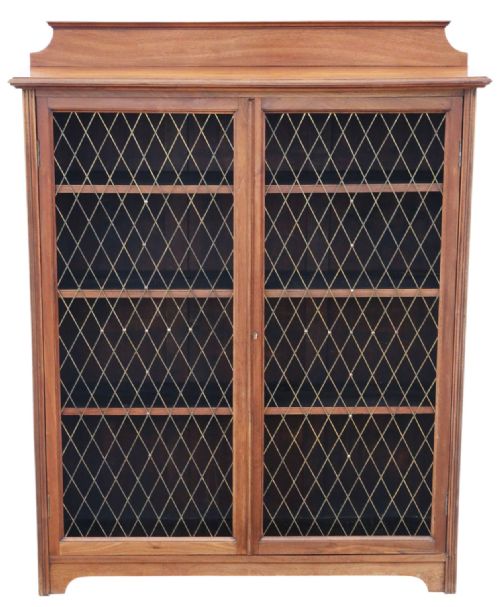
Mesh Door Bookcase
A mesh door bookcase uses woven metal wire to protect volumes while keeping titles visible, spanning Regency elegance to early twentieth-century utility.
Mesh Door Bookcase
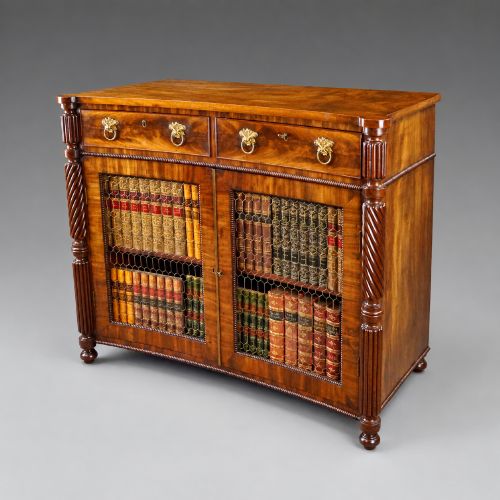
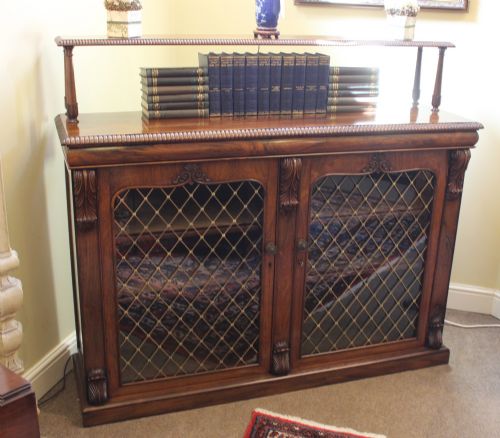
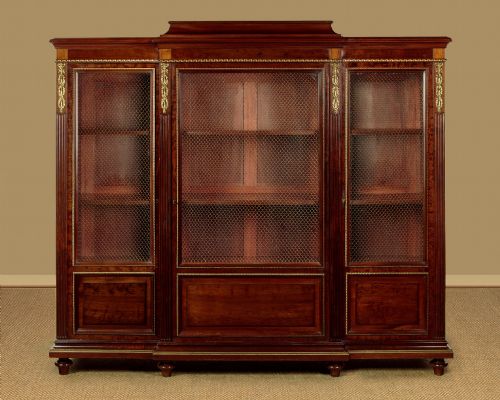
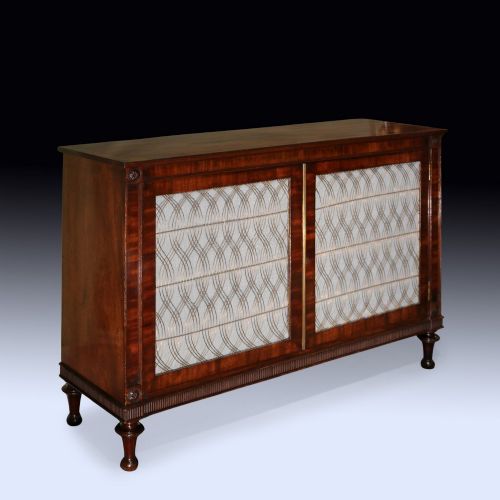
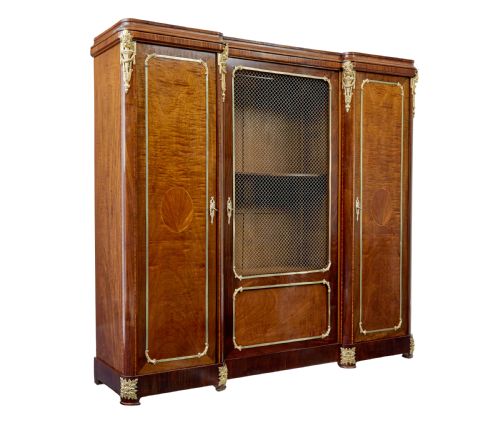
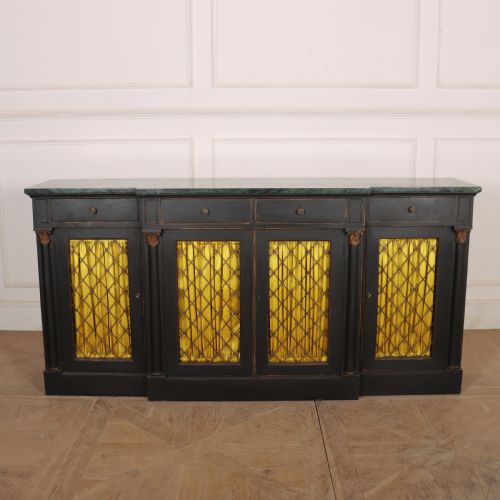
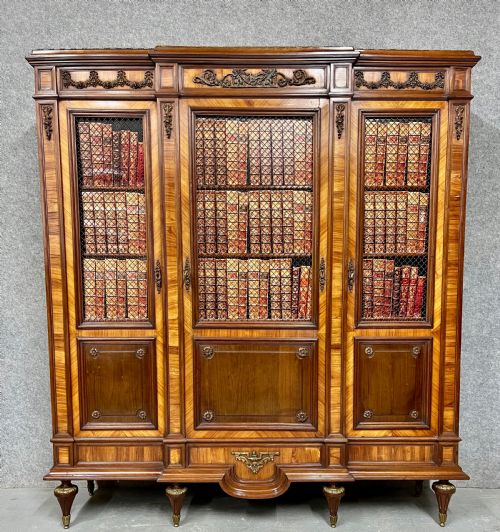
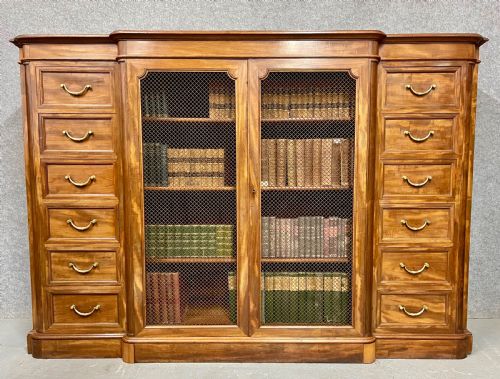
A mesh door bookcase combines timber shelving with fine metal grilles, appearing in forms from substantial breakfront libraries to compact side cabinets. Buyers seeking this phrase encounter pieces dating from the eighteenth century through the 1930s, executed in styles including Regency, Victorian, and Edwardian.
The selection ranges from grand mahogany and rosewood library pieces to painted French provincial cabinets and walnut display units. Many examples integrate brass mounts, adjustable shelves, or side cabinet configurations alongside standard book storage.
Materials and construction
Cabinet makers utilised dense hardwoods such as mahogany, walnut, rosewood, and kingwood for the primary carcases, often applying fine veneers or paint finishes. Wire mesh, woven from brass or iron, was secured into timber door frames to provide ventilation and security for books.
Joinery techniques involved precise mortise and tenon framing to support heavy shelving loads, while brass mounts, grilles, and hardware added structural and decorative contrast to the timber surfaces.
Mesh Door Bookcase Retail Price Guide 2026
Typical asking prices for mesh door bookcase among the pieces listed under this phrase on Sellingantiques today, from the lower quarter to the upper quarter. They describe what is for sale here now, not the wider market.
Early owners used brass mesh doors so their prized books could breathe without collecting dust.
Evaluating quality and craftsmanship
Quality rests in the selection of timber figures, such as striking Gonçalo Alves or richly grained mahogany, and the precision of the brass wirework within the door frames. Superior examples display refined proportions, integrated brass mounts, and clean interior cabinetwork.
Simpler provincial pieces rely on painted finishes and utilitarian construction, whereas formal Regency and breakfront designs exhibit sophisticated architectural detailing and careful timber matching.
The Mesh Door Bookcase Glossary
- Breakfront
- A cabinet design where the central section projects forward from the flanking wings. This architectural arrangement creates depth and visual rhythm in large library bookcases.
- Brass grille
- A decorative lattice or woven wire mesh fitted into cabinet doors. It offers visibility of the contents while maintaining a secure enclosure.
- Chiffonier
- A low sideboard or cabinet developed in the nineteenth century, often equipped with enclosed shelving beneath. It serves a similar function to compact side cabinets.
- Gonçalo Alves
- A dense exotic hardwood prized for its distinct contrasting figuring. Makers utilised this material in high-status Regency furniture.
- Kingwood
- A richly coloured timber with dark banding, popular in fine cabinet making during the eighteenth and nineteenth centuries. It provides a polished surface for decorative display pieces.
Mesh Door Bookcase: Frequently Asked Questions
Where were mesh door bookcases placed?
These cabinets stood primarily in libraries, studies, and formal drawing rooms to house leather-bound volumes and reference books. The enclosed mesh protected valuable texts from dust while allowing air circulation.
In domestic settings, they also functioned as side cabinets for displaying decorative objects or storing household linens alongside books.
How do I clean the wire mesh?
Dust the mesh gently with a soft-bristled brush or a dry microfibre cloth to remove accumulated particles without snagging the wire. Avoid harsh chemical cleaners that might discolour the brass or damage the surrounding timber.
If the metal requires deeper attention, use a specialised non-abrasive cleaner applied sparingly on a cloth, taking care to keep liquids away from the wood.
Can shelves be adjusted?
Many period cabinets feature adjustable shelving systems supported by wooden ratchets or metal pins. This adaptability allowed owners to accommodate varying book heights over time.
Some early or provincial pieces feature fixed shelves built into the carcase structure during original construction.
How do I identify a Regency period piece?
Regency items typically display classical restraint, balanced proportions, and specific materials such as rosewood, mahogany, and brass grille work. They often incorporate neoclassical motifs, architectural cornices, and refined brass mounts.
Construction details, including hand-cut dovetails and traditional timber preparation, help confirm the nineteenth-century origin.