






Mens Geometric Cufflinks
Mens geometric cufflinks combine crisp modernist lines with the practical utility of mid-century tailoring, offering sharp architectural detail for the modern cuff.
Mens Geometric Cufflinks
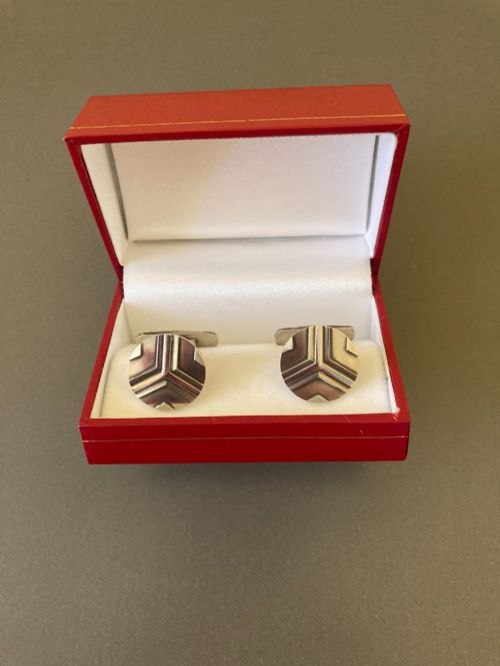
When you search for mens geometric cufflinks, you encounter neat pairs designed for men's shirting that rely on clean angles and structured shapes rather than floral or figurative motifs. The selection leans heavily toward pieces from the nineteen-thirties, showcasing the streamlined aesthetic characteristic of the period.
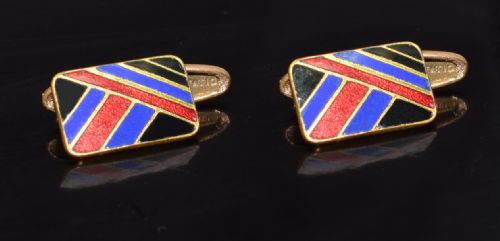
You are most likely to meet enamel designs finished in green and black alongside modernist silver configurations. These items originate from British and continental workshops, reflecting a broad European shift toward industrial clarity in personal accessories.
Materials and construction
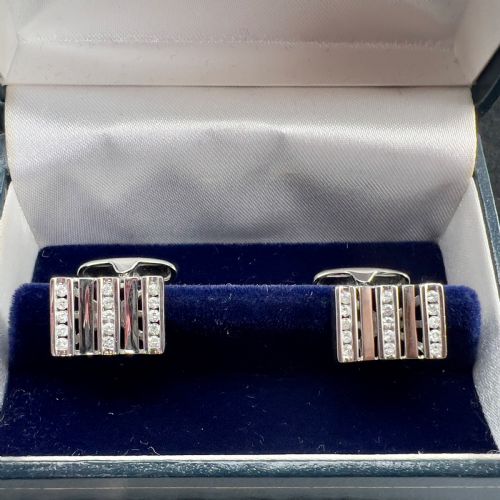
Makers utilised sterling silver and brass as structural foundations, applying vitreous enamel to create smooth planes of flat colour within geometric borders. Some examples incorporate precious metals such as white gold and yellow gold, paired with diamonds or sapphires to elevate the design.
The construction relies on secure hinged or rigid toggle backs soldered firmly to the face plates. Enamel work is fused directly to the metal substrate by heat, demanding precise temperature control to prevent cracking across tight rectilinear fields.
Mens Geometric Cufflinks Retail Price Guide 2026
Typical asking prices for mens geometric cufflinks among the pieces listed under this phrase on Sellingantiques today, from the lower quarter to the upper quarter. They describe what is for sale here now, not the wider market.
Many a gentleman in nineteen-thirty relied on bright green enamel to signal he possessed a very modern wrist.
Distinguishing quality
The standard of execution rests entirely on the crispness of the enamel work and the integrity of the metal joints. Superior pieces exhibit flat, well-fired enamel surfaces flush with the surrounding metal bezels, showing minimal shrinkage or surface pitting under close inspection.
Design coherence separates ordinary utilitarian fasteners from exceptional modernist examples. Finer pairings maintain strict symmetry in their geometric patterns and use heavier gauges of silver or gold that resist bending during daily wear.
Georg Jensen
The Mens Geometric Cufflinks Glossary
- Art Deco
- A design style spanning the nineteen-twenties and nineteen-thirties characterised by sleek lines, geometric symmetry and industrial influences. It remains the dominant stylistic source for early twentieth-century shirt fastenings.
- Vitreous Enamel
- A material created by fusing powdered glass to a metallic substrate through high-temperature firing. This technique produces durable, glossy coloured surfaces resistant to fading.
- Sterling Silver
- An alloy consisting of silver and other metals, typically copper, standardised for durability. It provides the bright white metallic ground common in twentieth-century men's accessories.
- Modernist
- An aesthetic approach prioritising function, clean geometry and rejection of historical ornament. In cufflinks, this translates to stark rectangles, chevrons and minimal frames.
Mens Geometric Cufflinks: Frequently Asked Questions
How do I date geometric cufflinks?
Dating relies on stylistic markers and material choices such as the heavy use of vitreous enamel paired with silver during the nineteen-thirties. Later decades introduced different alloy standards and distinct modernist shifts.
Examining the fastening mechanism also helps establish chronology, as toggle and swivel designs evolved significantly between the pre-war era and the nineteen-fifties.
Are these cufflinks suitable for daily wear?
Sturdy metal foundations in silver or brass make these pieces robust enough for regular use on modern double-cuff shirts. Solid construction ensures the hinged fittings withstand repeated fastening.
Care must be taken with enamelled faces to avoid sharp impacts against hard surfaces, which can chip the glass paste.
What shirt cuffs work best?
French cuff shirts with structured buttonholes provide the ideal pairing for rigid or chain-linked designs. The geometric faces sit flush against the fabric layers, displaying the pattern clearly.
Avoid overly thin shirt materials that allow heavier silver or gold pairs to sag downwards.
How should I clean enamel surfaces?
Gentle wiping with a soft, dry microfibre cloth removes everyday oils and restores the lustre of both metal and enamel. Avoid abrasive dips or harsh chemical solvents that can damage the glass fusion.
Professional ultrasonic cleaning should be avoided if the pieces contain delicate stone settings or fragile enamel inlays.