



Meiji Wood Sculpture
Meiji wood sculpture captures the intricate craftsmanship of Japan, offering collectors tactile figures and okimono shaped from boxwood, bamboo, and hardwood.
Meiji Wood Sculpture
Meiji wood sculpture encompasses traditional Japanese figures, netsuke, okimono, and decorative pieces produced across the late nineteenth and early twentieth centuries. These works span subjects from mythological figures and deities such as Fukurokuju and Ebisu to animals including tigers, frogs, and rabbits.
The objects on this page largely originate from the nineteenth century and the Meiji period, alongside related Edo and Edwardian examples. Forms range from miniature pocket pieces to tall carved figures and card butlers.
Collectors encounter diverse expressions, including boxwood netsuke, carved hardwood okimono, and bamboo carvings. Each piece reflects the material culture and artistic refinement of Japanese craftsmanship from this era.
Materials and Methods
Carvers utilised boxwood, hardwood, burr wood, and bamboo to shape detailed sculptures, netsuke, and paperweights. These timbers allowed for precise chisel work and smooth finishing on small and large scales alike.
Makers employed traditional carving techniques to render naturalistic textures, capturing the fur of animals, the folds of garments, and the distinct grain of exotic woods. Certain works integrate root wood bases and mixed elements like horn.
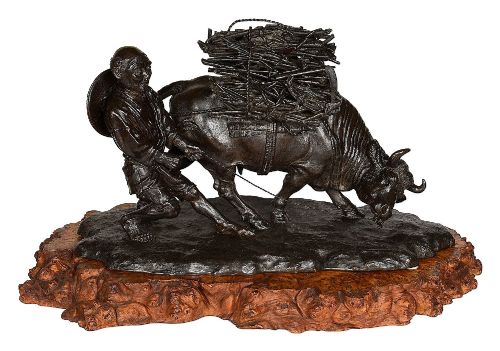
Artisans also combined wood with metal components, as seen in mixed-material compositions pairing carved timber elements with cast bronze figures.
Meiji Wood Sculpture Retail Price Guide 2026
Typical asking prices for meiji wood sculpture among the pieces listed under this phrase on Sellingantiques today, from the lower quarter to the upper quarter. They describe what is for sale here now, not the wider market.
Listings feature boxwood, bamboo, and hardwood across sculptures, netsuke, and paperweights originating primarily from the nineteenth century.
Factors of Quality
The standard of execution in carving defines the distinction between pieces, evident in the precision of facial expressions, anatomical proportions, and surface texture. Finer works display meticulous attention to detail in hair, clothing, and natural forms.
Material selection plays a role, with dense timbers like boxwood and exotic hardwoods enabling sharper relief and better preservation of intricate details over time. The choice of wood dictates the tactile quality of a netsuke or okimono.
Signatures by recognised makers distinguish notable works from unsigned anonymous productions, adding historical weight to the piece.
Tomochika·Masayuki·Gyoko
The Meiji Wood Sculpture Glossary
- Okimono
- A Japanese decorative freestanding sculpture designed for display on a shelf or in a tokonoma alcove. These objects depict figures, animals, and mythical subjects.
- Netsuke
- A small carved toggle fastened to the end of a cord attached to a small container worn hanging from a traditional Japanese kimono sash. They were carved in boxwood and other timbers.
- Sashi netsuke
- A long, slender type of toggle slipped directly behind the kimono sash rather than attached by a cord. They often doubled as pipe case holders.
- Boxwood
- A dense, pale hardwood favoured by carvers for its fine grain and ability to hold microscopic detail without splintering. It develops a warm patina through handling.
- Edo period
- The historical period of Japanese history preceding the Meiji era, spanning from sixteen hundred and three to eighteen hundred and sixty-eight. Pieces from this era share stylistic roots with early Meiji works.
Meiji Wood Sculpture: Frequently Asked Questions
What is a meiji wood sculpture?
A meiji wood sculpture is a carved Japanese object produced during the Meiji period, encompassing figures, okimono, and netsuke.
These pieces showcase traditional craftsmanship, often depicting animals, deities, or daily life in boxwood, bamboo, and hardwood.
How were netsuke used?
Netsuke functioned as toggles on the cords of small hanging pouches or containers worn suspended from kimono sashes.
They served a practical purpose while doubling as miniature portable sculptures displaying intricate woodcarving.
How do I identify meiji period pieces?
Identification relies on examining the specific wood types, carving styles, subject matter, and signature marks left by carvers.
Comparing the object to documented nineteenth-century Japanese motifs helps place it within the Meiji or transitional Edo periods.
How should I care for boxwood sculptures?
Boxwood sculptures require stable indoor environments away from direct sunlight and sudden humidity changes to prevent timber splitting.
Gentle dusting with a soft brush preserves the natural surface and patina developed from handling over the decades.