






Meiji Taisho Pottery
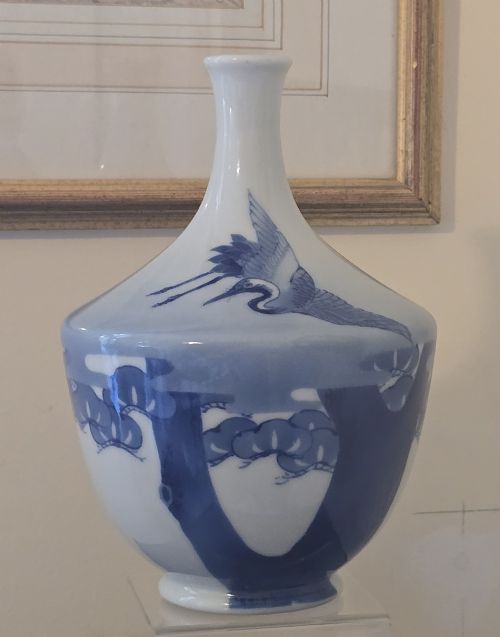
Meiji taisho pottery spans striking transitional ceramics from late nineteenth and early twentieth century Japan, combining tactile relief work with fluid glazes.
Meiji Taisho Pottery
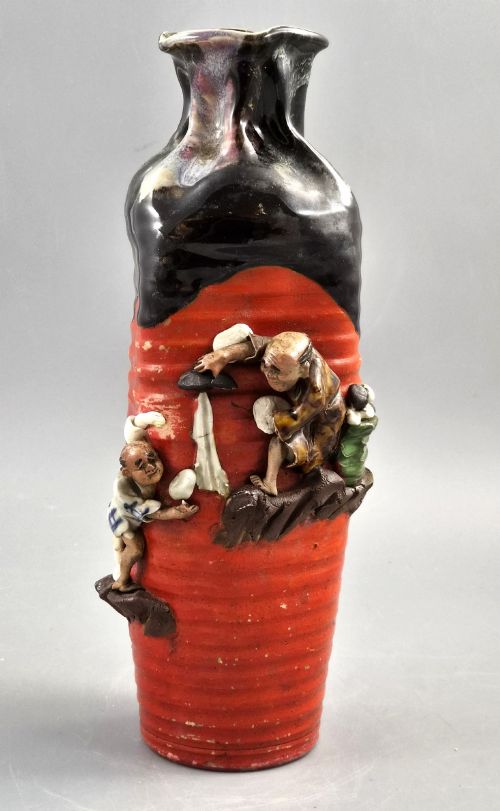
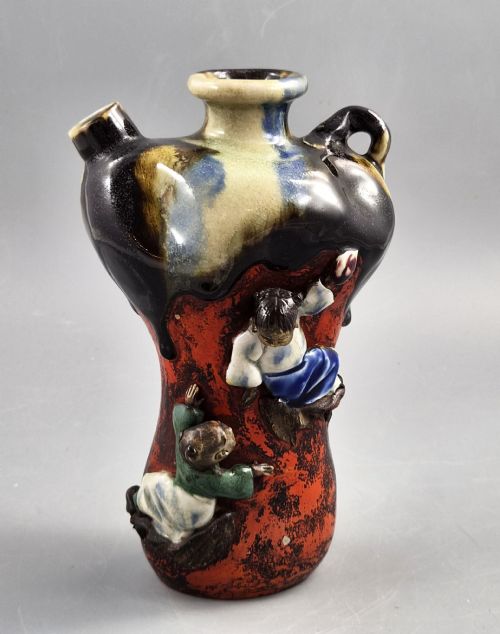
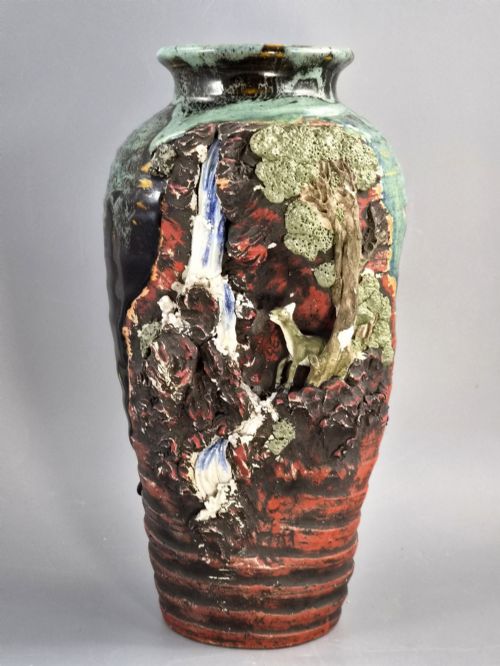
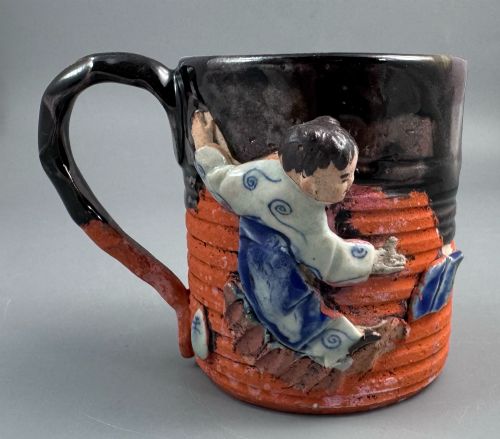
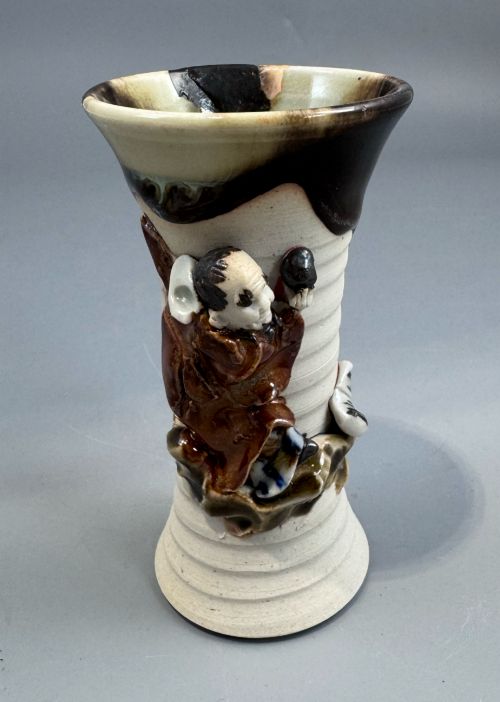
When searching for meiji taisho pottery, buyers encounter distinctive Japanese ceramics spanning the Meiji and Taisho periods, predominantly featuring the textured output of the Sumida Gawa kilns. These pieces encompass functional forms and decorative vessels such as vases, pitchers, bowls, and teacups, alongside figurative works and brush washers.
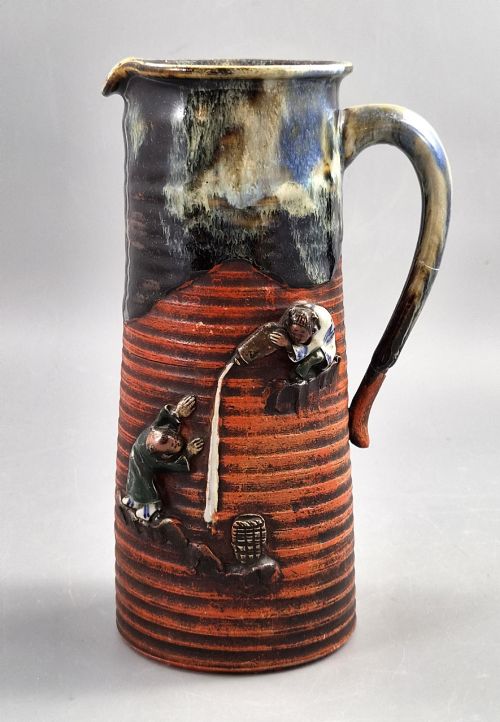
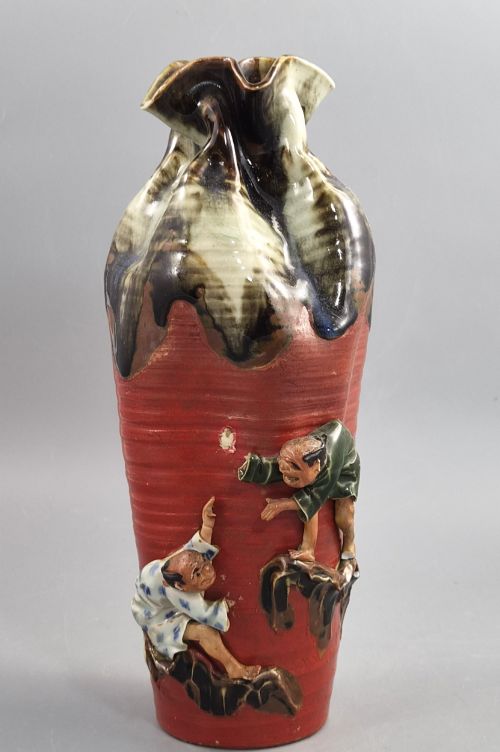
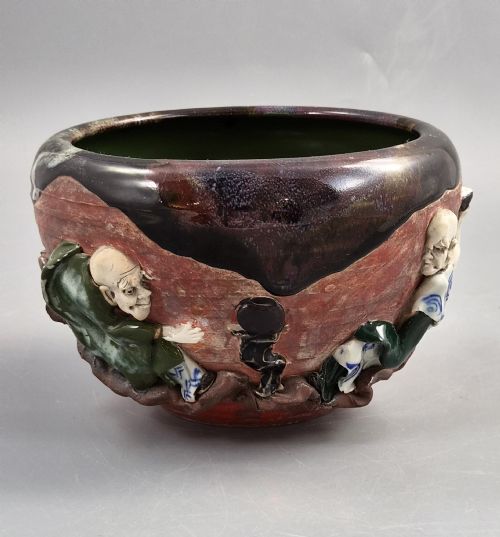
The most common examples on this page are Sumida Gawa wares characterised by heavily potted stoneware bodies, thick dripping glazes, and applied sculptural figures in high relief. Alongside these sit Satsuma earthenware vases, Kutani figurines, and studio pottery produced around nineteen hundred and the Edwardian era.
Materials and construction methods
Potters constructed these vessels using coarse stoneware and earthenware clay bodies, often throwing forms by hand before applying sculptural elements directly to the surface. Artisans modelled figures of sages, children, and animals separately in clay and attached them before firing.
Surfaces received heavy applications of coloured enamel, ceramic glaze, flambe glaze, and occasional highlights of gold leaf. Kiln operators controlled reduction and oxidation to achieve the characteristic streaked and pooled glaze effects that surround the applied figures.
Meiji Taisho Pottery Retail Price Guide 2026
Typical asking prices for meiji taisho pottery among the pieces listed under this phrase on Sellingantiques today, from the lower quarter to the upper quarter. They describe what is for sale here now, not the wider market.
Current listings feature earthenware and stoneware forms decorated with enamels, gold leaf, and ceramic glazes across the Meiji and Taisho periods.
Distinctions in quality and execution
Quality separates by the precision and character of the modelling in the applied figures, where master makers achieved expressive faces and dynamic poses rather than stiff, generic forms. The integration between the body and the applied relief matters greatly, showing clean adhesion without clumsy luting.
Glaze control also distinguishes the tier of a piece, separating harmonious pools of flambe and crackle glazes from flat or muddy surfaces. Signed works by documented makers such as Inoue Ryosai and Koko generally demonstrate superior artistic ambition in both sculptural detail and glaze chemistry.
Inoue Ryosai·Ishiguro Koko·Tagawa·Makuzu Kozan II
The Meiji Taisho Pottery Glossary
- Sumida Gawa
- A style of Japanese pottery originating near Tokyo, known for thick drippy glazes and applied figures in high relief. This ware was largely produced for export during the late nineteenth and early twentieth centuries.
- Flambe glaze
- A streaked or mottled ceramic finish resulting from metallic oxides reacting in the kiln atmosphere. These glazes produce dramatic shifts in colour, often running down the sides of tall vases.
- Moriage
- A Japanese ceramic technique of applying slip in raised dots or lines to create textured surface decoration. It appears frequently on Kutani and Satsuma wares from the period.
- Rakan
- Depictions of enlightened disciples of Buddha, commonly modelled as sage figures on Japanese ceramics. They appear frequently climbing across the surfaces of Sumida Gawa vessels.
Meiji Taisho Pottery: Frequently Asked Questions
What is Sumida Gawa pottery?
Sumida Gawa pottery refers to distinctive Japanese ceramics made near Tokyo that feature heavily textured stoneware bodies and dripping glazes. Artisans applied realistic figures, such as sages and children, in high relief directly onto the wet clay before firing.
These pieces emerged during the Meiji period to satisfy international demand for expressive, hand-modelled Japanese art. They range from tall baluster vases to small desk accessories like brush washers.
How do I identify a Meiji or Taisho piece?
Identifying these periods relies on observing stylistic markers such as applied relief figures, signature plaques, and the combination of traditional Japanese motifs with turn-of-the-century export aesthetics. Most items date from roughly eighteen ninety to nineteen twenty.
Examine the base and body for artist signatures, kiln marks, or stamps that connect the work to known workshops. The presence of thick flambe glazes and unglazed clay patches often points directly to the Sumida Gawa tradition.
Where were these ceramics made?
These ceramics were produced primarily in Japan, with specific styles tied to regional kilns and urban workshops such as those near the Sumida River in Tokyo. Other traditions represented include Satsuma ware from Kyoto and studio pottery from designated regional centres.
Many of these objects were created specifically for export to Western markets during the late nineteenth and early twentieth centuries. Consequently, they often blend traditional Japanese iconography with forms suited to European and American interiors.
How do I display these vessels at home?
Display these textured vessels on stable surfaces where adequate lighting highlights their high-relief figures and complex glaze variations. Placing them away from direct foot traffic prevents accidental damage to the delicate applied elements.
Allow enough surrounding space for the eye to appreciate the sculptural modelling and dramatic glaze drips. Pairing single vases with neutral backgrounds lets the rich earth tones and applied figures stand out clearly.