
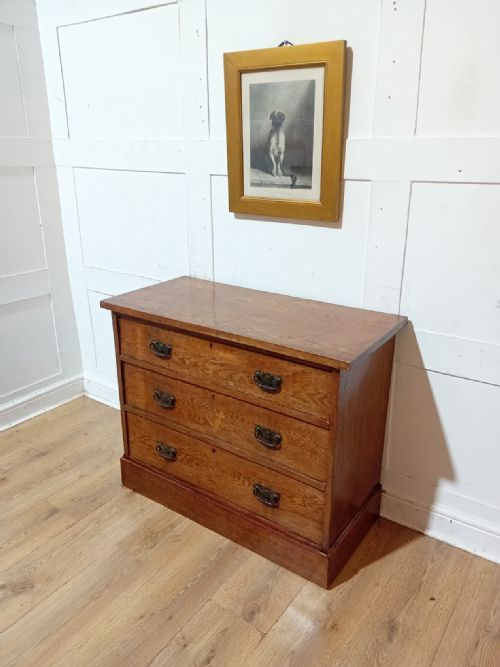


Medium Oak Chests
Medium oak chests offer practical storage in warm, figured timber, spanning utility forms from Edwardian filing cabinets to Arts and Crafts drawers.
Medium Oak Chests
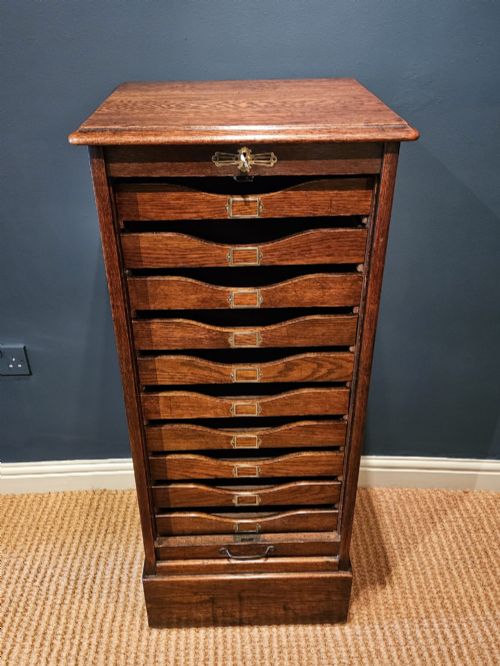
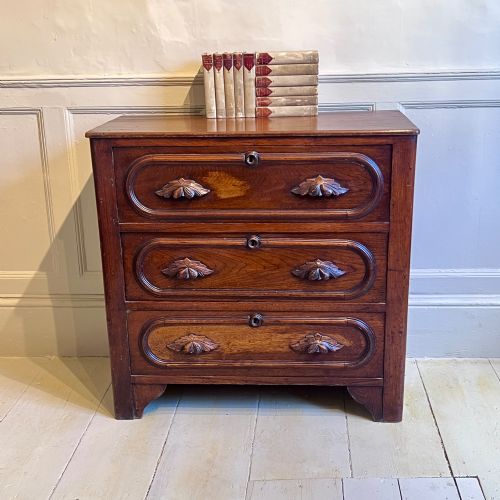
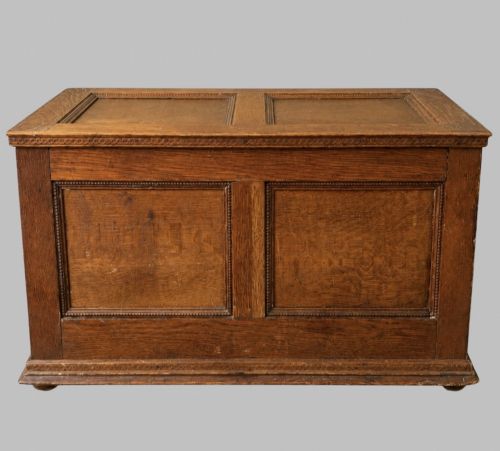
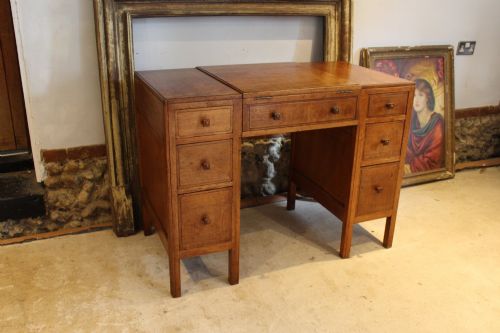
Medium oak chests encompass a range of storage furniture including blanket chests, blanket boxes, dressing chests, and multi-drawer filing units. These pieces emerge from various eras such as the 17th Century, Victorian period, Edwardian years, and the 1930s.
Buyers encountering this group will find both utilitarian office furniture and domestic bedroom pieces sharing a sturdy timber construction. The emphasis remains on functional compartmentalisation rendered in solid oak and wood inlay.
Materials and Construction
Construction relies heavily on solid oak, frequently augmented with brass and metal hardware, iron details, and occasional pewter elements. Wood inlay provides decorative contrast on specific stylistic variants.
Workshop methods range from traditional panel and frame assembly seen in revival coffers to tambour tracks utilised in early filing cabinets. Drawer construction employs dovetailing and simple runners appropriate to the period of manufacture.
Listings feature oak alongside brass, iron, glass, and pewter across Edwardian, Victorian, and 1930s periods.
Assessing Quality and Execution
Quality differentiates itself through the selection of timber grain and the precision of joinery, particularly in drawer construction and panel fitting. Maker attribution, such as work associated with Gomme or Heal and Sons, elevates specific pieces above standard commercial production.
The integrity of original hardware, including brass pulls and operational keys for collector cabinets, distinguishes superior examples. Surface finish and the preservation of original patination dictate the visual success of the piece.
Gomme·Heal and Sons
The Medium Oak Chests Glossary
- Tambour front
- A sliding shutter formed of narrow vertical strips of wood glued to a canvas backing. This mechanism allows smooth access to internal filing slots.
- Cofer
- A traditional heavy storage chest, often constructed with panelled sides and a hinged lid. These pieces served domestic storage needs before built-in wardrobes became common.
- Dressing chest
- A low chest of drawers equipped with an attached mirror and small jewellery drawers on top. They bridge the function of a dressing table and a drawer unit.
- Collector cabinet
- A specialised small cabinet fitted with multiple shallow drawers designed for holding specimens or small objects. They frequently include lockable doors to secure the contents.
- Wood inlay
- The technique of embedding contrasting pieces of wood into the primary surface to create decorative patterns. It appears across various revival and Arts and Crafts pieces.
Medium Oak Chests: Frequently Asked Questions
What periods do these oak chests cover?
The selection spans pieces from the 17th Century revival works through Victorian, Edwardian, and 1930s modernist designs. Each era brings distinct stylistic priorities to the timber.
Earlier items often reflect traditional revival aesthetics, while 20th-century examples lean towards utilitarian or modernist forms.
How were tambour front cabinets used?
Tambour cabinets served primarily as office furniture for filing documents securely in professional settings. The slatted wooden curtain slides open to reveal internal shelving or file trays.
Today, they adapt easily to modern home offices or living spaces for concealed storage.
What is an Arts and Crafts oak chest?
Arts and Crafts chests emphasise honest construction, simple geometric lines, and visible craftsmanship over heavy ornamentation. They frequently feature hand-beaten metal hardware and subtle wood inlay.
These pieces reflect a late 19th and early 20th century philosophy valuing artisan production.
Are dressing chests different from dressing tables?
Dressing chests combine the drawer capacity of a standard small chest with a fitted mirror superstructure. They provide significant storage in a compact footprint compared to large dressing tables.
Many Edwardian and 1930s examples incorporate jewellery compartments and adjustable mirrors.