



Marquise Cut Ring
When you search for a marquise cut ring, you seek the elongated boat-shaped silhouette that flatters the hand with unmistakable presence.
Marquise Cut Ring
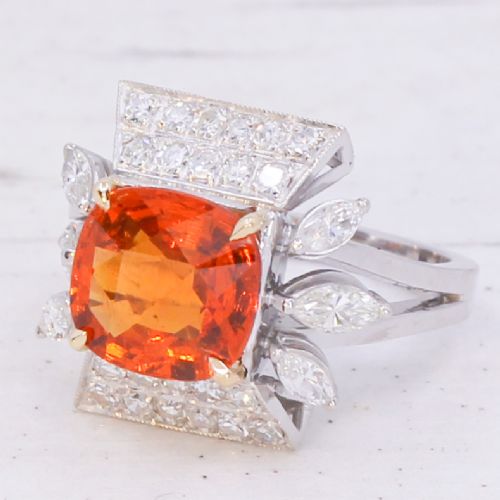
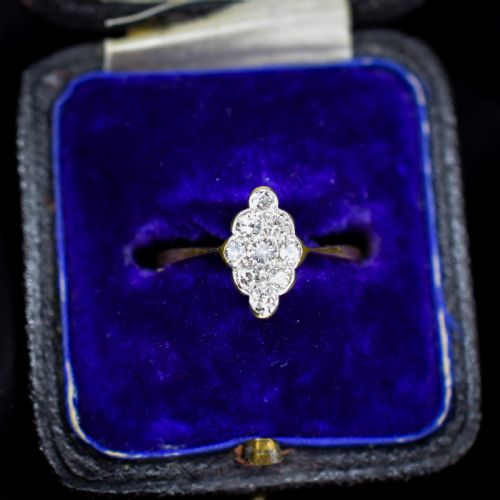
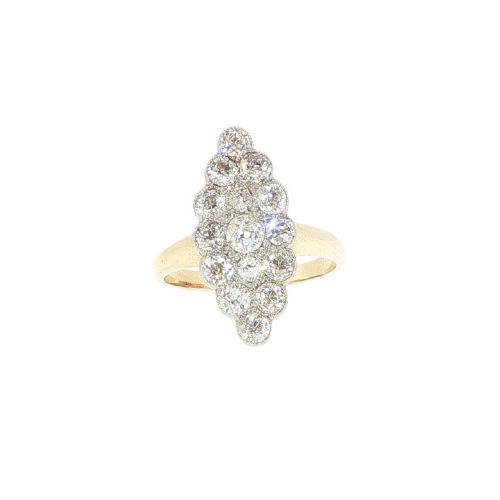
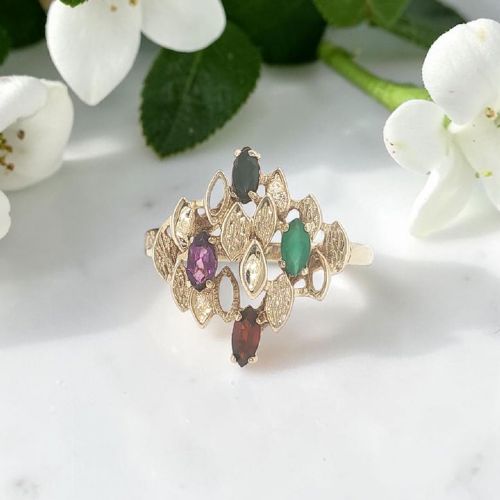
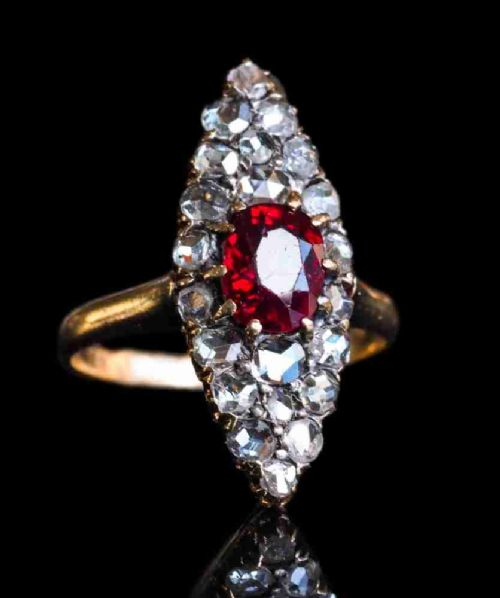
A marquise cut ring displays an elongated, pointed stone shape historically known as a navette, designed to maximise carat weight visually on the finger. The form appears frequently across Victorian, Edwardian, and Art Deco periods, often configured as a cluster with smaller gems surrounding a central stone.
Makers set these stones in configurations ranging from solitaire arrangements to intricate multi-gem cocktail and dress rings. The evidence shows styles extending from the late nineteenth century through the mid-twentieth century, encompassing both British and continental European workshops.
How they were made
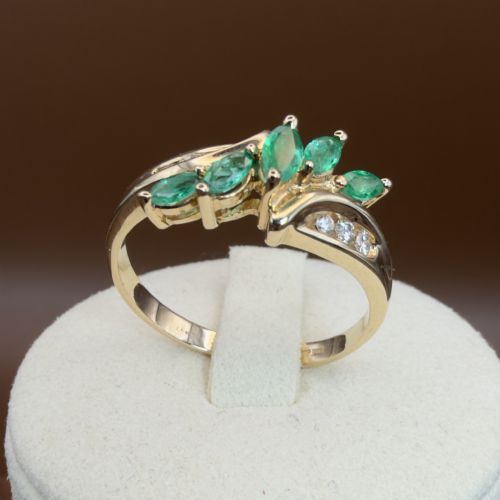
Goldsmiths combined yellow gold, white gold, and platinum, frequently pairing platinum settings with yellow gold shanks in Edwardian and Art Deco pieces to frame diamonds and coloured gemstones brightly. Old cut, rose cut, and old mine cut diamonds appear alongside natural sapphires, emeralds, and rubies.
Clusters demand precise claw or bezel work to secure the pointed tips of the central marquise stone while maintaining symmetrical alignment with surrounding smaller gems.
Listings demonstrate marquise cut rings spanning from the Victorian era through the mid-twentieth century, executed in platinum, 18ct gold, and 9ct gold.
What varies in quality
Quality rests upon the symmetry of the pointed ends and the proportional balance between the central stone and its surrounding cluster. Master lapidaries cut these stones to prevent a dark bow-tie shadow across the centre, ensuring even light return.
The integrity of the metalwork, particularly the preservation of delicate millegrain edges and shared claw settings, separates standard production from finer workshop output.
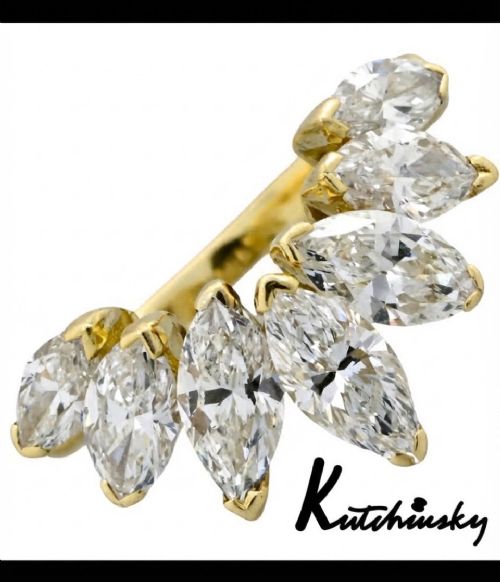
Kutchinsky
The Marquise Cut Ring Glossary
- Marquise cut
- A gemstone cut with an elliptical shape and pointed ends, designed to elongate the finger. It is also historically referenced as a navette.
- Navette
- A French term meaning little ship, describing a boat-shaped cluster ring or gemstone setting with tapered ends. This form is common in Georgian, Victorian, and Edwardian jewellery.
- Millegrain
- A decorative technique featuring a line of tiny, raised metal beads along the edges of a setting. It adds a refined texture typical of Edwardian and Art Deco pieces.
- Old cut
- A diamond cut style predating the modern brilliant cut, characterised by a smaller table, higher crown, and large culet facet. These stones were shaped by hand to catch candlelight.
- Cluster ring
- A ring design where a central gemstone is surrounded by a group of smaller stones. This layout magnifies the visual impact of the piece on the hand.
Marquise Cut Ring: Frequently Asked Questions
How do I care for antique rings?
Historic rings require gentle handling, particularly pieces featuring softer coloured stones like emeralds or delicate claw settings. Regular professional inspection ensures the stones remain secure.
Remove these rings during manual tasks or swimming to protect both the metal and the gems from unnecessary wear. Store them individually in lined boxes to prevent friction against other jewellery.
How do I identify Edwardian rings?
Edwardian rings typically employ platinum settings combined with yellow gold, utilising intricate openwork motifs and fine millegrain detailing. The overall aesthetic favours lightness, grace, and lace-like diamond arrangements.
Makers of this era frequently favoured platinum for its strength, allowing for delicate wirework that held old cut diamonds securely. Natural sapphires and emeralds also appear regularly alongside these diamonds.
What is a navette ring?
A navette ring shares the same boat-shaped, pointed silhouette as a marquise ring, often used interchangeably in historical descriptions. The term derives from the French word for a small boat.
These rings frequently span the finger horizontally, making them prominent examples of Victorian and Edwardian cluster jewellery. They often combine rose cut or old cut diamonds with rubies or sapphires.