

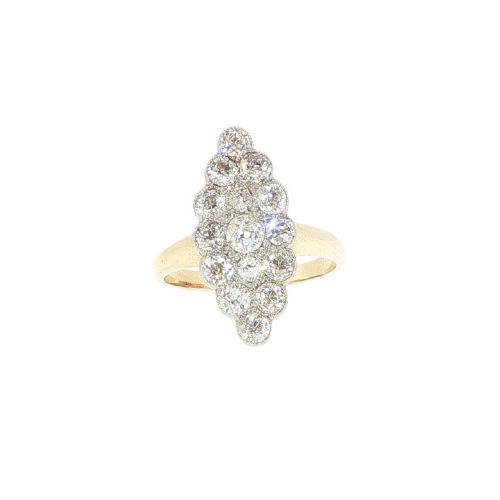

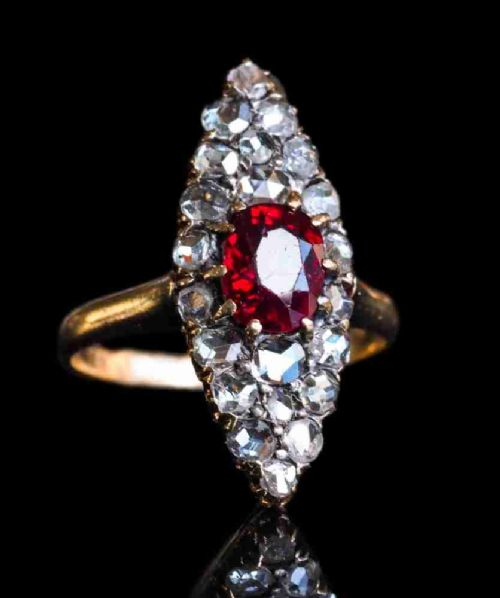


Marquise Cut Diamond Ring
A marquise cut diamond ring brings an elongated silhouette to the hand, combining centuries of royal heritage with brilliant stone arrangement.
Marquise Cut Diamond Ring
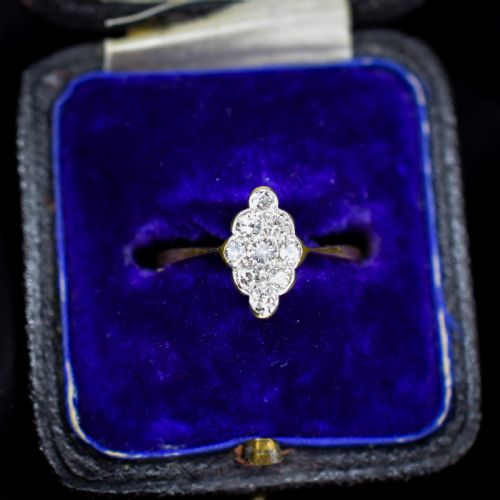
A marquise cut diamond ring, often referred to as a navette or boat-shaped cluster, presents a distinctive pointed-oval profile designed to maximise perceived stone size. Buyers exploring this selection will encounter pieces spanning from the Victorian era through Edwardian and Art Deco periods into mid-century modern designs.
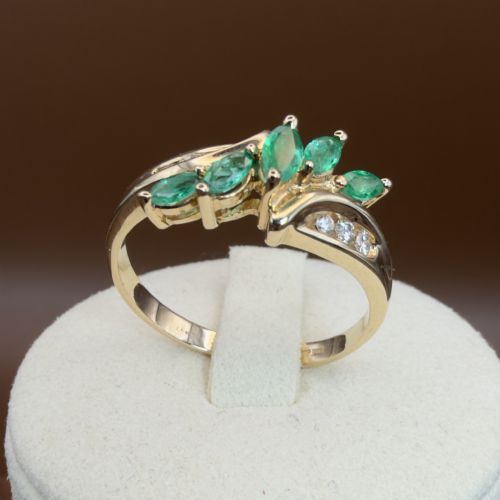
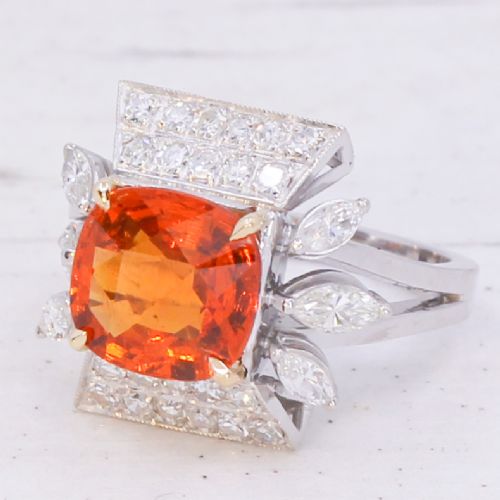
The form frequently pairs a central diamond or coloured gem with concentric clusters of smaller diamonds, rubies, sapphires, or emeralds. Platinum, 18ct yellow gold, and white gold serve as the primary foundational metals holding these intricate arrangements.
Dress rings, cocktail rings, and engagement configurations dominate the selection, reflecting diverse historical functions from formal evening wear to daily adornment. Pieces range from delicate nineteenth-century navette clusters to substantial mid-century cocktail statements.
How They Were Made
Goldsmiths constructed these rings using combinations of platinum and 18ct gold, occasionally employing silver-topped gold in earlier Victorian examples to enhance the brilliance of old-cut stones. Platinum gained prominence during the Edwardian and Art Deco periods, allowing for delicate, lace-like metalwork that secured closely set diamonds.
Gemstones including old-cut diamonds, rose-cut diamonds, and calibré-cut rubies or emeralds were hand-set into bezel, millegrain, or prong mountings. The navette and cluster formations required precise geometric alignment to follow the curved taper of the marquise outline without compromising structural integrity.
Legend connects the marquise shape to a royal smile commissioned by a French monarch.
What Varies in Quality
The harmony of the proportions dictates the visual success of the piece, particularly the symmetry of the pointed ends and the curvature of the shoulders. Master goldsmiths achieved a seamless flow between the central navette cluster and the supporting shank, avoiding clumsy transitions or heavy-handed claw work.
The selection of accompanying gemstones significantly influences the standing of a ring, with well-matched natural unheated rubies, emeralds, or sapphires elevating the piece. The precision of the hand-cut facets on old mine and rose-cut diamonds further separates standard workshop production from finer jewellers.
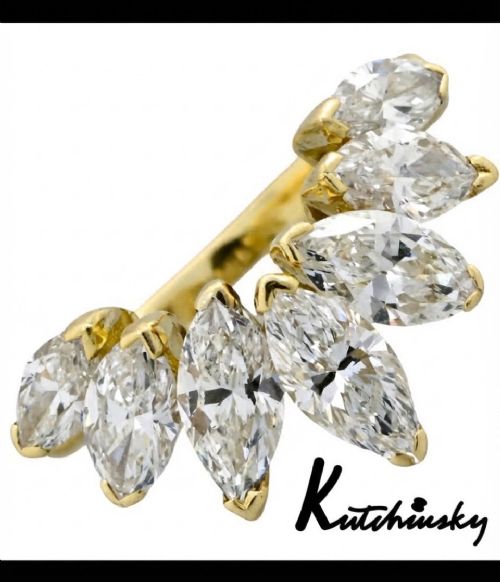
Kutchinsky
The Marquise Cut Diamond Ring Glossary
- Navette
- French for little ship, describing an elongated, boat-shaped ring cluster that tapers to points at both ends. This silhouette sits flat along the finger and creates an expansive visual footprint.
- Old Cut
- A precursor to the modern brilliant cut, typically faceted by hand during the Victorian or Edwardian eras with a smaller table and a higher crown. These stones display a distinctive soft glow under candlelight rather than modern laser-calibrated fire.
- Millegrain
- A decorative technique featuring a row of tiny raised metal beads along the edge of a setting. Jewellers utilised this finish extensively during the Edwardian and Art Deco periods to soften metal borders.
- Calibré Cut
- Gemstones specifically cut in small, uniform geometric shapes to fit tightly together within a channel or bespoke setting. This method requires exceptional lapidary skill to maintain unbroken lines of colour around a central stone.
Marquise Cut Diamond Ring: Frequently Asked Questions
How do I care for an antique ring?
Antique rings require gentle handling due to their delicate settings, particularly pieces featuring millegrain work or old-cut stones. Professional cleaning by a specialist jeweller ensures mountings remain secure.
Removal during manual labour or heavy household tasks prevents unnecessary wear on platinum and gold claws. Storing each ring individually avoids scratching softer stones or metal surfaces.
Are these rings suitable for daily wear?
Many of these pieces function well for everyday wear, provided the settings are checked regularly by a professional. Sturdier 18ct gold and platinum mountings from the Edwardian and mid-century periods hold up reliably.
Frail Victorian or Edwardian navette clusters with very fine wirework benefit from reserved wear on special occasions. Assessing the depth of the metal channels helps determine longevity.
How can I tell the period of a ring?
Dating relies on stylistic markers, metal choices, and the specific cutting style of the diamonds or coloured gems. Edwardian pieces often feature platinum-topped yellow gold with intricate millegrain, whereas Art Deco examples embrace geometric symmetry.
Victorian iterations frequently showcase closed-back settings or larger old mine-cut diamonds in yellow gold. Hallmarks, where present, offer definitive stamping for country of origin and year of assay.