

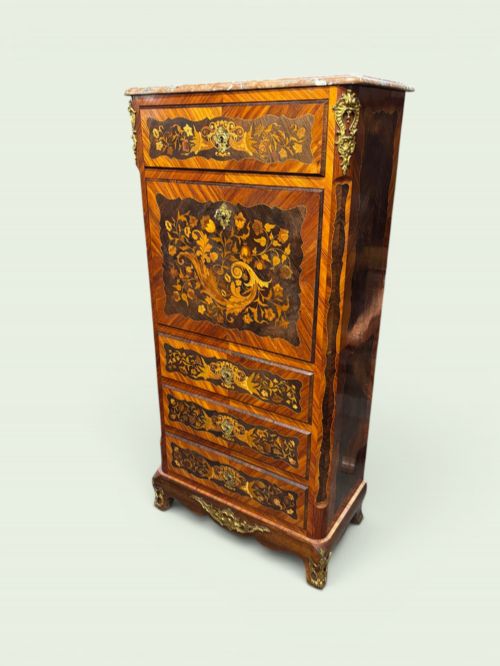


Marquetry Inlaid Secretaire
A marquetry inlaid secretaire combines hidden writing drawers with intricate wood patterns, offering both elegance and practical workspace for the collector.
Marquetry Inlaid Secretaire
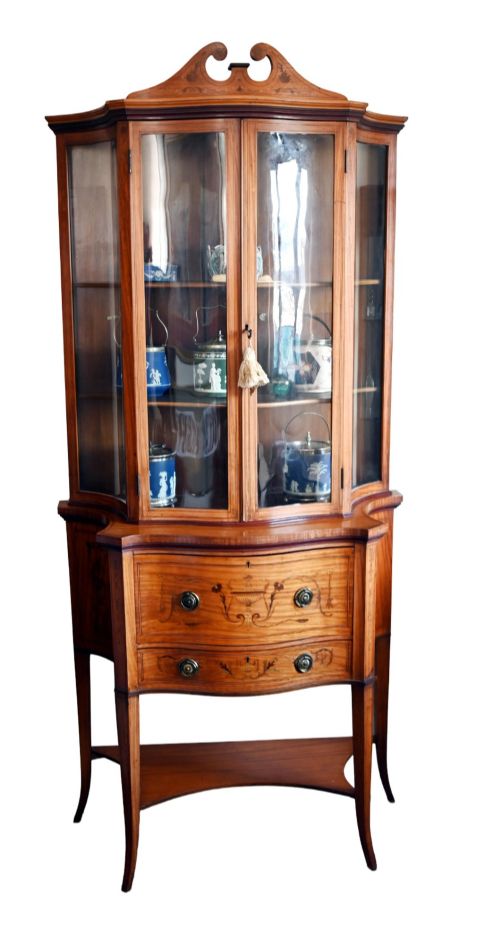
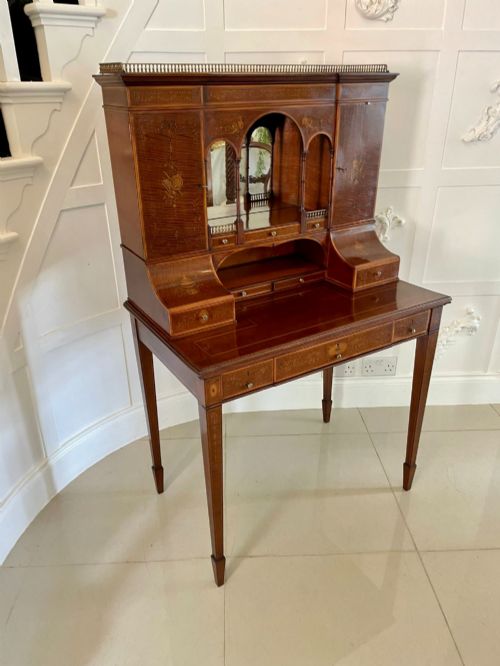
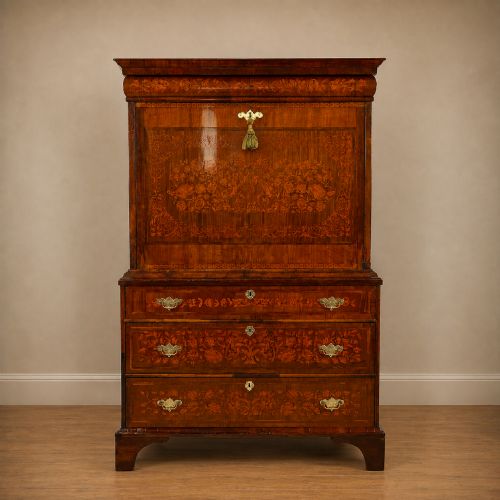
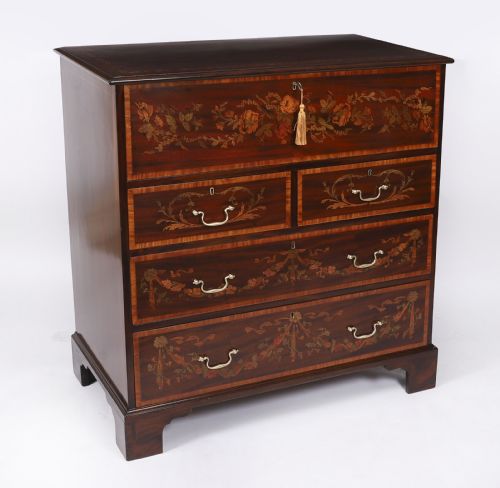
A marquetry inlaid secretaire appears in various forms on this page, including bureau bookcases, fall-front cabinets, and writing desks. These pieces originate from distinct periods such as the Georgian era, the Victorian age, and the Edwardian epoch.
Makers across different regions utilised specific regional styles, ranging from Dutch floral designs and French Louis XV revivals to Sheraton Revival satinwood pieces and Italian geometric marquetry. The most frequent encounters on this page include walnut and mahogany secretaire bookcases alongside rosewood and kingwood abattants.
The integration of a drop-front writing surface or fitted internal drawer defines the primary function of these items. Collectors encounter diverse iterations that span from George II chest forms to elaborate credenzas with internal writing compartments.
Materials and construction techniques
Carpenters constructed the carcase of each marquetry inlaid secretaire using robust timbers like mahogany, walnut, and rosewood, often applying veneers of satinwood and kingwood over the primary wood. Artisans then meticulously cut and fitted contrasting wood veneers to create floral, geometric, or pictorial marquetry patterns across the exterior surfaces.
Metal mounts in brass and ormolu frequently accent the structural corners, key escutcheons, and feet of French and Italian examples. Selected pieces incorporate additional decorative elements such as marble tops, tambour fronts, and glass panel doors to complete the construction.
Marquetry Inlaid Secretaire Retail Price Guide 2026
Typical asking prices for marquetry inlaid secretaire among the pieces listed under this phrase on Sellingantiques today, from the lower quarter to the upper quarter. They describe what is for sale here now, not the wider market.
Materials utilised across the documented pieces include mahogany, walnut, satinwood, rosewood, ormolu, and marble.
Distinctions in craftsmanship and design
The sophistication of the veneer work dictates the standing of each piece, where intricate multi-wood floral motifs or precise geometric patterns demand superior technical skill from the cabinetmaker. The crispness of the hand-cut joints within the internal writing drawers and pigeonholes further separates standard production from superior examples.
The choice of secondary woods and the quality of applied ormolu or brass mounts influence the overall standard of the object. Pieces bearing recognised maker stamps or exhibiting exhibition-quality execution represent the upper tier of this category.
Edwards and Roberts·Adriano Brambilla
The Marquetry Inlaid Secretaire Glossary
- Marquetry
- Decorative veneer work forming pictures or patterns by assembling small pieces of different coloured wood. This technique requires precise hand-cutting to ensure seamless joints between the contrasting timbers.
- Secretaire
- A piece of furniture containing a drawer or compartment that folds down to serve as a writing desk. The drop-front mechanism conceals small drawers and pigeonholes for correspondence.
- Escritoire
- An antique writing cabinet or desk, often featuring a fall-front panel. The term derives from the French word for writing.
- Ormolu
- Gilded bronze mounts applied to furniture for decorative effect. Makers cast and chased these metal elements to complement the woodwork.
- Abattant
- A vertical cabinet featuring a drop-front writing flap that conceals an interior fitted with small compartments. This form originates largely from French cabinetmaking traditions.
- Sheraton Revival
- An aesthetic movement drawing inspiration from the late eighteenth-century designs of Thomas Sheraton. Pieces in this style frequently employ satinwood and delicate inlay.
Marquetry Inlaid Secretaire: Frequently Asked Questions
What is a marquetry inlaid secretaire?
A marquetry inlaid secretaire is a cabinet or desk featuring patterned wood veneer work and a concealed writing surface. The drop-front mechanism opens to reveal compartments for stationery and letters.
Craftsmen built these pieces in various regional styles, combining practical storage with decorative exterior surfaces.
How do I identify the period of my secretaire?
Dating relies on examining the primary timbers, construction methods, and stylistic cues present in the marquetry. Georgian and Edwardian pieces exhibit distinct characteristics tied to their respective eras.
Matching the hardware, wood types, and specific revival motifs helps narrow down the decade of production.
Where were these cabinets made?
Workshops across Britain, France, Italy, and the Netherlands produced these writing cabinets. Each region imparted distinct aesthetic preferences, such as Dutch floral marquetry or French ormolu mounts.
British makers frequently utilised mahogany and satinwood during the Sheraton Revival period.
How should I care for wood veneer?
Maintaining veneer requires stable indoor humidity and protection from direct sunlight to prevent the timbers from drying out. Gentle dusting with a dry cloth preserves the polished surface.
Avoiding excessive moisture safeguards the delicate adhesive layers beneath the marquetry.