


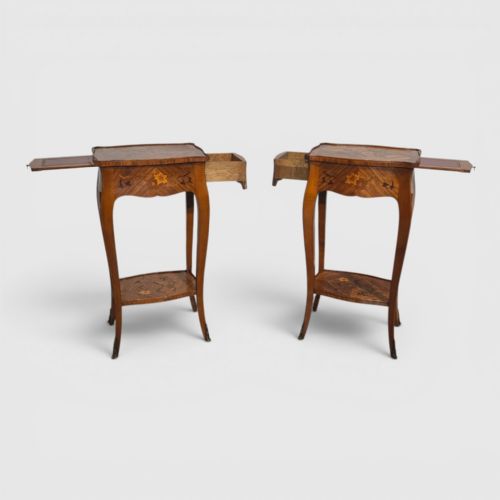


Marquetry Accent Cabinet
These marquetry accent cabinets bring intricate wood inlay and compact proportions to domestic spaces, offering both decorative presence and useful surface area.
Marquetry Accent Cabinet
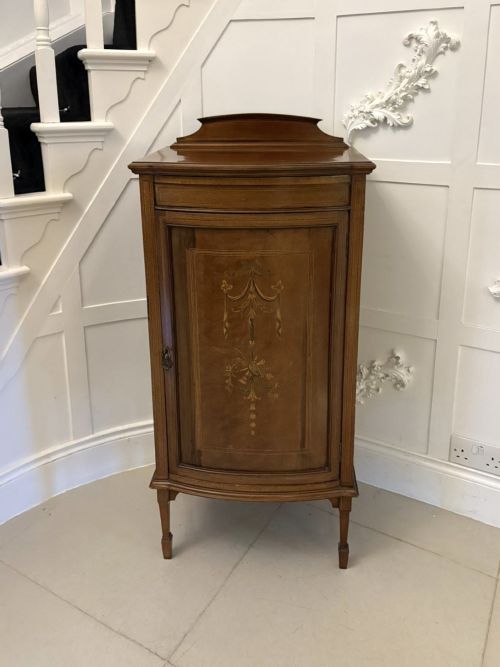
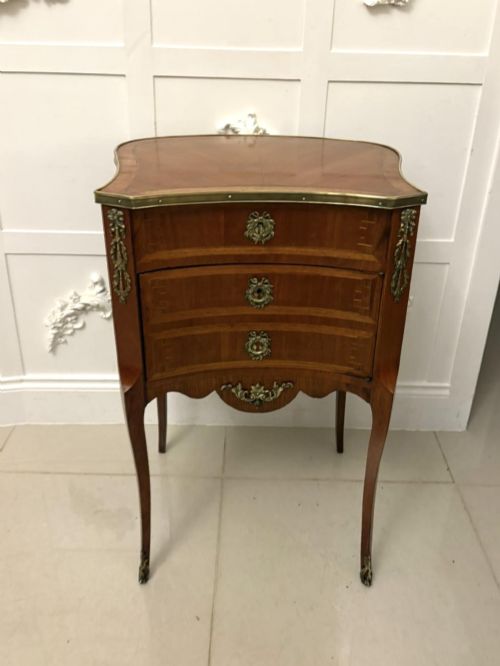
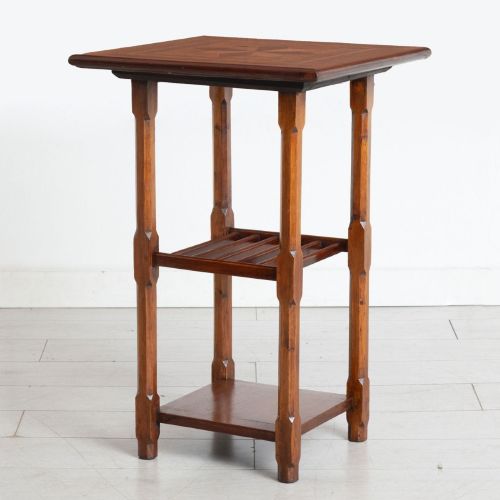
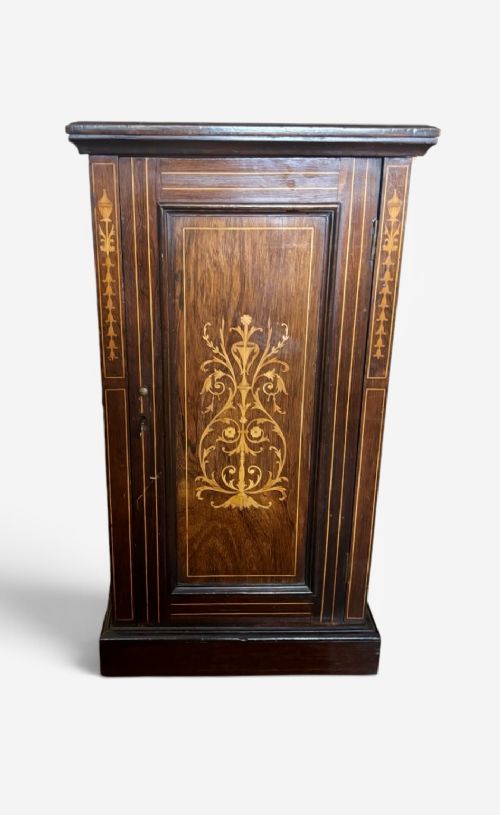
A marquetry accent cabinet brings patterned wood veneers and decorative floral or geometric compositions into smaller domestic spaces. When you search for a marquetry accent cabinet, you encounter forms ranging from French Louis XV style commodes and bedside chests to narrow Victorian cabinets and occasional tables.
The pieces appearing on this page span the seventeenth century through the early twentieth century, showing a strong representation of Edwardian and French revival pieces. You will find forms equipped with marble tops, gilt bronze mounts, and satinwood inlay.
Side cabinets, side tables, and cabinets on stand dominate the selection, offering varied drawer and cupboard configurations. Each piece relies on figured woods and contrasting veneers to create visual depth in a room.
Materials and construction methods
Cabinet makers constructed these pieces using dense structural timbers like mahogany, walnut, and oak as a foundation for decorative surface veneers. Kingwood, rosewood, and olive wood provide the varied natural tones required for detailed pictorial and geometric veneer work.
Marquetry entails cutting thin slices of different coloured woods and fitting them together to form intricate patterns before gluing them to the carcase. Craftsmen incorporated brass mounts, gilt bronze details, and marble tops to finish the edges and surfaces of the more ornate continental examples.
Marquetry Accent Cabinet Retail Price Guide 2026
Typical asking prices for marquetry accent cabinet among the pieces listed under this phrase on Sellingantiques today, from the lower quarter to the upper quarter. They describe what is for sale here now, not the wider market.
A tiny sliver of malachite sits quietly in a bronze mount, proving someone long ago refused to leave well enough alone.
Assessing quality in veneer and form
Quality rests upon the precision of the veneer cutting and the complexity of the wood selection. The finest examples demonstrate seamless joints within the marquetry pattern and a careful choice of contrasting timbers that retain their natural colour without excessive staining.
Structural integrity and the retention of original mounts separate standard production from superior pieces. Crisp chasing on gilt bronze mounts and well-figured grain in woods like kingwood and satinwood indicate higher standards of workshop execution.
The Marquetry Accent Cabinet Glossary
- Marquetry
- A decorative technique where small pieces of veneer are assembled to form pictorial or geometric designs on a wooden surface.
- Veneer
- A thin layer of finely figured wood applied over a secondary timber carcase to provide an ornamental exterior.
- Kingwood
- A dense, heavily figured exotic timber featuring dark brown and violet stripes, frequently utilised in eighteenth and nineteenth century French cabinet making.
- Ormolu
- Gilt bronze mounts cast and chased to ornament the corners, feet, and aprons of fine furniture.
- Oyster veneer
- Circular slices cut across small branches to produce concentric rings resembling oyster shells, typical of seventeenth century joinery.
Marquetry Accent Cabinet: Frequently Asked Questions
What is a marquetry accent cabinet used for?
These cabinets provide compact storage and display surfaces in hallways, living rooms, and bedrooms. They hold small items while adding decorative pattern through their wood veneers.
Many examples feature cupboards, drawers, or open tiers suited for lamps and decorative objects. Their modest footprint allows them to fit into spaces where larger furniture cannot go.
How do I identify French Louis XV style pieces?
French Louis XV style furniture displays curved cabriole legs, serpentine fronts, and asymmetrical floral marquetry. Makers often incorporated gilt bronze mounts along the edges to accentuate the flowing lines.
These pieces typically utilise woods such as kingwood and tulipwood arranged in intricate parquetry or floral arrangements. The overall aesthetic prioritises organic movement and rich surface texture over straight lines.
What is the difference between marquetry and inlay?
Marquetry covers the entire surface of a furniture carcase with an assembled jigsaw of different wood veneers. The design is formed first and then applied as a complete skin.
Inlay involves carving a recess into a solid wood surface and inserting a contrasting material into that specific depression. Marquetry creates a continuous pictorial composition across panels and tabletops.
How do I care for antique veneer?
Antique veneer requires stable indoor humidity and protection from direct sunlight to prevent the wood from drying out and cracking. Dust the surface regularly with a soft, dry cloth.
Avoid placing these cabinets near heat sources or damp areas, as fluctuating conditions can cause the glue beneath the veneer to fail. Periodic application of appropriate furniture wax maintains the finish.