
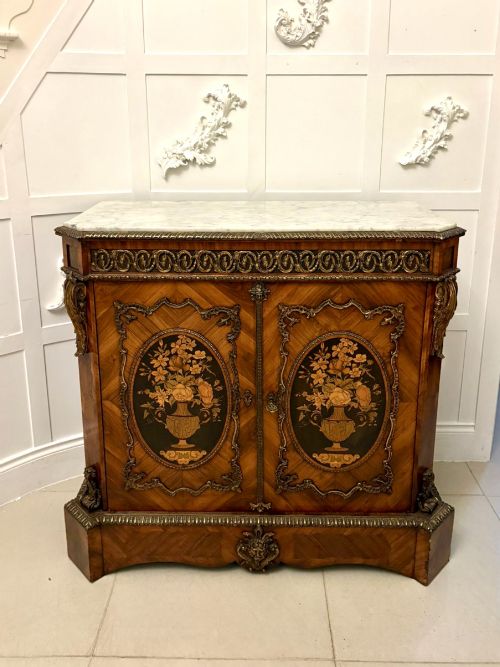
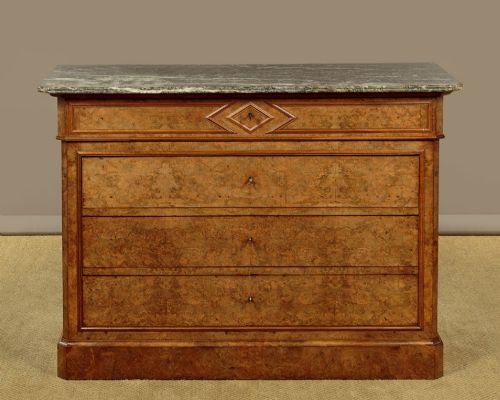
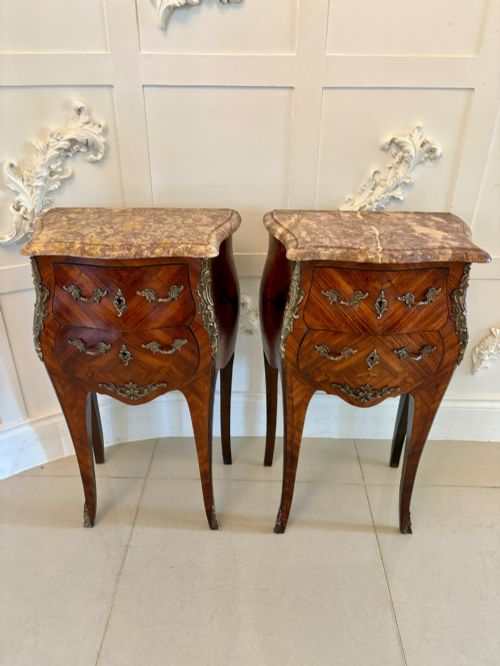
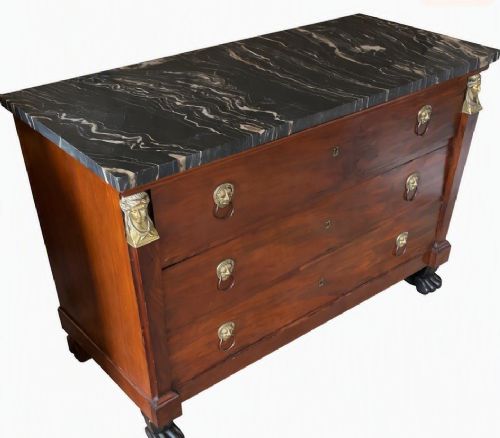
Marbled Top Commode
A marbled top commode brings tactile stone surfaces and generous drawer storage together in a single statement piece.
Marbled Top Commode
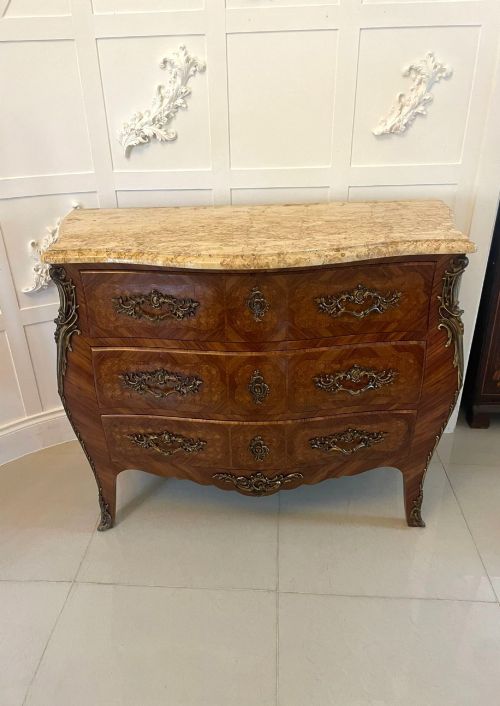
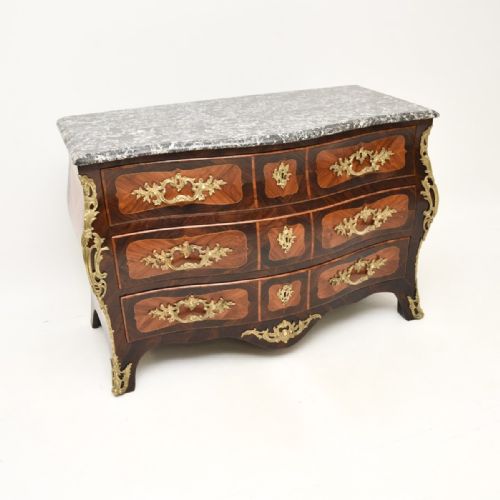
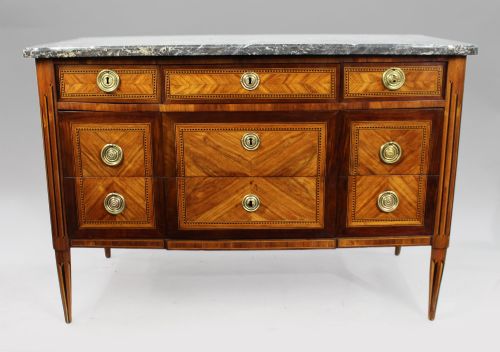
A marbled top commode sits at the intersection of practical storage and decorative display, serving as a low chest of drawers or bedside cabinet topped with heavy stone. When searching for a marbled top commode, a buyer meets diverse forms ranging from serpentine fronts and demi-lune cabinets to compact bedside chests.
The pieces span several centuries, with particular concentration in eighteenth-century and nineteenth-century French cabinetmaking traditions. Styles draw heavily on Louis XV and Louis XVI revivals, incorporating vernacular cherrywood and walnut alongside elaborate marquetry.
Makers working in Paris and the provinces produced these cabinets to function as bedroom storage or salon side tables. The stone surface provided a practical, wipe-clean counter while the timber carcass offered enclosed drawer space.
Materials and technique
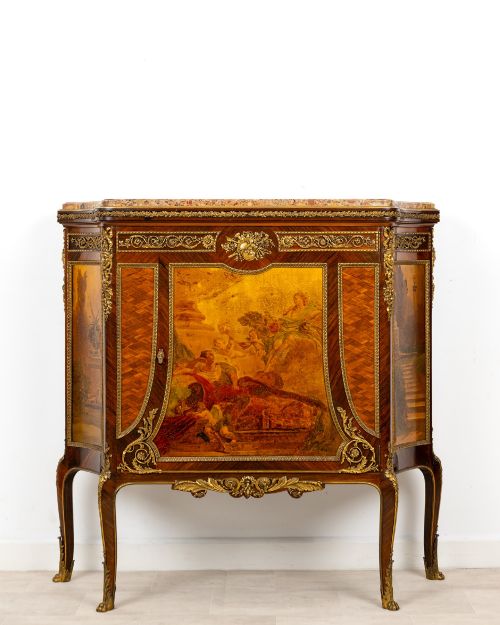
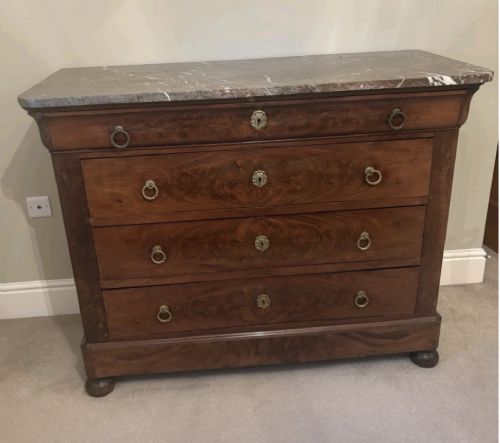
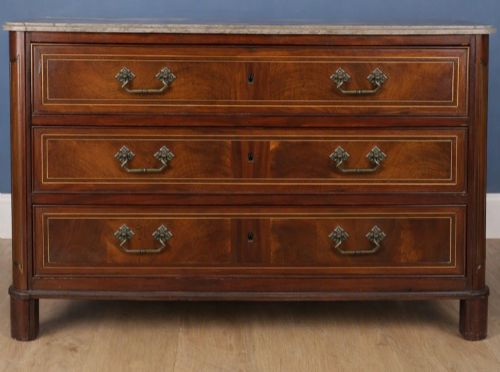
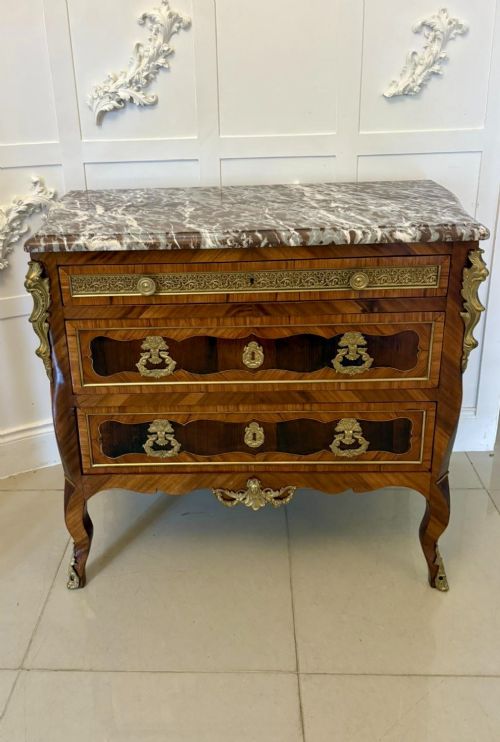
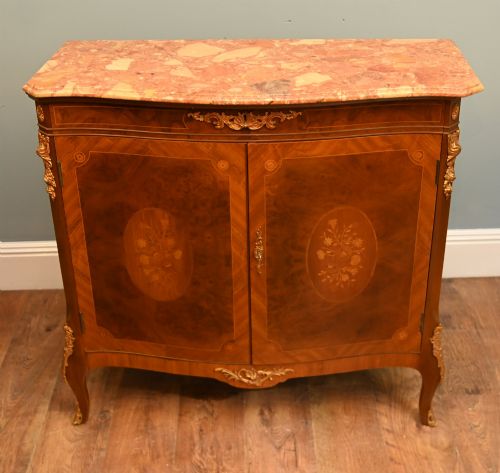
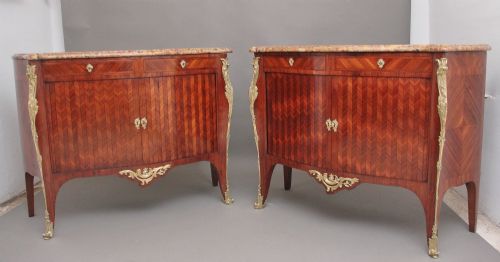
Carcasses employ native timbers like walnut, cherry, and oak, often faced with exotic veneers such as kingwood and mahogany. Cabinetmakers laid geometric parquetry and pictorial marquetry patterns across the drawer fronts and sides.
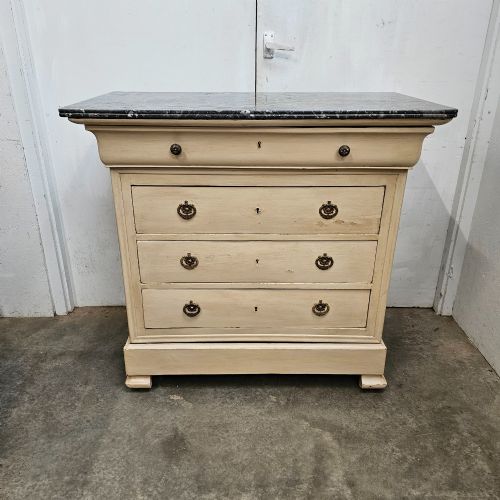
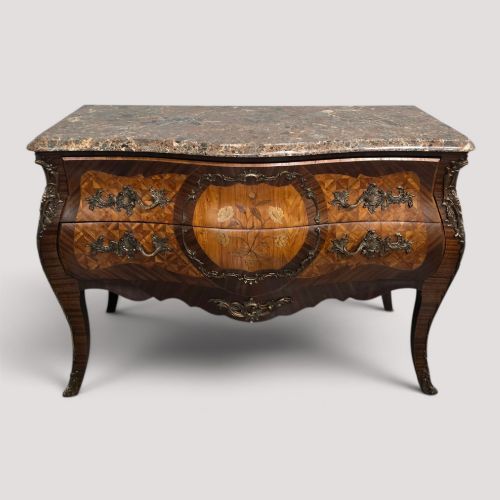
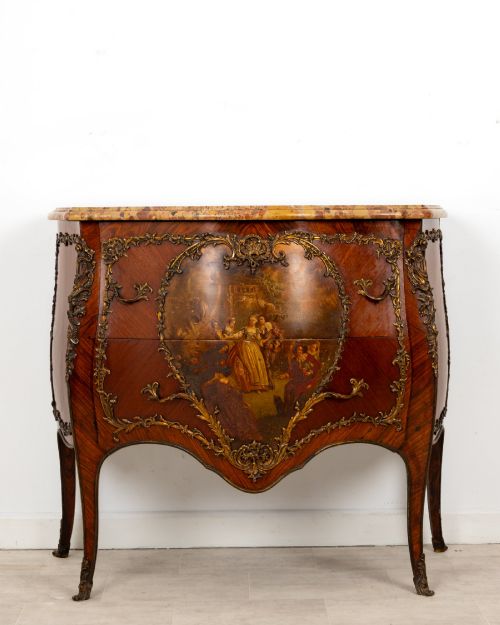
Marble slabs, ranging from grey to rouge varieties, sit directly upon the timber tops, shaped to follow the serpentine or straight contours of the cabinet. Cast or chased ormolu and gilt bronze mounts protect corners, frame panels, and form drawer pulls.
Cabinet forms include miniature chests, bedside tables, and serpentine commodes from the nineteenth century.
Evaluating workmanship
Quality rests in the precision of the marquetry and the weight of the bronze mounts. Finer cabinets display hand-chiselled ormolu details and tightly fitted marble tops that follow the carcass curves without gaps.
Secondary timbers inside the drawers and the crispness of the dovetail joints reveal the hand of the maker. Superior execution appears in the fluidity of the bombé shape and the integration of vernis martin panels.
Jacques Bircklé·Henry Dasson·E. Kahn
The Marbled Top Commode Glossary
- Commode
- A low chest of drawers or cabinet standing on legs, originating in France during the seventeenth century. It functions as a storage unit and a surface for display.
- Marquetry
- The art of applying small pieces of veneer to a structure to form decorative patterns or pictures. Craftsmen utilise contrasting timbers to create depth.
- Ormolu
- Gilded bronze mounts applied to furniture to protect corners and provide ornamentation. The technique involves treating bronze with an amalgam of gold.
- Bombé
- A swelling or bulging contour found on cabinet sides and fronts. This curved form requires advanced woodworking skill to veneer successfully.
- Parquetry
- Geometric wood mosaic work used for floors and furniture surfaces. Artisans arrange veneer squares and triangles to form repeating patterns.
Marbled Top Commode: Frequently Asked Questions
What rooms suit a marbled top commode?
These cabinets suit bedrooms, living rooms, and hallways where low storage and surface display are required.
The stone top offers a durable counter for lamps and objects while the drawers hold clothing or linens.
How do I care for the marble top?
Wipe the stone surface with a soft, damp cloth and avoid acidic liquids that can etch the polish.
Applying a neutral wax protects the marble from stains while preserving its natural lustre.
Are these commodes French in origin?
Most examples follow French design traditions and originate from workshops in Paris or provincial regions.
Styles span Louis XV, Louis XVI, and later nineteenth-century revivals of those periods.
How do I distinguish eighteenth-century pieces?
Eighteenth-century examples show hand-cut joinery, traditional timber framing, and period-specific mount casting.
Later nineteenth-century revival pieces often display heavier mechanical uniformity in their construction.