






Marbled Book Supports
Marbled book supports bring weight and distinct character to a shelf, keeping volumes upright through solid stone bases and metal figures.
Marbled Book Supports
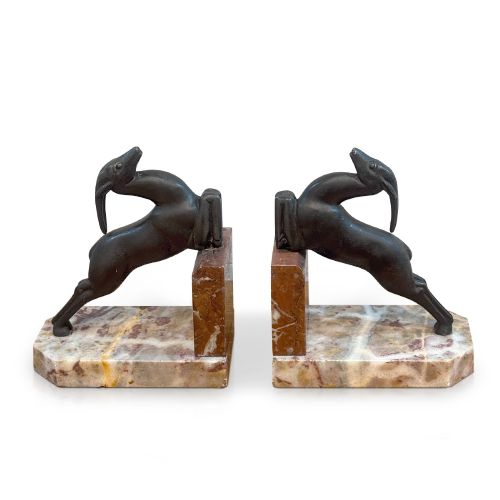
Marbled book supports combine heavy stone bases with sculptural figures to hold volumes upright on a shelf. When looking for marbled book supports, you will encounter matching pairs featuring animals, birds, and abstract forms. The examples appearing here date from the early decades of the twentieth century, specifically the Edwardian period and the Art Deco era.
Makers produced these functional items using natural stone alongside cast metals. The stone portions provide the necessary mass to secure heavy books, while the metal elements introduce varied textures and silhouettes. Most pieces originate from French workshops active during the interwar years.
How they were made
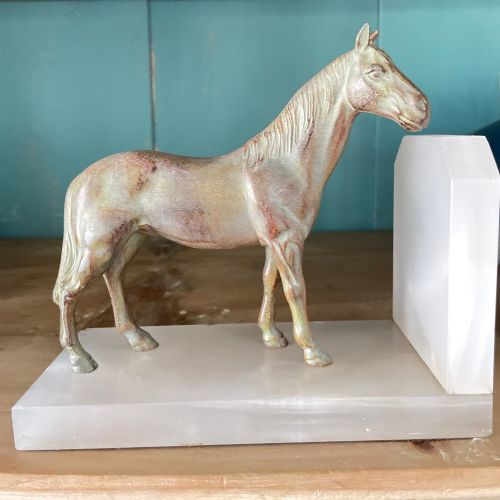
Craftsmen shaped dense stones such as marble and alabaster into geometric or stepped blocks to serve as weighted foundations. These stone bases were polished to a smooth finish to highlight natural veining and patterns within the material.
Foundries cast figures in spelter, bronze, brass, and patinated metal before mounting them securely onto the stone plinths. Some late examples incorporate chrome plating on the metal components to achieve a bright, reflective finish.
Marbled Book Supports Retail Price Guide 2026
Typical asking prices for marbled book supports among the pieces listed under this phrase on Sellingantiques today, from the lower quarter to the upper quarter. They describe what is for sale here now, not the wider market.
The listings show items from three distinct decades: nineteen-ten, nineteen-twenty, and nineteen-thirty.
What varies in quality
The distinction between standard examples and superior pieces lies in the choice of materials and the finesse of the metal casting. Heavy, richly veined marble or alabaster paired with finely detailed bronze figures represents the upper tier of production.
Lighter metal alloys like spelter often show simpler surface finishing and less intricate detailing in the animal subjects. The precision of the joinery between the metal sculpture and the stone base also determines the overall calibre of the piece.
The Marbled Book Supports Glossary
- Spelter
- A zinc-based alloy commonly used in the manufacture of decorative figures and sculptures. It is softer than bronze and typically takes a painted or patinated finish.
- Alabaster
- A fine-grained, translucent stone that is softer than marble. It was frequently carved into smooth geometric blocks for decorative objects.
- Patinated metal
- Metal treated with chemicals or heat to produce a coloured surface layer. This process protects the metal and adds depth to the appearance.
- Art Deco
- A design style spanning the 1920s and 1930s characterised by streamlined forms and geometric symmetry. It heavily influenced the manufacture of domestic ornaments.
Marbled Book Supports: Frequently Asked Questions
How heavy are these book supports?
These supports rely on dense stone bases made from marble or alabaster to provide substantial weight. This mass ensures they can hold heavy rows of books securely in place.
Smaller pairs require less shelf space while still offering enough heft to prevent volumes from sliding. The specific stone density dictates the exact weight of each individual pair.
Where were these pieces made?
Many of these decorative objects originate from French workshops operating during the Art Deco period. French makers excelled at combining cast metals with carved stone.
Other examples date from the Edwardian era in Britain and Europe. Workshops across these regions produced functional desk accessories for domestic libraries.
What animal figures appear on them?
Makers cast a variety of creatures in metal to adorn the stone bases. Common subjects include birds such as owls, alongside dogs like spaniels and larger wildlife.
Art Deco examples frequently feature exotic animals including elephants and sea lions. These figurative subjects reflected popular artistic themes of the interwar decades.
How do I care for marble and alabaster?
Stone bases require gentle cleaning with a soft, dry cloth to remove dust. Avoid using harsh chemical cleaners that can damage the polished surface.
Alabaster is particularly soft and sensitive to moisture. Keeping these pieces away from damp environments preserves the stone and the metal patination.