

Marble Topped Center Table
A marble topped centre table anchors a room with a cool, solid stone surface carried on timber or gilt frames.
Marble Topped Center Table
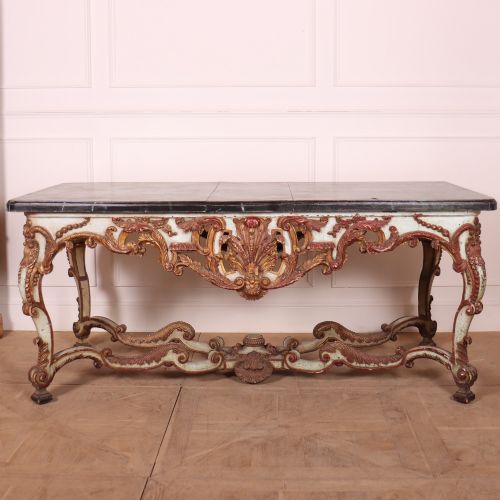
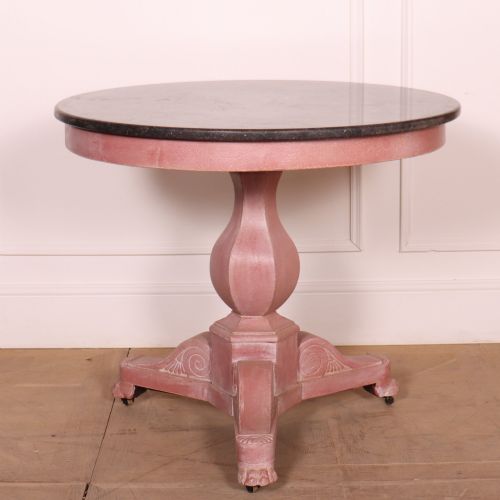
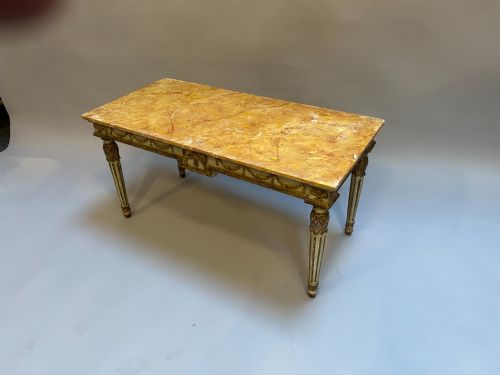
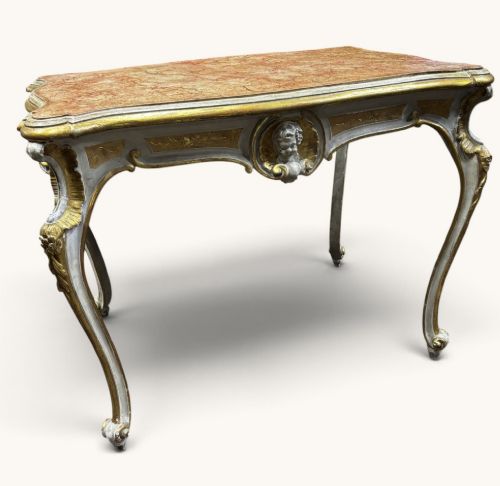
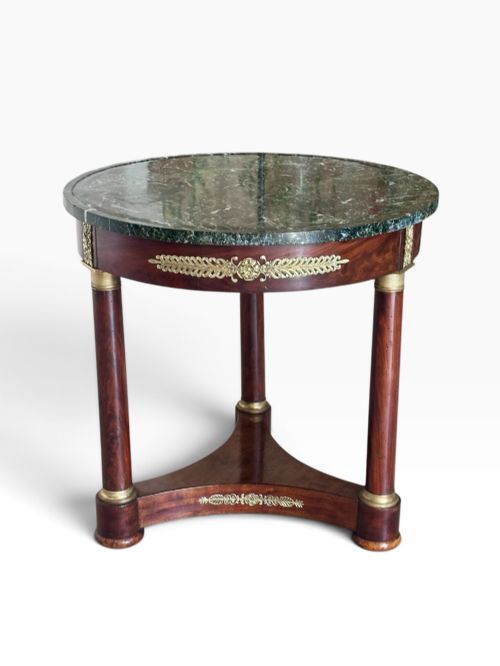
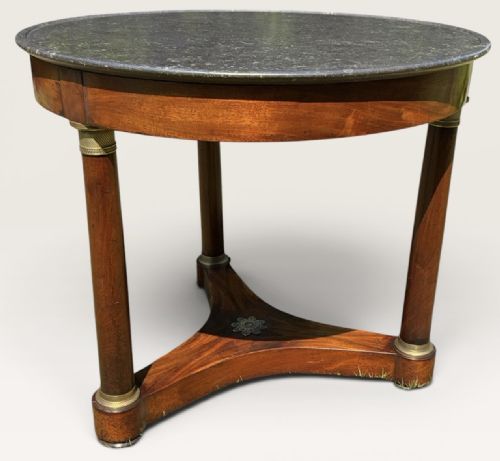
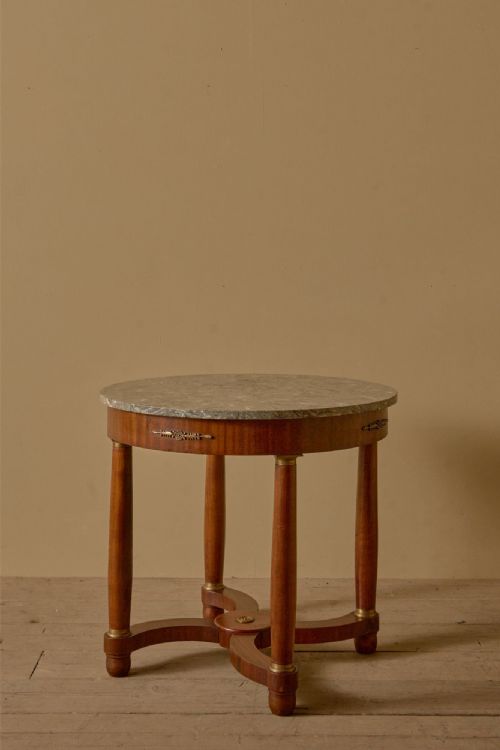
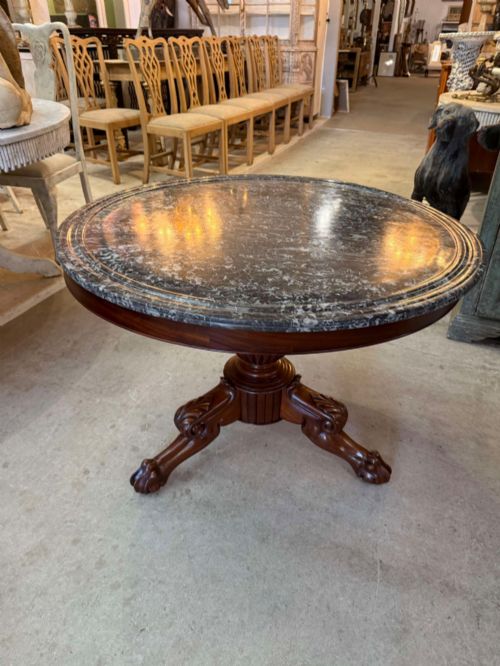
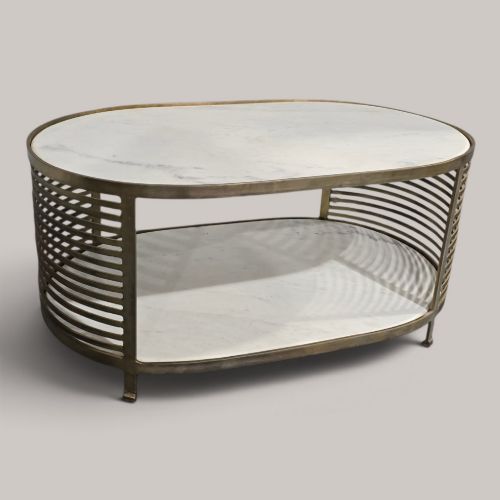
A marble topped centre table serves as a freestanding focal point designed to sit in the middle of a room rather than against a wall. The selections here encompass circular gueridons, occasional tables, and occasional coffee variants spanning the nineteenth and twentieth centuries.
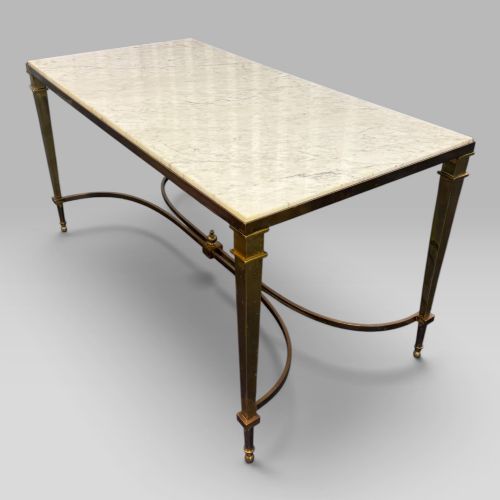
Makers across France, England, Italy, and China produced these pieces in styles ranging from French Empire and Regency to Victorian and Neoclassical. Buyers typically encounter circular pedestal forms alongside rectangular formats intended for central placement or serving as lamp tables.
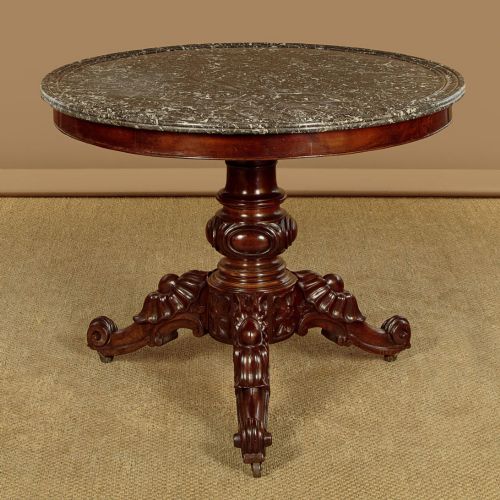
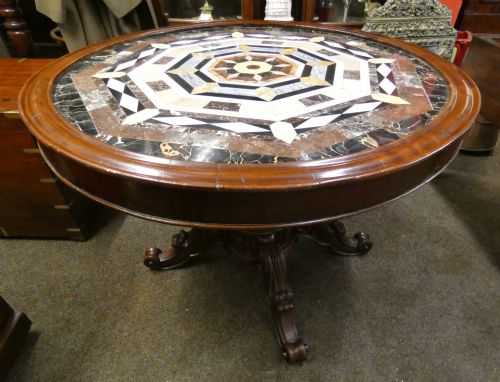
The primary function remains display and gathering, resting heavy stone slabs upon robust timber structures. Mahogany, walnut, and kingwood frequently form the chassis, while the stone inserts vary from simple white slabs to complex specimen marbles and rouge panels.
Materials and construction
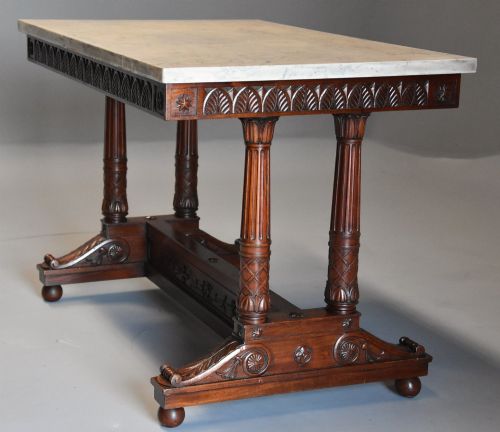
Cabinetmakers constructed the frames using native and exotic timbers including mahogany, walnut, oak, and kingwood, often shaping them into carved columns, tripod legs, or neoclassical dolphin supports. Giltwood and polychrome painted finishes appear alongside bleached walnut and plain wood surfaces.
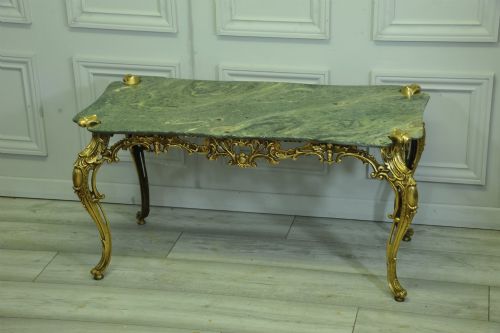
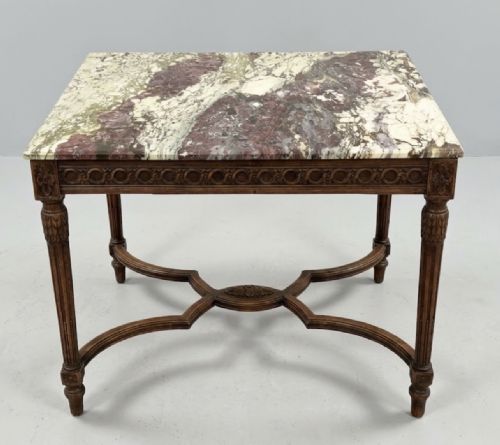
The heavy stone tops utilise a variety of marbles such as Breccia Medicea violetta, Siena, onyx, and green marble, cut flat and polished to a smooth finish. These slabs are typically set directly into a recessed timber frame or supported firmly upon a central pedestal base.
Marble Topped Center Table Retail Price Guide 2026
Typical asking prices for marble topped center table among the pieces listed under this phrase on Sellingantiques today, from the lower quarter to the upper quarter. They describe what is for sale here now, not the wider market.
One exceptional nineteenth-century design enlists carved wooden dolphins to hold up the heavy stone top.
Quality and execution
Distinction across the range lies in the depth of timber carving and the complexity of the stone insert. Specimen marble tops or detailed figuration in flame mahogany and kingwood elevate a piece above standard utility furniture.
Structural integrity depends on how securely the heavy stone top integrates with the wooden base. Superior examples demonstrate precise joinery in the pedestal or leg supports to bear the substantial weight of the marble without leaning.
Amleto Bertoni·JACOB
The Marble Topped Center Table Glossary
- Gueridon
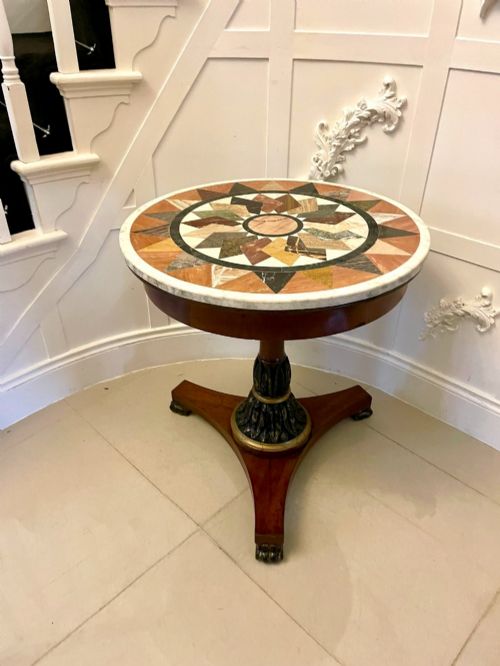
- A small French table, typically round and supported by a single central pedestal or three legs. They frequently feature marble tops and date from the nineteenth century.
- Specimen marble
- A stone top composed of numerous small pieces of different coloured marbles arranged in geometric or pictorial patterns. This technique requires meticulous stonemasonry.
- Breccia marble
- A type of marble composed of broken fragments of rock cemented together by a fine-grained matrix. It creates a variegated, multi-coloured surface pattern.
- Ormolu
- Gilt bronze mounts applied to furniture frames, common in French Empire and Louis styles. The term derives from the French for milled gold.
Marble Topped Center Table: Frequently Asked Questions
What is a gueridon table?
A gueridon is a traditional French round table type supported by a central pillar or a set of legs. These pieces were originally designed for holding candlesticks or serving drinks.
Today, they function as versatile centre tables or lamp tables in drawing rooms and halls, combining timber frames with fitted stone slabs.
How do I clean a marble top?
Marble requires gentle cleaning with a soft cloth and warm water to protect the polished surface. Avoid acidic cleaners or harsh chemicals that can etch the stone.
Routine dusting preserves the natural sheen of varieties like Siena, onyx, and green marble without wearing down the polish.
Are these tables freestanding?
These pieces are finished on all sides for placement in the middle of a room rather than pushed against a wall. Their circular or rectangular designs allow 360-degree access.
This makes them ideal for anchoring open spaces, libraries, and large reception halls where they can be viewed from every angle.
How do I date a marble top table?
Dating relies on combining the timber species, joinery methods, and stylistic cues of the wooden base. Styles like French Empire, Regency, and Victorian provide distinct structural markers.
Examining the underside of the tabletop and the construction of the pedestal reveals the manufacturing period, whether early nineteenth century or later.