
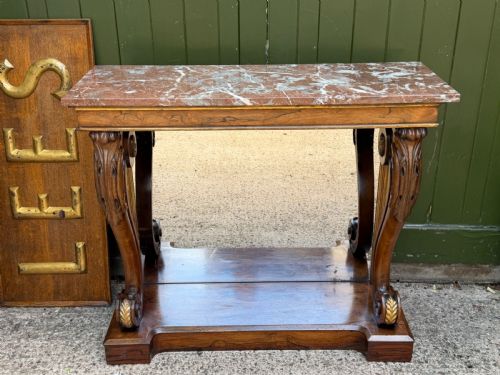


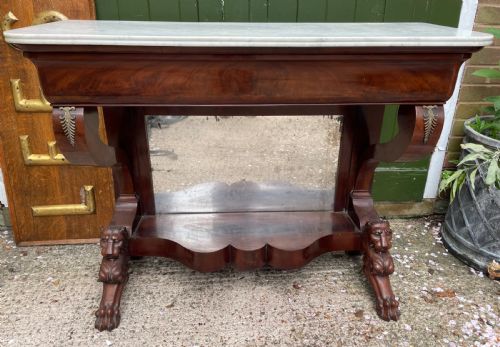
Marble Top Console Mirror
A marble top console mirror anchors a hallway or drawing room with reflective depth and a cool stone surface.
Marble Top Console Mirror
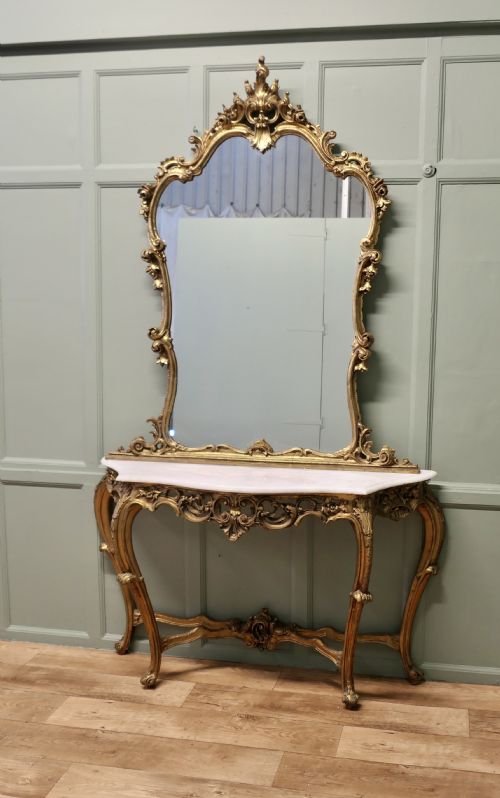
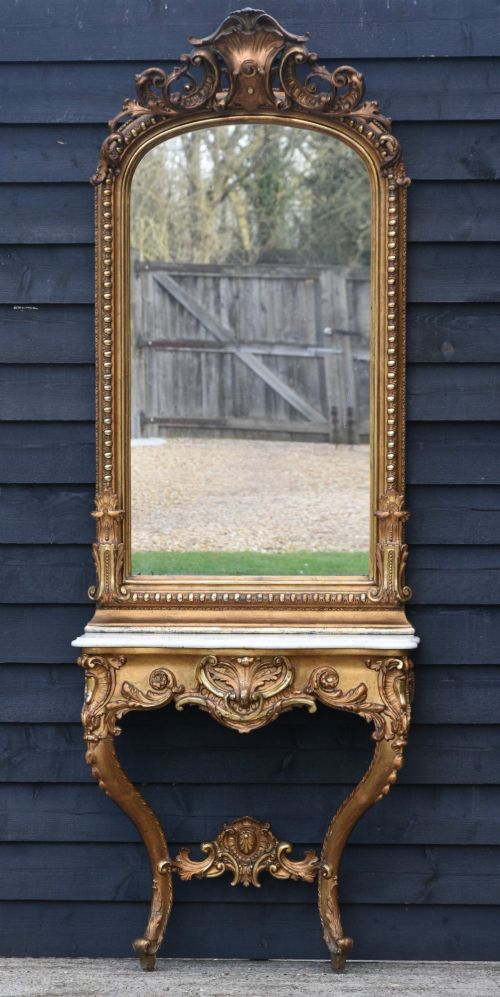
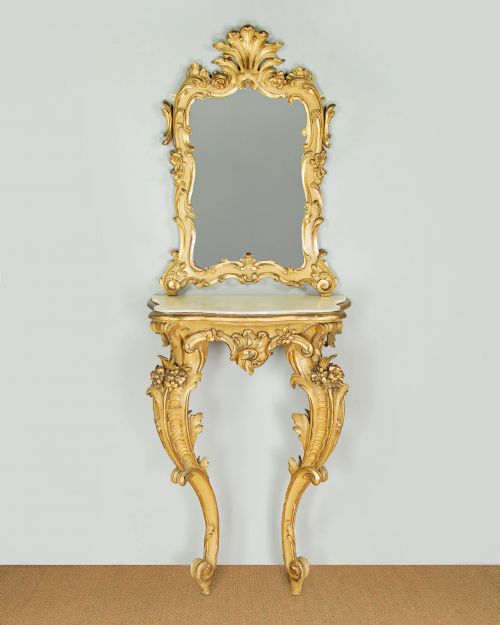
A marble top console mirror combines a heavy stone-topped table with a matching wall-mounted or attached looking glass designed for grand interiors. These furnishings emerge frequently from nineteenth-century French and English workshops, spanning Regency, Victorian, and Edwardian periods.
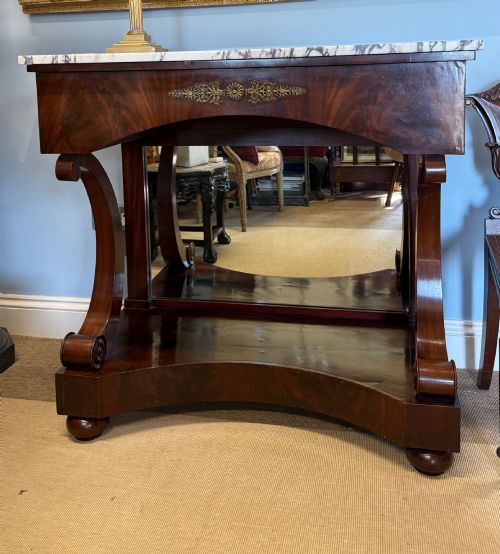
The table portion typically stands on slender legs or a heavy plinth, supporting a polished slab of marble. Above it sits the mirror, often framed in giltwood or carved mahogany to echo the base.
Buyers encounter matched console and mirror sets alongside combined mirror-back tables where the glass rises directly from the rear of the marble slab. Forms range from compact boudoir pieces to towering architectural mirrors designed for high ceilings.
How they were made
Cabinetmakers constructed the main framework from dense timbers like mahogany, walnut, and rosewood, frequently applying gilded gesso or ormolu mounts for decorative impact. The tables required sturdy internal framing to support thick slabs of carrara and figured marble without sagging.
Mirrors utilised silvered glass set within carved wooden frames, sometimes incorporating trumeau panels painted with classical scenes. Metal components like brass and wrought iron provided structural reinforcement and surface ornamentation.
Materials commonly recorded across the inventory include carrara marble, giltwood, ormolu mounts, and silvered mirror glass.
What varies in quality
The refinement of the carving distinguishes standard production from exceptional examples, particularly in the crispness of gilded gesso foliage and the depth of wood relief. The quality of the marble slab, judged by the subtlety of its natural veining and the precision of its edge moulding, plays a major role in the overall stature of the piece.
Proportion and originality determine true distinction, where matching console and mirror sets retain their original gilding and stone surfaces without later alterations or mismatched pairings.
The Marble Top Console Mirror Glossary
- Console table
- A table designed to stand against a wall, traditionally supported by two front legs or brackets fixed to the wall itself.
- Pier mirror
- A tall looking glass specifically proportioned to hang on the wall space between two windows.
- Trumeau
- A decorative wall panel featuring an upper section filled with a painting or mirror and a lower wooden panel.
- Giltwood
- Timber coated with a thin layer of gold leaf over a prepared gesso ground, creating a brilliant metallic finish.
- Ormolu
- Cast bronze mounted and finished with a mercury gilding process to produce a rich gold-coloured decorative element.
Marble Top Console Mirror: Frequently Asked Questions
How do I style a marble top console mirror?
Position the piece in an entrance hall or living room where it can reflect natural light and create a sense of expanded space. Keep the marble surface largely clear, perhaps styling it with a single bronze ornament or a small floral arrangement.
The vertical height of the mirror draws the eye upward, making it an ideal focal point above a low base. Ensure the console is securely fixed to the wall if the mirror frame is exceptionally heavy.
Were the table and mirror always made together?
Many surviving examples were conceived as unified suites by the same cabinetmaker, sharing identical carving motifs and wood patination. Other configurations bring together a period console table and a complementary pier mirror from the same decade.
Examining the underlying construction, wood species, and wear patterns helps determine whether the pairing is original. Matched sets command particular attention from collectors seeking decorative harmony.
How do I care for the marble top?
Wipe the stone surface regularly with a soft, damp cloth and neutral soap to prevent staining from acidic liquids. Avoid harsh chemical cleaners or abrasive scouring pads that can dull the polished finish over time.
Applying a specialist stone wax periodically helps protect the marble from moisture rings and daily wear. Treat the antique stone with care, as natural fissures can be vulnerable to sharp impacts.
What periods do these pieces date from?
The majority of listings date from the nineteenth century, encompassing Regency, Victorian, and Louis Philippe aesthetic movements. Pieces from the Edwardian era and the early twentieth century also appear, often showing French influence.
Stylistic markers such as rococo scrolls, empire proportions, and neoclassical pilasters help narrow down the exact decade of manufacture. Each period brings distinct interpretations of timber selection and decorative carving.