
Mahogany Wooden Chairs
Mahogany wooden chairs bring enduring timber grain and traditional form to dining rooms and studies, shaped across Georgian, Regency and Victorian periods.
Mahogany Wooden Chairs
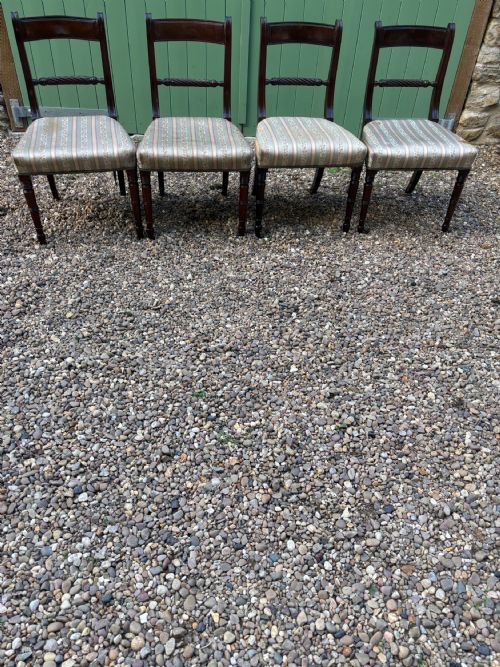
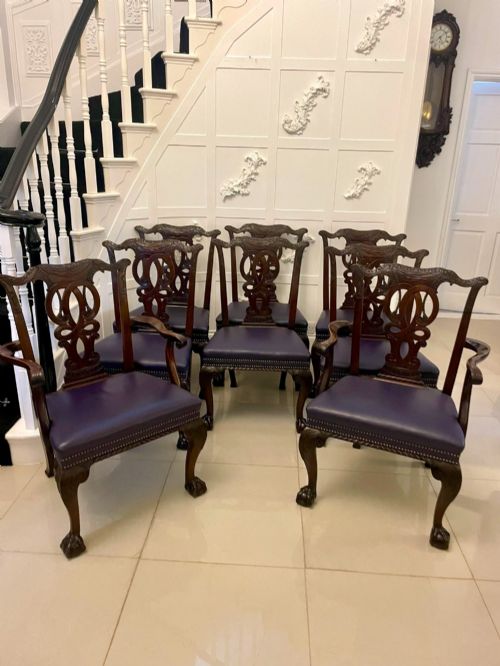
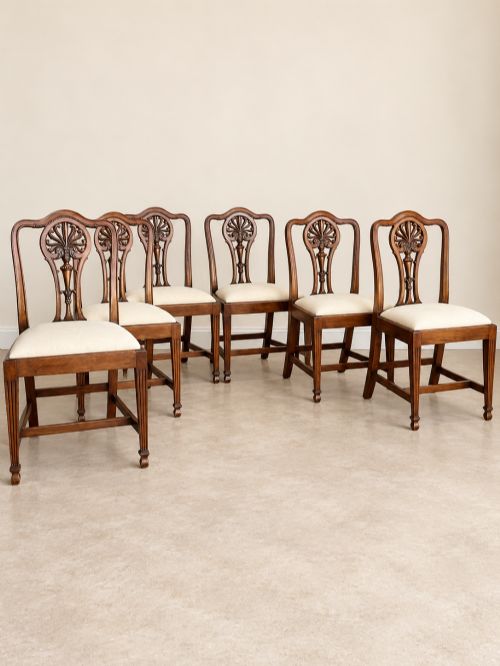
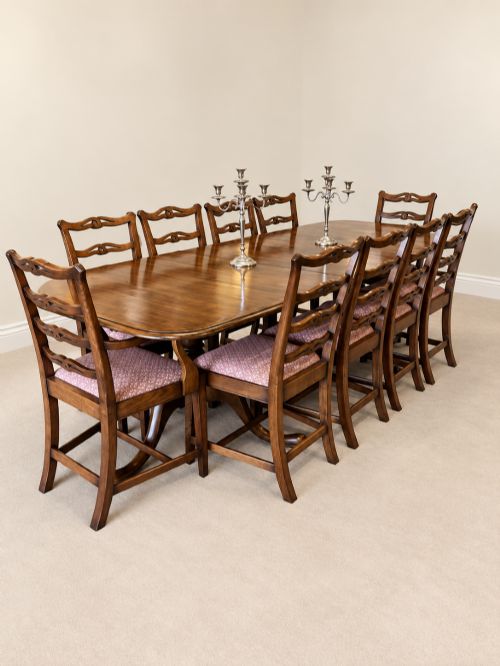
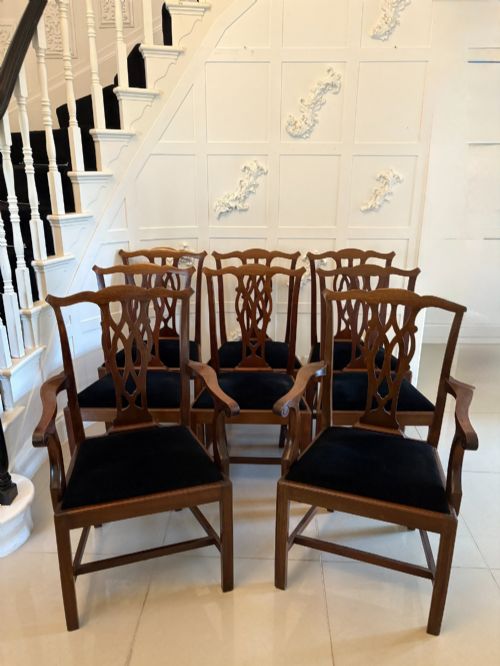
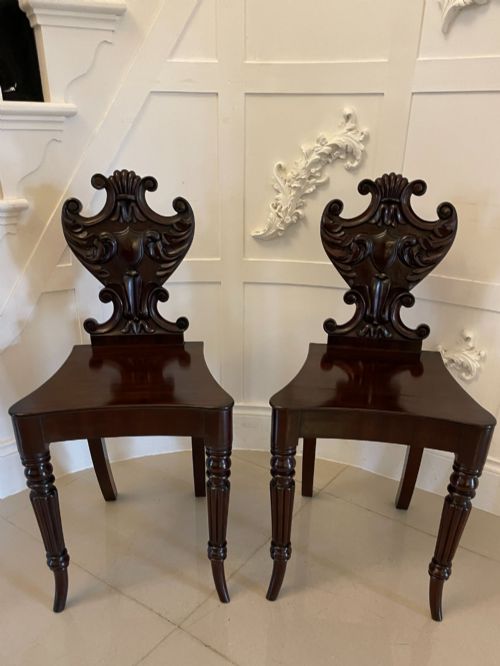
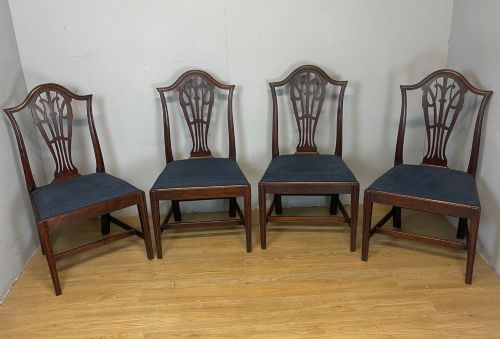
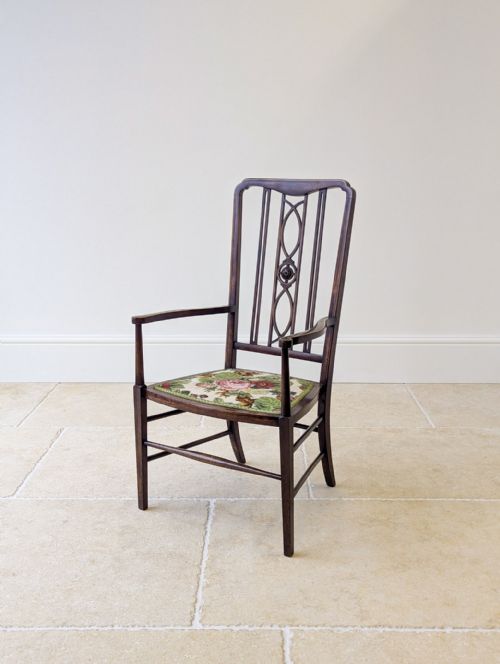
When buyers search for mahogany wooden chairs, they encounter seating spanning the eighteenth, nineteenth and early twentieth centuries, constructed primarily as dining sets, armchairs, hall chairs and desk chairs. The forms range from plain single side chairs to large suites of matching carvers and dining chairs.
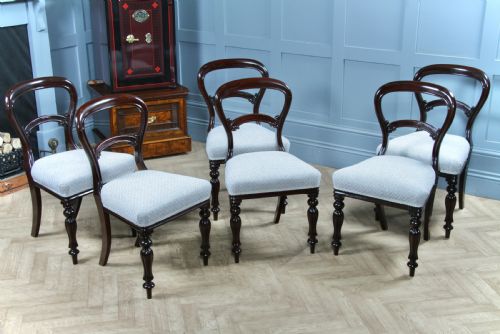
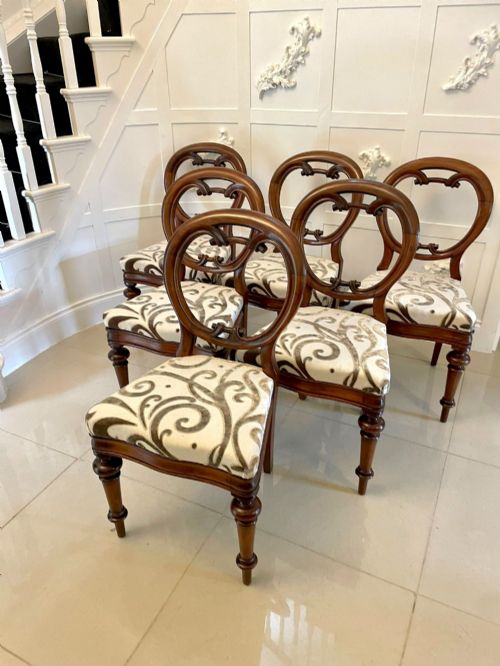
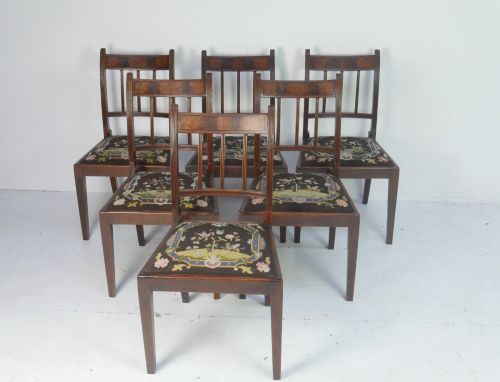
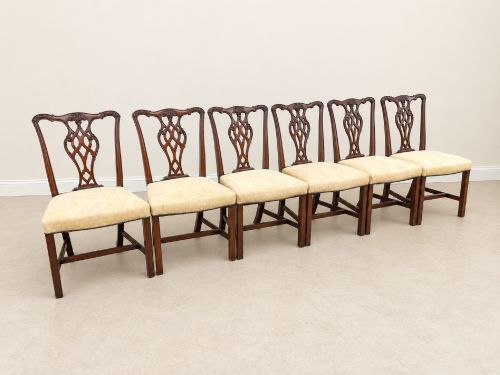
The most common examples on this page belong to the Victorian and Georgian periods, manifesting as balloon back, bar back, ladderback or Chippendale style seats. These pieces originate from workshops operating through the 18th Century, 19th Century and Edwardian eras, utilising durable tropical hardwoods.
Buyers select these items to furnish domestic interiors with historical seating solutions that combine structural timber frames with upholstered pads in leather, velvet or fabric.
Distinctions in craftsmanship and design
Quality rests in the crispness of carved details upon the mahogany wood, the integrity of the frame joints and the matching consistency across larger dining sets.
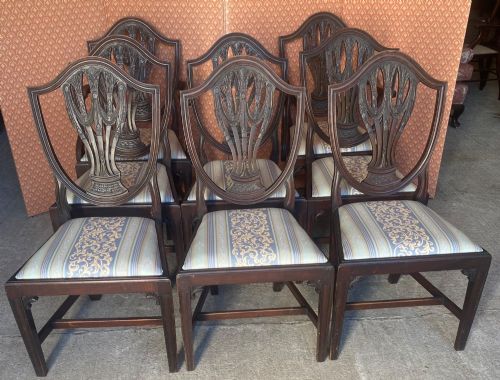
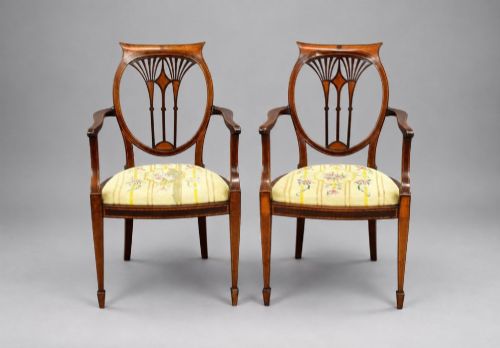
Superior examples display balanced proportions, refined timber figure and well-executed stylistic references to Chippendale, Hepplewhite or Regency designs, whereas lesser items show plain or worn construction with heavier, less graceful proportions.
Listings feature mahogany wooden chairs spanning 18th Century, 19th Century and Edwardian periods, utilising fabric, leather, brass and velvet materials.
Howard and Sons·Maple and Co
The Mahogany Wooden Chairs Glossary
- Carver
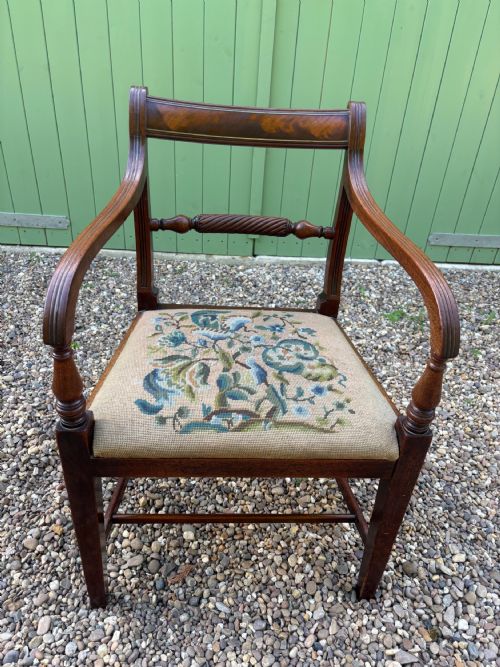
- An armchair, frequently designed en suite with a set of single dining chairs for the head of the table.
- Bar back
- A chair featuring a horizontal carved top rail resembling the shape of a bar across the uprights.
- Balloon back
- A rounded, oval-shaped backrest popular during the Victorian period.
- Hall chair
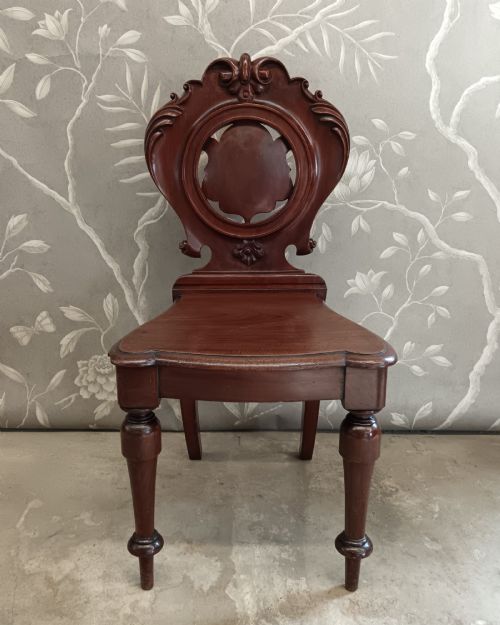
- A rigid wooden seat, often un-upholstered, intended for placement in an entrance hallway.
- Library steps
- A metamorphic piece of furniture that folds out from a chair into a set of steps.
Mahogany Wooden Chairs: Frequently Asked Questions
How do I date mahogany wooden chairs?
Dating relies on examining the timber characteristics, construction methods, and stylistic cues such as cabriole legs, balloon backs or brass inlay. Comparing the joinery against known period examples helps narrow down the decade of manufacture.
Changes in upholstery techniques and hardware also offer clues to whether a chair originates from the Georgian, Regency or Victorian era.
Are these chairs suitable for daily dining?
Many antique mahogany chairs remain robust enough for regular dining use, provided the frames are structurally sound and the joints are stable. Selecting sets designated as dining chairs ensures appropriate seat heights for standard tables.
Buyers often pair antique carvers at the table ends with side chairs along the flanks for a functional dining arrangement.
What is the difference between a carver and a side chair?
A carver is an armchair designed to accompany a set of dining chairs, traditionally placed at the head of the table. Side chairs are narrower, armless seats intended to run along the sides.
Sets frequently combine a majority of side chairs with a pair of matching carvers.
How should I maintain mahogany furniture?
Maintenance involves keeping the timber away from direct heat sources and strong sunlight to prevent the mahogany surface from drying out or fading. Regular dusting with a soft cloth preserves the polish.
Applying appropriate wax occasionally helps nourish the wood grain without building up heavy residues.