




Mahogany Wood Poles
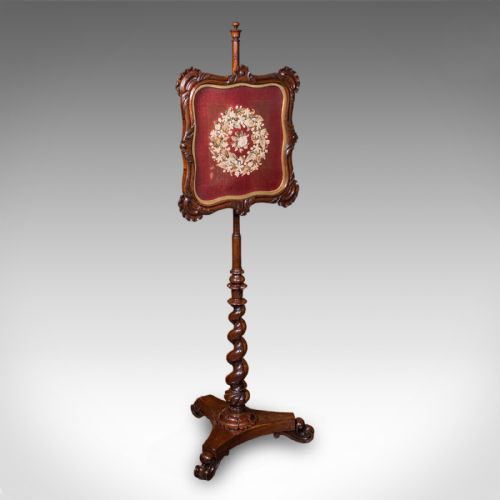
These mahogany wood poles mostly arrive as adjustable fire screens designed to deflect the fierce heat of an open hearth.
Mahogany Wood Poles
Mahogany wood poles primarily serve as the vertical standards for adjustable firescreens, holding framed panels of needlepoint or tapestry at a comfortable height. These pieces span the Georgian, Regency, William IV, and Victorian eras, alongside related items like curtain poles and library steps.
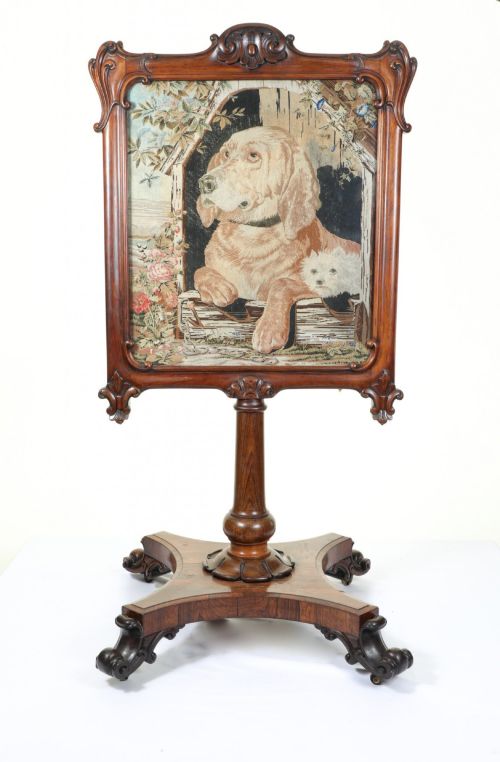
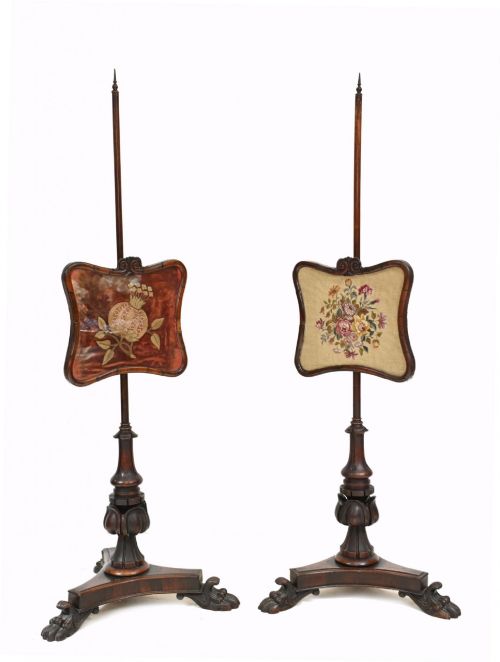
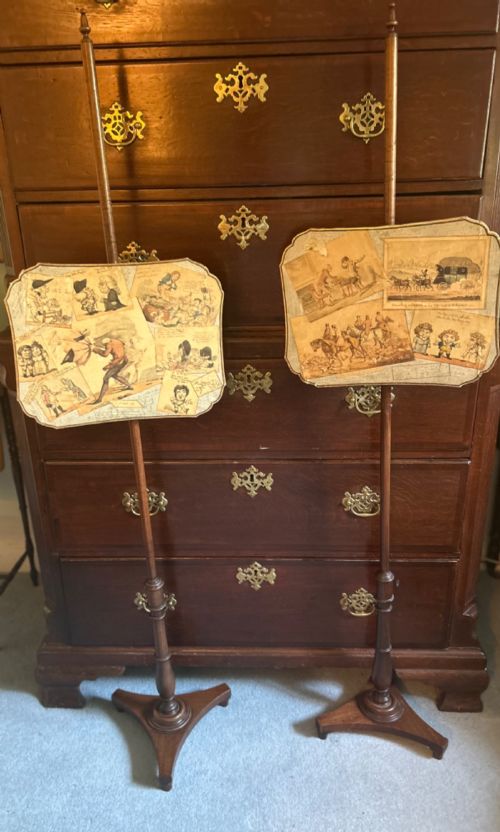
The most common form on this page is the adjustable fireside pole screen, featuring a turned or carved central pillar supported by a tripod or platform base. Makers utilised the dense grain of mahogany to create slender, stable columns that could endure the heat of the fire without warping.
Materials and construction
Cabinetmakers turned solid mahogany on a lathe to form the central shafts, often incorporating decorative reeding, fluting, or intricate carving towards the base. Heavier timbers such as goncalo alves or rosewood occasionally appear alongside mahogany to provide contrast and stability.
The vertical poles support sliding mechanisms or brass thumbscrews that allow the framed screens, often set with silk, glass, or needlepoint tapestry, to move up and down. Subsidiary materials like brass and leather appear on related items such as curtain poles and library steps.
Mahogany Wood Poles Retail Price Guide 2026
Typical asking prices for mahogany wood poles among the pieces listed under this phrase on Sellingantiques today, from the lower quarter to the upper quarter. They describe what is for sale here now, not the wider market.
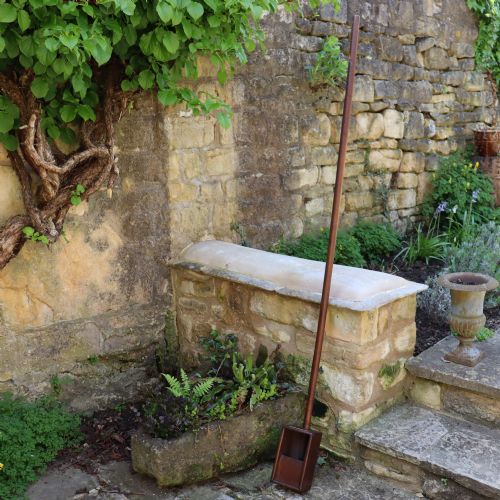
Object forms include firescreens, curtain poles, library steps, church collection boxes, and converted lamp tables.
Assessing quality and craftsmanship
Superior examples distinguish themselves through the crispness of the turned woodwork and the stability of the weighted tripod base supporting the tall shaft. Subtleties in the carving of the column and the quality of the brass adjustment fittings separate workshop production from simpler output.
The intricacy of the mounted panels, whether needlepoint, tapestry, or satirical prints, heavily influences the character of each piece. Well-preserved textiles and tightly fitted sliding mechanisms indicate careful handling and superior initial construction.
The Mahogany Wood Poles Glossary
- Pole screen
- A freestanding fireside accessory consisting of a vertical wooden shaft on a base, holding an adjustable sliding panel to block radiant heat. The panel could be turned to shield the face from the open fire.
- Needlepoint
- Hand-stitched canvas work used extensively for the decorative panels mounted within firescreen frames. These detailed textile works often depict floral or pictorial scenes.
- Tripod base
- A three-legged support structure commonly turned from mahogany to provide stability for tall vertical poles. This design prevents the slender shaft from tipping easily on uneven floors.
- Regency
- A style period spanning the early nineteenth century, characterised by classical restraint and influences from antiquity. Pieces from this era often feature refined mahogany turning and brass mounts.
Mahogany Wood Poles: Frequently Asked Questions
How do I adjust the screen height?
Most examples utilise a sliding collar or a brass thumbscrew mechanism located at the back of the framed panel. Loosening this fixture allows the panel to glide smoothly up and down the vertical mahogany pole.
Care should be taken when adjusting older brass fittings to avoid straining the wood or damaging the internal friction mechanism.
How do I date a mahogany pole screen?
Dating relies heavily on the style of the base and the turning of the central pillar, moving from Georgian restraint through Regency elegance to heavier Victorian forms. Details such as carved tripod legs, paw feet, or reeding provide clear stylistic clues.
Associated materials and the style of any mounted needlepoint or prints also help narrow down the period of manufacture.
Can these be used as standard lamps?
Some historical pieces feature conversions where the original screen mechanism has been adapted to hold electrical fittings for lighting. This practice repurposes the slender mahogany pole into a floor-standing lamp base while retaining the antique turned woodwork.