

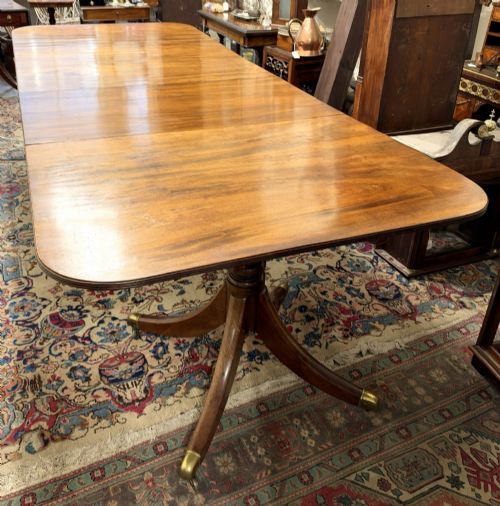
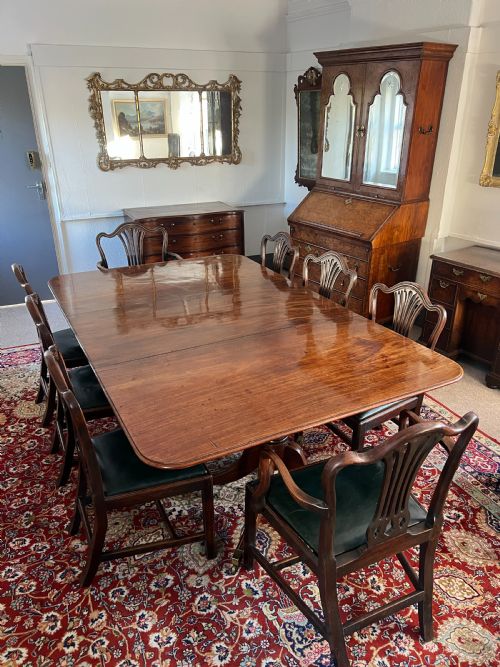
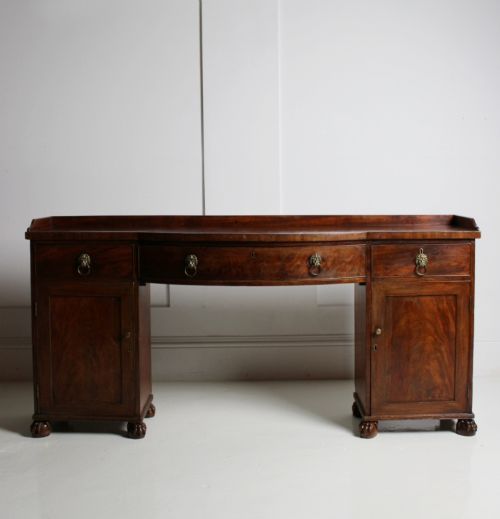
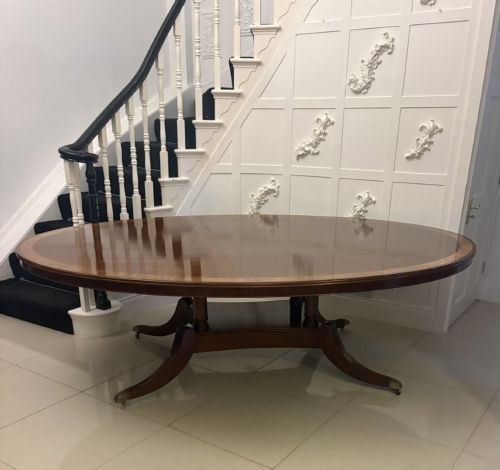
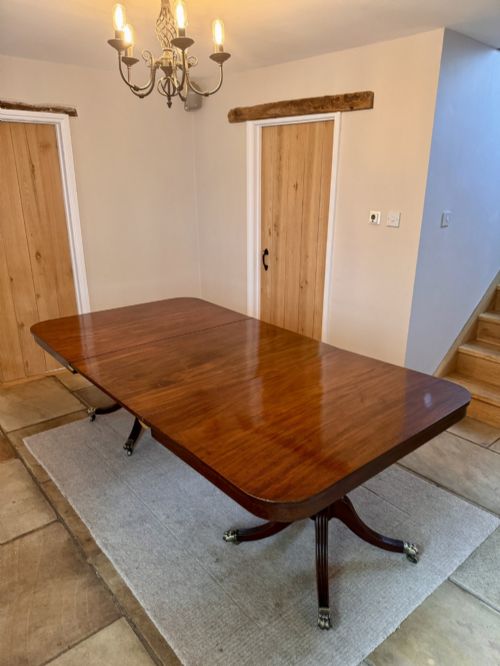
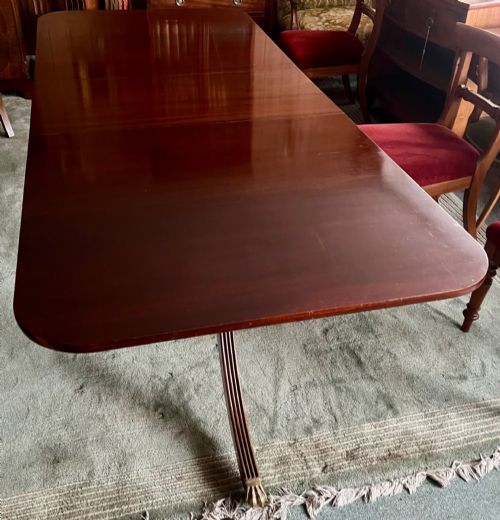
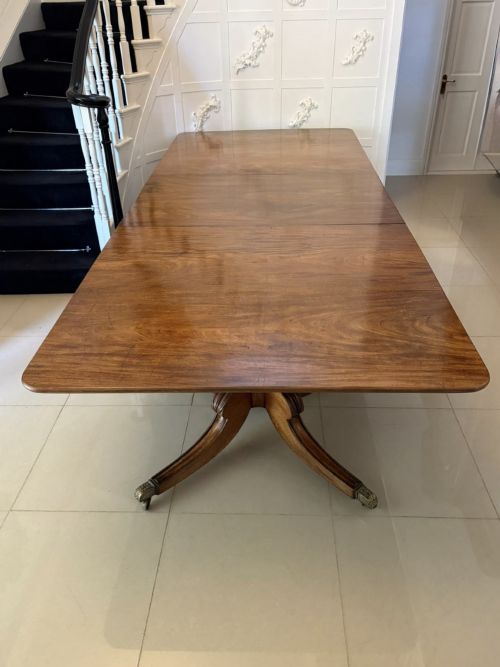
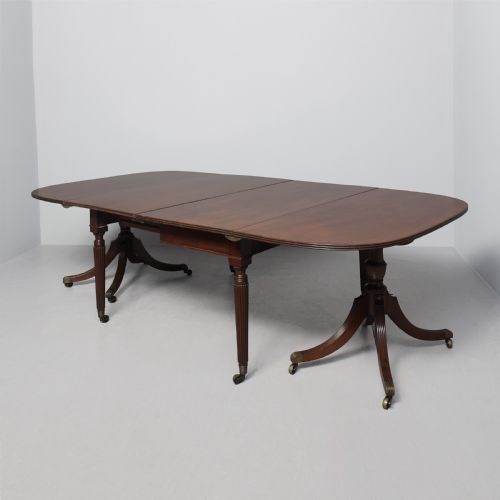
Mahogany Twin Pedestal Dining Table
When you search for a mahogany twin pedestal dining table, you are looking at a classic British dining format designed to seat diners comfortably while offering flexible room arrangements.
Mahogany Twin Pedestal Dining Table
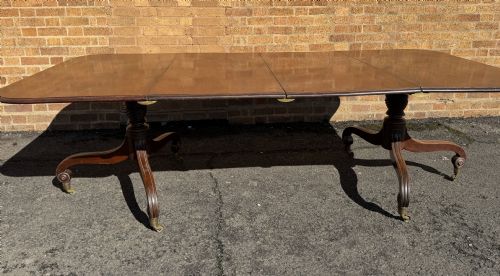
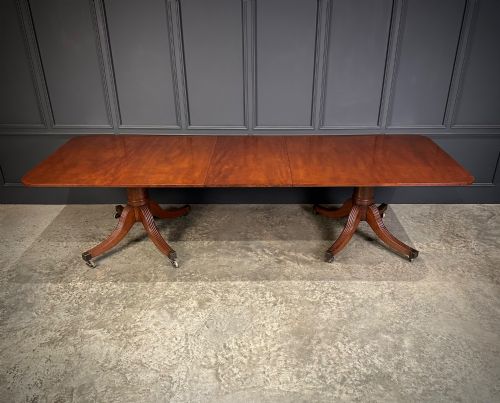
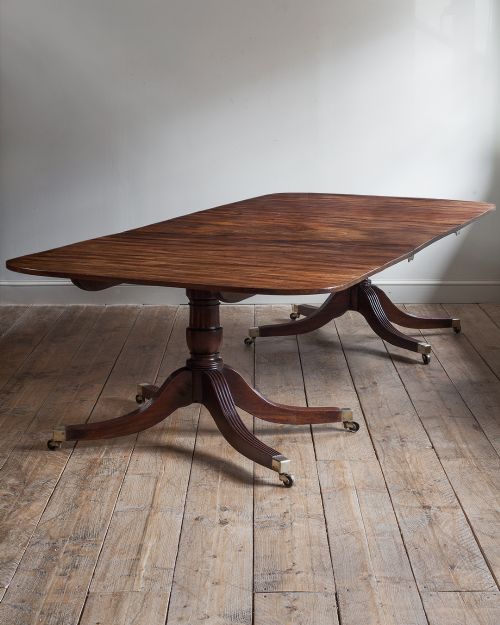
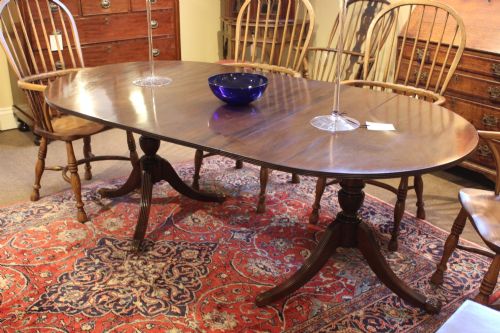
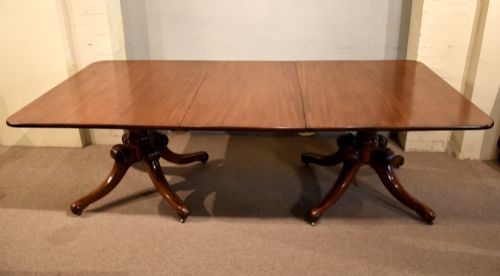
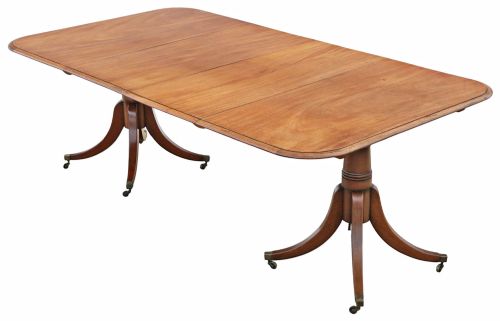
A mahogany twin pedestal dining table consists of two separate pillar bases supporting a long timber top, often accompanied by removable leaves to adjust the overall length. The form emerged strongly during the late eighteenth and early nineteenth centuries to replace rigid single-frame dining formats.
Period examples span the Georgian, Regency, and William IV eras, constructed with solid timbers and central column supports fitted to splayed legs. Later revivals from the Edwardian period and the early twentieth century replicate these traditional configurations with similar proportion and scale.
The most common variants on this page include two-pillar formats with brass castors and drop-in leaves, alongside larger extending versions capable of seating multiple guests for formal dinners.
What Varies in Quality
Quality rests upon the selection of the timber grain and the precision of the joinery connecting the pillars to the central leaves. Superior examples display rich natural colour and careful matching of figured veneers across all added sections.
The weight and finish of the cast brass fittings, alongside the stability of the pedestal base under extended loads, distinguish high-workshop output from standard commercial production.
Mahogany Twin Pedestal Dining Table Retail Price Guide 2026
Typical asking prices for mahogany twin pedestal dining table among the pieces listed under this phrase on Sellingantiques today, from the lower quarter to the upper quarter. They describe what is for sale here now, not the wider market.
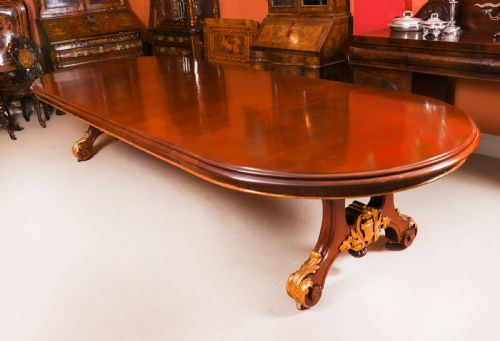
Materials recorded across the inventory include brass castors, satinwood inlay, leather surfaces, and gold leaf detailing alongside flame mahogany.
Gillows of Lancaster·Wylie and Lochead
The Mahogany Twin Pedestal Dining Table Glossary
- Twin pedestal
- A table construction utilising two distinct central pillar supports rather than four corner legs. This layout provides extra legroom for seated guests.
- D end
- A table end shaped in a semi-circular profile resembling the letter D. These sections detach or fold when leaves are removed.
- Crossbanding
- A border of veneer laid perpendicular to the main grain of the table top. It creates a contrasting visual frame around the perimeter.
- Castor
- A small wheel fitted beneath the pedestal feet for mobility. Brass versions are typical on higher quality period pieces.
- Flame mahogany
- A veneer cut from the fork of the tree where branches meet the trunk. It produces a distinctive flickering flame pattern across the polished surface.
Mahogany Twin Pedestal Dining Table: Frequently Asked Questions
How do I add leaves to the table?
Most extending versions separate at the centre to allow drop-in timber leaves to rest between the two pedestal bases. Brass latches or wooden alignment pins underneath secure the sections together.
Ensure the table is fully supported across the pedestals before locking any extra leaves into place to maintain a level surface.
Can these tables fit in modern dining rooms?
The twin pedestal format offers great flexibility because the central pillars leave space for chairs along the sides without corner legs obstructing the seating. Removing extra leaves shrinks the footprint for daily use.
Measure the room dimensions carefully to allow clearance for pulling chairs out comfortably while the table is fully extended.
How do I tell a Regency table from a revival?
Period pieces from the Regency era exhibit authentic timber ageing, hand-cut joinery, and period-specific brass hardware beneath the frame. Revival pieces made in the twentieth century often use standardised modern screws and machine-sawn components.
Examine the underside of the top and the internal blocks of the pillars to inspect the construction methods used by the cabinet maker.
What is Spanish mahogany?
Spanish mahogany refers to dense timbers imported from the Caribbean during the Georgian and Regency periods, prized for its deep colour and heavy weight. It resists warping and takes a fine polished finish.
Tables built from this material display a rich patina developed through generations of domestic use.