



Mahogany Travel Desk
Mahogany travel desk pieces are portable writing containers built for movement, offering a solid timber exterior paired with secure fitted interiors for the road.
Mahogany Travel Desk
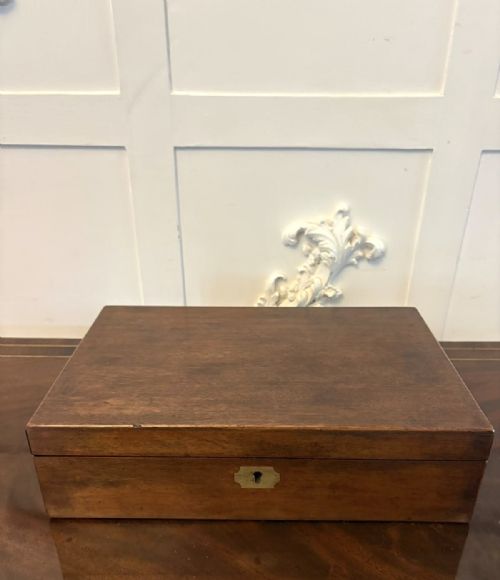
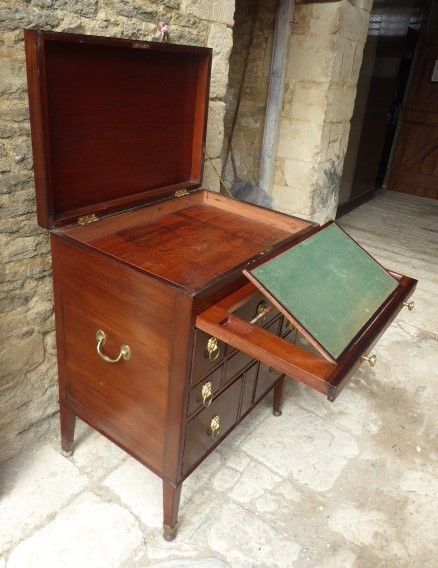
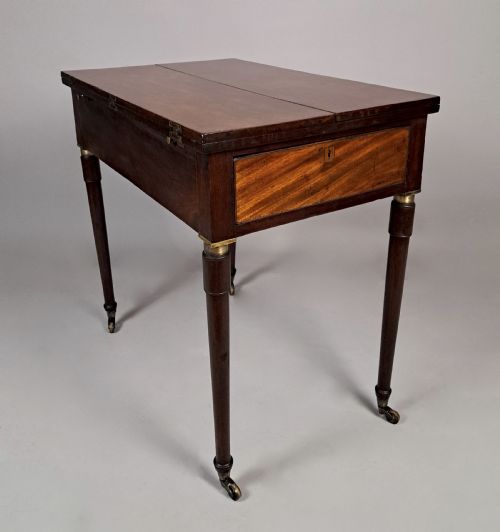
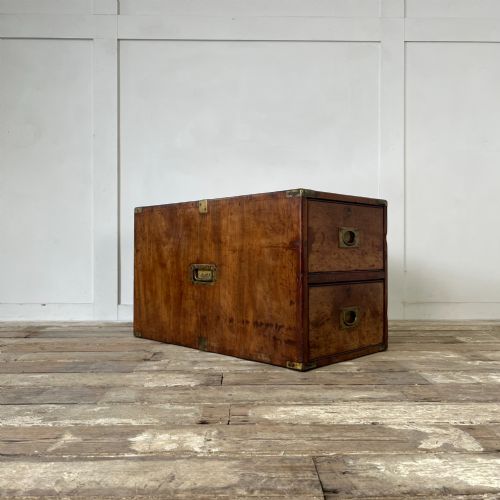
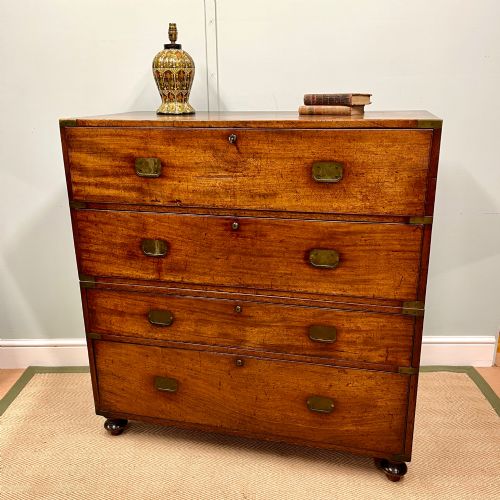
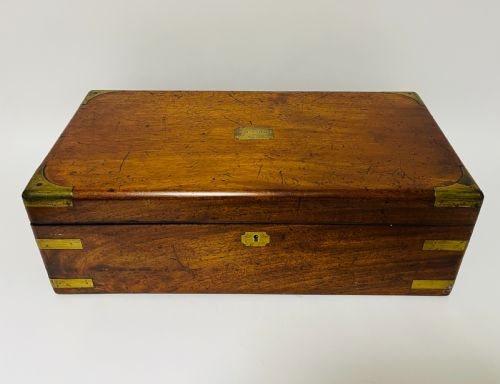
When you search for a mahogany travel desk, you look at portable writing equipment designed for movement across the eighteenth and nineteenth centuries. These items range from compact writing slopes and boxes placed on tables to large military campaign chests and secretaire furniture.
The versions most frequently met on this page include nineteenth-century writing slopes and Victorian campaign chests alongside George III examples. They serve as functional writing spaces that fold or stack for transit while maintaining domestic utility.
Makers adapted these forms to suit officers and travellers, incorporating folding mechanisms and secret compartments into compact footprints. Each piece reflects the structural demands of travel during the Georgian, Victorian, and Edwardian eras.
Materials and construction methods
Workshops constructed these pieces primarily in mahogany, occasionally utilising burr walnut for decorative surfaces. Timber selection prioritized stability during transit across varying climates.
Brass corners, strapping, and flush handles reinforce the edges and drawers of campaign items to withstand rough handling. Internal fittings incorporate baize or leather writing surfaces alongside glass inkwells and fitted compartments.
Mahogany Travel Desk Retail Price Guide 2026
Typical asking prices for mahogany travel desk among the pieces listed under this phrase on Sellingantiques today, from the lower quarter to the upper quarter. They describe what is for sale here now, not the wider market.
Materials appearing across these items include solid mahogany, burr walnut, brass, leather, baize, and glass.
Distinctions in quality and execution
Quality rests in the precision of the brass hardware integration and the tightness of the joinery. Superior examples maintain structural rigidity when expanded while keeping flush profiles during closure.
The sophistication of the internal mechanism dictates the grade of the piece, particularly where secret compartments and folding actions operate smoothly. Finer items display careful timber selection across secondary woods and consistent patination on the primary mahogany surfaces.
Gillows·Mappin & Webb
The Mahogany Travel Desk Glossary
- Campaign chest
- A modular chest of drawers built in two or more sections with recessed brass handles and corner brackets to facilitate transport.
- Writing slope
- A portable box with an angled lid that opens to reveal a slanted surface for writing and storage for stationery.
- Secretaire
- A desk form featuring a drop-front drawer that conceals smaller drawers and pigeonholes for correspondence.
- Flush handle
- A hardware fitting sunk level into the timber surface so it does not catch on transit covers or adjacent items.
Mahogany Travel Desk: Frequently Asked Questions
What is a mahogany travel desk?
It is a portable wooden box or modular chest designed for writing and storing papers while on the move. These items range from small tabletop boxes to large sectional chests.
They combine timber construction with protective metal hardware to survive long journeys. Interiors typically feature dedicated spaces for ink, pens, and correspondence.
How were these desks used?
Owners used them as portable offices during military deployment, travel, or administrative duties away from home. The folding lids and slopes provided an immediate writing surface anywhere.
Secret compartments offered secure storage for valuables, currency, and private letters. Once packed down, the brass hardware protected the edges from impact.
How do I identify the period?
Georgian examples often display restrained lines and specific cabinetmaker touches from the eighteenth century. Victorian pieces frequently incorporate heavier brass mounts and military styling.
Edwardian items continue the tradition with folding travelling desks adapted for later tastes. Construction methods and timber characteristics help confirm the era of manufacture.
How do I care for the wood?
Keep mahogany pieces away from direct heat sources and extreme humidity fluctuations to prevent timber movement. Regular dusting with a dry cloth maintains the finish.
Avoid excessive polishing and protect leather or baize writing surfaces from moisture. Gentle handling of brass fittings preserves the surrounding wood.