



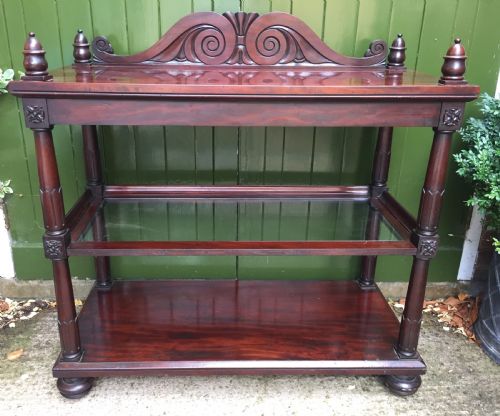


Mahogany Tier Sideboard
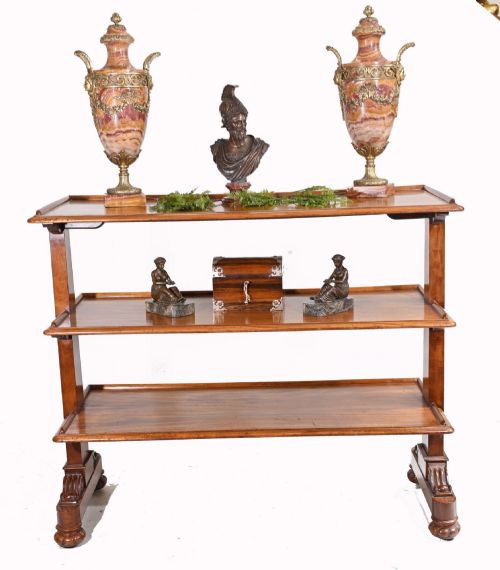
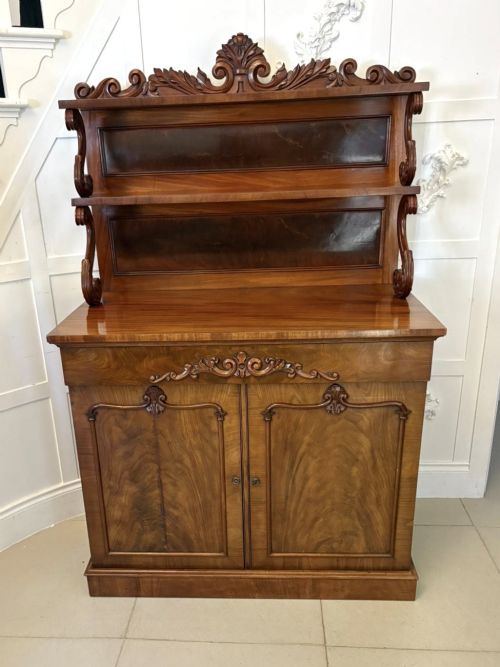
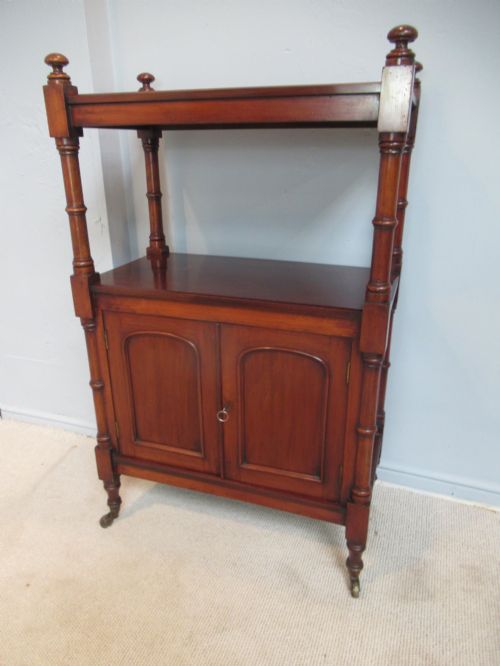
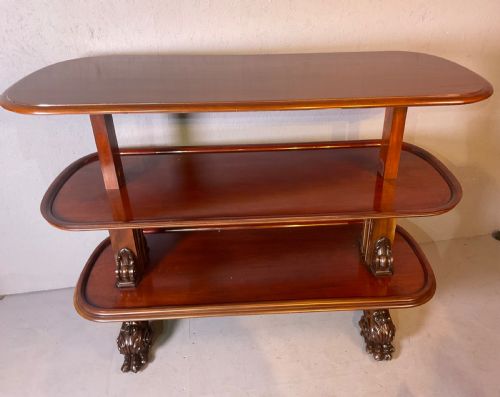
A mahogany tier sideboard brings tiered utility and rich timber grain to a room, offering the serving space and display depth that serious collectors prize.
Mahogany Tier Sideboard
A mahogany tier sideboard encompasses multi-shelf serving furniture designed for dining and entertaining across the nineteenth century, including dumb waiters, chiffoniers, and buffet servers.
Most examples found here date from the Victorian and Regency periods, spanning decades from eighteen-fifty to eighteen-eighty in various forms of tiered side cabinetry.
Buyers encounter everything from compact small chiffoniers to large country house morning room cabinets, alongside serving tables equipped with multiple shelves and original castors.
How they were made
Cabinet makers utilised solid mahogany and flame mahogany veneer over structural timber, frequently enhancing the design with brass fittings, ceramic elements, and glass.
Fine workshops applied parcel gilt and ebonised wood details to create contrast on the tiered shelves, serving tables, and drop-down cupboards.
Mahogany Tier Sideboard Retail Price Guide 2026
Typical asking prices for mahogany tier sideboard among the pieces listed under this phrase on Sellingantiques today, from the lower quarter to the upper quarter. They describe what is for sale here now, not the wider market.
Some nineteenth-century dumb waiters feature telescopic columns, proving that Victorian dining rooms appreciated adjustable architecture just as much as modern offices do.
What varies in quality
The degree of figuration in the mahogany veneer and the crispness of carved elements separate standard utility pieces from exceptional items.
Original moving parts, such as telescopic mechanisms on dumb waiters and intact castors, elevate the functional distinction of a sideboard.
Gillows of Lancaster and London·Maple & Co·James Shoolbred & Co
The Mahogany Tier Sideboard Glossary
- Dumb waiter
- A tiered serving stand or table designed to hold dishes or drinks without requiring servants. These multi-shelf pieces appear frequently in nineteenth-century dining rooms.
- Chiffonier
- A low sideboard or cabinet featuring shelves above, often used for storage and display. Regency and Victorian examples frequently include a two-tier shelf back.
- Etagere
- A piece of furniture consisting of a set of open shelves for displaying small objects. These tiered stands match the form of multi-shelf buffets.
- Flame mahogany veneer
- A distinctive wood grain figure cut from the fork of the mahogany tree, creating a flame-like pattern. Makers applied this veneer to highlight the primary surfaces of fine cabinets.
Mahogany Tier Sideboard: Frequently Asked Questions
What is a mahogany tier sideboard used for?
These pieces served primarily in dining rooms and morning rooms for holding serving dishes, glassware, and drinks during meals. The multiple tiers allowed hosts to keep supplementary items close at hand.
Today, they function effectively as display surfaces or serving stations in contemporary dining spaces, utilising their original shelf depth to hold bottles and decorative objects.
How do I tell a Regency piece from a Victorian one?
Regency examples generally date from the early nineteenth century and exhibit classical restraint with clean lines, Cuban mahogany timber, and restrained brass mounts. Victorian pieces, spanning from eighteen-fifty onwards, often display heavier proportions and more elaborate carved decoration.
Examining the underlying construction and the style of the turnings helps confirm whether a piece belongs to the Regency era or the later Victorian decades.
Are metamorphic sideboards difficult to operate?
Metamorphic dumb waiters and adjustable buffets rely on nineteenth-century mechanical columns or ratchet systems to alter shelf heights. When well maintained, these moving parts adjust smoothly.
Users should operate the lifting mechanisms with care to preserve the original brass fittings and wooden joints that allow the tiers to move.
Can I use a buffet server as a bar cabinet?
Nineteenth-century sideboards and dry bar cabinets were built to house bottles, decanters, and glassware behind cupboards and upon open tiers. Their generous shelf space suits modern drinks storage.
Placing glassware on the upper tiers and bottles within the lower cabinets mirrors their historical function as serving and refreshment stations.