



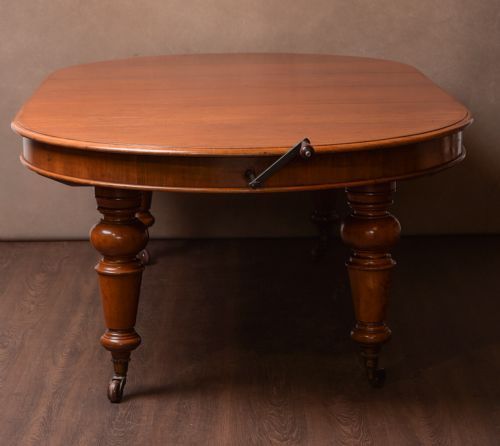

Mahogany Telescopic Table
A mahogany telescopic table offers mechanical ingenuity and rich timber, providing a functional centrepiece for large gatherings or refined daily tasks.
Mahogany Telescopic Table
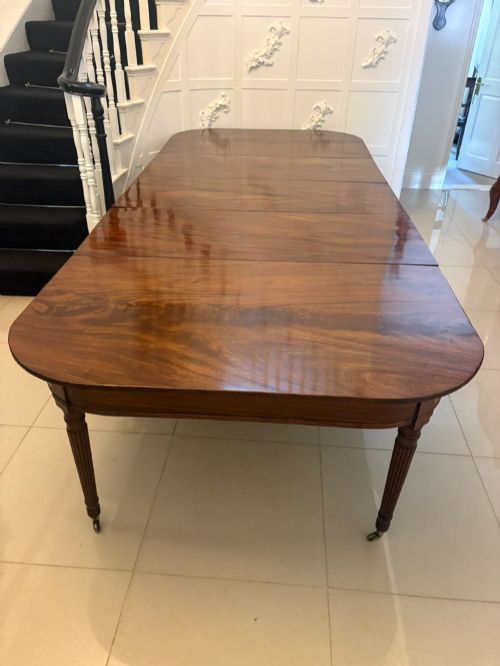
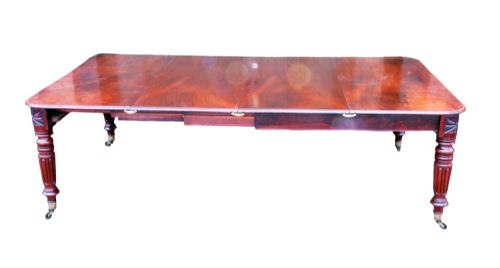
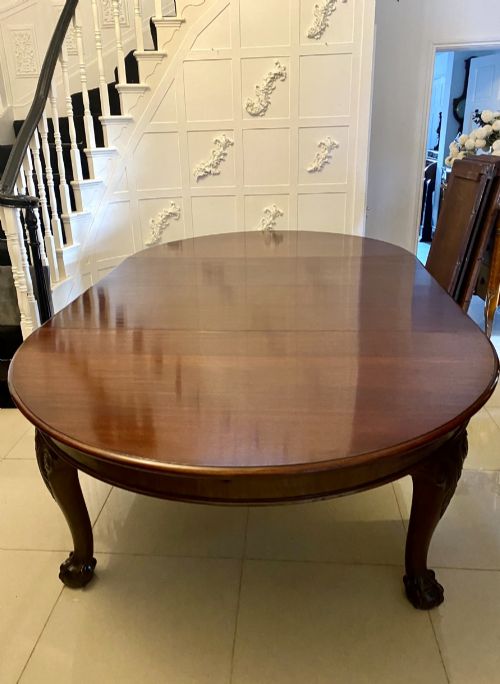
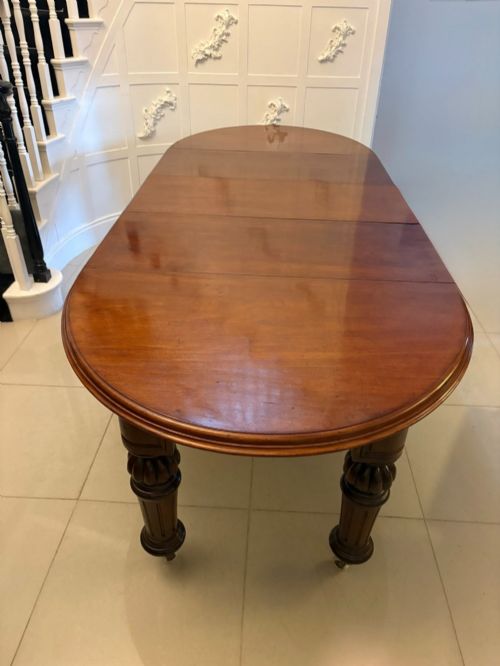
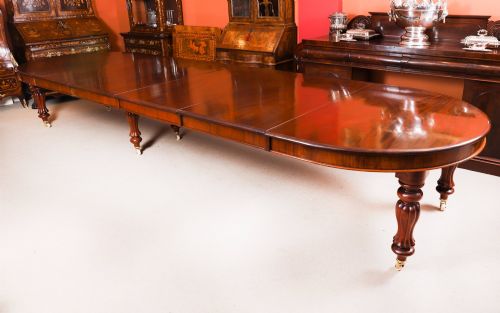
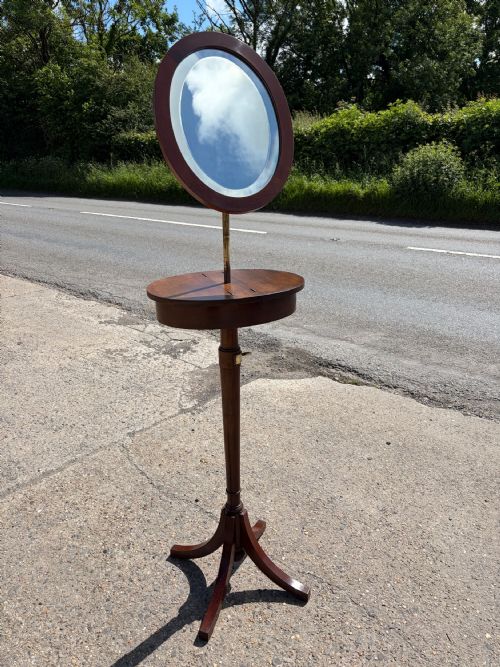
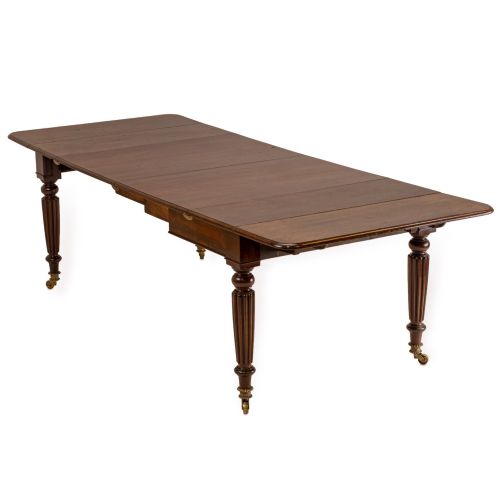
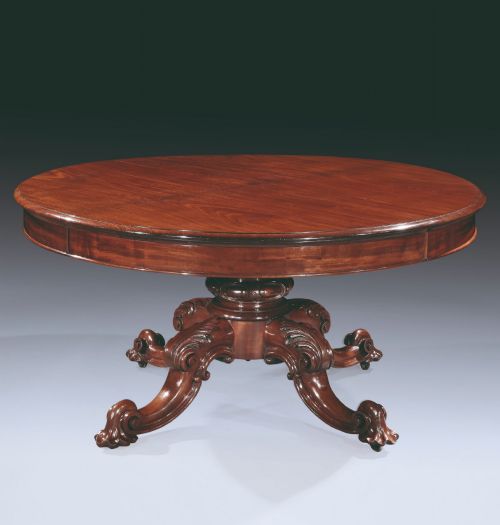
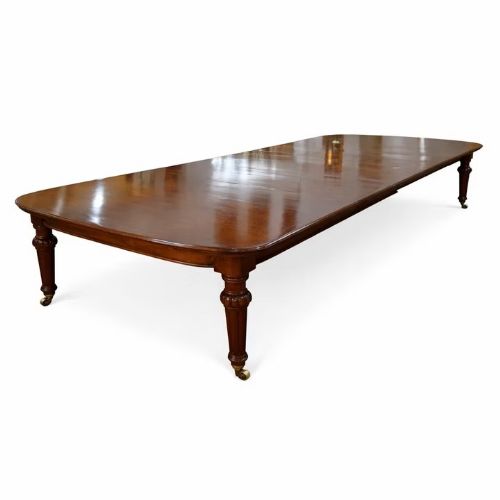
A mahogany telescopic table is primarily represented here by large dining tables engineered to extend for seating groups ranging from eight to over fifteen people. These pieces span periods from the Georgian era through the Regency, William IV, and Victorian epochs, alongside smaller forms such as telescopic shaving mirrors and reading tables.
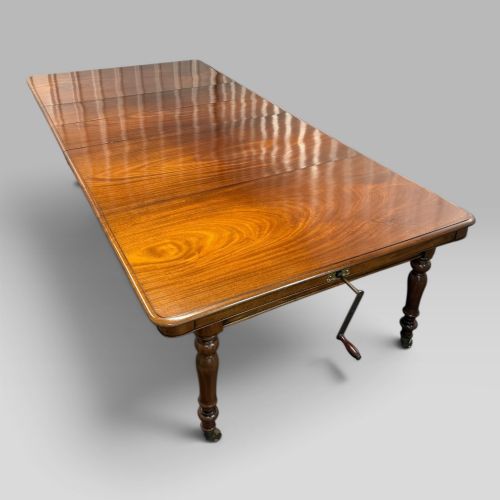
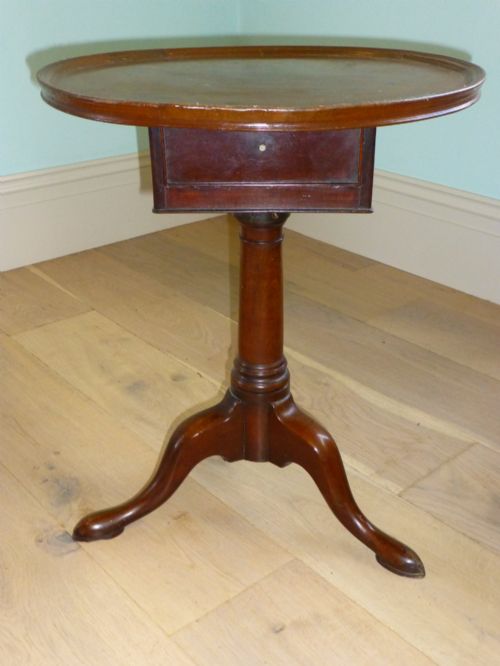
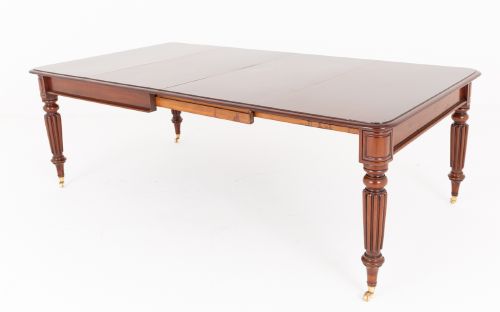
The dining pieces often incorporate winding mechanisms, imperial actions, or multiple original leaves to adjust length. Smaller examples utilise a tripod base or pillar structure to allow height or angle adjustment for domestic use.
How they were made
Cabinet makers utilised dense figured mahogany for the primary surfaces and leaves, often pairing the timber with sturdy internal frames. Brass components, including castors and winding sockets, facilitate the mechanical expansion of the extending dining tables.
Metal and steel mechanisms are concealed within the framework to operate the wind-out systems smoothly. Additional materials such as ceramic, glass, and mirror glass appear in specific variants like shaving mirrors and associated furnishings.
Mahogany Telescopic Table Retail Price Guide 2026
Typical asking prices for mahogany telescopic table among the pieces listed under this phrase on Sellingantiques today, from the lower quarter to the upper quarter. They describe what is for sale here now, not the wider market.
The listings feature mahogany extending dining tables alongside smaller telescopic forms including shaving mirrors, reading tables, and wine tables.
What varies in quality
The distinction between standard domestic pieces and exhibition quality work lies in the selection of figured mahogany timber and the sophistication of the internal extending mechanism. Workshops known for high-status production achieve superior precision in the fit of multiple leaves and stability at extended lengths.
Proportion and detailing dictate distinction, where finer pieces display restrained classical styling, well-turned legs, and integrated brass hardware that operates without binding.
Gillows·F & J Smith
The Mahogany Telescopic Table Glossary
- Wind-out mechanism
- A mechanical system using a handle and internal screws to expand the frame of an extending dining table.
- Imperial action
- A specific extending table mechanism designed to support very long dining surfaces and multiple leaves.
- Figured mahogany
- Timber selected for distinctive grain patterns such as flame or curl, highly prized for table tops.
- Tripod base
- A three-legged support structure commonly found on smaller telescopic items like shaving mirrors and candlestands.
Mahogany Telescopic Table: Frequently Asked Questions
How do wind-out tables operate?
Wind-out tables use an internal metal screw mechanism operated by a removable handle. Turning the handle drives the sections apart to accommodate additional leaves.
This concealed engineering allows large dining tables to expand smoothly while maintaining structural rigidity across the extended span.
What periods do these tables come from?
The pieces span the Georgian, Regency, William IV, and Victorian periods. Each era brings distinct proportions and leg styling to the mahogany framework.
Earlier Georgian and Regency examples often feature refined tapering legs, whilst later Victorian iterations run to massive proportions and heavy turnings.
How many people can an extending table seat?
Seating capacity varies according to the length and number of leaves. Standard configurations accommodate eight to ten diners, while imperial versions extend to seat twelve, fourteen, or fifteen people.
Checking the length with leaves inserted determines the exact dining capacity for large gatherings.
Where were smaller telescopic tables used?
Smaller telescopic pieces functioned as shaving mirrors on tripod bases, reading tables, or wine tables. These items served specific daily tasks in bedrooms and parlours.
Their adjustable height and pivoting frames provided practical utility for domestic grooming and study.