



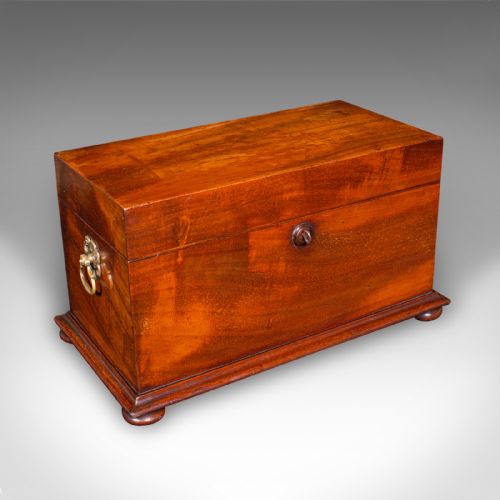


Mahogany Tea Canister
A mahogany tea canister is a domestic container for holding loose leaves, prized for its tactile warmth and period craftsmanship.
Mahogany Tea Canister
A mahogany tea canister brings the refined domestic rituals of the Georgian, Regency, and Victorian eras directly into a modern room. These vessels served to protect precious tea leaves under lock and key, reflecting the high value placed on the commodity during the eighteenth and nineteenth centuries.
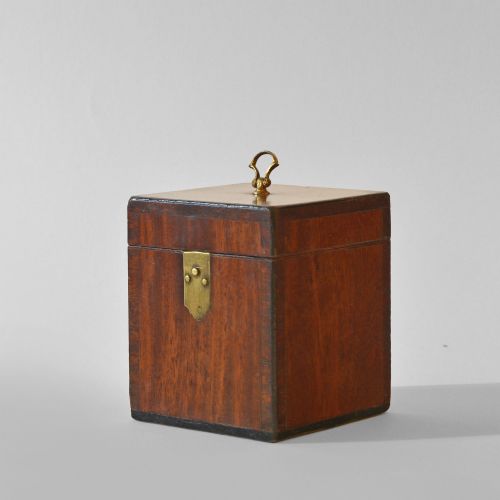
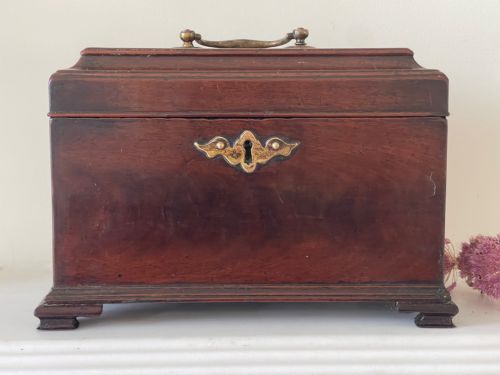
Makers utilised dense timbers, predominantly mahogany alongside burr maple and rosewood, to construct durable containers that often display careful wood inlay or hand-painted details. These pieces range from small domestic boxes to substantial chests equipped with metal canisters.
How they were made
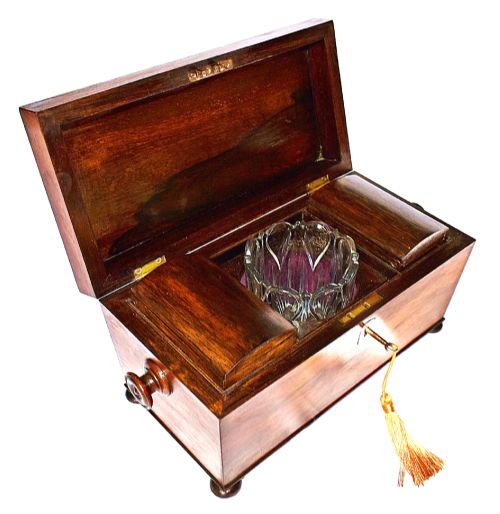
Cabinet makers constructed these canisters using solid mahogany and flame mahogany veneers over secondary timbers, shaping them into rectangular or sarcophagus forms. The surfaces often received decorative treatments such as contrasting wood inlay, ebony stringing, or hand-painted motifs.
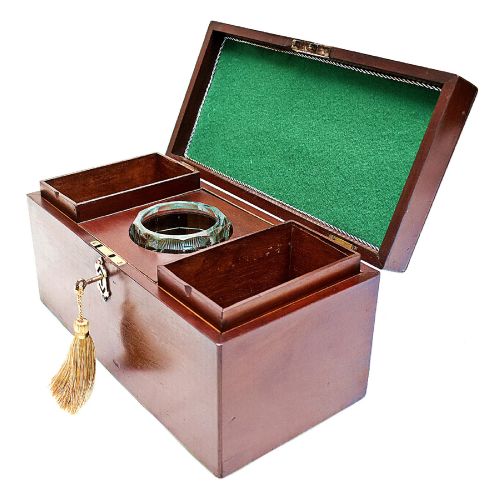
Interior fittings required precise woodworking to house glass mixing bowls, loose leaf compartments, and secret drawers securely. Internal lids and partitions were fitted alongside metal canisters or bone handles to complete the construction.
Mahogany Tea Canister Retail Price Guide 2026
Typical asking prices for mahogany tea canister among the pieces listed under this phrase on Sellingantiques today, from the lower quarter to the upper quarter. They describe what is for sale here now, not the wider market.
The listings here span the Georgian, Regency, and Victorian eras, utilising mahogany, burr maple, brass, glass, and bone.
What varies in quality
The choice of timber creates a distinct difference between standard boxes and superior pieces, particularly when flame mahogany or burr maple is selected for the outer surfaces. Grain pattern intensity and the crispness of any wood inlay dictate the visual depth of the exterior.
Internal completeness heavily influences the standard of a piece, with surviving glass mixing bowls, secret drawers, and original metal canisters elevating the integrity of the container. The presence of working locks, keys, and intact internal lids demonstrates superior original craftsmanship.
The Mahogany Tea Canister Glossary
- Sarcophagus form
- A distinct box shape featuring a domed or steep-sided profile resembling a classical stone coffin, popular during the Regency period. This architectural outline gave makers space to display bold mahogany grain patterns.
- Flame mahogany
- A veneer cut from the fork of the mahogany tree where the branch meets the trunk, creating a fiery, undulating pattern. Cabinet makers used this figure on the primary surfaces of finer tea caddies.
- Mixing bowl
- A small glass vessel fitted inside a tea caddy to blend different varieties of loose leaf tea before brewing. These bowls are often removable and sit centrally between internal compartments.
- Wood inlay
- Pieces of contrasting timber fitted into recessed pockets on the surface of the box to form geometric patterns or decorative lines. This technique enhances the visual richness of mahogany furniture.
- Secret drawer
- A concealed small compartment built into the interior of a chest, accessed by removing a false panel or partition. It provided a secure space for storing small valuables alongside tea leaves.
Mahogany Tea Canister: Frequently Asked Questions
What is a mahogany tea canister?
A mahogany tea canister is a period wooden box designed to store loose tea leaves securely during the eighteenth and nineteenth centuries. These containers often featured secure locks to protect valuable tea from household servants.
Today, they serve as decorative storage objects or standalone display pieces that showcase traditional cabinet making techniques from the Georgian and Regency eras.
How were these boxes used?
Household owners used these containers to keep precious loose tea safe and dry under lock and key. The mistress of the house typically held the key, dispensing the leaves herself for social gatherings.
Internal compartments separated different varieties of tea, while glass mixing bowls allowed leaves to be combined before brewing.
How do I identify a Regency tea caddy?
Regency tea caddies frequently display architectural sarcophagus forms, bold mahogany veneers, and brass feet or ring handles. They often incorporate precise wood inlay, ebony stringing, or painted decorative accents characteristic of the early nineteenth century.
Internal layouts from this period commonly feature central glass mixing bowls flanked by lidded compartments for different tea varieties.
How do I live with an antique tea caddy?
These boxes function well as decorative objects on sideboards, desks, or coffee tables, bringing warmth and historical texture to a room. Their internal compartments also make them practical for storing small modern items like jewellery or keepsakes.
Keep the wood conditioned with appropriate wax and avoid placing the pieces in direct sunlight or near heat sources to protect the mahogany finish.