

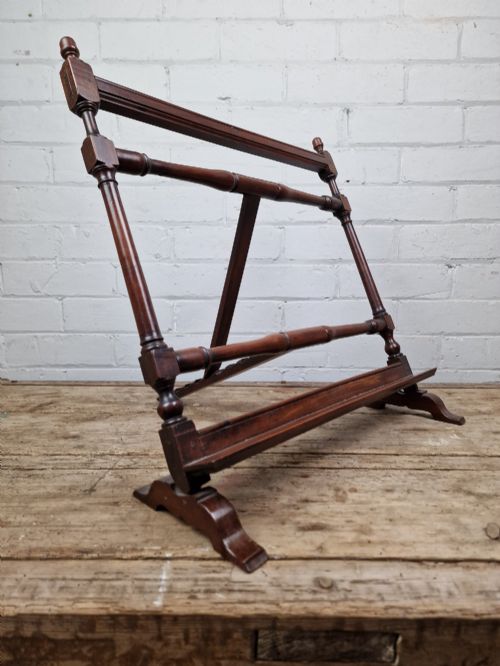
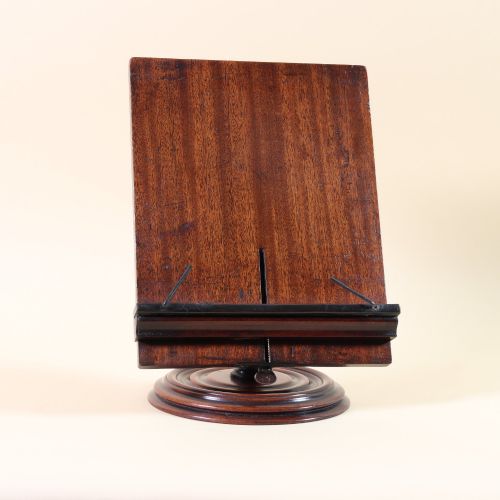
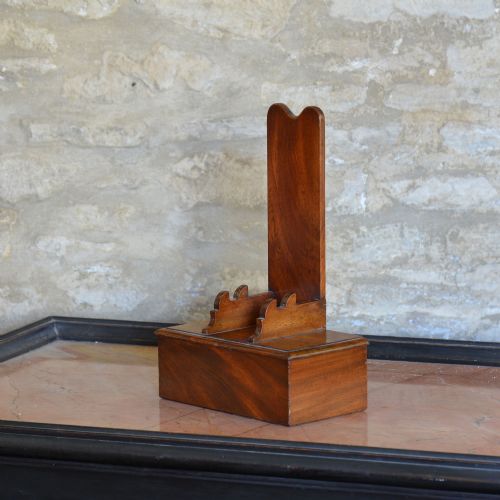


Mahogany Tabletop Stand
A mahogany tabletop stand brings versatile timber utility and period surface display to desks and dressing tables.
Mahogany Tabletop Stand
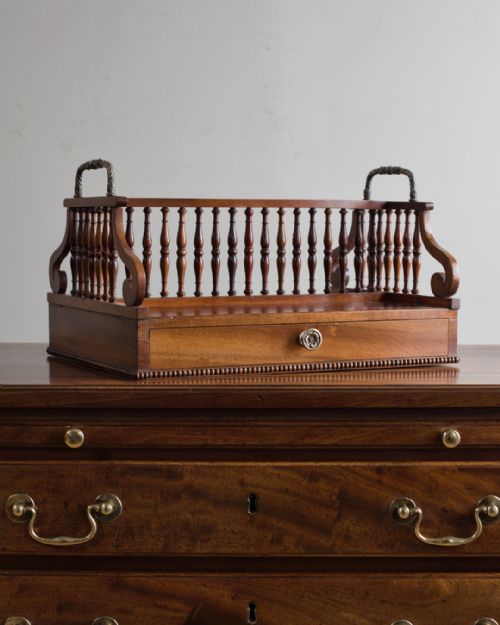
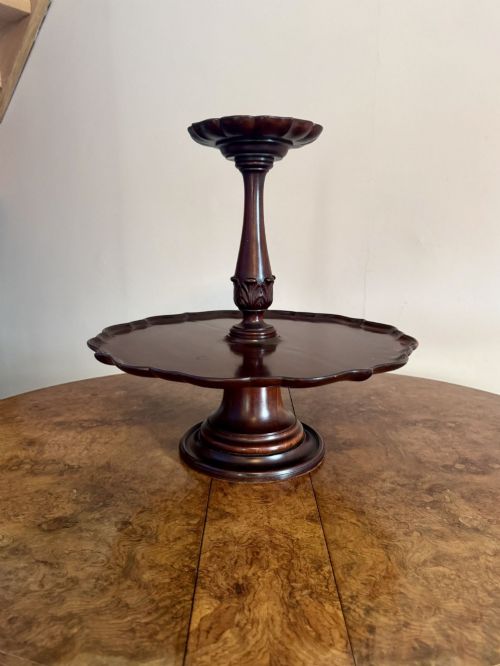
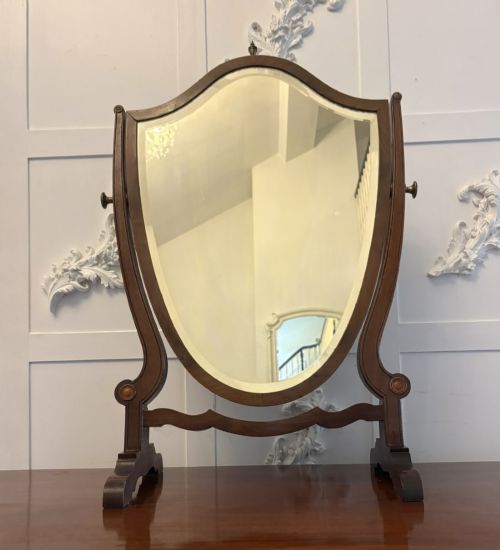
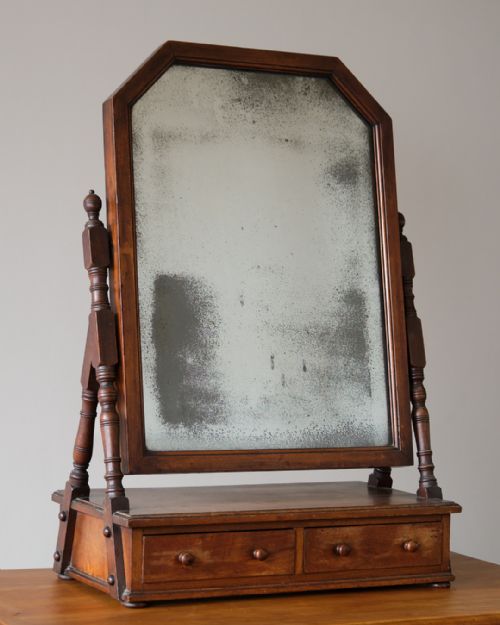
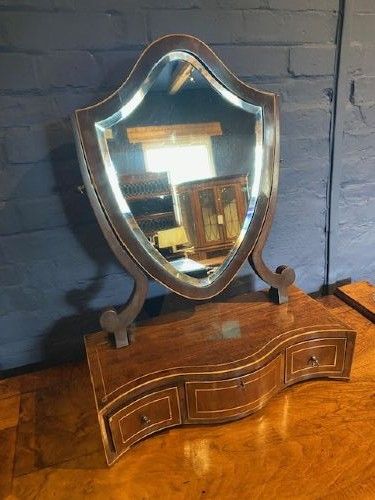
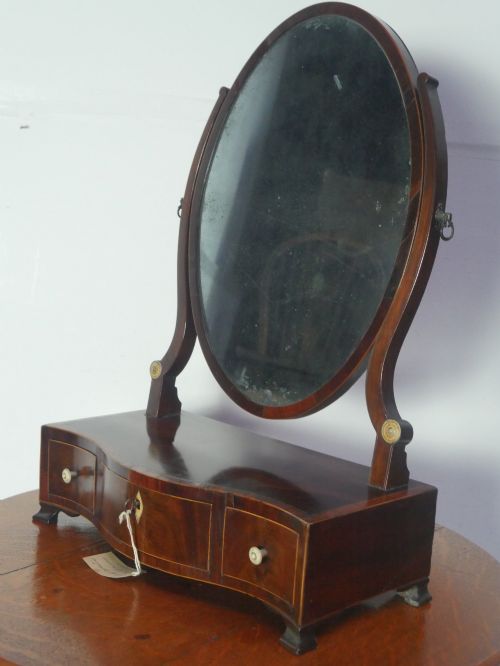
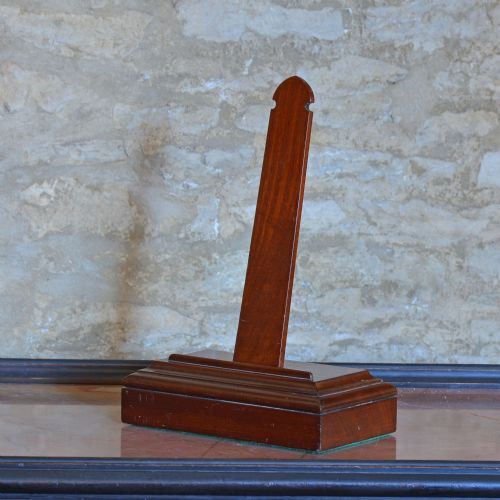
The domestic pieces appearing most frequently on this page date from the eighteenth century through the Edwardian period. Dressing mirrors and swing mirrors dominate the selection, alongside tabletop book carriers, lazy Susans, and specialised stands for scientific instruments.
Origins range across standard British cabinet-making traditions, incorporating regional workshops and patented designs. Each form serves a specific desktop or tabletop role, utilising the rich grain of mahogany to provide both utility and understated decorative presence.
Materials and Construction
Makers constructed these pieces primarily from solid mahogany and carefully selected veneers, often pairing the timber with contrasting brass fittings, bone details, and mirrored glass. Structural stability relied on traditional joinery, turning, and precise framing to support swinging mirror plates or rotating book drums.
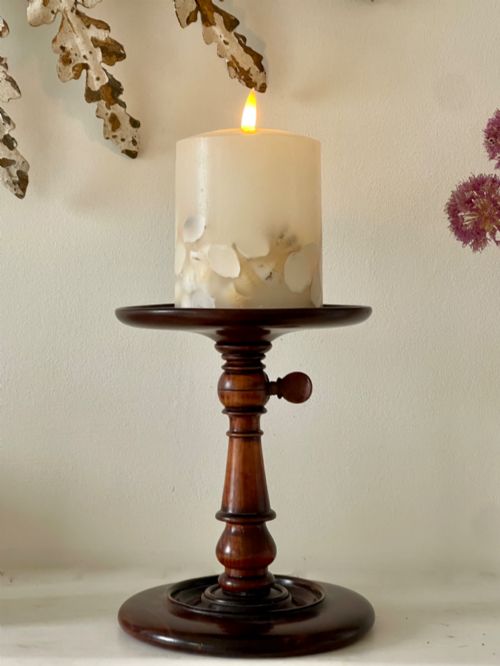
Metal components such as brass brackets, clips, and candle sockets appear frequently to reinforce joints or add adjustable functionality to reading desks and easels. Polished timber surfaces received natural wax finishes that highlighted the deep reddish-brown grain characteristic of the period.
Mahogany Tabletop Stand Retail Price Guide 2026
Typical asking prices for mahogany tabletop stand among the pieces listed under this phrase on Sellingantiques today, from the lower quarter to the upper quarter. They describe what is for sale here now, not the wider market.
Listings feature mahogany combined with brass, glass, bone, and satinwood across Georgian, Victorian, and Edwardian periods.
Craftsmanship and Proportion
Superior examples of a mahogany tabletop stand demonstrate refined timber selection, featuring unblemished grain patterns and harmonious proportions between base and superstructure. Cabinet-makers who invested time in hand-cut joinery and crisp edge mouldings elevated simple utilitarian objects into sophisticated furnishings.
The integration of secondary materials like mercury mirror glass, heavy cast brass hardware, and subtle inlay work separates standard workshop production from exceptional maker-attributed pieces. Original components, smooth mechanical movement in revolving or adjustable elements, and intact patination dictate the upper tier of the range.
Heal & Sons·Thomas Rubergall·Matthew Berge·Gillows·G. Adams
The Mahogany Tabletop Stand Glossary
- Swing mirror
- A tabletop looking glass mounted on vertical pivots between two upright posts, allowing the plate to tilt. This form is central to Georgian and Victorian dressing table arrangements.
- Revolving bookcase
- A compact tabletop shelving unit designed to rotate on a central pivot for easy book selection. Edwardian examples often feature inlaid satinwood details.
- Plate stand
- A vertical or tiered rack designed to hold plates, trays, or dishes securely on a sideboard or table. These stands frequently utilise weighted bases for stability.
- Reading stand
- An adjustable desk accessory intended to hold books, music sheets, or documents at a comfortable viewing angle. Campaign versions often fold flat for transport.
Mahogany Tabletop Stand: Frequently Asked Questions
What is a mahogany tabletop stand used for?
These pieces served practical organisational roles on desks, sideboards, and dressing tables in period homes. They held books, displayed plates, supported dressing mirrors, or kept reading materials steady.
Over time, owners relied on them to maximise surface space and keep essential items within arm reach. Today, they continue to function as desktop organisers or decorative focal points.
How do I date a mahogany tabletop stand?
Dating relies on observing construction methods, timber characteristics, and hardware styles across different eras. Georgian pieces often display simpler, hand-finished lines, while Victorian and Edwardian examples may incorporate patent mechanisms or decorative inlay.
Makers' signatures, brass stamps, and the type of mirror glass used also provide clear chronological markers. Comparing the turning style and brass fittings to documented pieces helps narrow down the decade of manufacture.
Are these stands original or reproduction?
The pieces listed on this page originate from the eighteenth, nineteenth, and early twentieth centuries. They reflect the genuine manufacturing techniques and wear patterns associated with those historical periods.
Examining the depth of the timber patina, the hand-cut joinery, and the ageing of internal brass components confirms their period authenticity. Dealers assess these physical markers to verify that each item belongs to its stated era.
How should I care for antique mahogany?
Maintaining antique mahogany requires keeping the timber away from direct heat sources and sudden humidity changes. Regular dusting with a soft, dry cloth preserves the wax polish without building up residue.
Harsh chemical cleaners should be avoided to protect the natural finish and historical patination of the wood. Occasional application of quality beeswax helps nourish the grain and maintain a soft lustre.