





Mahogany Style Whatnot
A mahogany style whatnot gives you tiered display and storage with architectural grace, drawing on Georgian practicality and Regency design.
Mahogany Style Whatnot
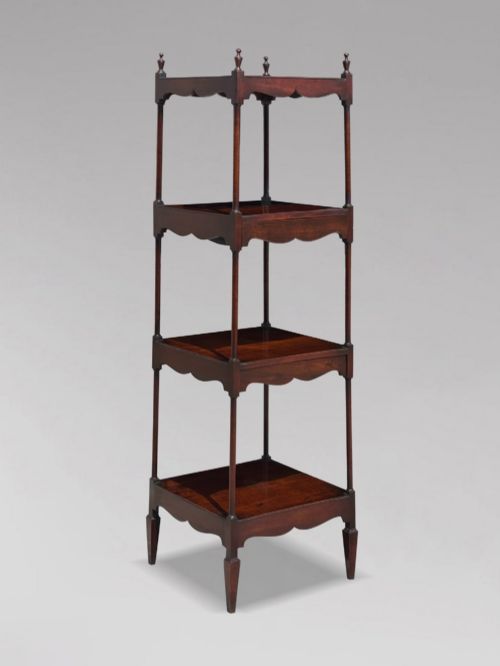
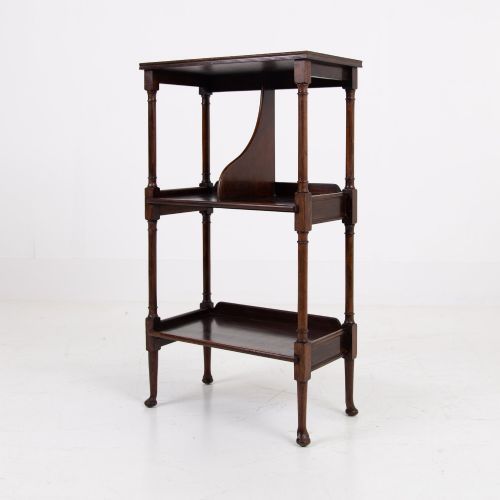
A mahogany style whatnot is a piece of tiered shelving designed for display and utility, frequently taking the form of open tiers supported by slender uprights. When you search for this phrase, you encounter pieces intended to hold books, ceramics, or decorative items within a room without blocking light or space.
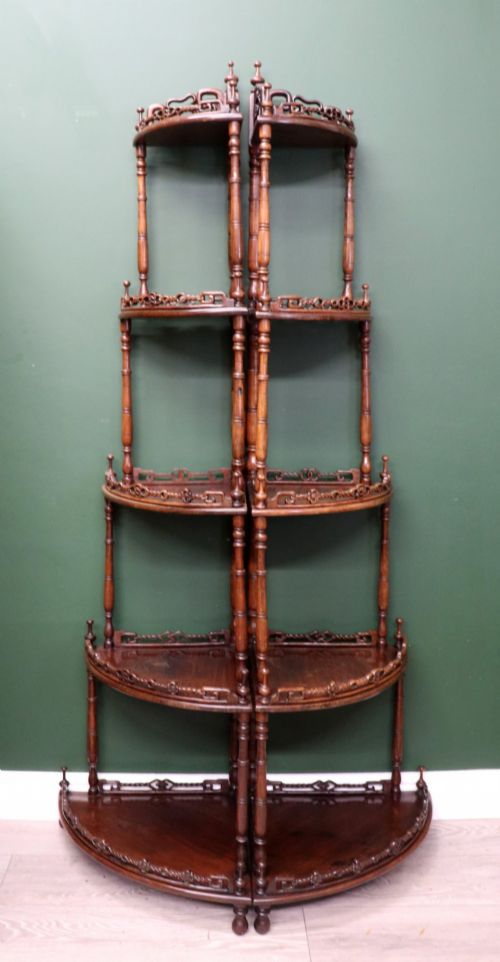
The versions most likely to meet you on this page span several periods, including Georgian, Regency, Victorian, and Edwardian revivals from around nineteen hundred. They appear as freestanding five-tier stands, corner shelves, bedside units, and etageres.
Makers historically adapted the basic tiered format into specific configurations like waterfall fronts or revolving dumb waiters. These variations reflect how earlier households required versatile shelving for different domestic corners.
How they were made
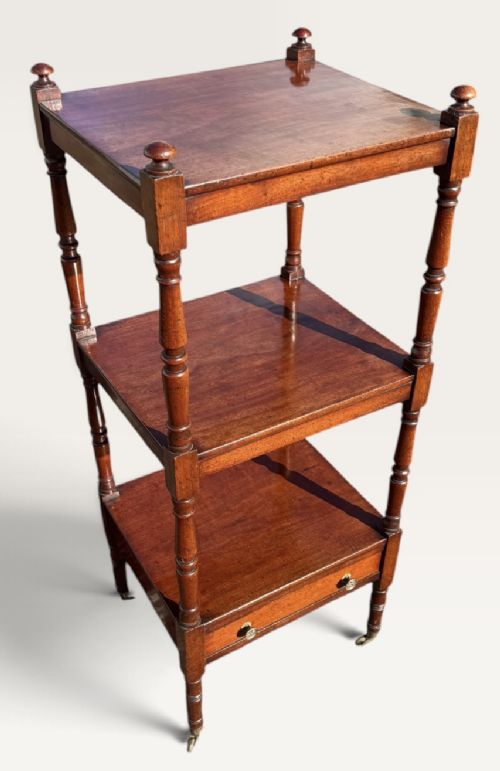
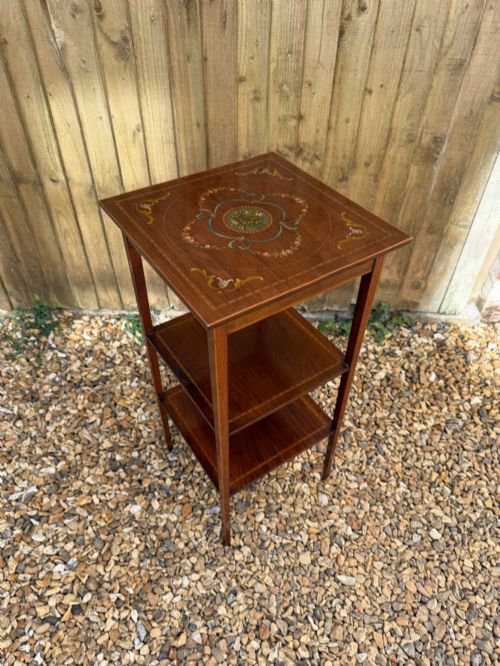
Makers constructed these pieces primarily using solid mahogany and mahogany veneers over secondary woods, sometimes incorporating boxwood inlay for linear contrast. Surfaces often received a hand-polished finish that highlights the natural grain and deep brown colour of the timber.
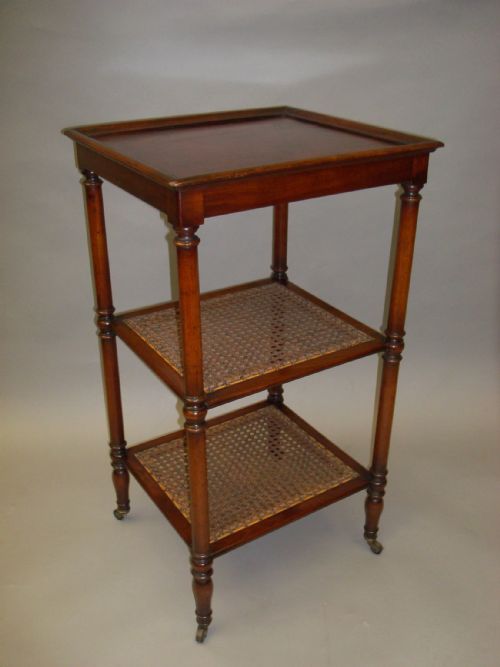
Structural elements frequently include turned wooden columns or brass supports dividing the tiers. Certain variations integrate marble tops or cane panels, combining rigid wooden frameworks with contrasting tactile surfaces.
Joinery techniques relied on traditional pegging and housing joints to secure the multiple shelves firmly to the vertical uprights. This ensured the stability required for stacked tiers carrying books or heavy decorative objects.
Mahogany Style Whatnot Retail Price Guide 2026
Typical asking prices for mahogany style whatnot among the pieces listed under this phrase on Sellingantiques today, from the lower quarter to the upper quarter. They describe what is for sale here now, not the wider market.
Some shelves step down like a waterfall, proving that even timber can attempt a dramatic descent.
What varies in quality
The quality of a mahogany style whatnot rests upon the selection of timber figures and the crispness of any inlay or turning. Finer examples display carefully matched grain patterns across every tier rather than plain or heavily patched boards.
Structural integrity separates standard utilitarian pieces from workshop productions attributed to notable cabinetmakers like Gillows. Superior pieces maintain rigid tiers without wobble, utilising substantial brass casters and precise vertical supports.
Gillows
The Mahogany Style Whatnot Glossary
- Whatnot
- A piece of furniture consisting of a set of open shelves for displaying small objects or books. It developed during the eighteenth century as a practical stand for household bric-a-brac.
- Etagere
- A piece of furniture with a set of open shelves for displaying ornaments. The term often describes French-influenced stands similar in function to the English whatnot.
- Dumb waiter
- A tiered stand traditionally used for holding food or tableware without the aid of servants. Examples on this page feature revolving or fixed wooden and marble tiers.
- Inlay
- A technique of ornamenting a surface by embedding pieces of a contrasting material into it. Boxwood lines frequently provide this decorative border on mahogany shelves.
- Waterfall front
- A tiered shelving design where each lower shelf steps forward or curves downward in a cascading profile. This layout creates an accessible display gradient from top to bottom.
Mahogany Style Whatnot: Frequently Asked Questions
What is a mahogany style whatnot?
A mahogany style whatnot is a tiered set of open shelves created to display decorative items, books, or tableware. These pieces provide vertical storage while maintaining an open, airy profile.
They emerged from Georgian and Regency traditions, evolving into various formats including corner units, bedside stands, and etageres.
How were they used historically?
Households utilised these pieces in drawing rooms, libraries, and bedrooms to hold portable objects that lacked a permanent home. The multiple tiers allowed owners to keep books, ceramics, and daily items within arm reach.
Some variations served dining spaces as dumb waiters, holding extra plates or serving dishes during meals.
Where should I place one?
These pieces suit empty corners, narrow wall spaces beside seating, or bedside positions where surface area is limited. Their open shelves keep small rooms feeling spacious while offering practical storage.
Freestanding five-tier stands work well against plain walls, whereas corner models utilise awkward junctions in a room layout.
How do I distinguish between periods?
Georgian and Regency pieces tend to exhibit restrained classical proportions, fine turned supports, and occasional boxwood stringing. Later Victorian and Edwardian revival items often feature heavier timbers or more ornate fretwork.
Construction details, such as the type of secondary wood and the style of brass castors, help indicate whether a piece dates to the early nineteenth century or a later revival.