

Mahogany Splat Back Chairs
Mahogany splat back chairs bring enduring craftsmanship and traditional seating forms into the home, ranging from formal dining sets to individual carvers.
Mahogany Splat Back Chairs
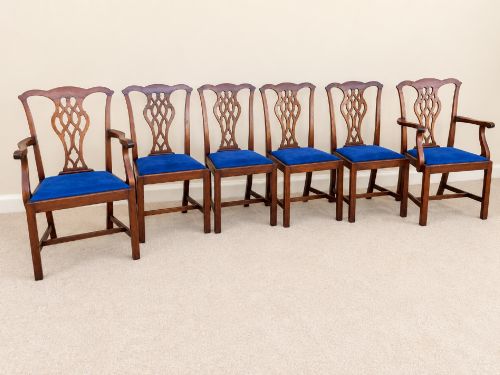
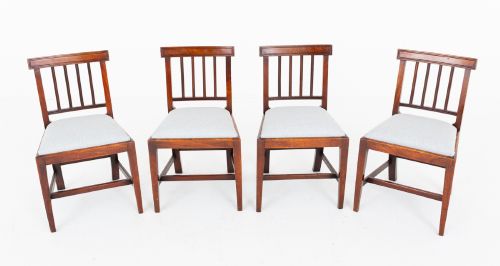
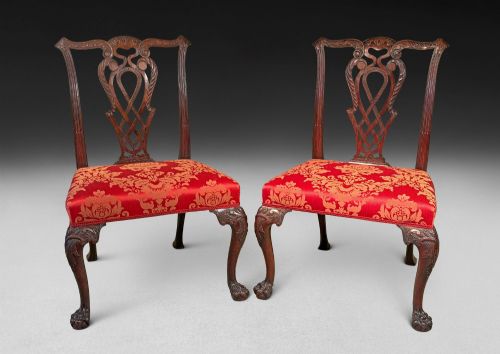
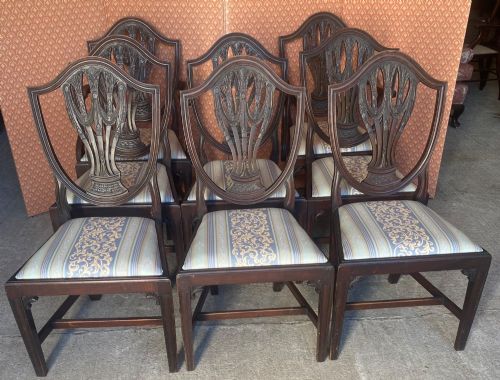
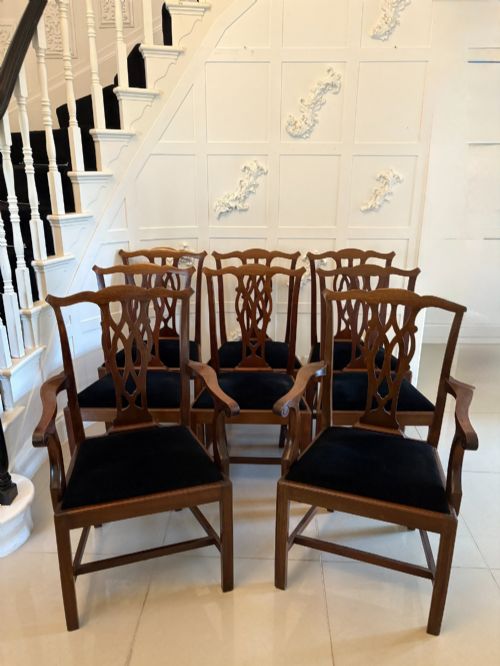
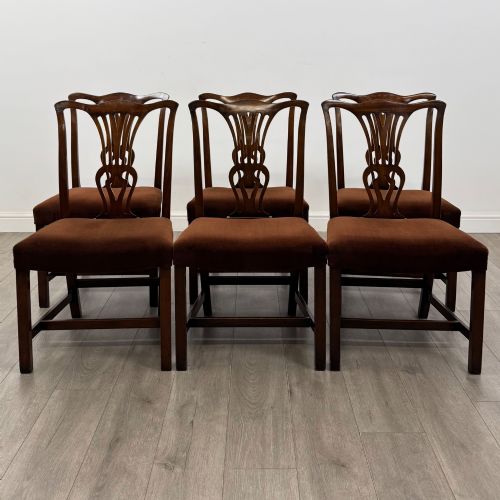
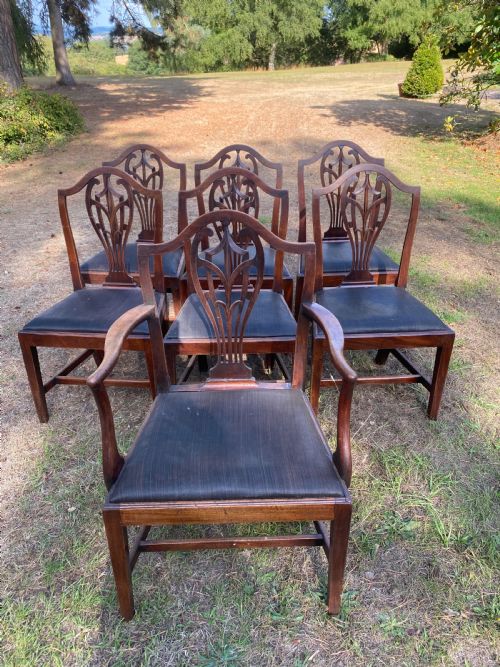
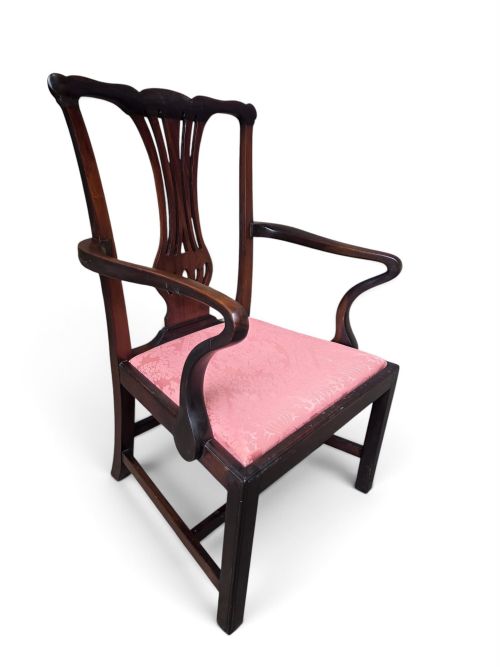
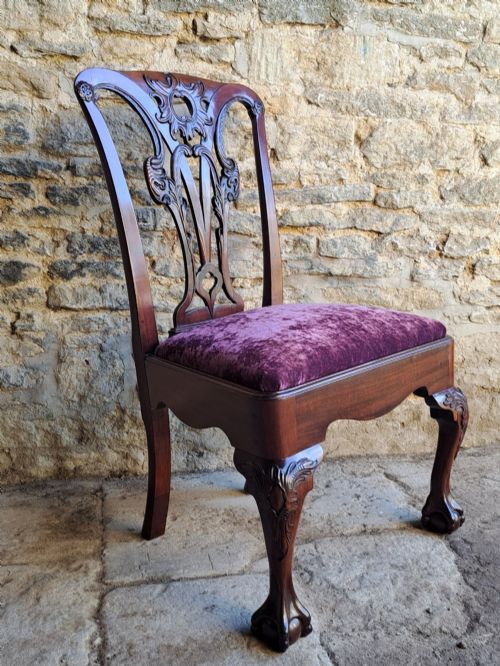
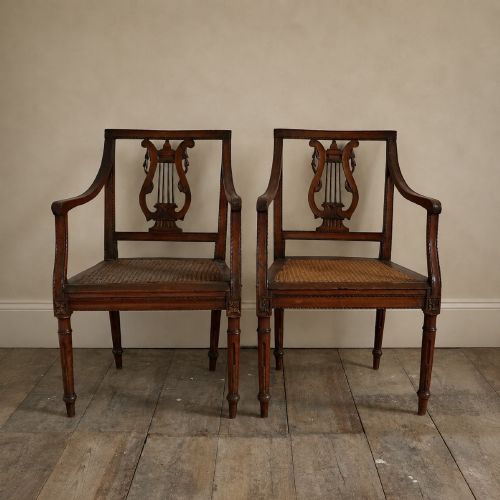
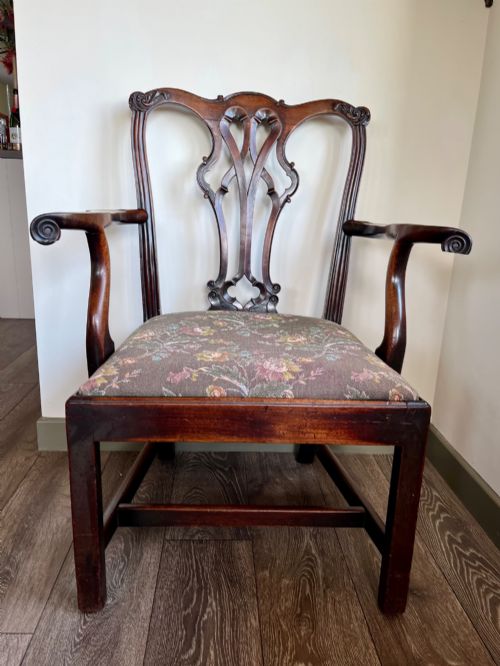
Mahogany splat back chairs encompass seating featuring a central vertical wooden slat supporting the backrest, commonly encountered as dining chairs, armchairs, and side chairs. These pieces trace their origins through Georgian, Victorian, and Edwardian periods, alongside later revival styles.
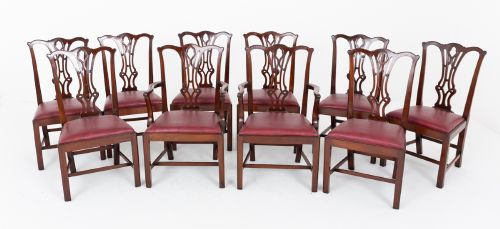
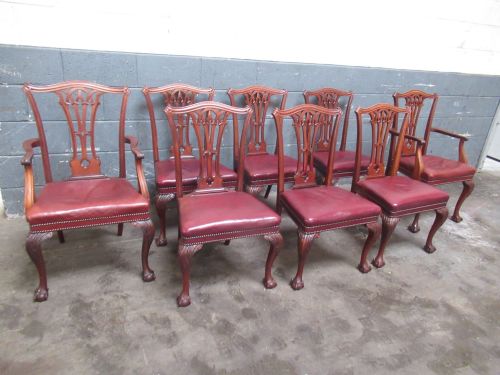
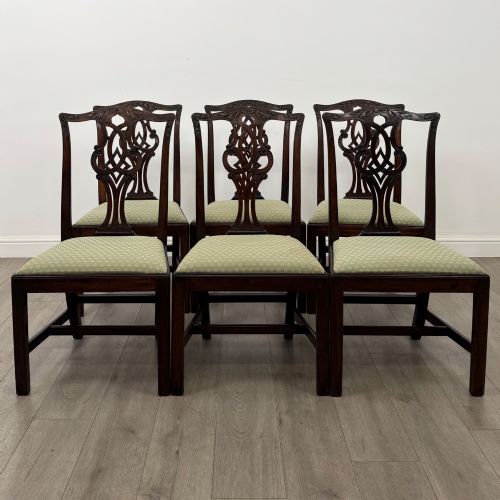
Buyers frequently encounter matching sets of dining chairs or pairs of armchairs produced in the eighteenth, nineteenth, and early twentieth centuries. The selection includes specific forms such as desk chairs, salon chairs, and occasional settees sharing the characteristic wooden splat construction.
How They Were Made
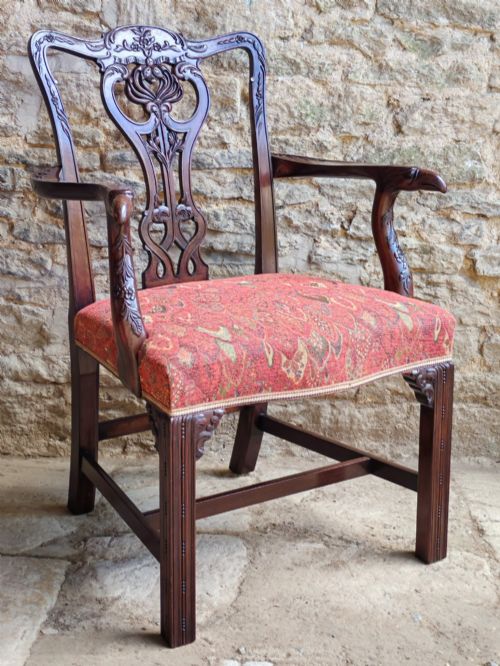
Cabinetmakers utilised solid mahogany timbers, occasionally selecting red walnut, shaping the frames through joinery and carving to create the characteristic pierced or solid central splats. Seats were constructed with drop-in frames or overstuffed upholstery layered with fabric, leather, velvet, tapestry, or rush.
Surface finishes relied on traditional polishing techniques that highlighted the grain and deep natural colour of the mahogany. Structural support was achieved through integrated stretchers, turned forelegs, or cabriole legs suited to the prevailing period style.
Upholstery options recorded across these chairs include leather, velvet, tapestry, rush, and woven fabric.
What Varies in Quality
The standard of carving on the back splat and crest rail defines the distinction between standard production and superior craftsmanship. Crisp execution of pierced designs, ribbon backs, or intricate foliage indicates higher workshop capability.
Timber selection and frame integrity further separate examples across the range. Heavier gauge mahogany, well-proportioned joinery, and original upholstered or cane seat foundations reflect the care applied during construction.
Howard and Sons·Thomas Chippendale·Wheelers of Arncroach
The Mahogany Splat Back Chairs Glossary
- Splat
- The vertical wooden strip down the centre of a chair back, often shaped, pierced, or carved to define the style.
- Carver
- An armchair, traditionally placed at the head of a dining table or used as a desk seat.
- Cabriole leg
- A furniture leg that curves out and then tapers inward, frequently terminating in a pad or claw foot.
- Drop-in seat
- A removable upholstered frame that fits into the seat rails of the chair without permanent fixings.
- Overstuffed seat
- An upholstered seat where the padding covers the wooden frame entirely, exposing only the legs.
Mahogany Splat Back Chairs: Frequently Asked Questions
How do I date a mahogany splat back chair?
Dating relies on examining the construction methods, leg styles, and timber characteristics. Eighteenth-century examples often feature finer hand-carving and lighter frames, whereas Victorian and Edwardian pieces frequently display heavier proportions and revival details.
Secondary indicators include the wear patterns on the feet and the type of secondary wood used in the frame construction. Comparing the splat design against known stylistic periods helps narrow down the decade of manufacture.
Are these chairs suitable for daily dining use?
Most antique mahogany dining chairs remain structurally robust enough for regular use, provided the joints are stable and secure. Many surviving sets have been maintained or sympathetically restored over generations to ensure daily practicality.
It is advisable to check the under-framing and stretchers for any movement before putting older chairs into heavy service. Professional tightening of loose joinery prevents long-term strain on the original wood.
What is the difference between a side chair and a carver?
Side chairs are built without armrests, designed primarily to sit neatly around a dining table or against a wall. Carvers feature arms, making them larger and traditionally suited for the ends of a dining table or as a desk seat.
Matching sets often combine six or eight side chairs with a pair of carvers. Both forms share the same decorative splat back design language within a unified suite.
How should I care for antique mahogany furniture?
Maintaining mahogany involves keeping pieces away from direct heat sources and strong sunlight, which can dry out the timber and fade the polish. Regular dusting with a soft, dry cloth preserves the surface shine without building up residue.
Applying a traditional beeswax polish occasionally helps nourish the wood and maintain its natural lustre. Avoid using modern silicone-based sprays, as they can permanently alter the patina.