






Mahogany Specimen Box
A mahogany specimen box gathers small treasures and scientific slides, built from dense timber to protect fragile contents over generations.
Mahogany Specimen Box
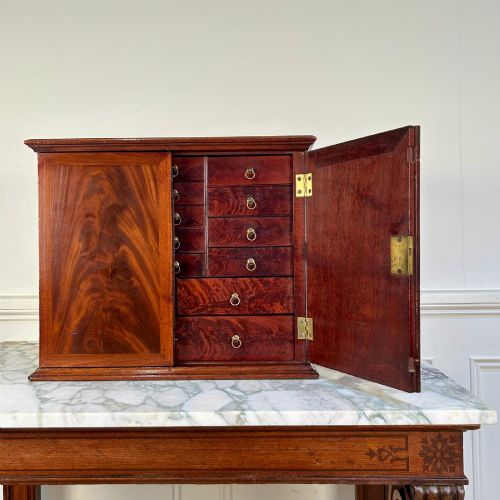
A mahogany specimen box takes the form of small cabinets, miniature chests of drawers, and glazed display cases designed to house collections. These pieces emerge chiefly from Victorian and early twentieth century workshops, spanning periods like the nineteenth century, eighteen ninety, and nineteen twenty.
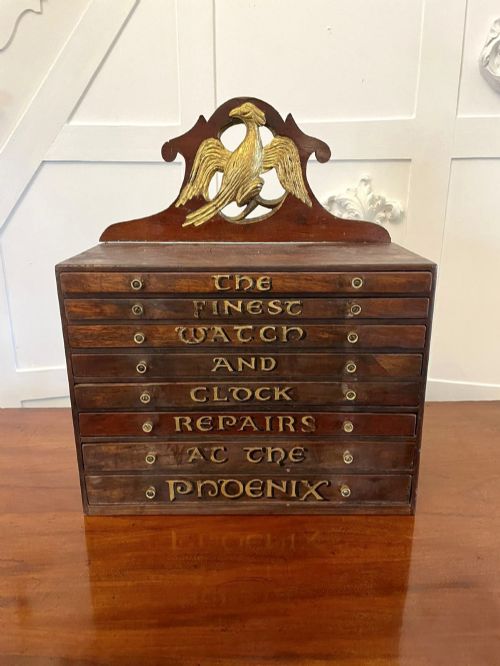
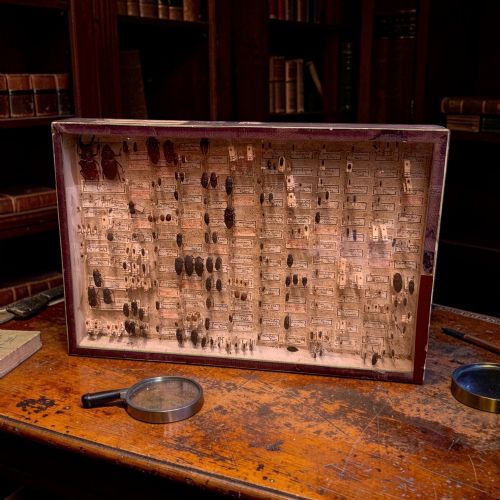
The most common versions met on this page include five or six drawer collector cabinets, tabletop display cases, and microscope slide cabinets. Certain examples serve specific trades, appearing as medical carrying chests, instrument cases for a dentist, or watch and clock repairer chests.
Formations range from multi-drawer storage units with brass fittings to glazed table top display cases and miniature chests of drawers. The overarching purpose remains the secure organisation and viewing of delicate items, whether entomology specimens or watch parts.
How they were made
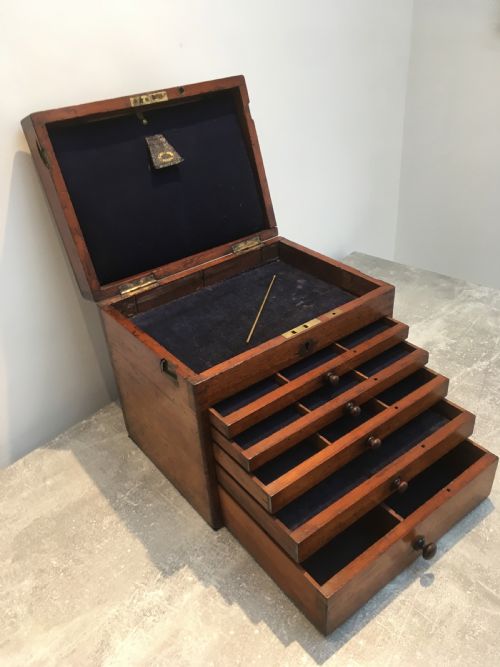
Makers constructed these pieces primarily using mahogany, frequently paired with secondary woods like oak and walnut, alongside boxwood details. Interiors often feature linings of felt and paper to cushion the contents of drawers.
Glazing with glass forms the viewing surfaces of display cases and tabletop cabinets, while metal and brass hardware provide functional handles, hinges, and lock plates. Construction methods combine tightly fitted drawer carcases with glazed framing to protect internal specimens from dust.
Mahogany Specimen Box Retail Price Guide 2026
Typical asking prices for mahogany specimen box among the pieces listed under this phrase on Sellingantiques today, from the lower quarter to the upper quarter. They describe what is for sale here now, not the wider market.
Listings feature items built from mahogany, oak, walnut, brass, glass, and felt, dating across the nineteenth and early twentieth centuries.
What varies in quality
The calibre of a mahogany specimen box rests upon the precision of its drawer joints and the retention of its original glass and brass furniture. Superior examples display dense timber grain paired with carefully fitted multi-drawer interiors designed for specific scientific or domestic collections.
Differences also arise in the complexity of the internal arrangement, distinguishing standard tabletop storage from twenty-eight drawer microscope slide cabinets equipped with sliding trays. The presence of fitted compartments, campaign style brass handles, and intact linings elevates the standard of manufacture.
The Mahogany Specimen Box Glossary
- Mahogany
- A durable, reddish-brown tropical hardwood chosen for fine furniture and cabinet-making. It provides structural stability and a handsome polished surface.
- Specimen Cabinet
- A small multi-drawer chest designed for organising natural history items, slides, or small artefacts. These units protect delicate contents within fitted enclosures.
- Glazed Case
- A display housing fitted with transparent glass panels for viewing objects safely. This style protects items from dust while permitting light to enter.
- Campaign Style
- Furniture design incorporating flush brass handles, corner brackets, and portable construction. Originally built for travel, these pieces prioritise robust durability.
Mahogany Specimen Box: Frequently Asked Questions
What fits inside a mahogany specimen box?
These boxes traditionally house microscopic slides, entomology items, watch repair components, and miniature collections. The shallow drawers suit flat or tiny items requiring organised storage.
Larger variations accommodate instruments or jewellery, while glazed top versions display objects for examination without handling.
How do I date a Victorian specimen box?
Dating relies on construction methods, hardware styles, and materials recorded across nineteenth century and Victorian examples. Brass fittings, dovetail joints, and secondary timbers like oak offer chronological clues.
Makers often integrated specific drawer counts and lock types characteristic of workshops operating between eighteen sixty and nineteen twenty.
Where were these cabinets placed originally?
Victorian collectors and professionals kept these pieces upon tabletops, study desks, or laboratory workbenches. Their compact proportions allowed them to sit in private libraries and consulting rooms.
Medical practitioners and naturalists utilised the portable carrying chests during fieldwork or house visits.
Are all specimen boxes made of solid mahogany?
While mahogany forms the primary exterior shell and drawer fronts, other materials appear internally. Oak, walnut, and boxwood supplement the structure, alongside paper and felt drawer linings.
Glass panels provide visibility in display variants, and brass secures the moving hardware.