

Mahogany Seating Pair
A mahogany seating pair brings matched warmth and proportion to a room, offering functional spots to sit with the continuity of twin frames.
Mahogany Seating Pair
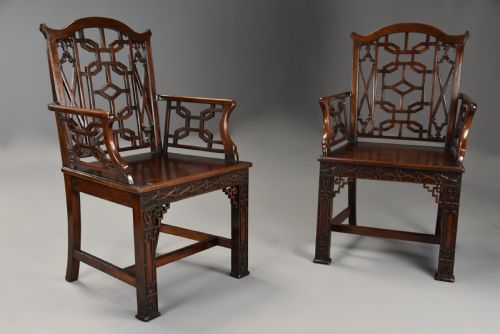
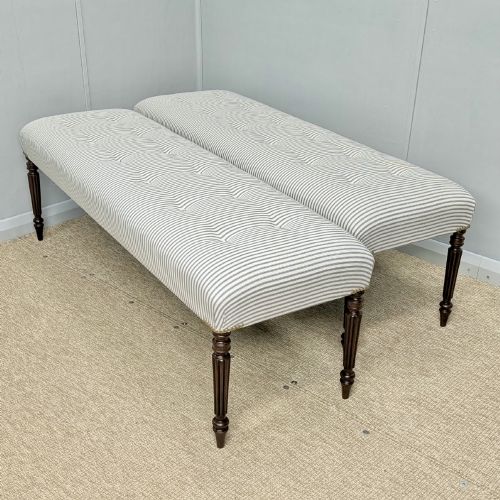
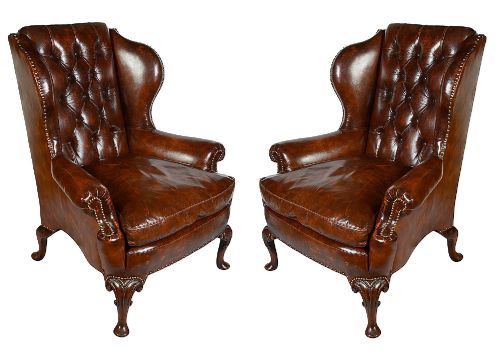
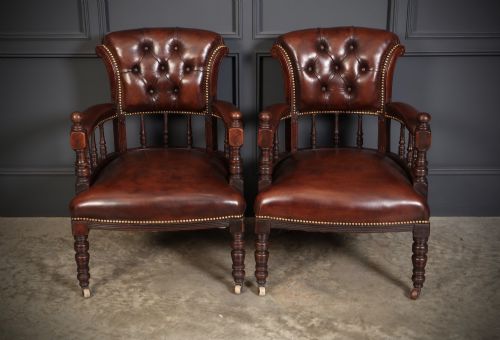
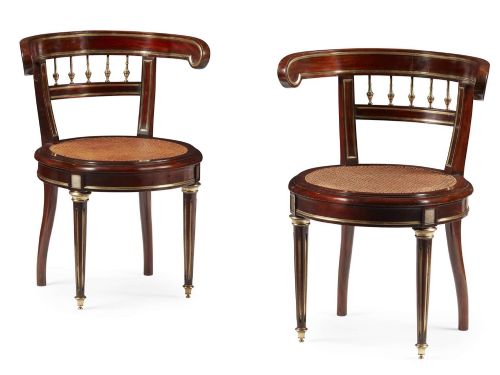
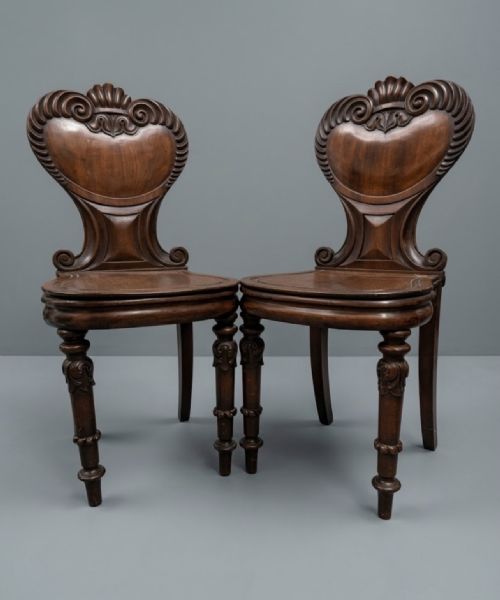
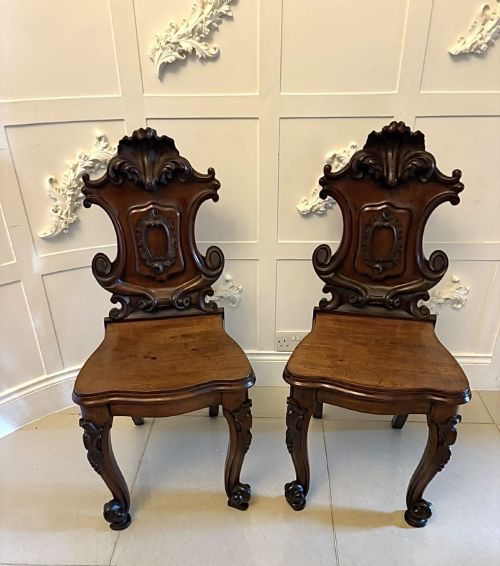
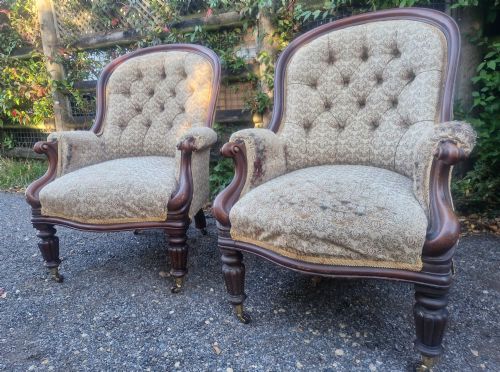
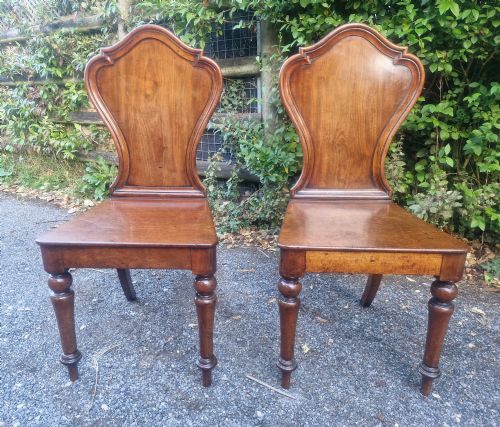
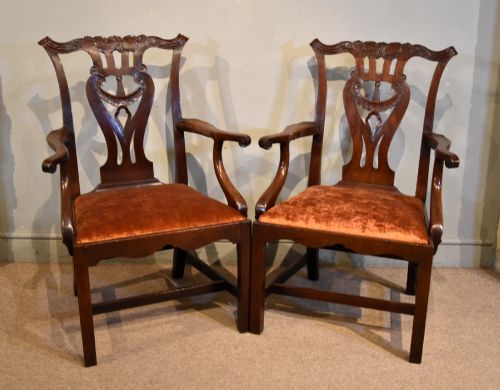
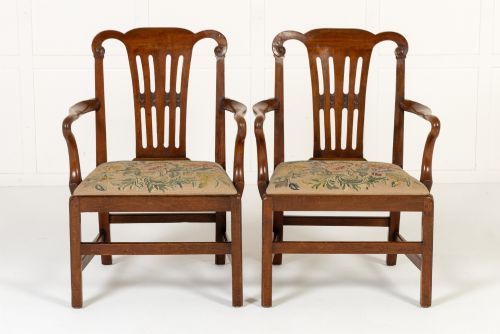
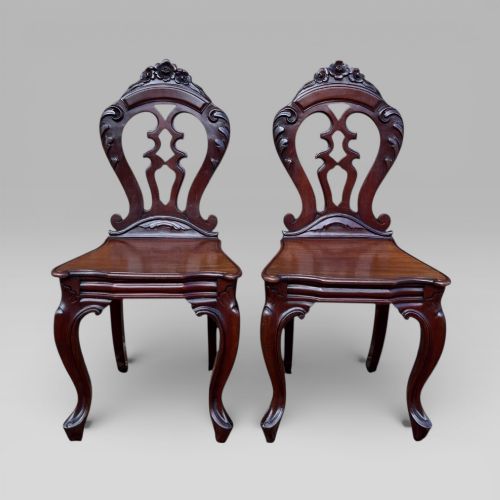
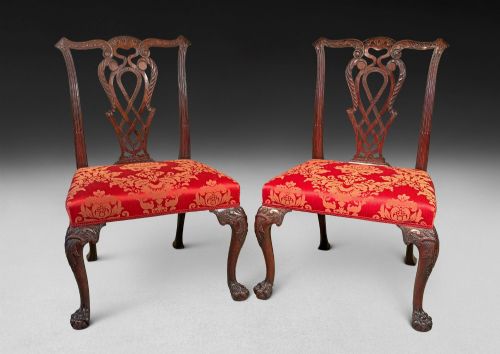
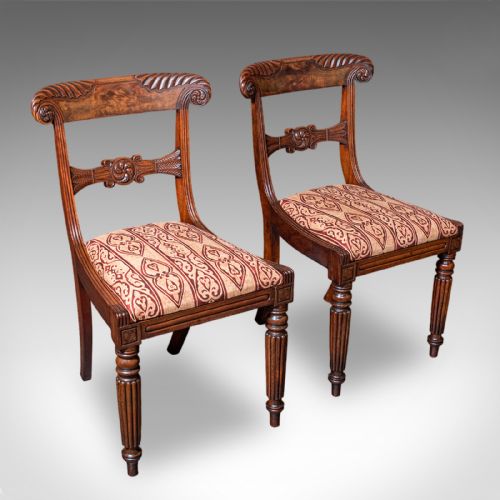
A mahogany seating pair consists of two matching chairs or seats fashioned primarily from dense tropical timber, designed to sit together symmetrically in a room. When buyers search for a mahogany seating pair, they encounter various forms ranging from formal hall chairs and side chairs to library armchairs and salon seats.
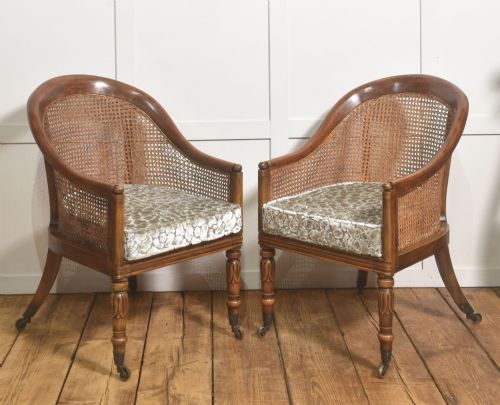
The selections span distinct historical eras, with Victorian and Regency examples appearing frequently alongside 18th-century George III pieces and later revival styles. Forms include open armchairs, tub chairs, and nursing chairs, offering choices for reception rooms, bedrooms, and dining spaces.
How they were made
Craftsmen built these frames using solid mahogany, often enhancing the timber with carved details, applied brass inlay, or marquetry work. Joinery relied on traditional methods to ensure stability across load-bearing legs and back rails.
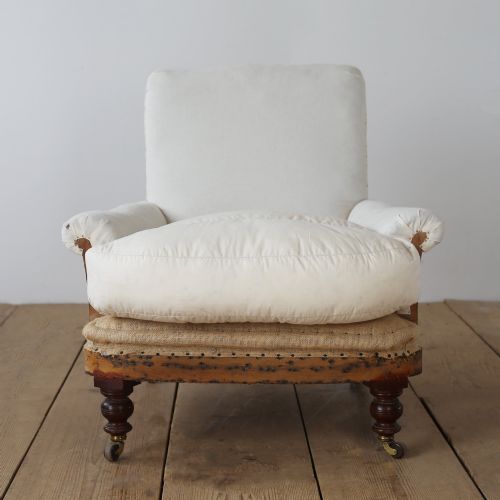
Seating surfaces incorporated a variety of materials depending on the chair type, including cane panels, buttoned leather, horsehair stuffing, and diverse upholstery fabrics over hessian support webbing.
Mahogany Seating Pair Retail Price Guide 2026
Typical asking prices for mahogany seating pair among the pieces listed under this phrase on Sellingantiques today, from the lower quarter to the upper quarter. They describe what is for sale here now, not the wider market.
Listings feature diverse forms including armchairs, side chairs, hall chairs, and settees spanning the Georgian, Regency, and Victorian periods.
What varies in quality
The refinement of the carved ornamentation separates standard examples from exceptional ones, particularly where hand-chiseled foliage or crisp shield backs display superior craftsmanship. Timber selection also dictates grade, with deeply figured grain and rich natural colour marking out the finer specimens.
Integrity of construction and the preservation of original surfaces heavily influence standing. Pieces retaining untouched timber patination and sturdy, unaltered joinery command greater appreciation than heavily restored equivalents.
Whytock and Reid·Howard and Sons
The Mahogany Seating Pair Glossary
- Hall chair
- A rigid wooden seat usually positioned in an entrance hall, featuring a solid timber panel back often carved or painted with a crest.
- Fauteuil
- An open-arm armchair with upholstered back and arm pads set within an exposed wooden frame, originating in French design.
- Marquetry
- Decorative inlay work using various tinted wood veneers to create geometric or pictorial patterns on the furniture surface.
- Cane
- Woven rattan or split plant material used to form light, supportive panels for chair seats and backs.
- Hessian
- A coarse woven fabric typically utilised as a strong foundational base beneath traditional upholstery stuffing.
Mahogany Seating Pair: Frequently Asked Questions
Where should I place a mahogany seating pair?
These matched chairs suit symmetrical arrangements, such as flanking a fireplace, framing a console table in a hallway, or positioning at opposite ends of a room.
Their shared design brings balance to an interior while providing functional seating options that work well in reception rooms and studies.
How do I identify Regency mahogany chairs?
Regency pieces often display classical influences, incorporating brass inlay, sweeping saber legs, and elements inspired by ancient Greek or Roman forms.
They typically date from the early nineteenth century and lean toward clean, architectural lines rather than heavy ornamentation.
What is the difference between hall chairs and dining chairs?
Hall chairs are built entirely of wood with rigid, upright seats intended for short periods of sitting rather than long dining sessions.
Dining chairs generally offer upholstered pads and more ergonomic proportions designed for comfort during meals.
How should I care for leather and mahogany?
Keep mahogany timber away from direct sunlight and excessive heat sources to prevent the wood from drying out or splitting.
Treat leather inserts periodically with appropriate conditioning balms to maintain flexibility and prevent cracking across the surface.