




Mahogany Quilt Rail
A mahogany quilt rail is a freestanding wooden frame designed for airing textiles, offering rich timber tones and practical charm for traditional interiors.
Mahogany Quilt Rail
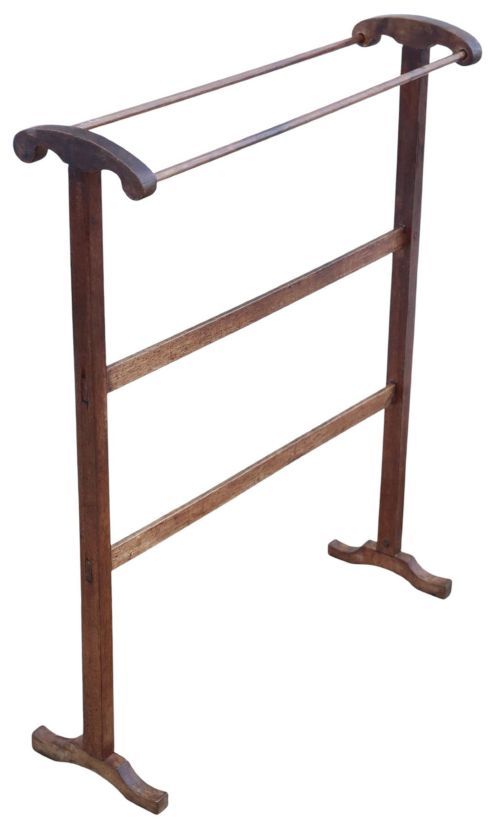
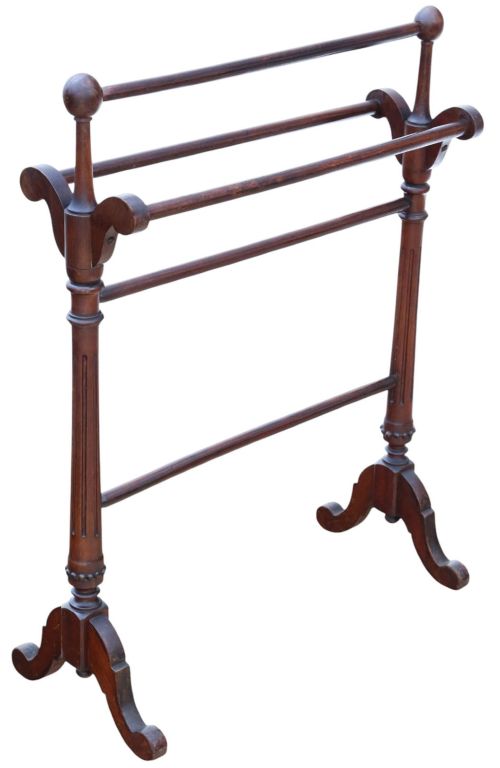
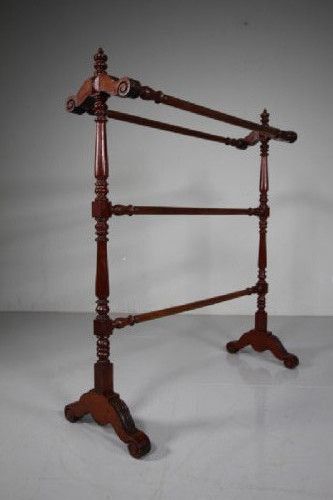
A mahogany quilt rail principally takes the form of a standing towel rail or clothes airer used in domestic chambers. Buyers searching for a mahogany quilt rail encounter sturdy wooden frames designed to hold linens and blankets.
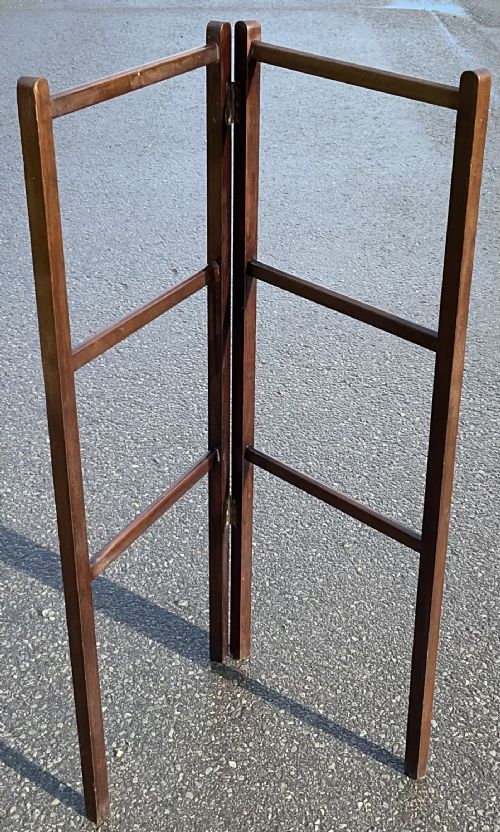
The pieces on this page span the Regency, Victorian, and Edwardian eras, with many examples originating from the early twentieth century. Common configurations include folding designs, five-bar frames, and large oversized formats.
Makers constructed these rails primarily as functional bedroom furniture, though their warm timber grain and elegant proportions now suit bathrooms, hallways, and living spaces for display and storage.
Materials and construction methods
Cabinet makers relied heavily on solid mahogany, frequently pairing it with secondary timbers such as oak for internal framing and structural integrity. Some Edwardian examples incorporate boxwood stringing and fine inlay work for decorative contrast.
Metal fittings appear in the form of brass joints, hinges, or screws that allow folding frames to articulate smoothly. Joinery traditions from the nineteenth century ensured these rails remained rigid under the weight of heavy damp textiles.
Mahogany Quilt Rail Retail Price Guide 2026
Typical asking prices for mahogany quilt rail among the pieces listed under this phrase on Sellingantiques today, from the lower quarter to the upper quarter. They describe what is for sale here now, not the wider market.
Many a Victorian household relied on these trusty wooden bars to air the heavy winter quilts before tucking everyone in for a chilly night.
Assessing quality and craftsmanship
Superior examples distinguish themselves through heavier timber scantlings, deeper natural polish, and refined architectural turns on the upright supports. Simpler utility rails contrast with oversized William IV or Regency pieces boasting substantial proportions and superior timber selection.
Subtle details such as inlaid boxwood stringing or multiple-bar configurations elevate a piece from basic utility furniture to a refined decorative accessory. The integrity of the original joints and the warmth of the aged mahogany finish determine the standing of each individual rail.
The Mahogany Quilt Rail Glossary
- Mahogany
- A durable tropical hardwood prized for its rich reddish-brown colour and fine grain. Cabinet makers selected it for its stability and handsome appearance in formal furniture.
- Edwardian
- A stylistic period spanning the early twentieth century up to the First World War. Furniture from this era often lighter in proportion with subtle classical inlay.
- Regency
- A period of English design marked by classical restraint and archaeological influence. Pieces from this era often feature bold forms and clean architectural lines.
- William IV
- A transitional design phase bridging Regency and early Victorian styles. Furniture typically displays heavy proportions, robust turning, and substantial timber sections.
Mahogany Quilt Rail: Frequently Asked Questions
How were mahogany quilt rails originally used?
Households placed these rails in bedrooms or dressing rooms to air bed linens, quilts, and garments near a fire. The open bars allowed air to circulate freely around heavy fabrics.
Over time, their practical role shifted as central heating became common, turning them into decorative pieces used today for displaying quilts, blankets, or towels in bathrooms and bedrooms.
How do I tell an Edwardian rail from a Victorian one?
Edwardian rails, dating around nineteen hundred to nineteen ten, often appear lighter in build and occasionally feature decorative boxwood stringing or multi-bar arrangements. They reflect a turn toward simpler, domestic utility.
Victorian and Regency examples generally present heavier timbers, darker finishes, and more robust turned supports. Their proportions tend to be larger, designed to handle heavier household linens.
Are these rails sturdy enough for daily use?
Traditional wooden frames are built with solid timber joinery designed for regular domestic duty. Most standing rails remain entirely functional for hanging contemporary towels or lightweight blankets.
Care should be taken with folding hinges or older joints on antique pieces to ensure they are not strained beyond their original intended capacity.
Where should I place a quilt rail in my home?
These rails suit bathrooms for holding folded towels or bedrooms for draping extra blankets at the foot of a bed. Their vertical profile occupies minimal floor space while adding timber warmth to an empty corner.
Placing them away from direct heat sources and strong sunlight preserves the rich colour and polished finish of the mahogany timber.