
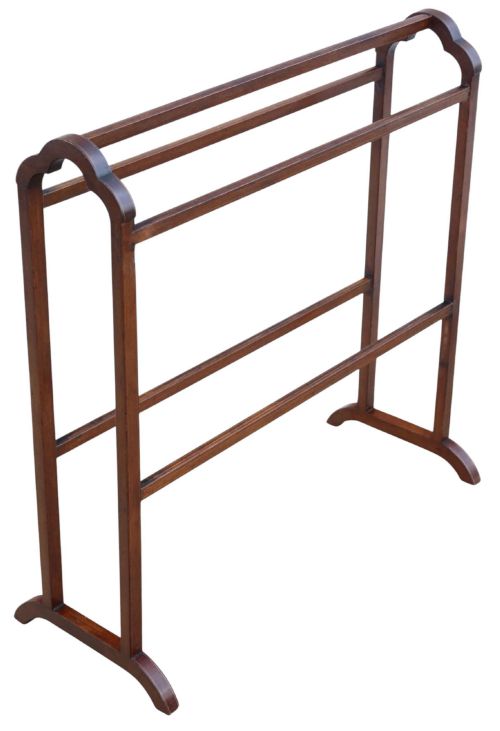
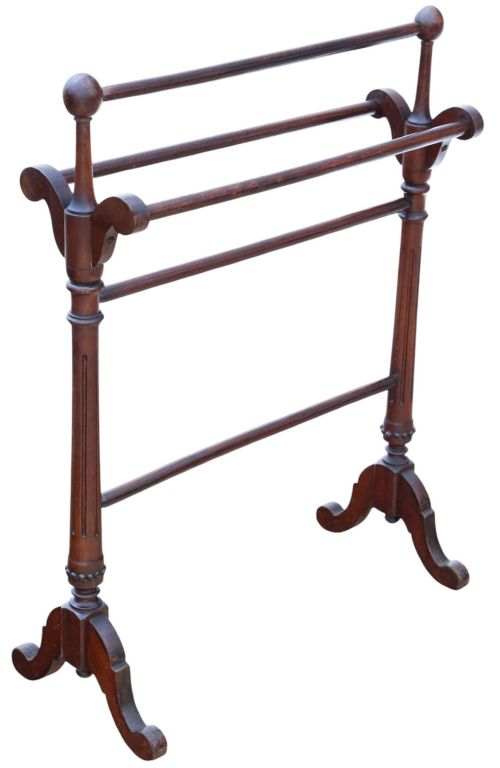
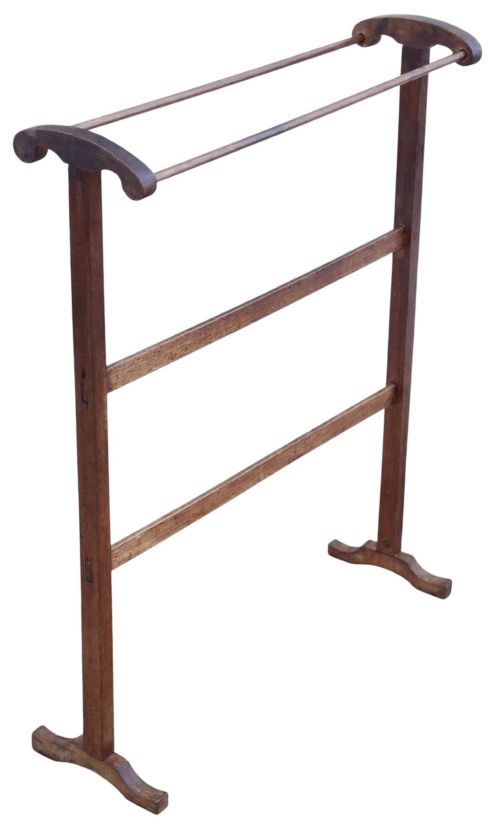
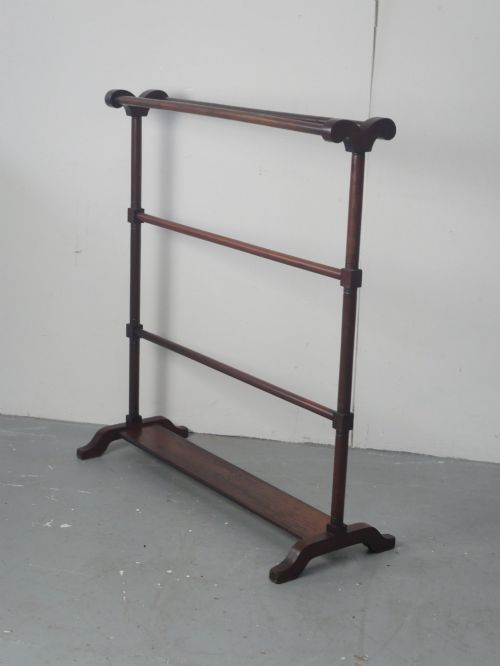


Mahogany Quilt Rack
These mahogany quilt rack pieces are practical wooden stands that bring period warmth and utility to a bedroom.
Mahogany Quilt Rack
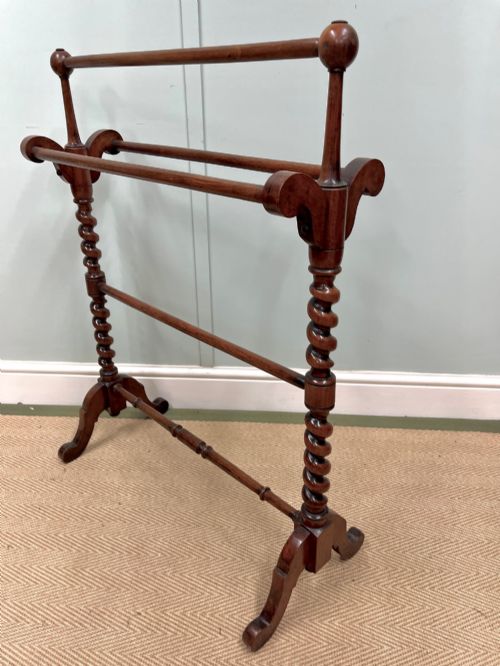
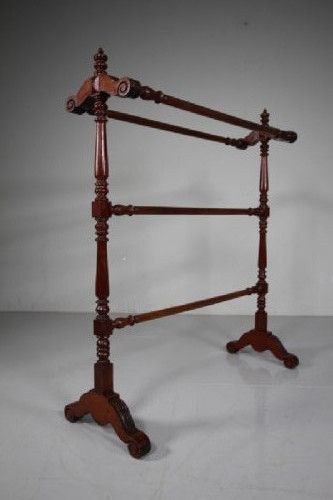
When you search for a mahogany quilt rack, you are looking at freestanding wooden frames designed to hold textiles, frequently listed as towel rails or clothes stands in the inventory. These domestic furnishings span periods from the Regency era through to Edwardian times, offering varying numbers of horizontal bars for hanging.
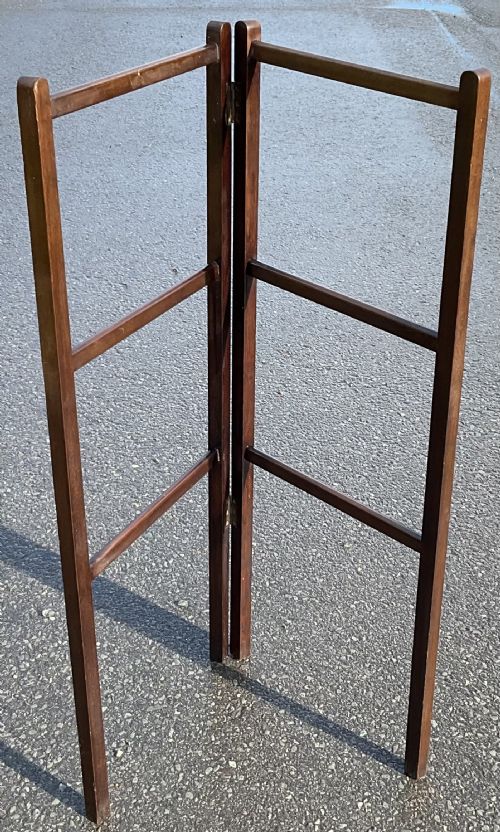
You are most likely to meet Edwardian and nineteenth-century examples on this page, often constructed with multiple rails to accommodate linens and quilts. Their forms range from simple folding stands to substantial five-bar designs and oversized William IV pieces.
Originating predominantly from English workshops, these items serve both a decorative and a utilitarian function in the home. They bring traditional timber character to modern interiors while remaining entirely practical for daily use.
How they were made
Cabinetmakers constructed these stands primarily using solid mahogany, frequently combining it with secondary hardwoods such as oak for structural stability. Selected pieces incorporate contrasting timbers, applying delicate boxwood and satinwood inlay to the upright supports or crossbars.
Metal fittings played a key role in construction, with brass hinges and joints enabling folding mechanisms on versatile Edwardian designs. Joinery techniques ensured that the frames could withstand the weight of heavy textiles without losing their balance or rigidity.
The inventory spans the nineteenth century, Regency era, and Edwardian period, utilising mahogany alongside oak, boxwood, satinwood, and brass.
What varies in quality
The distinction between standard domestic items and finer examples often rests on decorative detailing and timber selection. Pieces featuring crisp satinwood and boxwood inlay or substantial proportions demonstrate a higher level of craftsmanship from the maker.
Proportion and scale also define the hierarchy, with larger oversized William IV or Regency stands requiring superior timber framing to maintain stability. The clever integration of folding mechanics without compromising the integrity of the mahogany frame marks out the better specimens.
The Mahogany Quilt Rack Glossary
- Mahogany
- A durable, reddish-brown tropical hardwood prized for its rich grain and stability in fine furniture. It forms the primary material for the majority of these stands.
- Inlay
- A decorative technique where contrasting woods like boxwood or satinwood are inserted into recesses within the mahogany surface to create patterns. This ornamentation elevates the visual appeal of Edwardian examples.
- William IV
- A British design period spanning the 1830s, characterised by robust proportions and classical influences. Pieces from this era often appear larger and heavier than later Edwardian counterparts.
- Regency
- An English stylistic period covering the early nineteenth century, known for refined classical lines and elegant proportions. Stands from this time display sophisticated restraint in their woodwork.
- Edwardian
- A decorative era running from the late Victorian period up to the First World War, favouring lighter frames and decorative inlay. Many folding rails on this page date from this accessible era.
Mahogany Quilt Rack: Frequently Asked Questions
What is a mahogany quilt rack used for?
These pieces were originally designed for airing and displaying household textiles, blankets, and towels in bedrooms and dressing rooms.
Today, they function effectively in modern homes for hanging quilts, throws, or garments while adding period character to a room.
How do I identify an Edwardian towel rail?
Edwardian examples typically date from around 1900 to 1910 and often feature lighter frames, sometimes with folding mechanisms for easy storage.
They frequently incorporate decorative touches such as satinwood or boxwood inlay along the upright timbers.
Are these stands sturdy enough for heavy quilts?
Larger nineteenth-century and William IV pieces are built with substantial timber frames designed to support significant weight.
Lighter Edwardian folding versions suit decorative throws and lighter linens rather than exceptionally heavy damp items.
What materials besides mahogany are used?
While mahogany is the dominant timber, secondary woods like oak occasionally appear in the internal structure for added strength.
Brass fittings and hinges are commonly integrated into folding designs to allow smooth movement.