



Mahogany Paper Storage Stand
These mahogany paper storage stand pieces organise sheets and folios in timber of rich grain.
Mahogany Paper Storage Stand
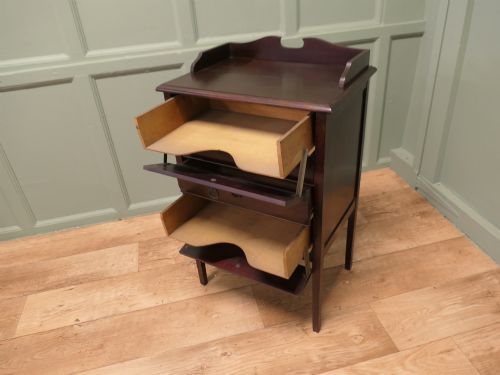
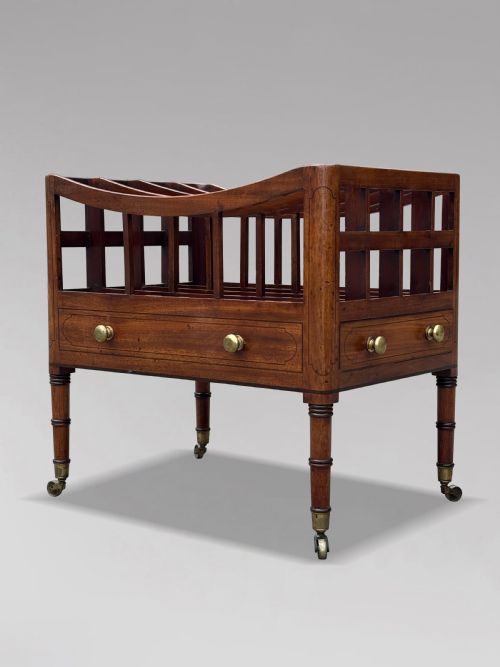
A mahogany paper storage stand takes the form of a canterbury, magazine rack, cabinet, or desk tidy designed to hold sheets, folios, and periodicals. The evidence shows these items spanning the Georgian, Regency, Victorian, and Edwardian periods, as well as around nineteen-twenty.
Canterburys form the most frequent encounter on this page, often appearing with multiple divisions for upright storage. Other versions include music cabinets, folio cabinets, and waterfall desk tidies constructed to keep papers orderly.
Materials extend beyond timber to include brass, ebony, bone, metal wire, and boxwood, with George III, George IV, and Arts and Crafts styles giving structural variety to the selection.
How they were made
Makers built these pieces primarily in mahogany, occasionally banding the timber with ebony or boxwood for contrast. Metal wire, tubular brass, and bone appear as secondary components in divisions, handles, and small inlay details.
Construction methods range from framed partitions for canterburys and magazine racks to enclosed shelving within music cabinets and folio cabinets. Carved elements feature on desk tidies, whilst turned uprights support the tiered sections of open racks.
Mahogany Paper Storage Stand Retail Price Guide 2026
Typical asking prices for mahogany paper storage stand among the pieces listed under this phrase on Sellingantiques today, from the lower quarter to the upper quarter. They describe what is for sale here now, not the wider market.
Materials paired with mahogany across these items include brass, ebony, bone, metal wire, and boxwood.
What varies in quality
Quality rests upon the selection of the mahogany grain and the precision of any banding in ebony or boxwood. Pieces that integrate materials like tubular brass or bone with tight joinery demonstrate a higher degree of workshop skill.
The sophistication of the divisions, whether simple wire frameworks or finely turned wooden slats, separates standard items from more ambitious designs. Carving on desk tidies and the proportion of cabinet doors further distinguish finer examples.
The Mahogany Paper Storage Stand Glossary
- Canterbury
- A low stand with divisions for holding sheet music, folios, or papers. It often sits upon castors and dates predominantly from the Georgian and Victorian eras.
- Folio cabinet
- An enclosed piece of furniture built to store large sheets of paper or drawings flat. These provide secure storage away from light and dust.
- Banding
- A narrow strip of contrasting wood, such as ebony or boxwood, inlaid around the edges of mahogany panels or tabletops. This technique defines borders and adds visual depth.
- Waterfall desk tidy
- A stepped desk accessory arranged in descending tiers to hold letters and papers upright. The stepped design allows a clear view of multiple documents at once.
- Division
- An internal partition within a rack or canterbury that keeps papers separated and upright. Divisions may be formed from solid timber slats or metal wire.
Mahogany Paper Storage Stand: Frequently Asked Questions
What is a canterbury used for?
A canterbury serves to hold sheet music, folios, newspapers, and unbound papers within vertical compartments. The divided sections keep documents upright and easy to browse.
Historically placed beside seating areas or desks, these stands kept current reading material close at hand.
How do I date a mahogany canterbury?
Dating relies upon observing the style of the legs, the turning of the uprights, and the presence of decorative inlays like ebony or boxwood. Georgian and Regency pieces typically show lighter proportions and refined joinery.
Victorian and later Edwardian items often incorporate heavier framing, tubular brass, or alternative forms such as music filing cabinets.
What is the difference between a magazine rack and a canterbury?
Canterburys traditionally feature low wooden divisions and often include a small drawer or carry handles, originating in the late eighteenth century. Magazine racks frequently adopt lighter wire frames or later Victorian tubular brass structures.
Both serve the same primary function of paper storage but reflect the aesthetic preferences of their respective periods.
Where should I place a paper storage stand at home?
These stands fit neatly beside a writing desk, armchair, or in a study to organise contemporary journals and letters. Their compact footprint allows them to sit against walls or beside larger pieces of furniture.
Keeping them away from direct heat sources protects the mahogany timber and any delicate boxwood or ebony banding.