
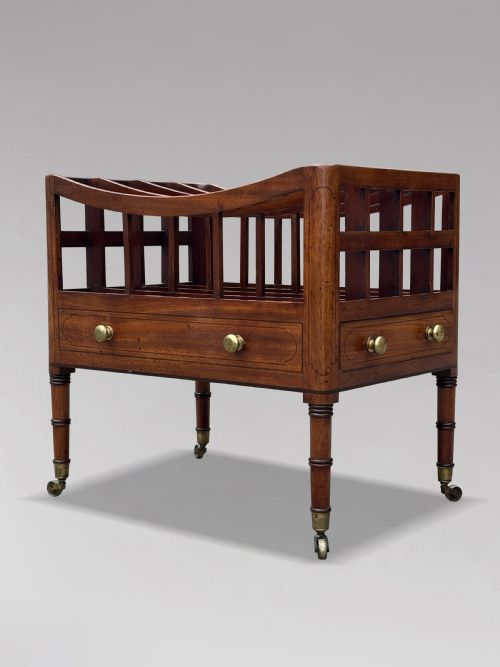


Mahogany Paper Storage Rack
A mahogany paper storage rack is a practical desk accessory or floor-standing piece designed to hold papers and magazines, offering both utility and traditional elegance.
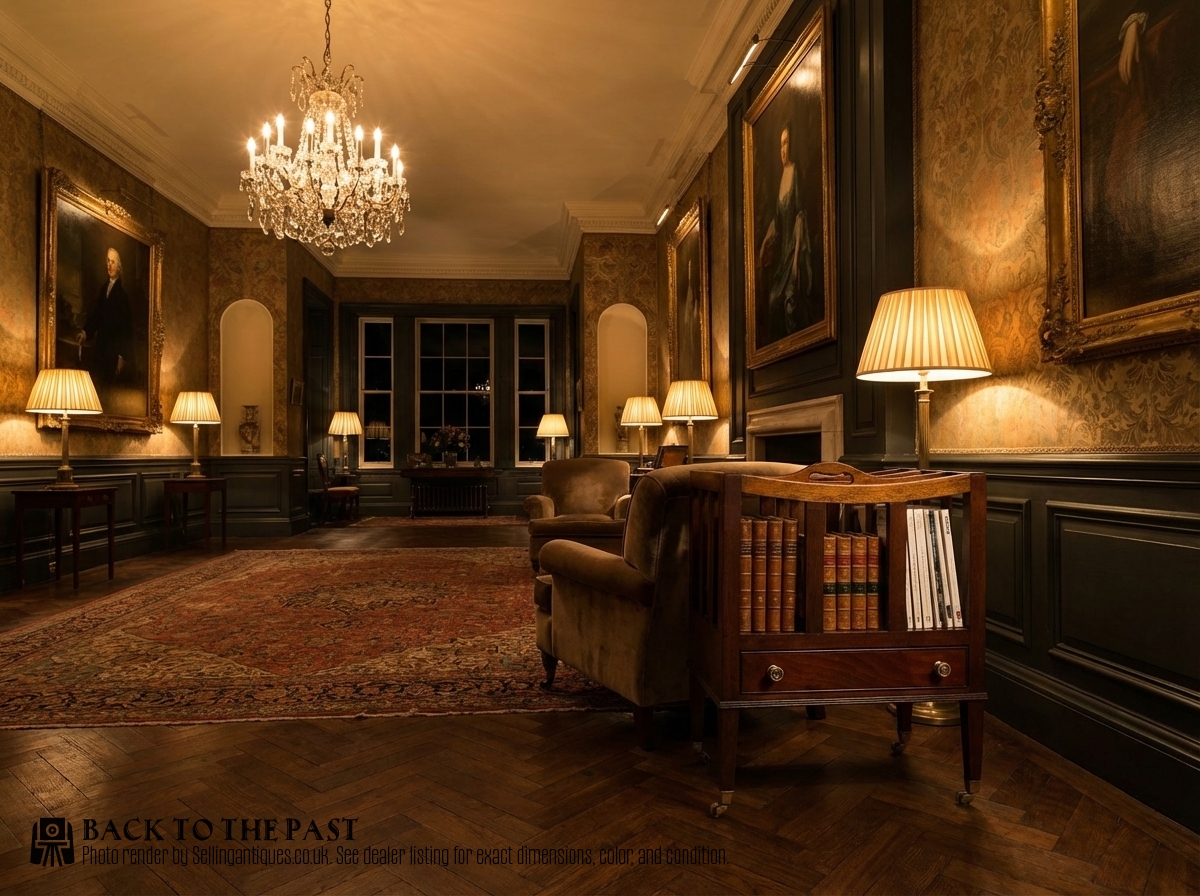
Mahogany Paper Storage Rack
A mahogany paper storage rack primarily takes the form of a canterbury or magazine rack, designed to hold periodicals, sheets, and documents in an orderly fashion. These items appear across various historical periods, including the Georgian, Regency, and Victorian eras.
Examples on this page span the eighteenth, nineteenth, and early twentieth centuries, including specific styles from the George III and George IV periods. Buyers encounter variations that range from traditional multi-division floor racks to tiered desk accessories.
How they were made
Cabinet makers constructed these pieces primarily from solid and veneered mahogany, frequently incorporating secondary woods and decorative details. Workshops utilised contrasting timbers such as ebony, boxwood, and bone for stringing and inlay work.
Metal components played a structural and decorative role, with brass carrying handles, castors, and tubular metal wire frames appearing in various designs. Artisans also employed hand-carving techniques to shape details on desk tidies and framework partitions.
Some Victorian examples swapped traditional wooden slats for tubular brass wire, giving polite paperwork a surprisingly industrial backbone.
What varies in quality
The distinction between standard and finer examples rests on the selection of timber and the precision of the joinery. Finer pieces display carefully chosen mahogany grain patterns and neat structural framing that supports daily use without excessive bulk.
Detailing creates further separation across the range, visible in the integration of contrasting stringing like ebony and boxwood, or the quality of cast brass fittings and turned legs. The refinement of carved elements on desk tidies and canterburys marks the higher standard of craftsmanship.
The Mahogany Paper Storage Rack Glossary
- Canterbury
- A low, open-partitioned stand used for holding loose papers, music sheets, or magazines. This form often includes a carrying handle and low castor feet.
- Stringing
- A narrow inlay of contrasting wood, such as ebony or boxwood, set flush into the mahogany surface. It provides a crisp border around panels and edges.
- Desk Tidy
- A compact table-top accessory featuring tiered compartments or partitions for organising stationery and letters. These items sit directly on a writing surface.
- George III
- A design period spanning the mid to late eighteenth century, known for restrained classical proportions and fine timber work. Pieces from this era show early iterations of the canterbury form.
Mahogany Paper Storage Rack: Frequently Asked Questions
What is a canterbury used for?
A canterbury serves as an open storage rack for organising papers, magazines, and periodicals within a room. The vertical divisions keep documents upright and accessible.
Historically, these pieces held sheet music or daily reading material near seating areas. Today, they function similarly for modern print media and correspondence.
How do I distinguish a desk tidy from a canterbury?
A desk tidy is a smaller, table-top accessory designed with stepped compartments for stationery and loose papers. It sits on top of a writing desk rather than on the floor.
In contrast, a canterbury is a larger, floor-standing piece featuring upright partitions and often standing on castors. The floor rack is meant to hold thicker volumes or larger quantities of material.
What materials are used in these racks?
Mahogany forms the primary structure of these storage pieces, appearing as both solid timber and decorative veneer. Cabinet makers often added contrasting details in ebony, boxwood, and bone.
Metal elements also feature prominently in the construction and hardware. Brass handles, tubular wire frames, and iron castors provide both functional support and visual contrast against the dark wood.
How can I tell the period of a rack?
Dating relies on stylistic markers associated with specific reigns and centuries, such as Georgian, Regency, or Victorian design traits. Construction methods and wood patination also offer clues to age.
Earlier eighteenth-century pieces exhibit simpler, robust proportions, while nineteenth-century versions introduce varied brass hardware and tubular wire structures. Examining the joinery helps confirm the era of manufacture.