

Mahogany Linen Armoire
A mahogany linen armoire brings grand proportions and rich timber grain to a bedroom, offering substantial storage behind panelled doors.
Mahogany Linen Armoire
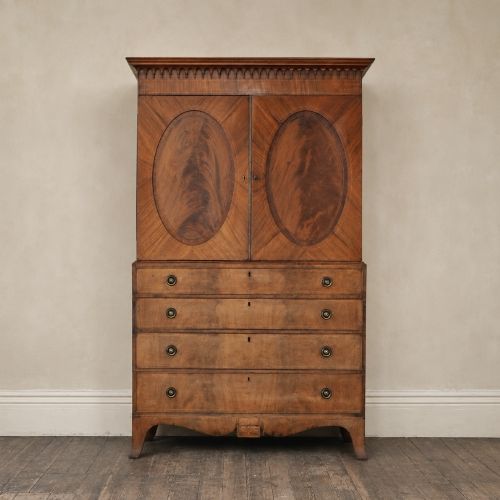
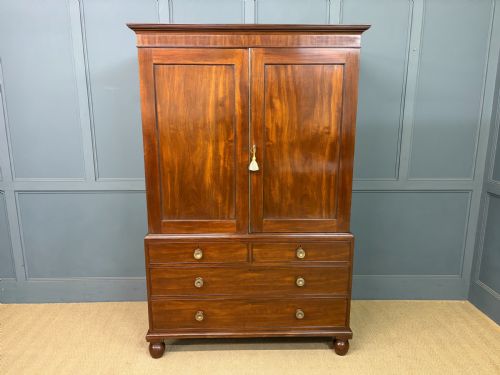
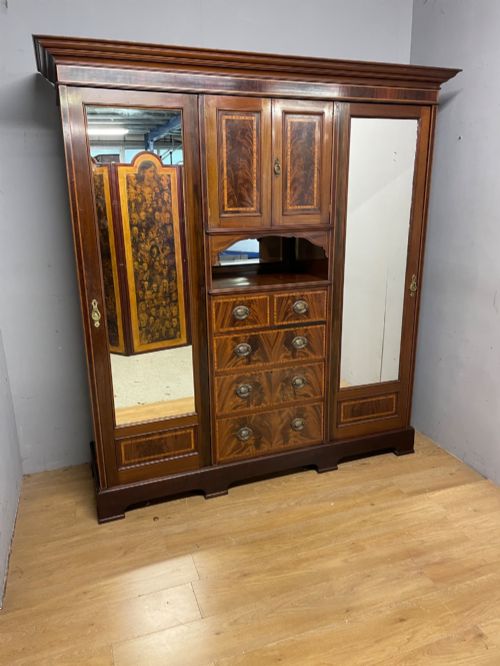
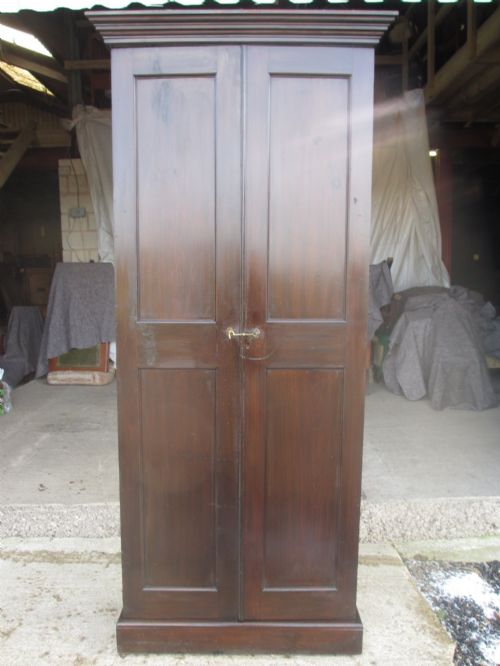
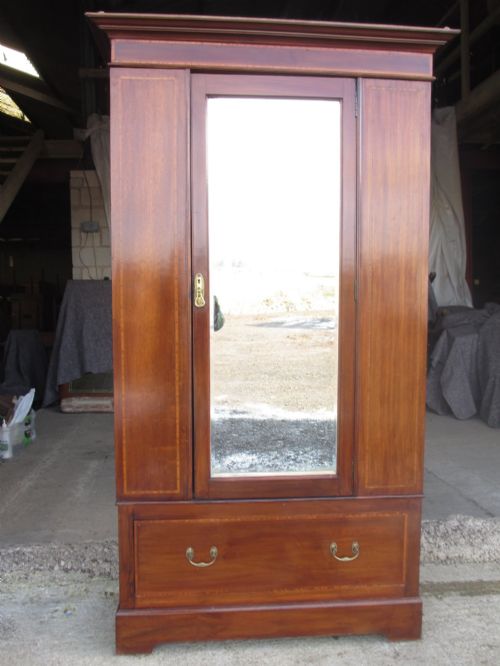
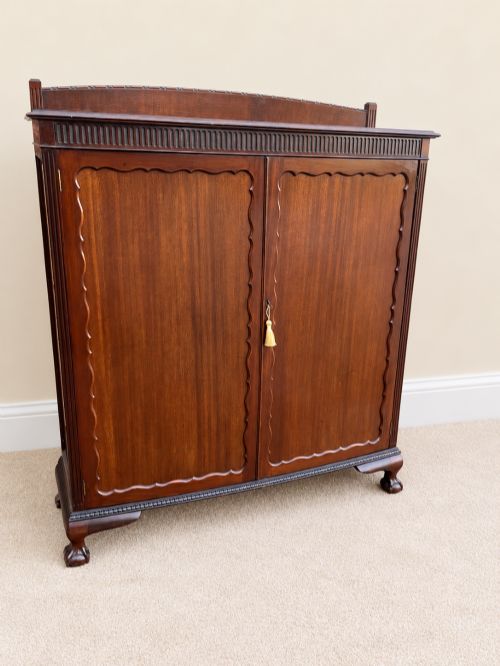
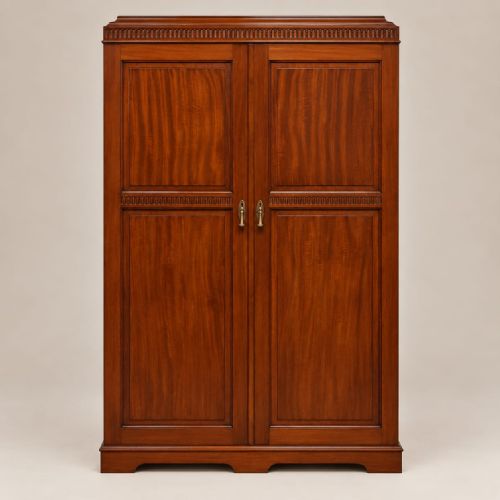
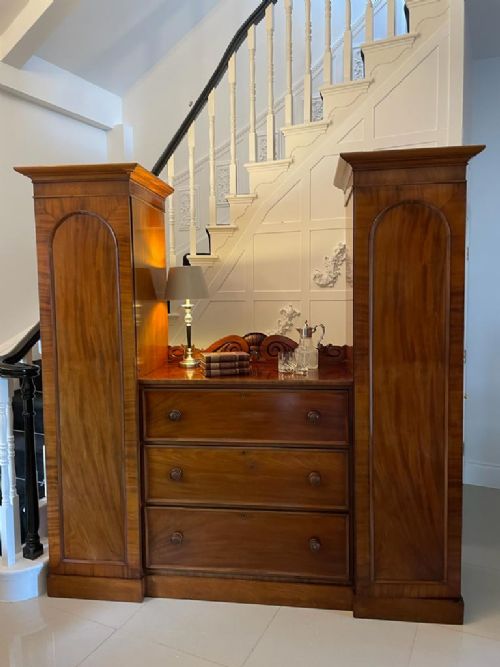
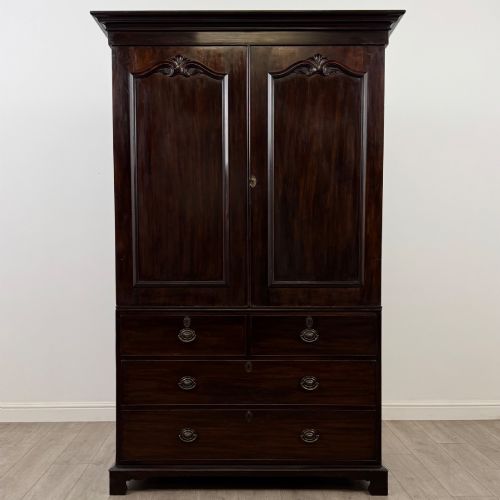
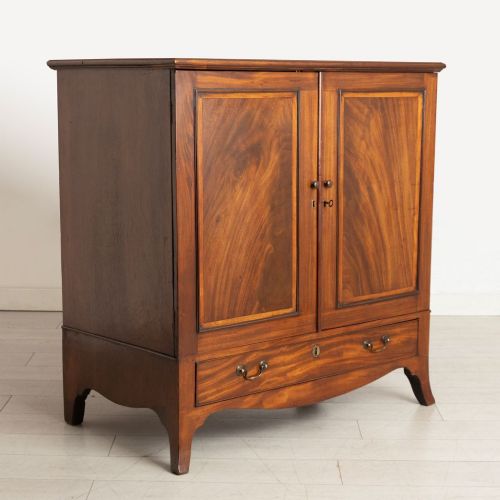
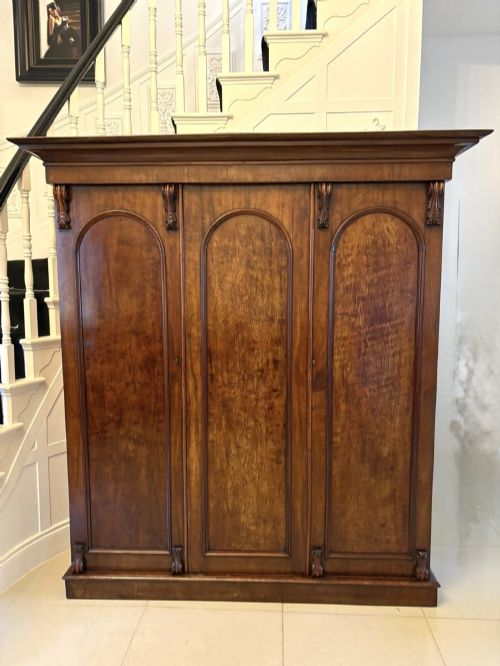
A mahogany linen armoire combines the roles of a wardrobe and a linen press, appearing across Georgian, Regency, William IV, Victorian, and Edwardian periods. These pieces take the form of double wardrobes, compactums, and press cupboards designed to house linens and garments.
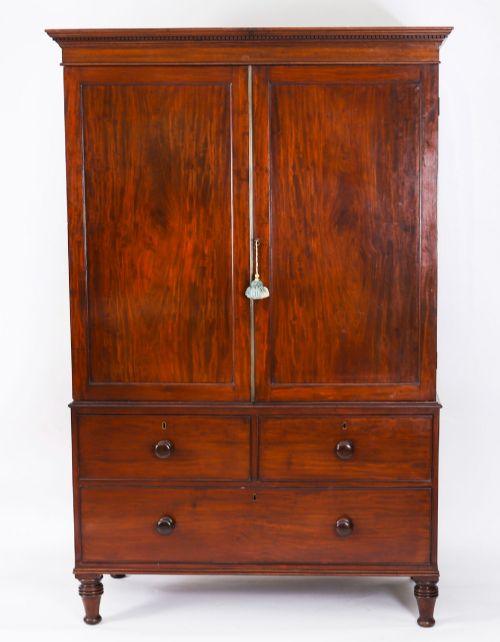
The examples gathered here range from early George III pieces to Edwardian and Sheraton Revival interpretations. Buyers frequently encounter Georgian presses featuring upper cabinet doors above drawer bases alongside later Victorian multi-door wardrobes.
Gradations of quality
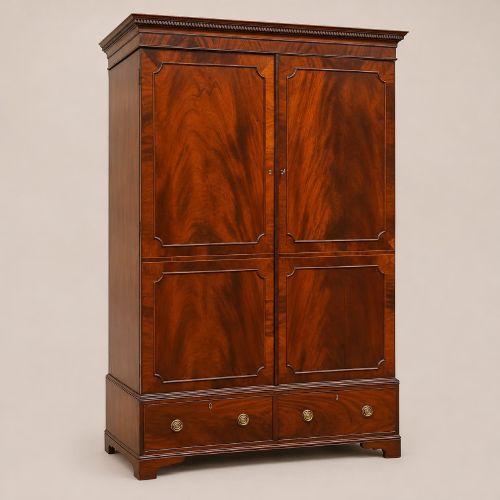
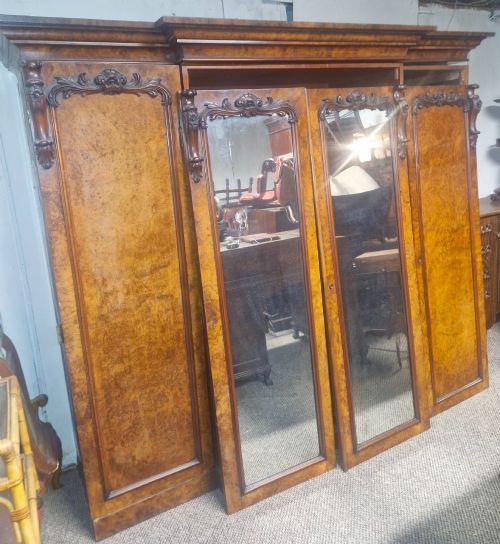
The hierarchy rests upon timber selection, where highly figured flame mahogany veneer or carefully matched grains elevate a piece above plain stock. Cabinet makers who invested time in delicate satinwood inlay and precise architectural cornices produced superior results.
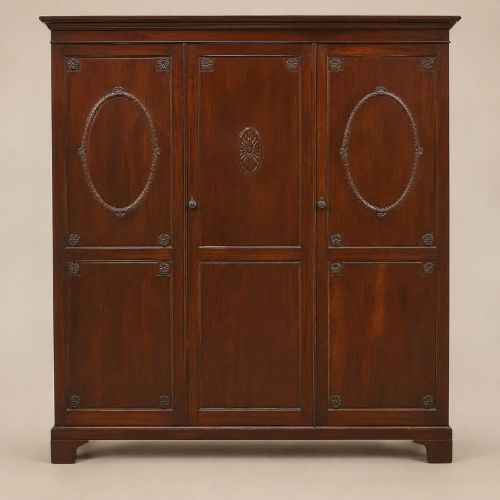
Proportion and internal arrangement also dictate standing. Larger four-door configurations and combination compactums demand greater joinery skill than standard double wardrobes, particularly when housing complex internal linen slides and drawers.
Mahogany Linen Armoire Retail Price Guide 2026
Typical asking prices for mahogany linen armoire among the pieces listed under this phrase on Sellingantiques today, from the lower quarter to the upper quarter. They describe what is for sale here now, not the wider market.
Housekeepers utilised deep lower drawers to store winter woollens safely away from household drafts.
Edwards and Roberts·Gillows·S and H Jewell·Druce and Co
The Mahogany Linen Armoire Glossary
- Compactum
- A multi-functional wardrobe combining hanging space, shelves, and internal drawers within a single fitted unit. These pieces offer comprehensive storage solutions for varied garments.
- Linen Press
- A tall piece featuring upper cabinet doors that enclose sliding trays for folded textiles, positioned above a chest of drawers base. They originated for domestic linen storage before hanging wardrobes became standard.
- Flame Mahogany Veneer
- A thin slice of timber cut from the fork of the mahogany tree, displaying a characteristic flickering, flame-like grain pattern. Cabinet makers applied these veneers to prominent exterior doors and drawer fronts.
- Blind Fretwork
- Carved ornamentation applied to a flat surface in geometric or interlaced patterns without piercing through to the wood beneath. It often decorates the cornice of Georgian presses.
- Satinwood Inlay
- Contrasting light yellow timber inserted into recesses within the darker mahogany surface to create decorative borders and motifs. This technique defines Sheraton Revival and later inlaid pieces.
Mahogany Linen Armoire: Frequently Asked Questions
How do I identify a Georgian linen press?
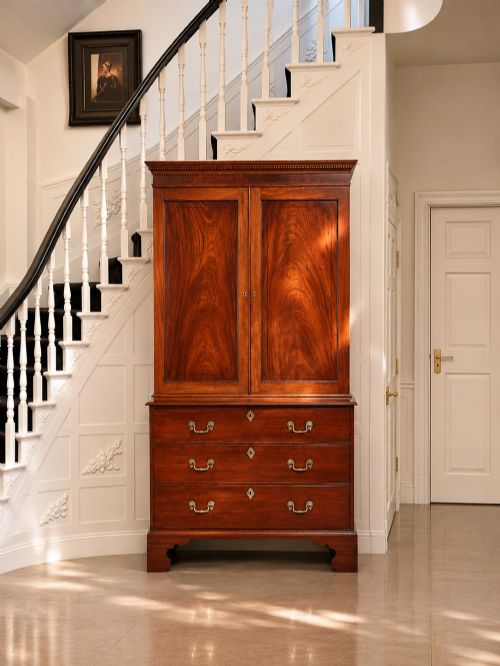
Georgian linen presses typically present a rectangular upper cabinet with panelled doors that open to reveal sliding shelves, set upon a base containing multiple working drawers. Their proportions tend to be architectural, often finished with dentil moulding or blind fretwork along the cornice.
Subsequent periods introduced softer lines and varied configurations, but the foundational division between upper linen storage and lower drawers remains characteristic of the Georgian form.
What is the difference between a wardrobe and an armoire?
A wardrobe specifically denotes a tall cupboard equipped primarily for hanging garments on rails or pegs. An armoire is a broader term that encompasses French and continental cabinets which may combine hanging space with shelves or mirror panels.
British examples listed here frequently use press and wardrobe interchangeably, reflecting changing domestic storage needs across the nineteenth and twentieth centuries.
How should I care for flame mahogany veneer?
Flame mahogany veneer requires stable indoor humidity and protection from direct sunlight to prevent the timber from fading or the underlying glue from drying. Regular dusting with a soft, dry cloth maintains the polished surface without the need for heavy waxes.
Avoiding placement near heat sources preserves the structural integrity of the large panel doors and prevents timber movement.
Can these large wardrobes be dismantled for transport?
Many nineteenth-century wardrobes and linen presses were constructed with modular carcases that bolt or peg together to allow for room-to-room transit. Larger pieces often separate into a cornice, upper doors, hanging sections, and a drawer base.
Checking the construction method helps determine whether a specific cabinet requires professional assembly upon delivery.