

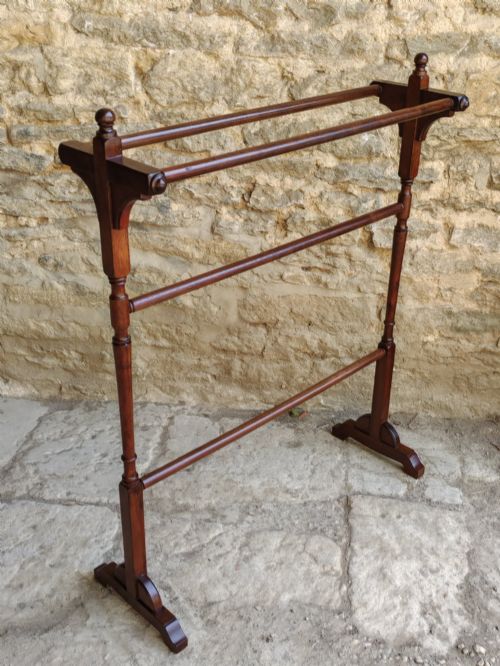
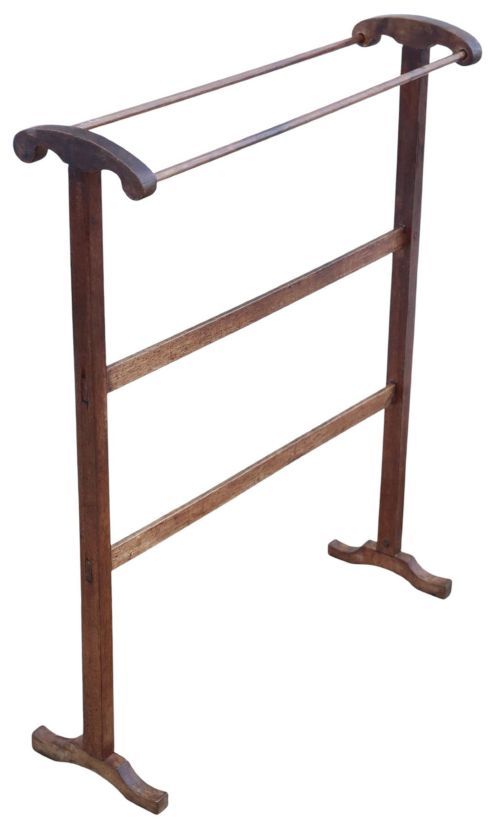
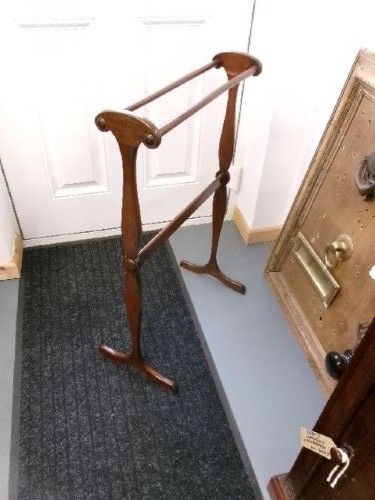
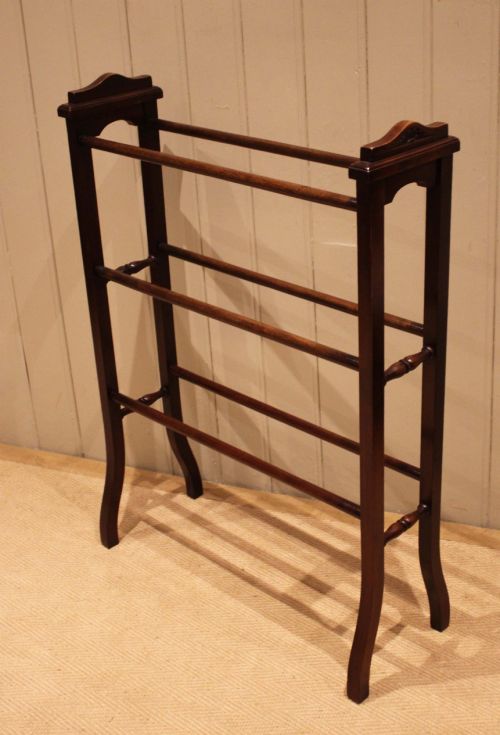



Mahogany Horse Airer
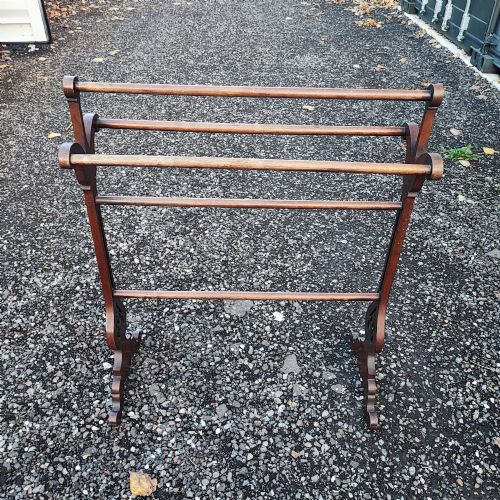
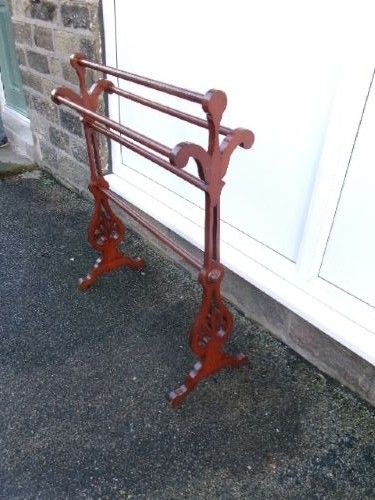
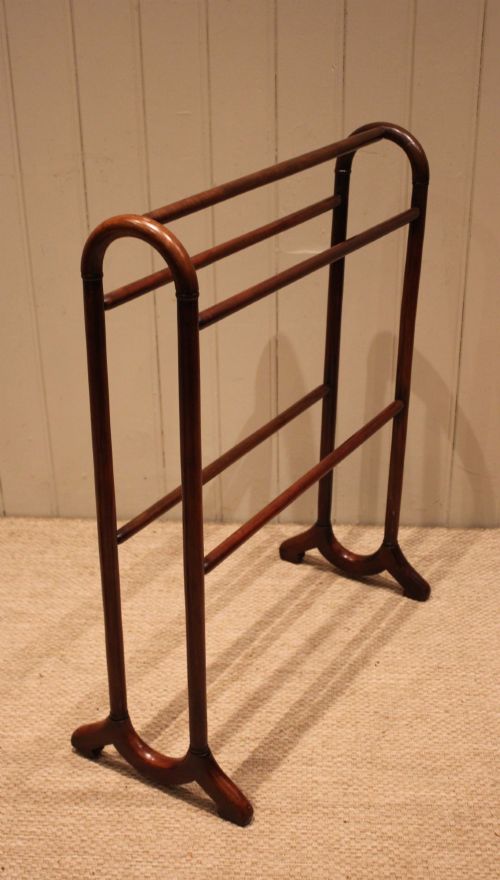
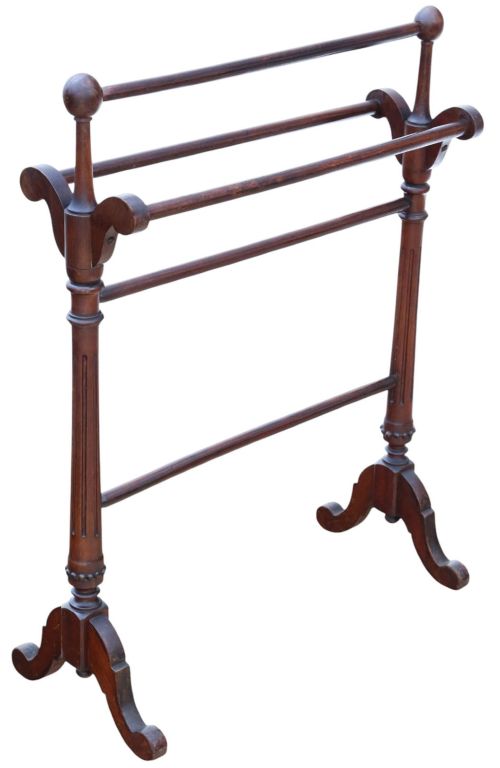
A mahogany horse airer is a sturdy timber frame designed for drying laundry, combining practical utility with rich wood tones that suit traditional interiors.
Mahogany Horse Airer
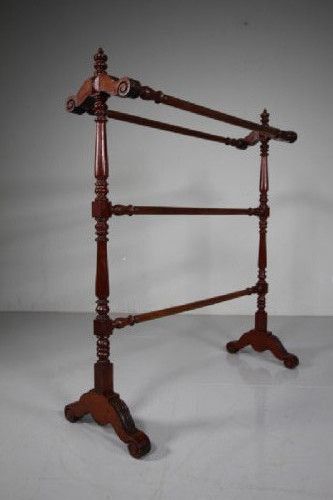
When someone searches for a mahogany horse airer, they are looking at wooden towel rails and clothes stands designed for domestic use. These pieces appear in forms ranging from small rails to large oversized and multi-fold stands.
The versions most likely to be met on this page date from the nineteenth and early twentieth centuries. They span periods such as Regency, William IV, Victorian, and Edwardian, reflecting domestic laundry habits of the past.
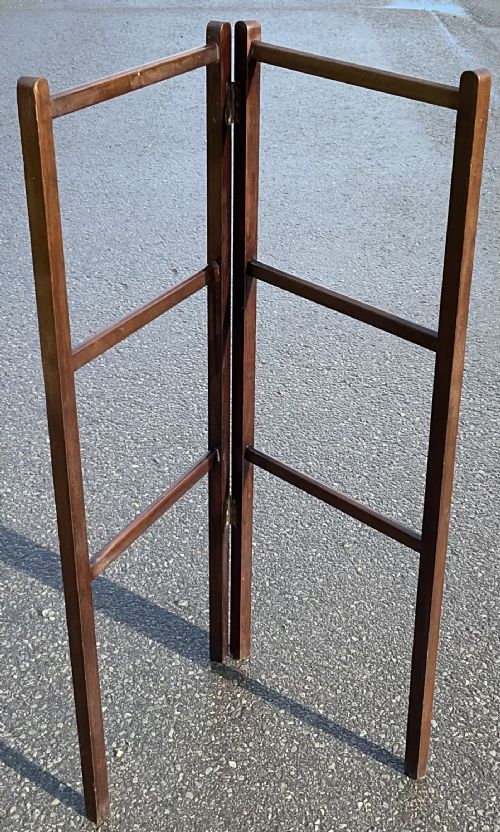
Makers constructed these frames primarily to stand in bedrooms, nurseries, or dressing rooms for airing textiles. Their forms include standing rails, folding cheval designs, and multi-bar configurations.
How they were made
Craftsmen built these laundry frames using solid timber, predominantly mahogany, sometimes accented with secondary woods like oak or boxwood. Workshops utilised brass fittings to secure joints or hinges on folding stands.
Makers incorporated multi-bar arrangements and occasionally delicate inlay work into the frame structure. These construction choices provided the necessary stability for hanging damp linens and heavy garments.
Mahogany Horse Airer Retail Price Guide 2026
Typical asking prices for mahogany horse airer among the pieces listed under this phrase on Sellingantiques today, from the lower quarter to the upper quarter. They describe what is for sale here now, not the wider market.
The inventory includes standing, folding, and multi-bar towel rails, with several pieces noted for their large or oversized proportions.
What varies in quality
The distinction between standard domestic items and finer examples lies in the selection of timber and the complexity of the frame. Superior pieces display carefully chosen mahogany grain, robust joint construction, and thoughtful proportions.
Design variations also separate simpler rails from more substantial pieces, such as oversized stands or those attributed to notable workshops. The presence of secondary materials like brass hardware and boxwood stringing elevates the finish.
The Mahogany Horse Airer Glossary
- Mahogany
- A durable reddish-brown tropical hardwood prized for its rich colour and stable working properties. Furniture makers utilised it extensively throughout the nineteenth century.
- Boxwood
- A dense, pale yellow wood often utilised for stringing or decorative inlay on cabinet work. It provides a sharp contrast against darker timbers.
- Cheval
- A freestanding frame design supported by feet or trestles, allowing the central section to pivot or fold. This configuration appears in mirrors and laundry airers alike.
- Regency
- A British design period spanning the early nineteenth century, characterised by classical influences and refined proportions. Pieces from this era often exhibit clean architectural lines.
Mahogany Horse Airer: Frequently Asked Questions
What is a mahogany horse airer used for?
These wooden frames served as domestic clothes and towel rails, positioned near fires or in dressing rooms to dry and air textiles.
Today, people utilise them in bathrooms and bedrooms for hanging towels or displaying blankets.
How do I identify a Victorian horse airer?
Victorian examples typically feature sturdy mahogany construction with standing or folding multi-bar configurations designed for heavy daily use.
Examining the timber grain and joint construction helps distinguish these mid to late nineteenth-century pieces from later Edwardian reproductions.
Are these clothes rails folding?
Many of the listed pieces include folding designs, such as three-fold and cheval configurations, which allowed users to collapse the frame when not in use.
This folding capability made storage straightforward in smaller domestic spaces.
What woods are used besides mahogany?
While mahogany forms the primary structure of these airers, makers occasionally incorporated oak for added strength or boxwood for decorative inlay details.
Brass fittings also appear on hinges and supports to ensure smooth movement on folding models.