


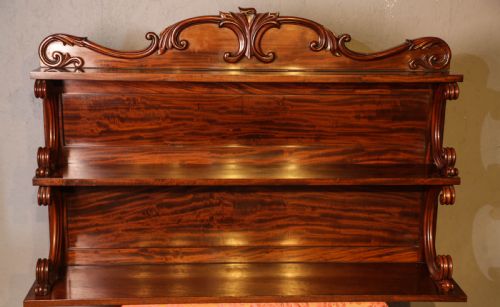


Mahogany Hanging Bookshelves
Mahogany hanging bookshelves offer practical wall storage with rich timber grain, bringing warmth and classic proportion to any room.
Mahogany Hanging Bookshelves
Mahogany hanging bookshelves are wall-mounted storage units designed to hold books and display small objects off the floor. The examples seen here range from simple two-tier wall shelves to more elaborate portable bookshelves and waterfall designs.
Most pieces encountered on this page belong to the nineteenth century, with Victorian, Regency, and Edwardian periods well represented. Pieces from the eighteenth century also appear, alongside French nineteenth-century interpretations.
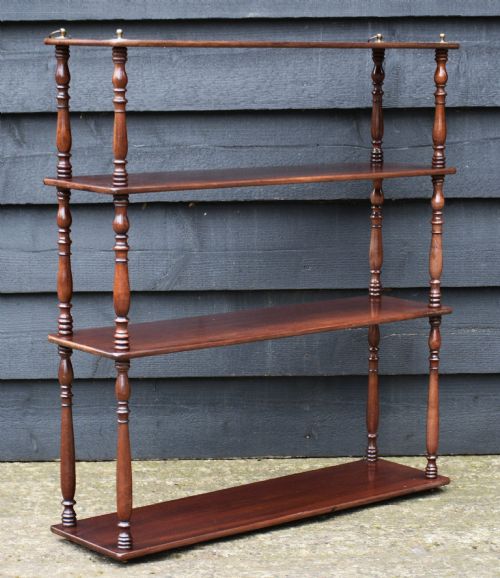
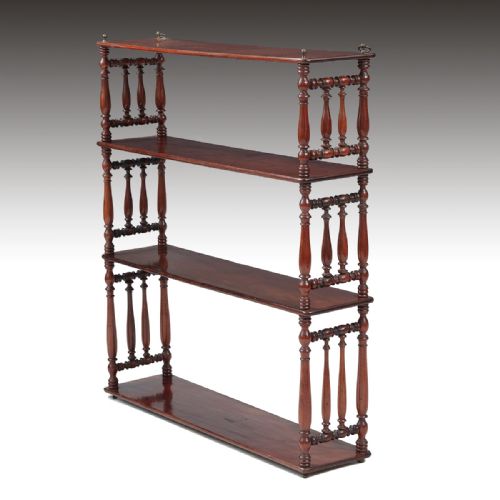
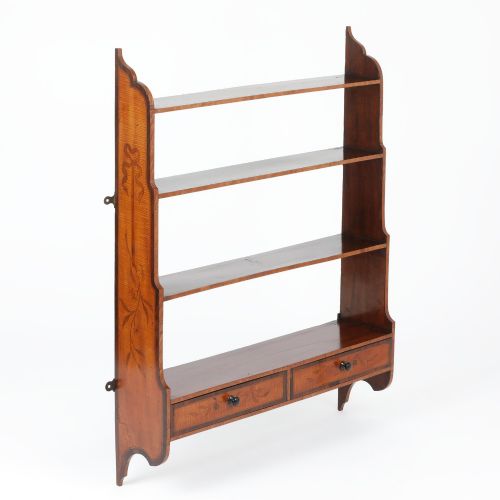
Forms include wall shelves, hanging shelves, shelving units, wall bookcases, display shelves, and mounted whatnots. These versatile pieces suit study spaces, hallways, or living rooms where floor space is limited.
How they were made
Brass fittings appear on mounting points and structural elements, providing both decorative contrast and functional support for wall hanging. Joinery relies on traditional carpentry techniques appropriate to the period of manufacture, from Regency workshops to Edwardian production.
Mahogany Hanging Bookshelves Retail Price Guide 2026
Typical asking prices for mahogany hanging bookshelves among the pieces listed under this phrase on Sellingantiques today, from the lower quarter to the upper quarter. They describe what is for sale here now, not the wider market.
Listings feature mahogany, satinwood, and brass across Victorian, Regency, Edwardian, and eighteenth-century periods.
What varies in quality
The choice of timber grain sets the finer pieces apart, particularly where flame mahogany veneer creates striking patterns across the backboards and shelves. Subtle details like satinwood inlay or bobbin turnings elevate simpler utilitarian forms into decorative focal points.
Proportion and structural integrity define the standard of execution, separating standard workshop output from finer cabinet work. Original brass hardware and sound joints indicate superior craftsmanship from the period.
The Mahogany Hanging Bookshelves Glossary
- Waterfall bookshelves
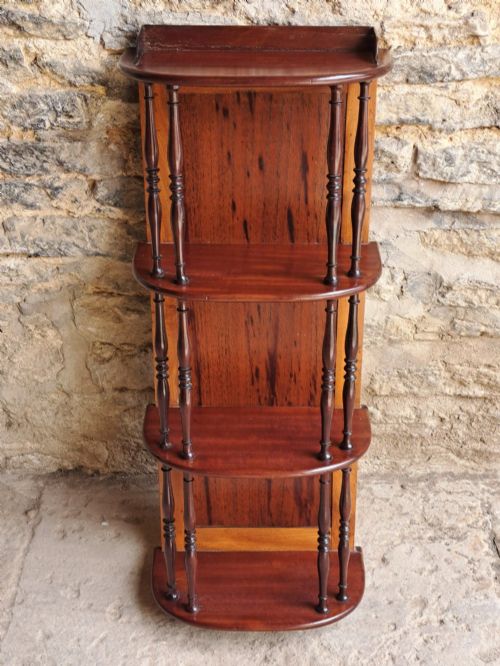
- Graduated tier shelving where each lower shelf extends further forward than the one above it. This style became popular for displaying books and small ornaments.
- Flame mahogany veneer
- A thin slice of timber cut from the fork of the mahogany tree to create a distinctive flickering flame pattern. It decorates the surfaces of finer cabinets and shelves.
- Whatnot
- An open set of tiered shelves designed for displaying ornaments, books, or curiosities. Mounted versions fix directly to the wall rather than standing on legs.
- Bobbin shelves
- Shelving supported by turned wooden columns resembling bobbins used in textile manufacturing. This decorative turning technique appears on nineteenth-century pieces.
- Regency period
- The British design era spanning roughly from the early nineteenth century through the eighteen-twenties. Pieces from this time often feature clean lines influenced by classical antiquity.
Mahogany Hanging Bookshelves: Frequently Asked Questions
How do you hang antique bookshelves securely?
These units rely on sturdy brass brackets or mounting plates integrated into the back frame. Fixings must attach directly to wall studs or use appropriate wall anchors to support the weight of the timber and books.
Ensuring correct installation protects both the wall and the antique structure from strain.
How do you distinguish Victorian from Regency shelves?
Regency pieces often display restrained classical lines influenced by early nineteenth-century design. Victorian examples tend to be heavier in construction with more ornate detailing or turned elements like bobbins.
Examining the secondary woods and joinery helps confirm the manufacturing era.
Can these shelves hold heavy books?
Most hanging shelves suit lighter volumes, displays, and paperbacks rather than heavy folio volumes. The depth of the shelves and the strength of the wall fixings determine the appropriate weight capacity.
Distributing heavier books toward the lower tiers helps maintain stability.