


Mahogany Footrest
A mahogany footrest is a sturdy timber-framed support designed to elevate the feet while seated, bringing period craftsmanship and practical comfort to firesides and reading corners.
Mahogany Footrest
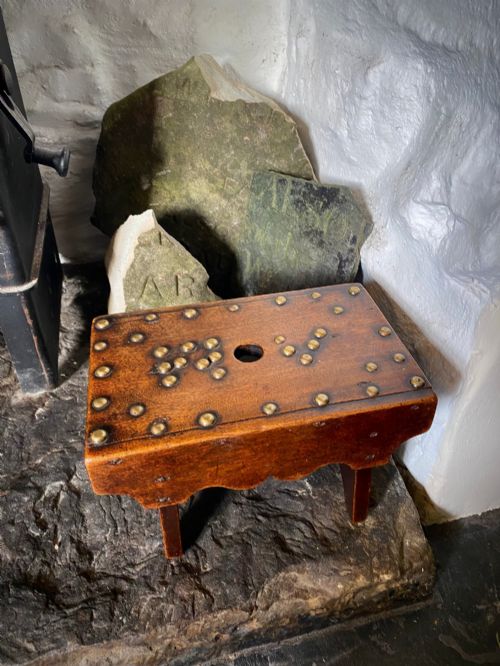
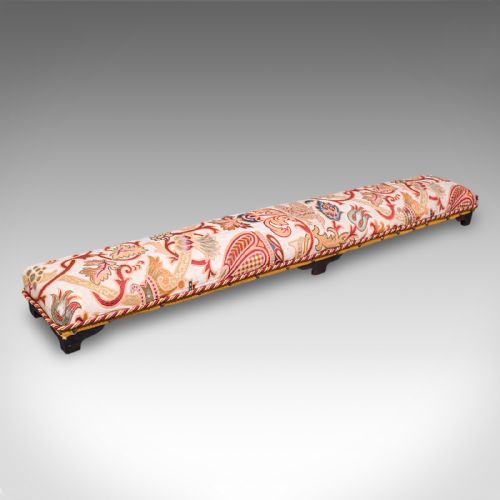
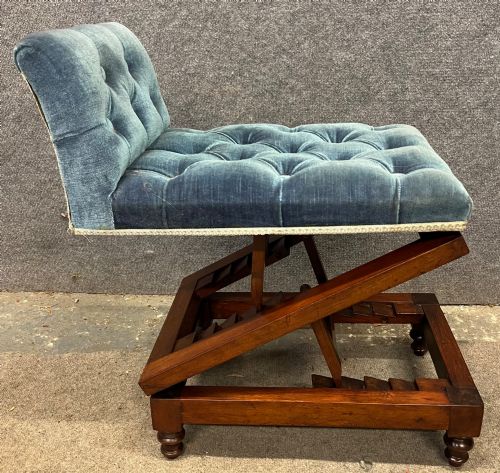
When searching for a mahogany footrest, buyers encounter various low seating forms designed for comfort and leisure. The selection spans compact stools, long carriage rests, and gout stools intended for elevated leg support.
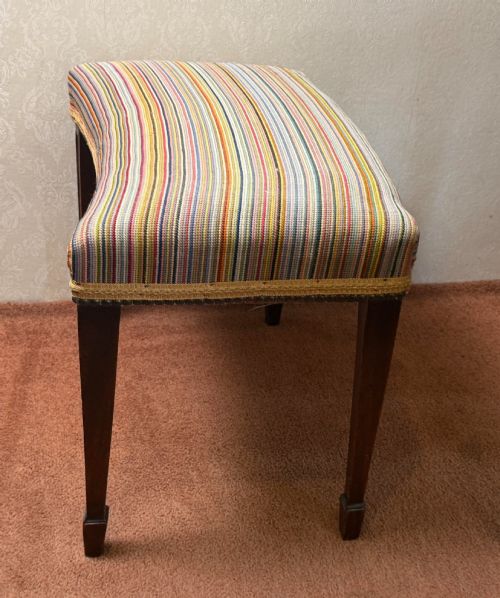
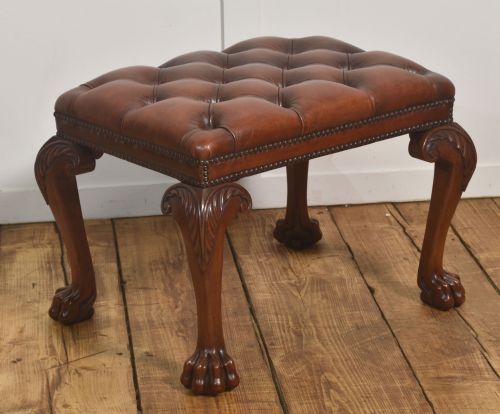
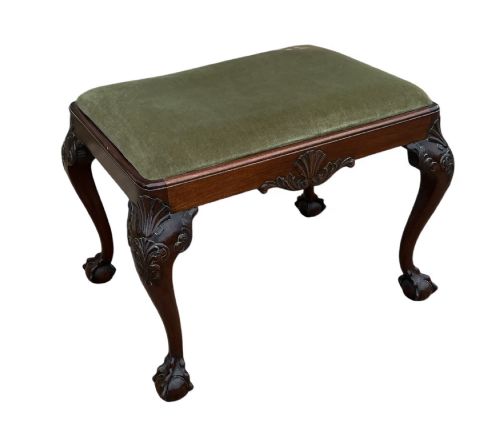
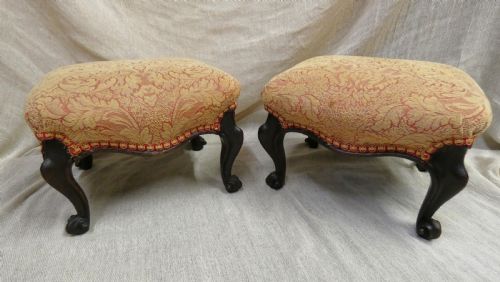
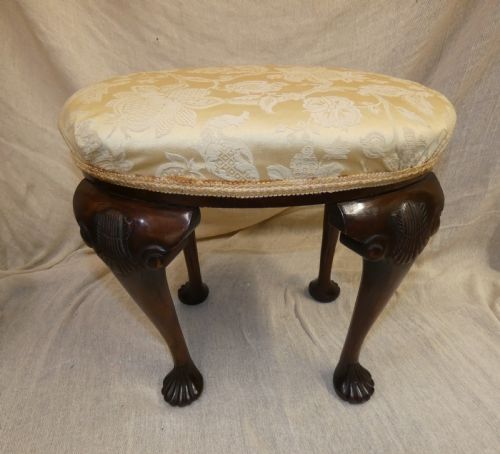
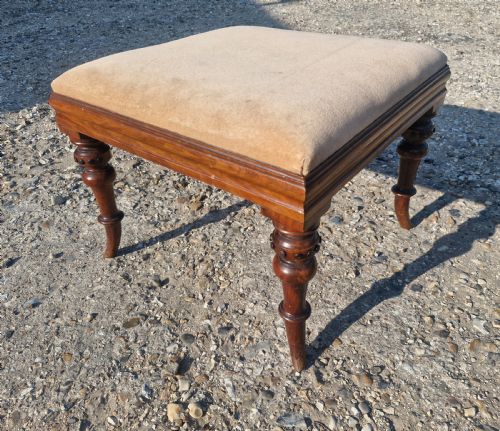
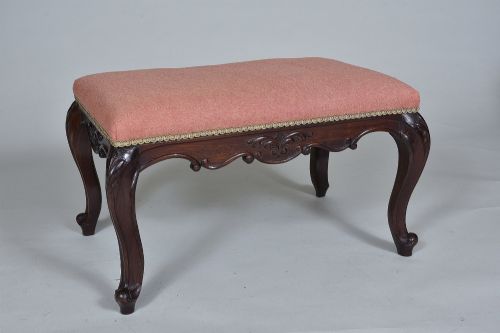
Most examples originate from the nineteenth century, including Victorian and Regency periods, alongside later revival styles. Common structural variations include cabriole legs, square tapering legs, and low frames fitted with brass castors.
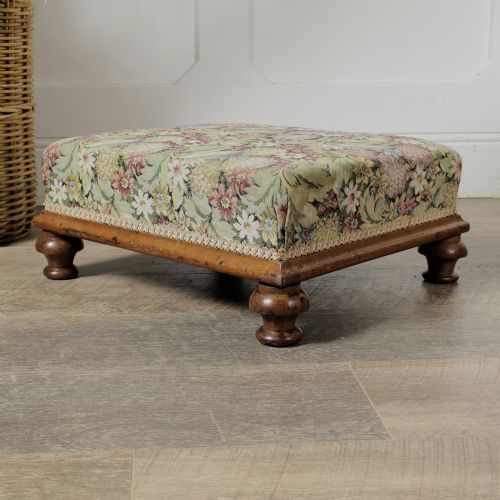
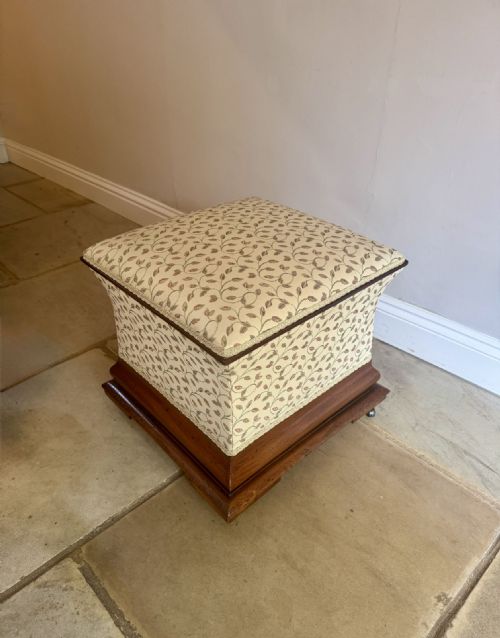
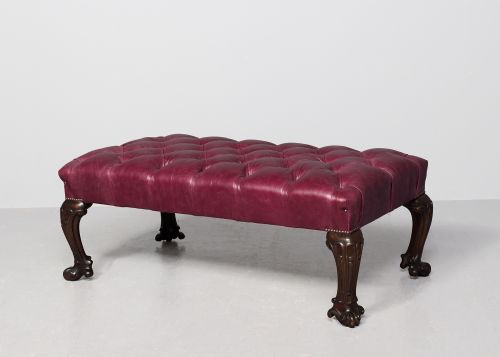
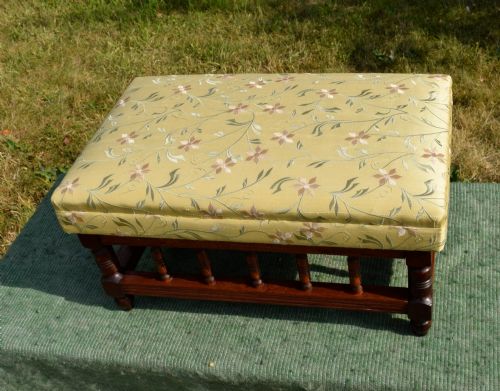
Upholstered variations feature prominently, ranging from simple padded tops to buttoned red hide and textiles. Pieces frequently utilise needlepoint, tapestry, crewelwork, kilim, or Liberty fabric for the top surface.
Timber and upholstery construction
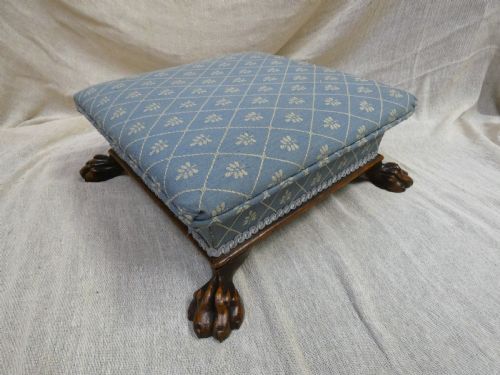
Makers utilised solid mahogany for the structural frames, often shaping the timber into carved cabriole legs, scroll tops, or lion paw feet. Brass elements such as castors and adjustable mechanisms appear frequently on functional resting pieces.
The top surfaces combine traditional upholstery stuffing with diverse textile coverings. Wool, leather, velvet, and woven tapestries are secured over padded foundations to provide firm yet comfortable support.
Mahogany Footrest Retail Price Guide 2026
Typical asking prices for mahogany footrest among the pieces listed under this phrase on Sellingantiques today, from the lower quarter to the upper quarter. They describe what is for sale here now, not the wider market.
Listings demonstrate mahogany frames paired with brass, leather, wool, and tapestry across Victorian, Regency, and Edwardian periods.
Evaluating period timber and upholstery standards
Quality rests upon the crispness of the mahogany timber carving and the integrity of the frame joints. Superior examples display thoughtful proportions, refined leg shapes, and substantial weight in the timber.
The standard of the upholstery finish and the authenticity of the covering materials significantly influence the character of each piece. Original leather, hand-worked tapestry, or period woven textiles elevate the historical integrity of the support.
Howard and Sons·Thonet
The Mahogany Footrest Glossary
- Gout stool
- An adjustable footrest specifically designed to elevate and support legs affected by joint pain. These pieces often feature pivoting platforms or mechanical adjustments.
- Ottoman
- A low, upholstered seat or footstool lacking a back or arms, sometimes incorporating internal storage beneath the top panel.
- Bergere
- A closed-arm upholstered armchair or stool featuring woven cane panels. This method creates a light, supportive lattice surface.
- Cabriole leg
- A furniture leg that curves outward at the knee and tapers inward toward the foot, drawing inspiration from animal limbs.
- Kilim
- A flatwoven textile originating from the Middle East or Eastern Europe. These durable fabrics often feature geometric patterns utilised on period upholstery.
Mahogany Footrest: Frequently Asked Questions
What is a gout stool?
A gout stool is a specialised rest featuring an adjustable mechanism to elevate the legs at a comfortable angle. These pieces were historically prescribed for individuals requiring lower limb support.
They often include pivoting top platforms and solid mahogany framing, combining mechanical utility with domestic comfort.
How do I identify a Regency footrest?
Regency pieces typically display classical revival motifs, such as scroll top designs, carved lion paw feet, or bold mahogany grains. These supports reflect early nineteenth-century design aesthetics.
They often incorporate high-quality brass hardware and substantial timber frames suited for formal entertaining spaces.
Are these footrests suitable for daily use?
Most antique footrests are structurally robust and function well in modern living spaces for resting feet or serving as secondary seating. Their solid mahogany construction provides reliable everyday stability.
Care should be taken with delicate vintage textiles, ensuring the upholstery is treated with appropriate conservation in mind.
What textiles cover these footstools?
Upholstery materials span leather, velvet, wool, needlepoint, and traditional tapestry work. Many pieces retain period woven coverings or historical revival fabrics.
These varied surfaces contribute distinct textures and visual warmth to traditional and contemporary rooms alike.