




Mahogany Folio Rack
These mahogany folio rack examples offer practical paper storage, combining adjustable stands and magazine tables to organise large prints.
Mahogany Folio Rack
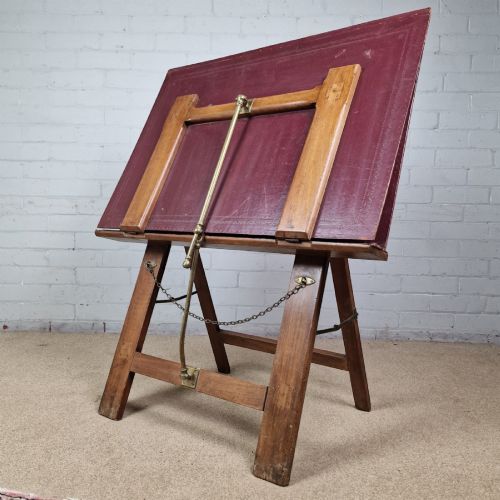
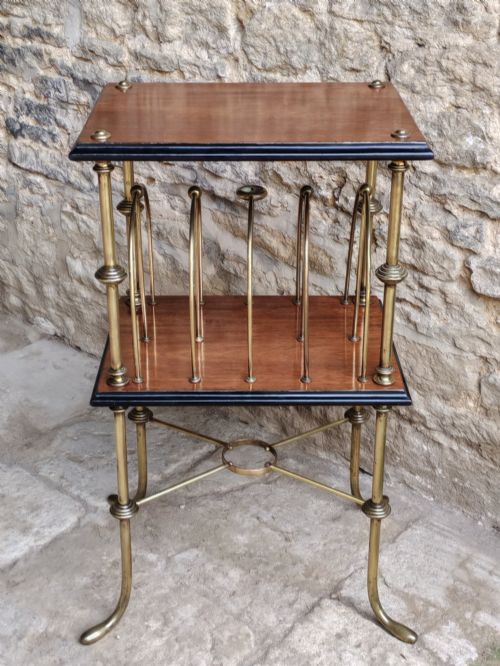
A mahogany folio rack serves as a dedicated holder for large papers, prints, and drawings, appearing in forms such as folio stands, magazine tables, and canterburys. When you explore this selection, you encounter pieces originating from the Regency, Georgian, and Victorian periods.
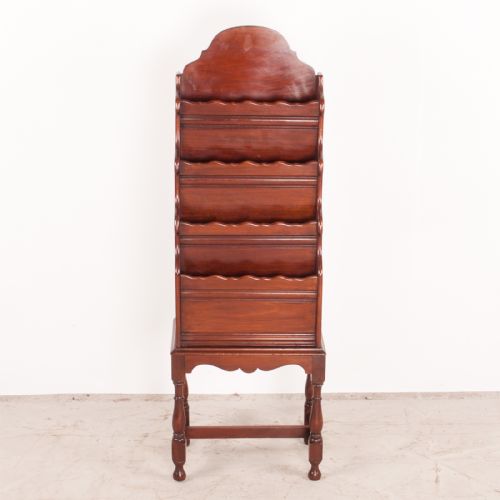
The objects span multiple structural types, including grand scale folio stands, occasional tables, magazine racks, low tables, and shelving units. Many pieces date specifically to the 19th century, around 1820, 1850, and 1920.
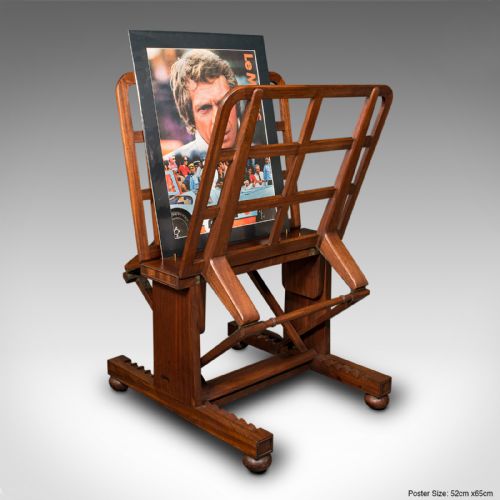
Makers and design origins reflect classical British cabinet making traditions, encompassing specific attributions like Gillow's alongside country house examples. Buyers frequently find adjustable artist stands and architect picture racks designed for functional workspace utility.
Materials and construction
The primary structural timber across these pieces is mahogany, often paired with secondary woods like oak, providing both rich grain patterns and robust physical support. Cabinet makers utilised this dense hardwood to handle the substantial weight of stacked paper and heavy folios.
Metal and leather elements appear frequently to supplement the wooden framework, with brass fittings and handles enhancing both mobility and mechanical adjustment. Turned feet and original castors allow these sizeable stands to move smoothly across floors.
Architects and artists once relied on these very stands to keep massive picture folios from taking over the floor.
Distinguishing quality
Quality reveals itself through the sophistication of the joinery and the presence of working mechanical adjustments that operate smoothly. Superior examples display refined timber selection with consistent mahogany figuring across the entire frame.
The integration of original brass hardware and castors indicates higher manufacturing standards, distinguishing grand scale pieces from simpler domestic utility items.
The Mahogany Folio Rack Glossary
- Folio stand
- A specialised piece of furniture designed to hold large sheets of paper, prints, or artwork upright or at a slanted angle. These stands often feature adjustable mechanisms to display contents easily.
- Canterbury
- A low multi-partitioned stand traditionally used for sheet music, folios, or magazines, featuring slatted divisions. It frequently includes a carrying handle or lower drawer.
- Regency
- An architectural and design style spanning the early 19th century, characterised by classical restraint, elegant proportions, and Greek or Roman motifs. Furniture from this period often uses dark timbers like mahogany.
- Castor
- A small wheel mounted in a swivel frame attached to the legs of furniture to allow easy rolling. Original castors add authenticity to 19th-century pieces.
Mahogany Folio Rack: Frequently Asked Questions
What is a folio stand used for?
A folio stand holds large paper items such as artist sketches, architectural plans, prints, and bound folios. They keep large documents accessible without risking creases or tears from flat stacking.
Historically, artists, architects, and collectors utilised these stands in studios and libraries to browse through visual collections efficiently.
How do I date a mahogany folio rack?
Dating relies on identifying period styles, timber characteristics, and mechanical hardware like brass screws or castors. Regency and Georgian examples display distinct classical proportions and cabinet-making techniques.
Later Victorian and 19th-century interpretations often incorporate heavier turnings or simpler utility framing compared to earlier custom commissions.
Are these racks adjustable?
Many artist and architect folio stands feature adjustable mechanisms to alter the display angle of the stored papers. This allows the user to view contents comfortably while standing or sitting.
Not every form is adjustable; magazine tables and canterburys maintain fixed partitions rather than pivoting frames.
How do I fit one into a modern room?
These racks function well in studies, living rooms, and hallways as both display furniture and practical storage for large books or art prints. Their open frames maintain a light visual footprint despite the solid mahogany construction.
Positioning them near a reading area or desk allows you to store current periodicals and oversized volumes close at hand.