
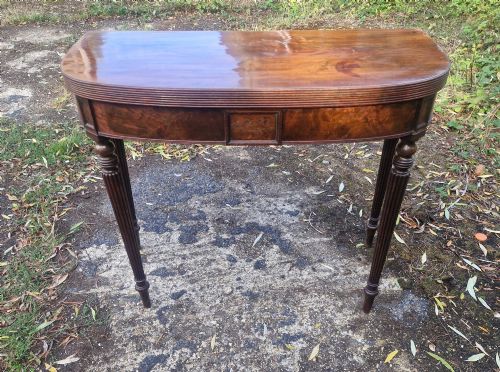
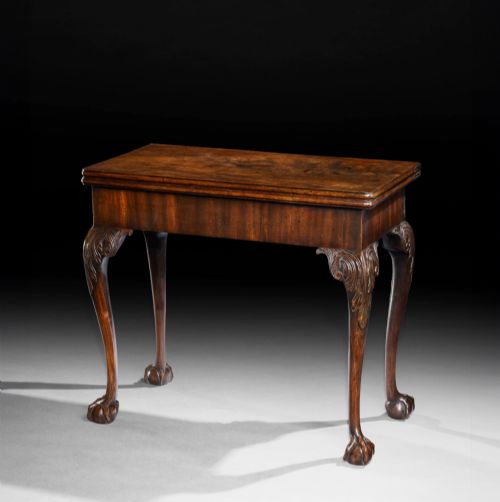
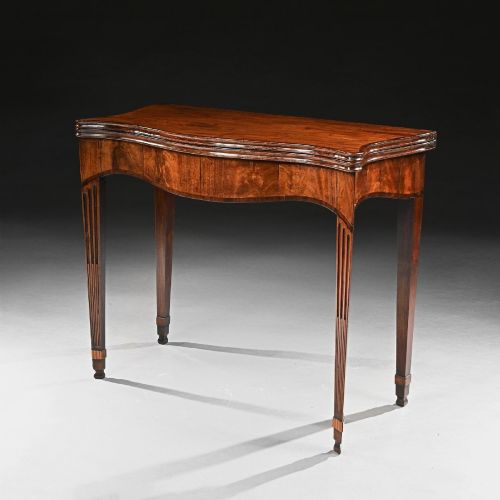

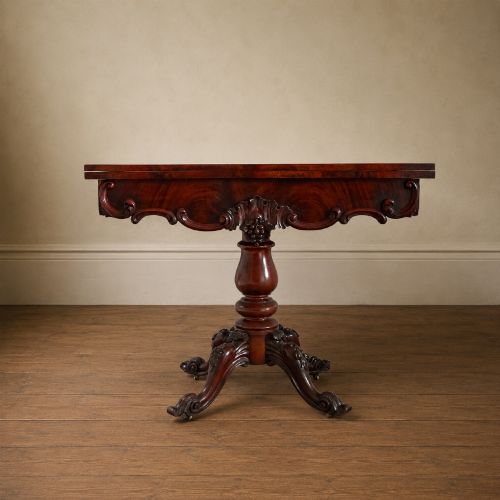
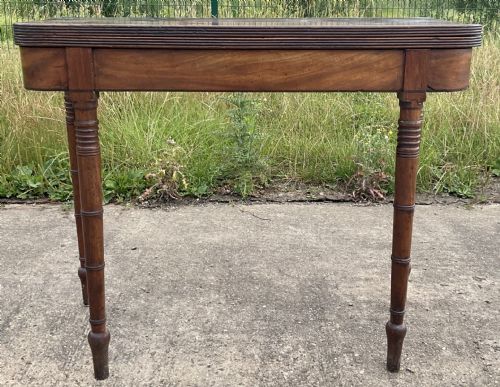
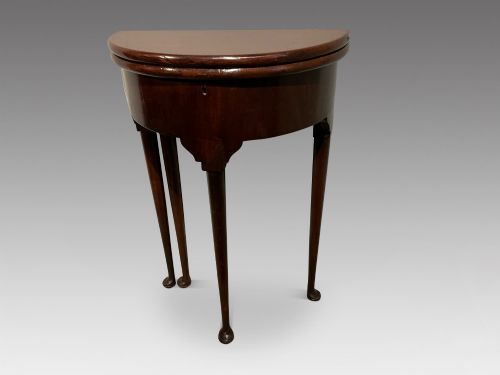
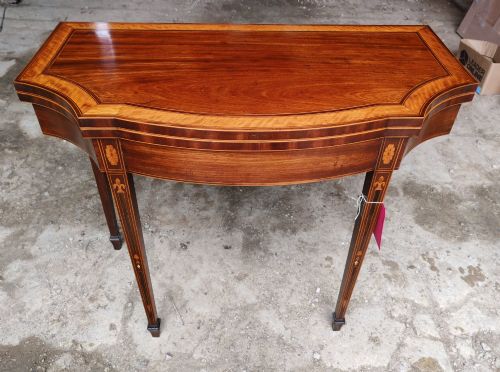
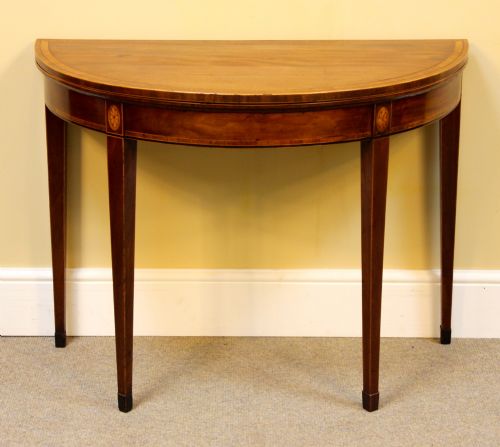
Mahogany Foldover Games Table
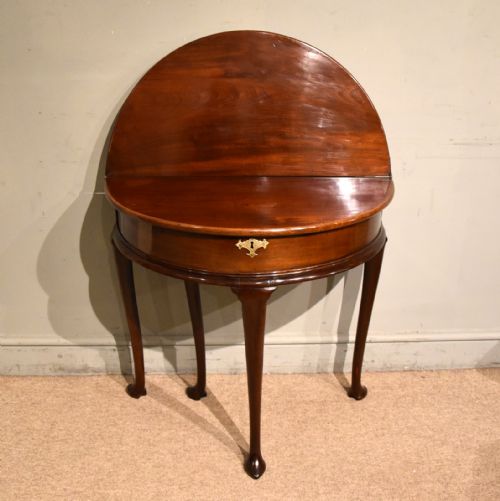
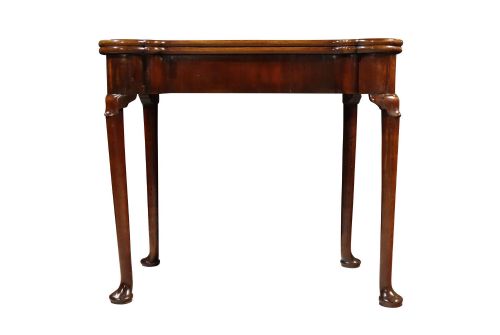
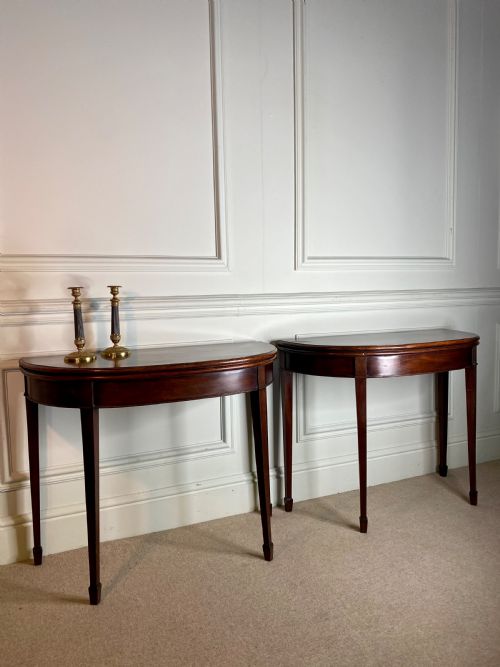
A mahogany foldover games table brings domestic parlour pastimes into focus, offering a dual-purpose surface that opens from a compact console.
Mahogany Foldover Games Table
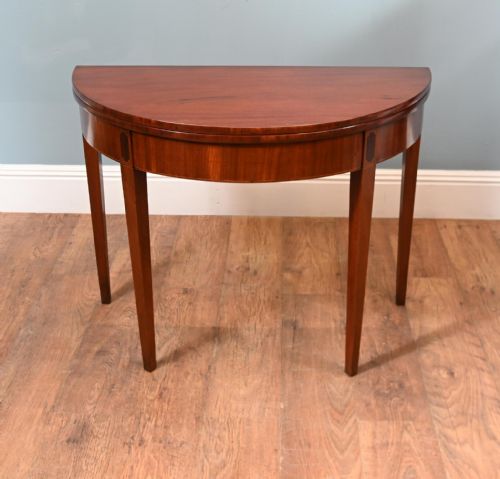
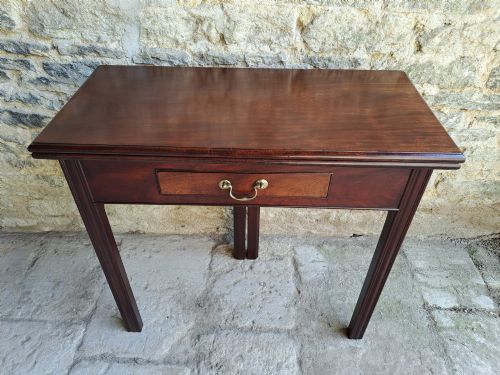
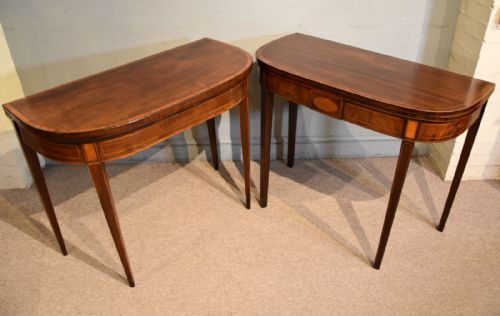
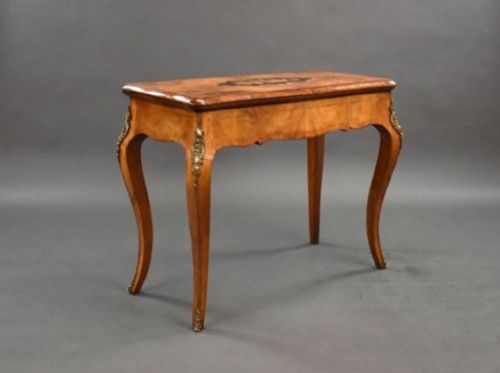
A mahogany foldover games table is encountered across the eighteenth and nineteenth centuries, taking forms such as card tables, tea tables, and console tables. These pieces originate in periods spanning the Georgian, Regency, and Victorian eras.
The most frequent examples found here display D-shaped, demi-lune, or rectangular tops designed to swivel and unfold against a hinged leaf. They serve primarily as occasional tables when closed and expand to accommodate evening entertainment when opened.
Makers and workshops construct these items in distinct regional styles, including George III, George IV, Sheraton, and Victorian designs. Buyers regularly select them for reception rooms where space-saving dual functionality remains practical.
Materials and Technique
Constructed predominantly from solid mahogany and wood veneer, these tables frequently incorporate secondary timbers and detailed decorative elements. Cabinetmakers applied brass inlay, satinwood, boxwood, rosewood, and ebony to enhance the primary surfaces.
Specialised mechanisms such as concertina actions permit the rear legs to extend safely when supporting the unfolded top. Workshops utilised precise joinery to ensure stability during the transition from a half-round console to a full gaming surface.
Listings span the eighteenth and nineteenth centuries, featuring Georgian, Regency, and Victorian periods alongside materials such as brass, satinwood, and mahogany.
Quality Distinctions
The sophistication of the timber figure and the depth of the natural patination distinguish superior examples from standard production pieces. Figured mahogany, Cuban mahogany, and intricate satinwood inlay signify higher workshop ambition.
Mechanical execution separates the finest tables from ordinary ones, particularly the smooth operation of concertina actions and pivoting leaves. The integration of brass decoration and the crispness of carved details reflect the original maker's skill.
Gillows·Giles Grendey·Chippendale
The Mahogany Foldover Games Table Glossary
- Concertina action
- An expanding frame mechanism that allows all four legs to move outward simultaneously when opening the table. This complex engineering provides stable central support without relying on a swinging gate leg.
- Demi-lune
- A half-moon shape used to describe tables with curved fronts that sit flush against a wall when closed. They reveal a full circle or oval surface upon unfolding.
- Turnover top
- A hinged wooden leaf that rotates on a pivot and folds flat to double the surface area of the base. It is the defining feature of card and tea tables from the Georgian and Regency periods.
- Satinwood inlay
- Contrasting ornamental woodwork inserted into recesses within the primary mahogany surface. This technique creates geometric borders, fan motifs, or floral patterns.
Mahogany Foldover Games Table: Frequently Asked Questions
How do I operate a foldover table?
Most pieces utilise either a swivel top that rotates ninety degrees before opening or a hinged leaf supported by a swinging leg or concertina frame. Care must be taken to lift the leaf gently rather than forcing stiff wooden hinges.
Older mechanisms rely on precise alignment to distribute weight evenly across the frame. Checking the pivot points ensures the mechanism moves smoothly without placing undue stress on the mahogany joints.
Where should I place this table?
These pieces suit hallways, living rooms, and drawing rooms when positioned flat against a wall in their closed console configuration. They function effectively as decorative side tables or display surfaces for lamps and small objects.
When guests arrive, the table moves easily into the centre of the room to open out for games or tea. Direct sunlight and heat sources should be avoided to protect the polish and prevent the mahogany from drying out.
What is a concertina action?
A concertina action is an expandable wooden framework linked to the rear legs that stretches outward when the table top is unfolded. This clever design provides four supporting legs beneath the extended playing surface instead of three.
Cabinetmakers reserved this sophisticated mechanism for higher-quality tables during the eighteenth century. It offers superior balance and a cleaner aesthetic when the table stands closed against a wall.
How do I date a mahogany table?
Dating relies on observing structural characteristics, timber choices, and stylistic details associated with periods like the Georgian or Regency eras. Earlier eighteenth-century pieces often feature distinct leg profiles and solid construction methods.
Later nineteenth-century examples incorporate different veneer techniques and decorative motifs such as brass inlay or burr walnut. Comparing the hardware, hinges, and secondary woods helps narrow down the decade of manufacture.