

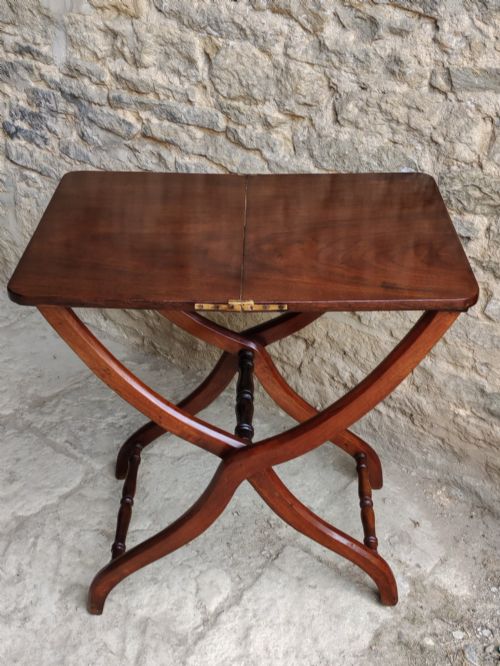
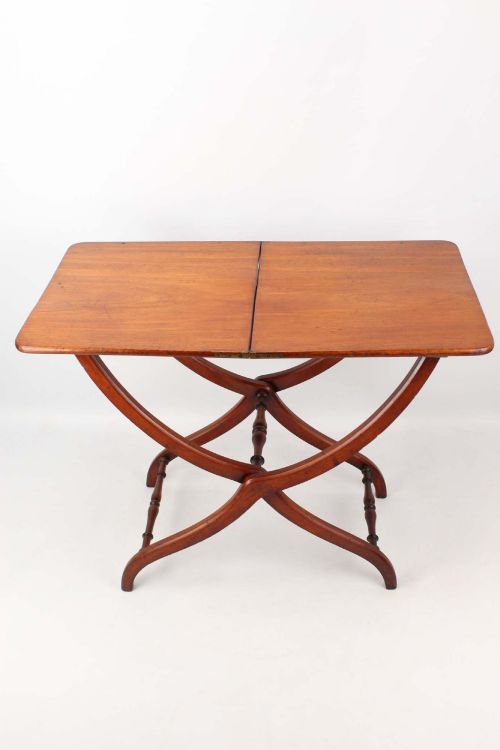
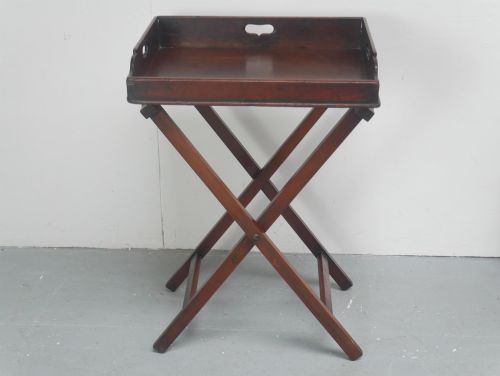

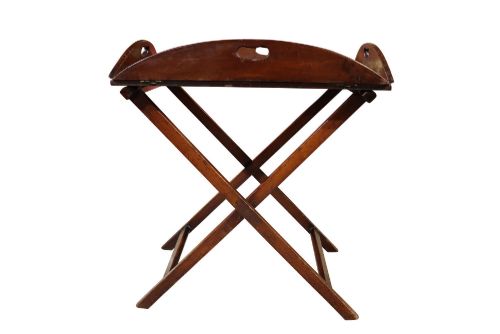
Mahogany Folding Campaign Table
These mahogany folding campaign tables offer portable utility and refined timber surfaces, built for travel and adaptable for modern rooms.
Mahogany Folding Campaign Table
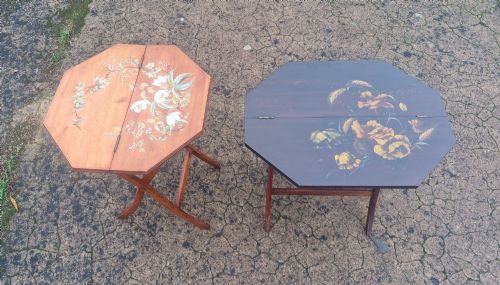
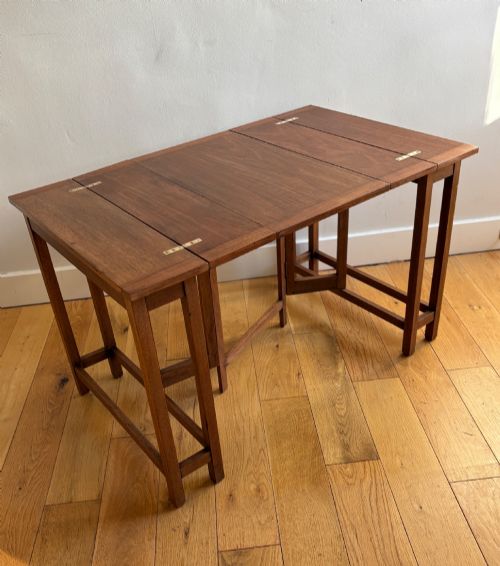
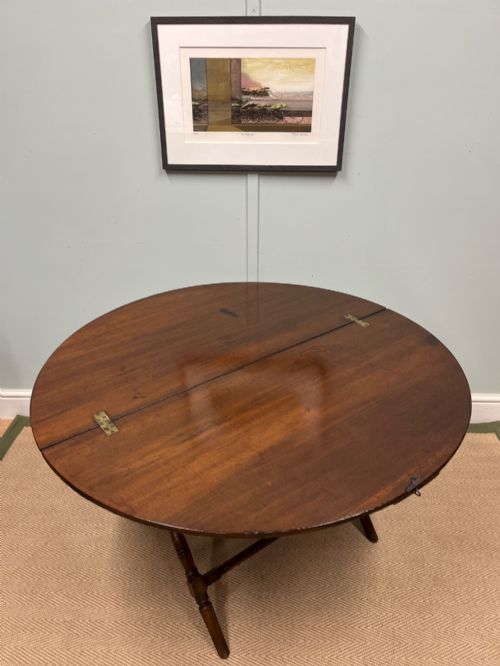
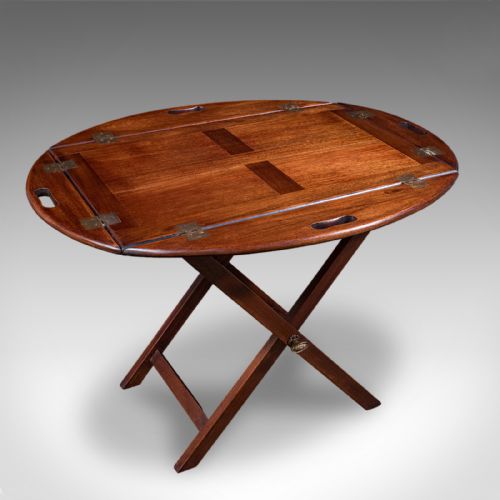
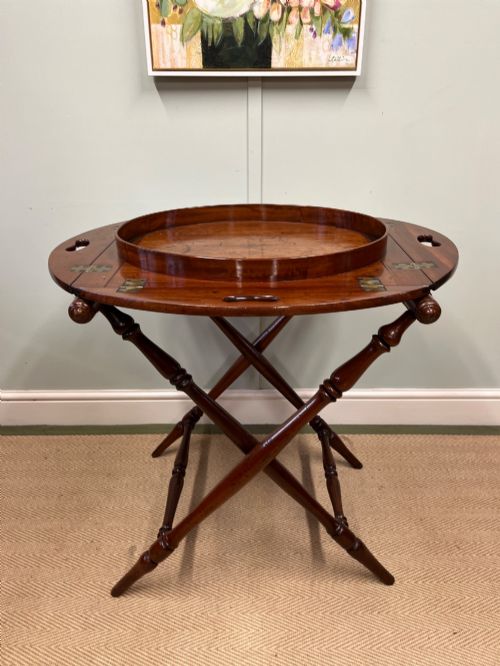
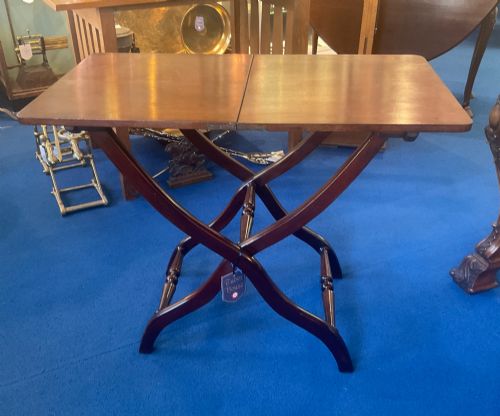
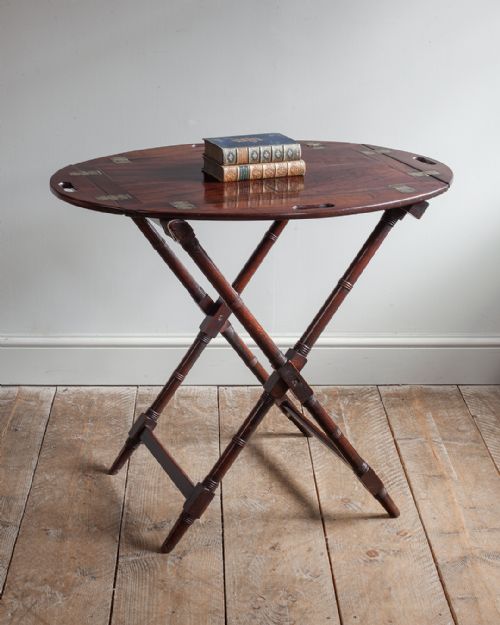
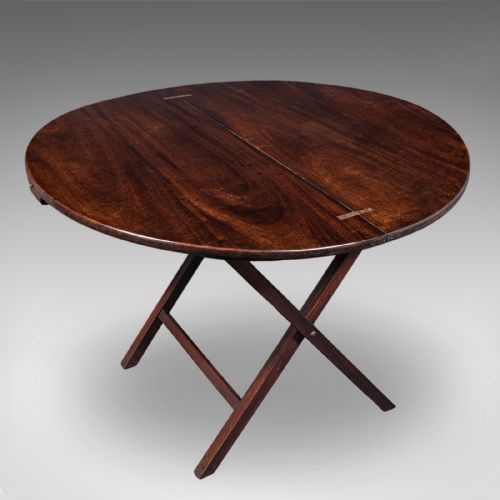
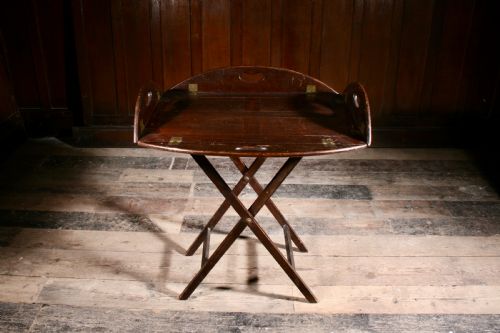
A mahogany folding campaign table combines timber framing with collapsible architecture, historically designed for military officers and travel. You will frequently encounter coaching tables, butler's trays on folding stands, and occasional tables across Georgian, Victorian, and Edwardian periods.
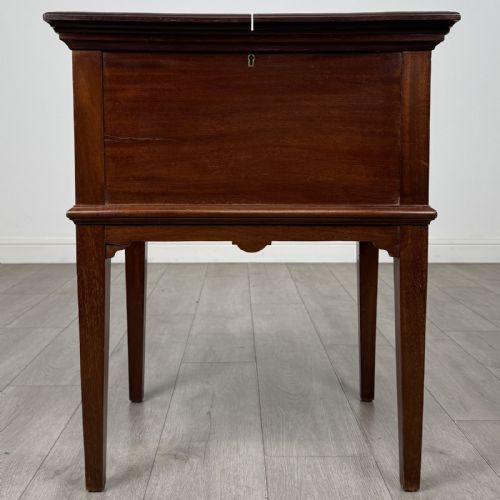
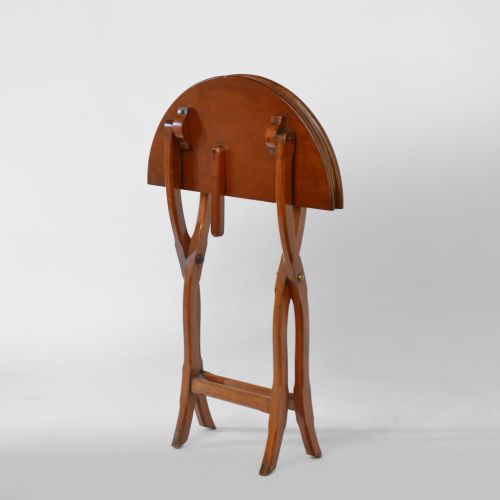
The primary forms on this page include oval and rectangular butler's trays, occasional tables, side tables, and desks. These pieces transition easily between practical serving surfaces and compact storage items in contemporary spaces.
How they were made
Cabinet makers utilised dense timbers such as mahogany and Cuban mahogany, often paired with contrasting satinwood details. Structural joints required robust construction to withstand repeated folding and transit.
Hardware elements typically include brass hinges, brackets, and carrying handles. Surfaces occasionally incorporate leather, baize, glass, or canvas webbing to protect contents during movement.
Mahogany Folding Campaign Table Retail Price Guide 2026
Typical asking prices for mahogany folding campaign table among the pieces listed under this phrase on Sellingantiques today, from the lower quarter to the upper quarter. They describe what is for sale here now, not the wider market.
Materials recorded across the inventory include solid mahogany, Cuban mahogany, brass hardware, leather, baize, glass, and canvas webbing.
What varies in quality
Quality depends upon the selection of timber figure, the precision of the folding mechanism, and the originality of the brass hardware. Pieces featuring dense Cuban mahogany or documented cabinet-maker attribution sit at the upper end of the range.
Proportion and stability during use separate superior examples from standard utility pieces. Retaining original stands and authentic surfaces rather than later replacements preserves historical integrity.
Gillows
The Mahogany Folding Campaign Table Glossary
- Campaign table
- A portable piece of furniture designed to fold or dismantle for military travel. These items prioritised sturdy construction alongside compact storage.
- Butler's tray
- A removable wooden tray with hinged or panelled sides, typically resting on a separate folding X-frame stand. They served dining and serving functions.
- Coaching table
- A specific folding table design utilised during travel, featuring a slatted or solid top that collapses flat. They appear frequently in nineteenth-century formats.
- Cuban mahogany
- A dense, richly figured timber native to the Caribbean, heavily utilised in high-status eighteenth and nineteenth-century cabinet making. Export restrictions later limited its use.
- X-frame stand
- A folding support structure constructed with intersecting legs that allow the base to collapse completely. This mechanism underpins many trays and coaching tables.
Mahogany Folding Campaign Table: Frequently Asked Questions
What is a mahogany folding campaign table?
A mahogany folding campaign table is a portable piece of furniture built to collapse for travel while retaining a polished timber surface.
These items encompass butler's trays on stands, coaching tables, and folding desks originating primarily from the Georgian, Victorian, and Edwardian eras.
How were campaign tables used historically?
Officers and travellers utilised these collapsible tables for dining, writing, and administrative duties while on military campaigns or journeys.
The folding design allowed servants to pack the furniture quickly into transport crates alongside other camp equipment.
How do I style a folding campaign table at home?
You can place a coaching table or butler's tray beside seating as an occasional surface or use a folding desk for compact workspace needs.
The collapsible mechanism allows you to store the piece away easily when floor space is required.
How do I tell Georgian campaign tables apart from Victorian ones?
Georgian examples often display finer timber figuring, such as Cuban mahogany or satinwood inlay, associated with eighteenth-century cabinet making standards.
Victorian and Edwardian versions tend towards heavier utility construction, straightforward brass fittings, and standard coaching table formats.