




Mahogany Dining Accessory
These mahogany dining accessory pieces bring centuries of refined service to the table, offering practical elegance for the modern home.
Mahogany Dining Accessory
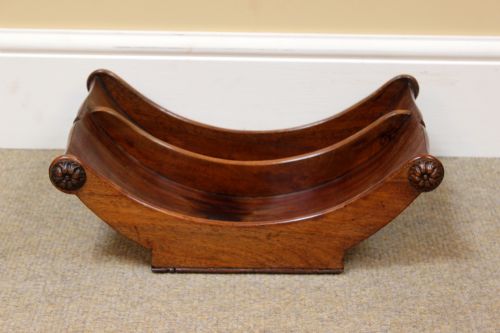
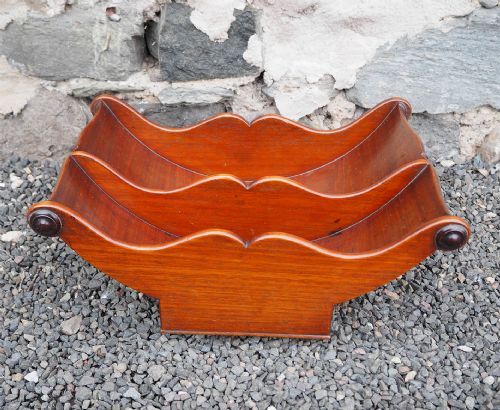
A mahogany dining accessory serves practical functions at the table, encompassing items designed for cheese, wine, and cutlery. These objects date across periods from the eighteenth century through the Edwardian era, reflecting changing habits in formal dining.
Most examples originate from the Georgian and Regency periods, utilising rich timbers fashioned into curved coasters, tiered dumb waiters, and shaped plate buckets. Buyers encounter everything from simple fruitwood coasters to elaborate brass-mounted cruet sets.
How they were made
Craftsmen shaped dense mahogany, often pairing the primary timber with contrasting boxwood or fruitwood stringing to define edges and panels. Metal components such as brass galleries, hinges, and casters added both structural support and functional movement.
Turning, joinery, and glass-cutting dominated the construction of these dining objects. Coasters and bottle holders utilised steam-bending or segmented turning to achieve smooth circular forms, while cutlery boxes relied on precise box-making techniques.
Materials documented across the pieces include solid mahogany, contrasting fruitwood and boxwood, gleaming brass, and sparkling cut glass.
What varies in quality
Quality rests in the depth of the timber's grain and the crispness of any turned mouldings or inlaid details. Superior pieces display thoughtful selection of figured wood, whereas simpler items rely on plain boards.
The integration of original brass hardware and the cleverness of mechanical elements, such as rotating tiers or castors, distinguish higher grades of manufacture. Subtle proportions and harmonious lines separate utilitarian items from those made for prominent households.
The Mahogany Dining Accessory Glossary
- Cheese coaster
- A low, wheeled tray designed to hold a wedge of cheese and glide smoothly along the dining table after the cloth was removed. These pieces often feature turned wooden bases and brass bottle castors.
- Dumb waiter
- A tiered stand fitted with rotating or stationary circular trays intended to hold dishes without requiring constant servant attention. They stand on central pillar supports with tripod or quadruped legs.
- Cruet set
- A matched assembly of glass bottles or cruets held within a fitted wooden or metal frame for condiments. These accessories sat centrally on the table during meals.
- Knife box
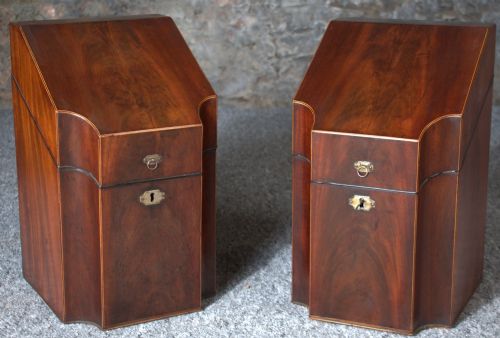
- A sloping wooden container lined with velvet or fitted slots to store and display cutlery upright. George III examples frequently feature serpentine fronts and inlaid star motifs.
- Plate bucket
- A deep cylindrical container built with stave construction, similar to a coopered barrel, used for storing or transporting plates. Brass carrying handles typically flank the sides.
Mahogany Dining Accessory: Frequently Asked Questions
What is a mahogany cheese coaster?
A cheese coaster is a small, portable tray fitted with small wheels or castors so diners could gently push the cheese around the table.
They were built low to the wood surface and often lined with baize or shaped with turned galleries to keep the cheese secure.
How were dumb waiters used?
Dumb waiters held extra plates, glasses, and condiments during formal meals when hosts preferred fewer servants in the room.
The tiered shelves allowed different courses or tableware to be kept close at hand without cluttering the main dining surface.
How do I identify a George III knife box?
George III knife boxes typically feature a distinctive sloping lid and a serpentine or slanted front profile designed to display cutlery handles.
Inside, the wooden interior is drilled and slotted to hold individual knives upright in neat rows.
What materials appear on these pieces besides mahogany?
Makers incorporated brass for handles, hinges, bottle coasters, and decorative gallery rails along the edges of trays.
Secondary woods like fruitwood and boxwood provided sharp contrast through inlay, while cut glass and mother-of-pearl enriched inserts and cutlery handles.