




Mahogany Desk Chair Castors
Mahogany desk chair castors are small functional components fitted to the base of period seating to aid movement across a room.
Mahogany Desk Chair Castors
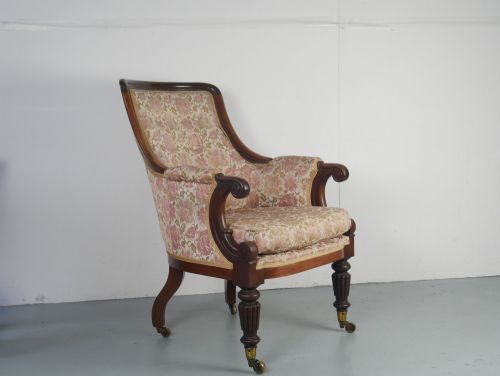
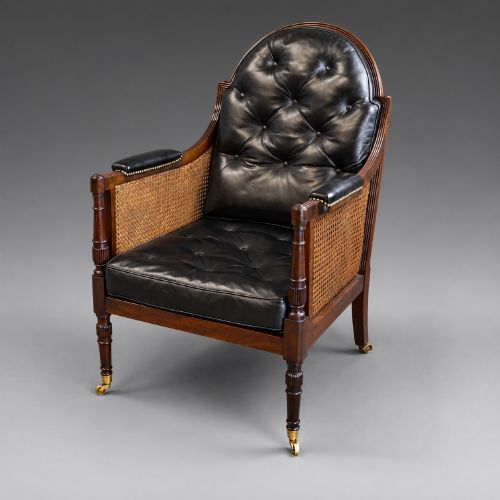
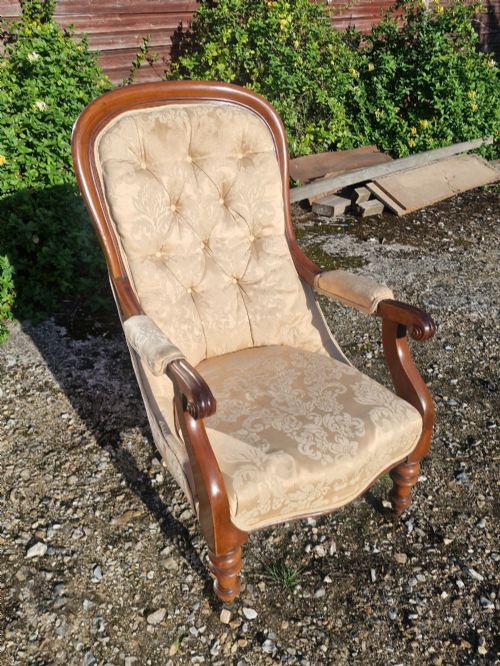
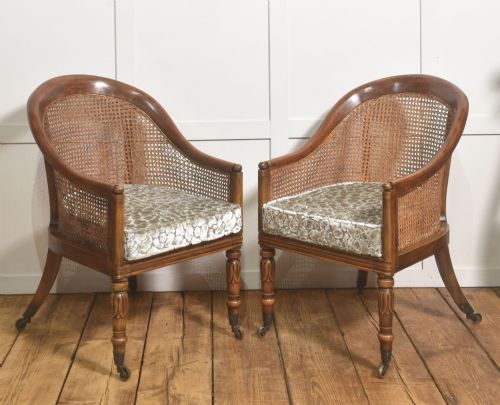
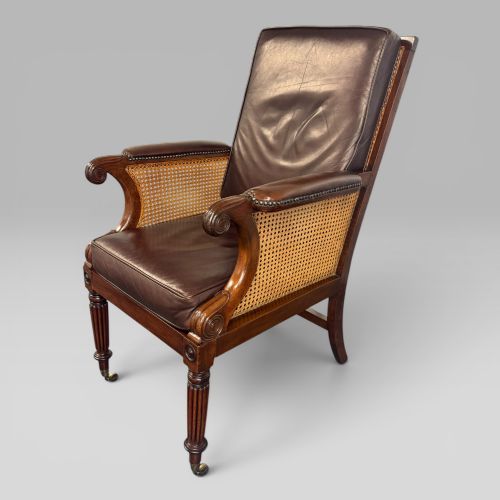
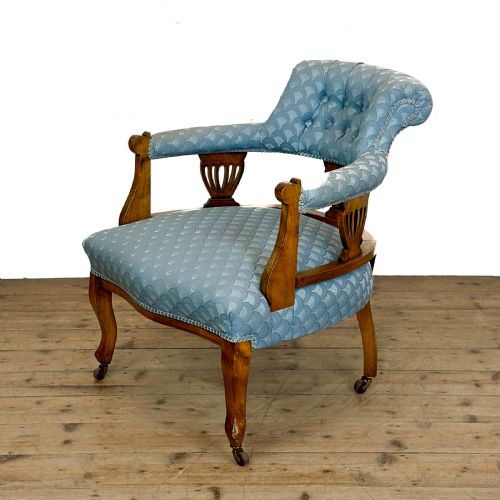
When searching for mahogany desk chair castors, buyers find hardware and fitted seating originating from the Regency, Victorian, and Edwardian periods. These pieces include revolving office armchairs, library bergères, and open armchairs constructed primarily from mahogany.
The items listed on this page range from early nineteenth-century designs to later 1900 examples. Forms vary from revolving desk chairs to bedroom chairs and side chairs fitted with turned front legs and castors.
How they were made
The furniture associated with these castors is built from solid mahogany and sometimes beech, reflecting the dominant timber traditions of English and French workshops. Artisans shaped these woods into reeded library chairs, swiveling office frames, and caned bergères.
Metal and brass components were integrated into the base structures to hold the rolling elements beneath turned legs. Upholstered variants incorporate materials such as leather, velvet, fabric, cane, and linen over sprung or padded frames.
Mahogany Desk Chair Castors Retail Price Guide 2026
Typical asking prices for mahogany desk chair castors among the pieces listed under this phrase on Sellingantiques today, from the lower quarter to the upper quarter. They describe what is for sale here now, not the wider market.
The listings on this site combine mahogany frames with brass castors across Regency, Victorian, and Edwardian periods.
What varies in quality
Quality in these items is determined by the precision of the timber turning and the robustness of the integrated metal swivel or castor mechanisms. Well-drawn frames with generous proportions distinguish finer library chairs from simpler side seating.
The preservation of original materials, such as leather upholstery, cane panels, and patinated brass fittings, marks the distinction between standard production pieces and superior workshop output.
Gillows·Daws
The Mahogany Desk Chair Castors Glossary
- Castor
- A small wheel fitted to the legs of furniture to allow easy rolling across floors. They are commonly made of brass and metal in period seating.
- Bergère
- An enclosed upholstered armchair with a wooden frame, often featuring cane work on the back and sides. These frames frequently date from the Regency period.
- Reeded
- A decorative moulding consisting of parallel convex strips resembling bundled reeds. This detail appears on the library chair legs and frames recorded in the evidence.
- Swivel
- A mechanism allowing the upper seat portion to rotate independently of the base. This engineering is typical of nineteenth and early twentieth-century desk chairs.
Mahogany Desk Chair Castors: Frequently Asked Questions
What periods do these chairs date from?
The pieces span the Regency, Victorian, and Edwardian eras, with examples recorded from around eighteen hundred through to nineteen hundred and ten.
Craftsmanship and timber treatment reflect the prevailing stylistic shifts of each distinct decade.
Were castors original to the chairs?
Many nineteenth-century library and desk chairs were fitted with brass and metal castors from the workshop to aid movement.
Checking the integration into the turned legs helps determine period authenticity.
What materials are used for upholstery?
Surviving examples feature leather, velvet, fabric, cane, and linen across various seat and back panels.
Some items retain older coverings while others present newer upholstery applied during conservation.
How do desk chairs differ from library chairs?
Desk chairs often incorporate swivel mechanisms and revolving bases designed for functional office use.
Library chairs typically use fixed frames with generous proportions and upholstered or caned seating for reading.