



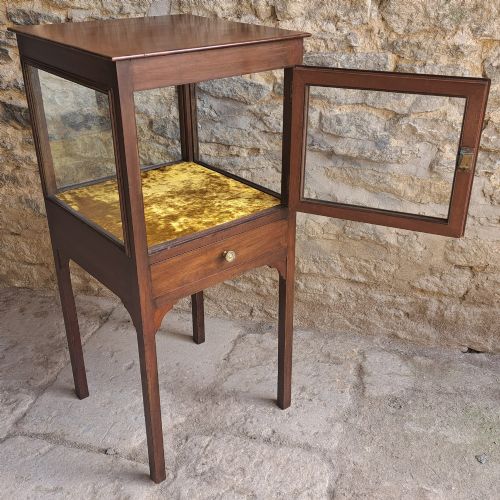

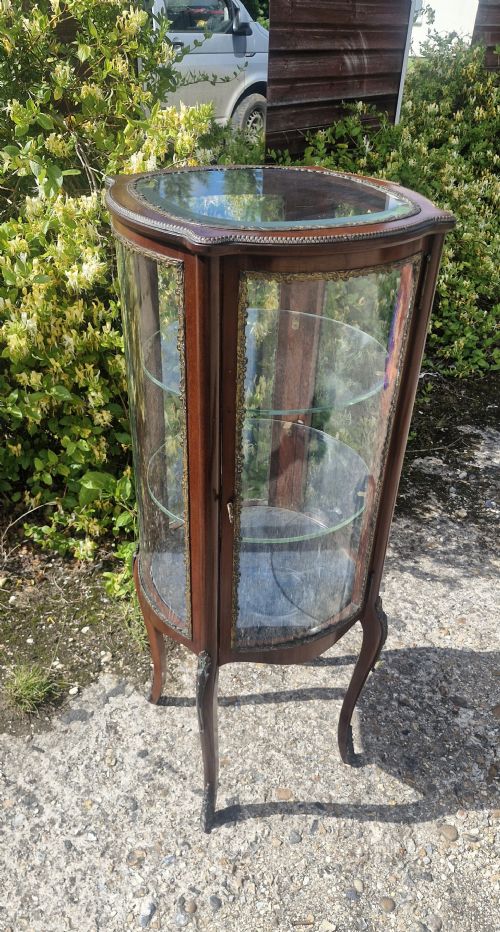


Mahogany Curio Table
A mahogany curio table offers a glazed stage for small treasures, combining polished timber and glass to display keepsakes within reach.
Mahogany Curio Table
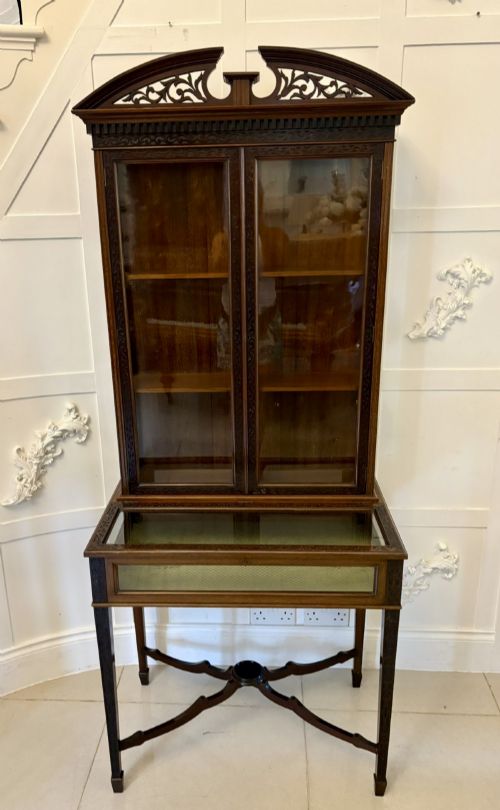
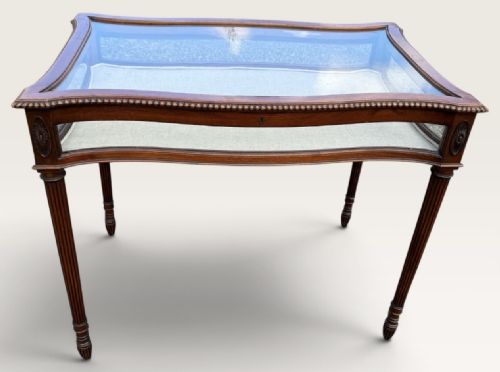
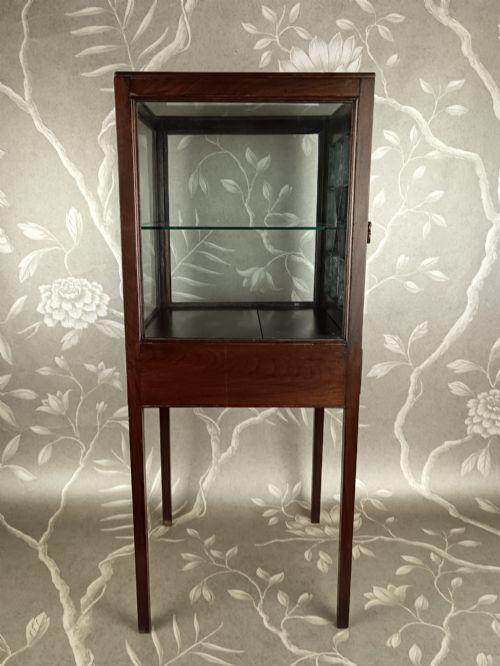
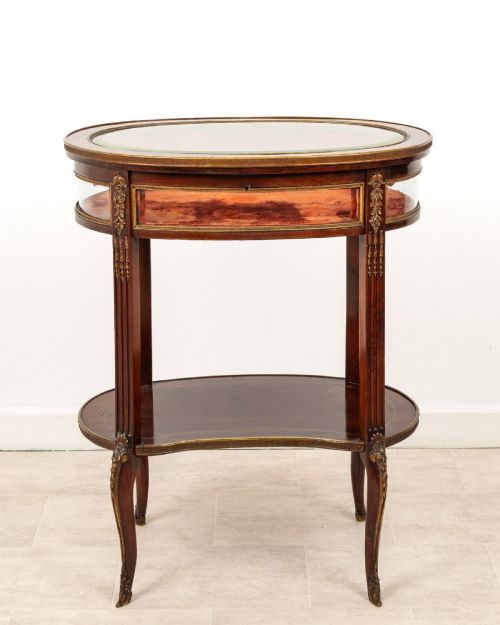
A mahogany curio table functions primarily as a display surface for small collectibles, jewellery and curiosities, combining the utility of a table with the protective glass enclosure of a cabinet. These pieces appear in forms ranging from oval bijouterie tables to serpentine shapes, kidney-shaped models, and traditional vitrines.
The pieces listed on this page span several key eras, with Edwardian examples and late nineteenth-century Victorian designs appearing alongside earlier Georgian items and pieces from the early twentieth century. Buyers encounter both English craftsmanship and continental variations, particularly French styles featuring delicate mounts.
Most items combine timber frames with glazed hinged lids or glass panel tops, allowing objects inside to be viewed from above. Variations include display cabinets, bijouterie tables, and occasional whatnots that serve the same domestic purpose of exhibition and storage.
How they were made
Makers built these tables using solid mahogany or applied mahogany veneers over secondary timbers, often incorporating satinwood or kingwood for decorative contrast. Timber selection governed the warmth and depth of the frame, providing a sturdy foundation for the glass top.
Glazing techniques required precise joinery to secure the glass panels within hinged lids or fixed frames. Brass hinges, locks, and handles feature prominently, while finer examples incorporate cast or chased ormolu mounts and gilt metal enrichment.
Decoration relied on marquetry and inlay work, particularly stringing and classical motifs executed in lighter woods. French styles often utilised gilt metal mounts and serpentine or oval forms to create flowing, organic silhouettes.
Mahogany Curio Table Retail Price Guide 2026
Typical asking prices for mahogany curio table among the pieces listed under this phrase on Sellingantiques today, from the lower quarter to the upper quarter. They describe what is for sale here now, not the wider market.
Listings for mahogany curio tables span periods from the eighteenth century through the Edwardian era, featuring brass, ormolu, and velvet linings.
What varies in quality
The standard of timber selection and veneer matching defines the visual impact of the frame, where fine grain patterns and careful book-matching elevate the piece. Superior examples display crisp marquetry and delicate stringing that remain flush with the surrounding mahogany.
Metalwork quality distinguishes workshop tiers, separating standard brass hinges and simple locks from finely chased ormolu mounts and heavy cast brass fittings. The integration of these decorative elements shows the original maker's investment in time and materials.
Structural harmony in curved forms, such as serpentine or kidney-shaped tops, relies on expert carpentry to ensure the glass lids fit snugly and operate smoothly. Refinement in the leg joinery and the precision of the glazed frame determine the overall longevity of the table.
The Mahogany Curio Table Glossary
- Bijouterie table
- A specialist display table with a glass top and glazed sides, originally designed for showing small ornaments, medals, and jewellery. These pieces often feature a velvet or fabric-lined interior base.
- Ormolu
- Gilt bronze mounts applied to furniture to accent corners, legs, and borders. This decorative technique became particularly popular in French-influenced nineteenth-century cabinet making.
- Marquetry
- Decorative veneer patterns formed by fitting together thin slices of various coloured woods into a pictorial or geometric design. Craftsmen used this technique on table tops and cabinet friezes.
- Vitrine
- A glass-fronted or glass-topped display cabinet designed to protect objects from dust while keeping them fully visible. The term encompasses both standing cabinets and table-height display cases.
- Serpentine
- A curved shape featuring a concave centre flanked by convex ends, resembling the undulating movement of a snake. This profile appears frequently on the rims of finer tables.
- Kingwood
- A dense, richly figured timber with dark violet and brown stripes, frequently used for contrasting veneers and crossbanding. It adds warmth and variety to mahogany frames.
Mahogany Curio Table: Frequently Asked Questions
What is a bijouterie table?
A bijouterie table is a specialised display piece featuring a glazed top and often glass sides, designed to elevate and showcase small valuables like jewellery and medals.
These tables typically include a fabric or velvet-lined interior tray to cushion the items placed inside for viewing.
How do I care for the glass top?
The glass panels require gentle cleaning with standard glass cleaner applied to a cloth rather than sprayed directly, preventing moisture from seeping into the timber frame.
Keep the table away from direct sunlight to protect both the polished mahogany and any fabric linings used inside the display compartment.
Where were these tables placed?
Victorian and Edwardian homes positioned these display pieces in drawing rooms and reception spaces where guests could inspect collections of small curiosities.
They served as both decorative furnishings and practical conversation pieces for displaying personal treasures during formal visits.
How do I distinguish Edwardian from Victorian pieces?
Victorian examples often display heavier carvings, darker mahogany tones, and sturdier proportions, reflecting the aesthetics of the late nineteenth century.
Edwardian pieces tend to feature lighter inlay work, more delicate Sheraton Revival influences, and slender tapering legs suited to brighter interiors.