



Mahogany Country House Sofa
A mahogany country house sofa offers deep comfort and substantial presence, built for long sitting rooms and libraries.
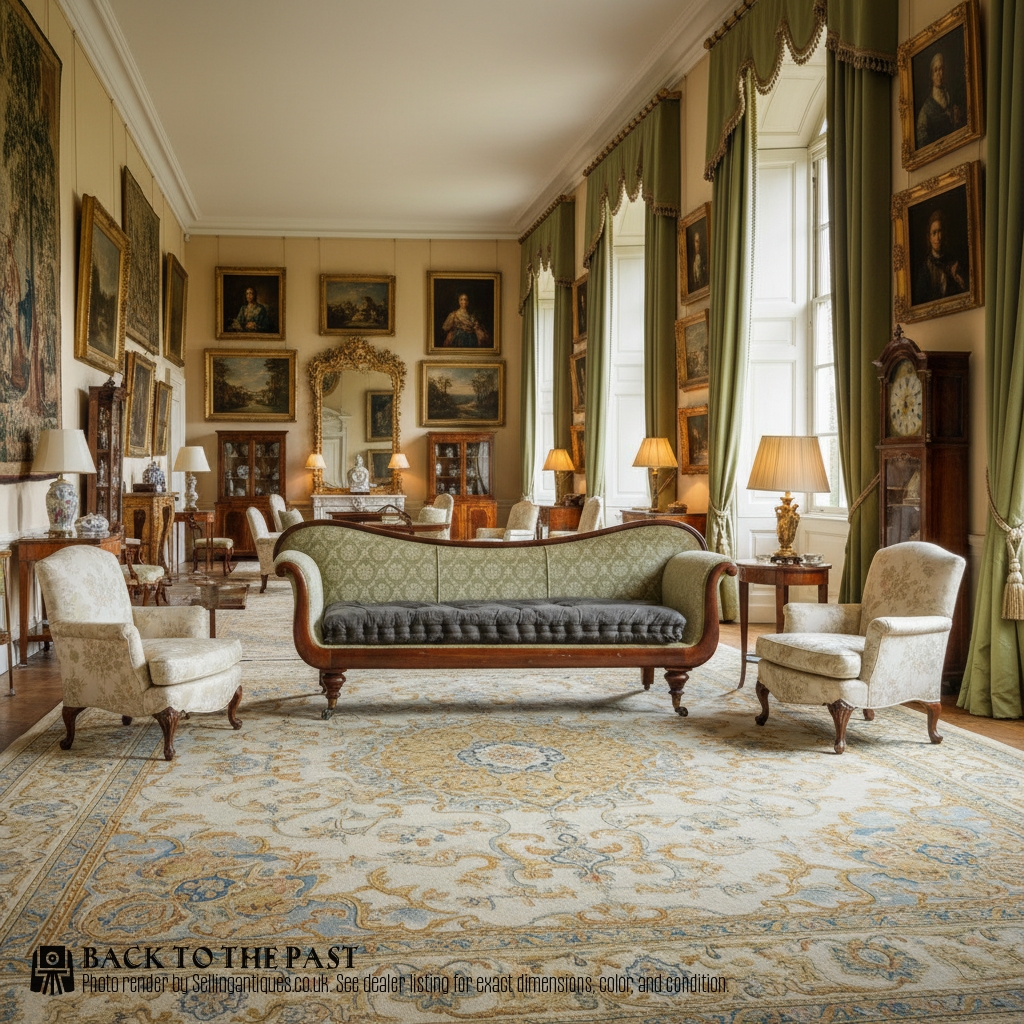
Mahogany Country House Sofa
When you search for a mahogany country house sofa, you encounter large, robust seating designed for generous proportions and everyday living. These pieces span the eighteenth, nineteenth and early twentieth centuries, reflecting changing domestic fashions in English country houses.
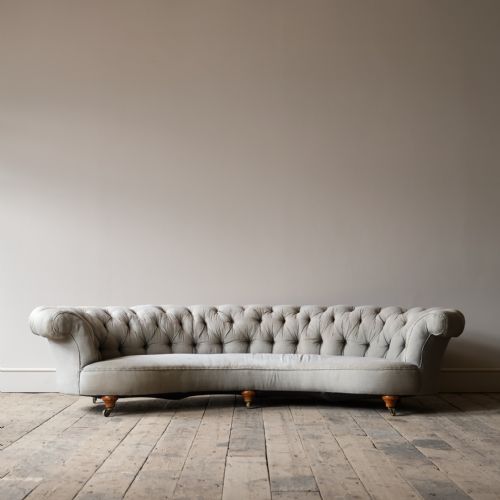
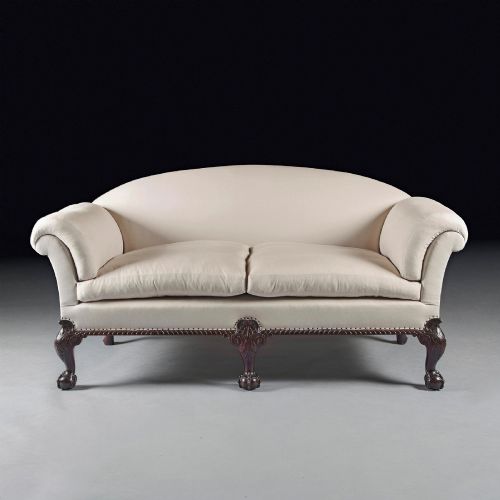
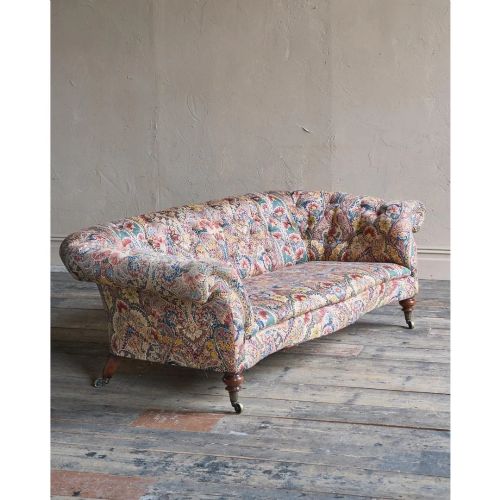
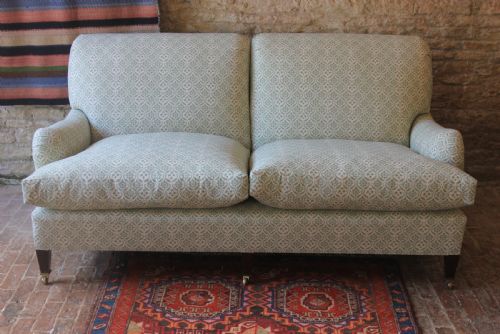
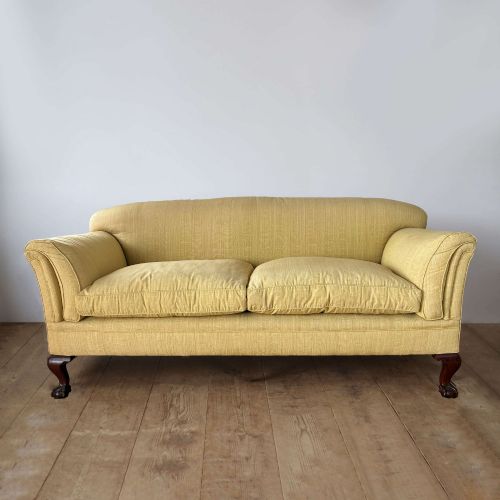
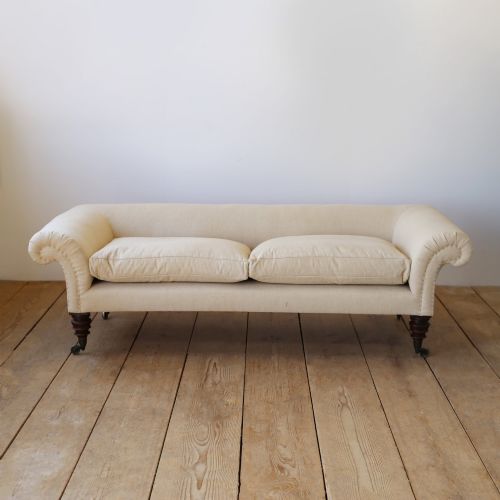
The version you are most likely to meet on this page is the Victorian or nineteenth century upholstered sofa with a solid mahogany frame. These pieces often feature deep seating, rolled or scroll arms, and turned wooden legs.
Makers such as Howard and Sons frequently appear, alongside examples in the Georgian, Regency and Edwardian styles. The selection also includes large Chesterfield forms, buttoned upholstery, and occasional chaise longues.
How they were made
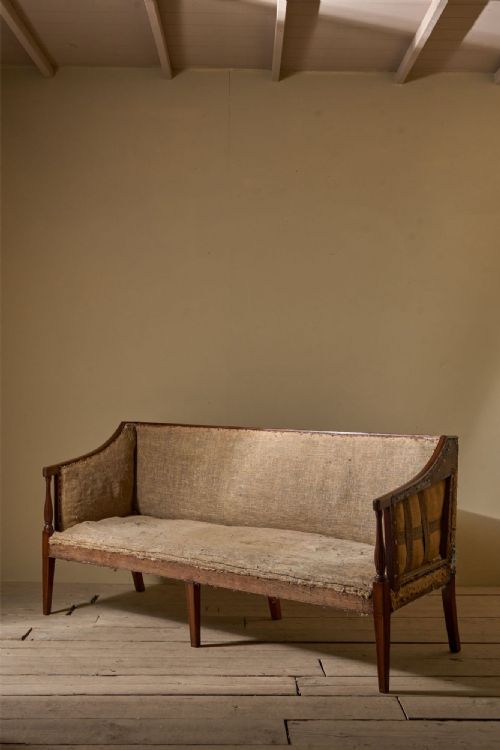
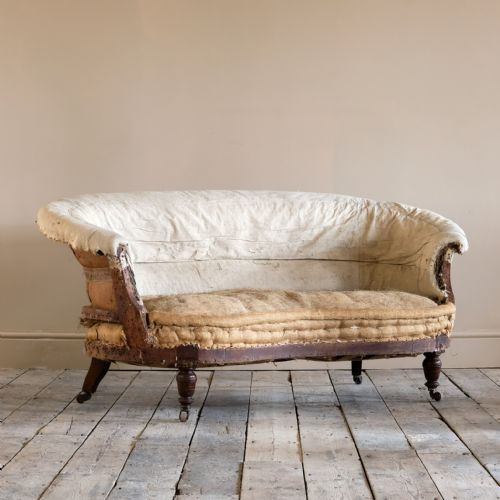
Makers built these frames using dense mahogany and underlying hardwoods to ensure structural stability under heavy daily use. Upholstery layers relied on traditional stuffings like hessian, calico, cotton calico, and leather, often supported by complex spring systems in later Victorian examples.
Exposed wooden elements such as reeded or turned legs and carved frames showcase skilled cabinet making. Brass castors frequently aided mobility for these heavy pieces, while hand-stitched leather and woven fabrics provided durable outer surfaces.
One enormous nineteenth century billiard room sofa arrived large enough to require its own postcode.
What varies in quality
The integrity of the mahogany frame and the scale of the timber dictate the baseline quality of each piece. Heavier, substantial frames with crisp carving or well-turned legs sit at the top of the range.
The standard of upholstery work and the retention of original maker markings or paper labels significantly influence the standing of an individual sofa. Pieces retaining their original configuration and reputable maker attributions command greater interest among collectors.
Howard and Sons·Hampton and Sons·Morison and Co Edinburgh
The Mahogany Country House Sofa Glossary
- Chesterfield
- A large upholstered sofa traditionally featuring deep buttoning and arms of the same height as the back. This form appears frequently in nineteenth century country house interiors.
- Chaise Longue
- An upholstered long chair designed for reclining, combining the functions of a chair and a day bed. Examples from the mid nineteenth century feature single scroll ends.
- Calico
- A plain-woven cotton fabric used as the inner lining and foundation layer beneath top upholstery. It provides a tight base for stuffing and outer covers.
- Reeded
- A decorative moulding consisting of parallel convex strips resembling parallel reeds. This technique often ornaments the mahogany legs of Regency and Victorian seating.
- Hessian
- A coarse woven fabric made from jute fibres, utilised inside upholstered furniture as a durable foundation for supporting springs and stuffing.
Mahogany Country House Sofa: Frequently Asked Questions
How do I identify a country house sofa?
These sofas are characterised by generous dimensions, robust mahogany frames, and deep upholstery designed for comfort. They often display traditional detailing such as turned legs, brass castors, and scroll arms.
Evidence shows they were built across the eighteenth, nineteenth, and early twentieth centuries for large domestic interiors, libraries, and billiard rooms.
What periods do these sofas date from?
The pieces span several eras, including George III and Georgian styles, the Regency period, and the broader nineteenth century. Victorian and Edwardian examples appear frequently alongside later twentieth century interpretations.
Stylistic markers help determine the age, ranging from Chippendale revival carvings to late Victorian buttoned upholstery and down cushions.
Were these sofas used in specific rooms?
Country house sofas served in principal reception rooms, libraries, and dedicated spaces like billiard rooms where large, comfortable seating was essential. Their substantial scale suited expansive properties.
Some examples, such as hall sofas or table combinations, indicate they also occupied entrance spaces and large landing areas.
What upholstery materials were used originally?
Original construction involved internal layers of hessian, calico, cotton calico, and traditional stuffing materials beneath the outer covering. Leather and heavy woven fabrics formed the visible surface for frequent daily use.
Many surviving pieces retain or have been restored with traditional leather, buttoned wool, or bespoke fabric finishes.