




Mahogany Corridor Chair
A mahogany corridor chair is a solid wood seat built for passage spaces, offering firm posture and striking back design.
Mahogany Corridor Chair
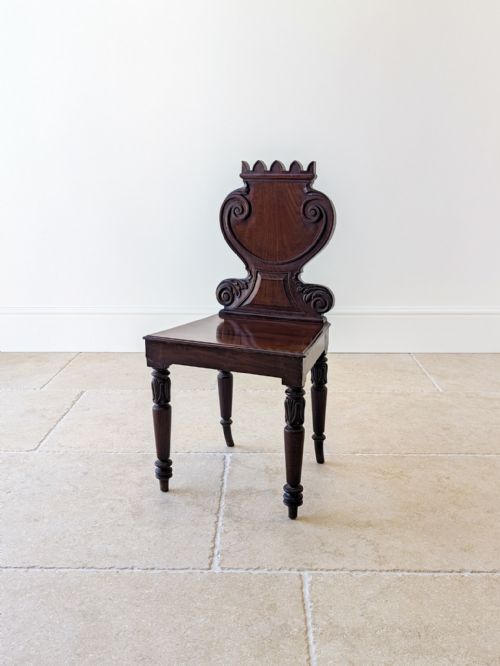
A mahogany corridor chair is typically encountered as a hall chair originating from the 18th century, Georgian, Regency, or Victorian periods. These pieces serve as functional seating for narrow transitional spaces, historically placed in hallways and corridors rather than main reception rooms.
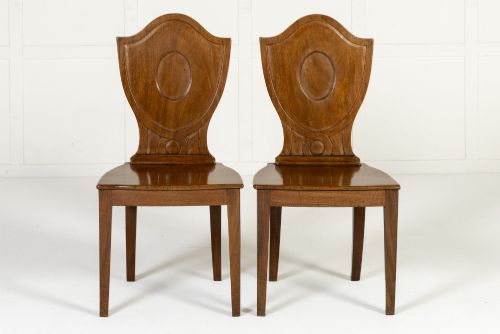
Buyers seeking a mahogany corridor chair will find examples ranging from George III and William IV eras up to late Victorian times. They frequently appear as pairs and feature solid wood construction with carved or shield backs designed to stand flat against walls.
How they were made
These chairs are constructed from solid mahogany wood, often utilising natural grain patterns and inlay work to create visual interest on the backrest. Cabinetmakers shaped the timber using traditional joinery, ensuring sturdy frames capable of withstanding placement in busy entrance halls.
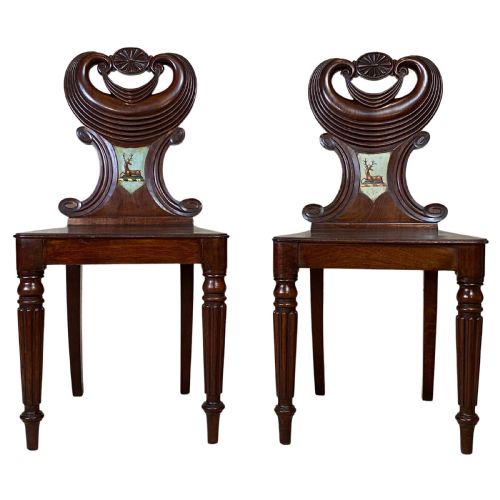
Carving technique defines the style, from plain shield backs with painted or carved crests to elaborate Regency and Victorian motifs such as Prince of Wales feathers. Woodworkers shaped the seats from solid timber planks, integrating turned or sabre legs directly into the underframe.
Prince of Wales feathers carved into timber backs give visiting guests something regal to contemplate while waiting in the hall.
What varies in quality
Quality in a mahogany corridor chair rests upon the crispness of the wood carving and the depth of the mahogany grain. Pieces attributed to prominent workshops demonstrate superior sculptural definition in details like shield backs and armorial bearings compared to standard production items.
The choice of solid wood stock and the balance of proportions distinguish finer examples from simpler provincial pieces. Better construction maintains tight joints and heavier gauge timber, ensuring the chair retains its structural integrity over centuries of use.
Gillows·Richard Bridgens
The Mahogany Corridor Chair Glossary
- Hall chair
- A wooden seat designed for corridors and entrance halls rather than prolonged sitting, usually featuring a solid wooden seat and an ornamental back. These pieces were historically used for guests waiting briefly in reception areas.
- Shield back
- A chair back shaped in the outline of a heraldic shield, popular during the Georgian period. This design often incorporates carved motifs like feathers or crests.
- Armorial
- Bearing heraldic arms or family crests, often painted or carved onto the centre of the chair back. Such details indicate bespoke commissioning for landed estates.
- Regency
- A British design style spanning the early 19th century, characterised by classical revival motifs and clean architectural lines. Furniture from this period frequently draws inspiration from ancient Greek and Roman forms.
Mahogany Corridor Chair: Frequently Asked Questions
Where were mahogany corridor chairs placed?
These chairs were stationed in hallways, corridors, and entrance spaces where guests would wait briefly before entering main rooms. Their slim profile allowed them to sit flat against walls without obstructing passage.
Because they were intended for transient use rather than lounging, the seats lack upholstery and encourage upright posture.
Are these chairs comfortable for daily sitting?
Mahogany corridor chairs feature solid wood seats and upright backs designed for brief seating rather than long periods of relaxation. Their primary historical function was practical and decorative in public areas.
Placing them in modern hallways preserves their original purpose as striking sculptural elements upon entering a home.
How do I identify a Regency period piece?
Regency pieces often display classical architectural influences, sabre legs, and crisp carved details reflecting early 19th-century design preferences. The proportion of the frame and the specific execution of the backrest help distinguish them from later Victorian interpretations.
Checking the wood colour and construction methods provides further context regarding the manufacturing date.
Why do many of these chairs come in pairs?
Many hall chairs were originally commissioned in sets to line the walls of grand entrance corridors symmetrically on either side of a doorway. Surviving pairs retain their matching decorative carved backs and uniform wood grain.
Finding them together offers a balanced look for modern interior styling in wide hallways.