



Mahogany Clothes Rack
A mahogany clothes rack provides a practical and handsome solution for airing laundry or draping garments in any room.
Mahogany Clothes Rack
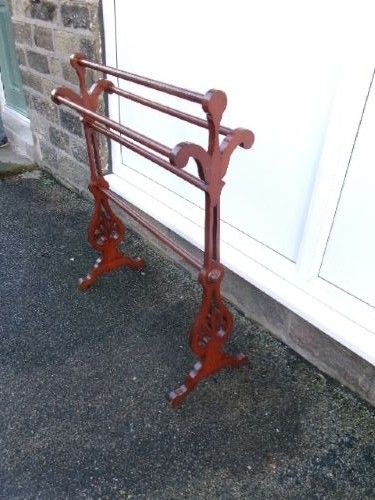
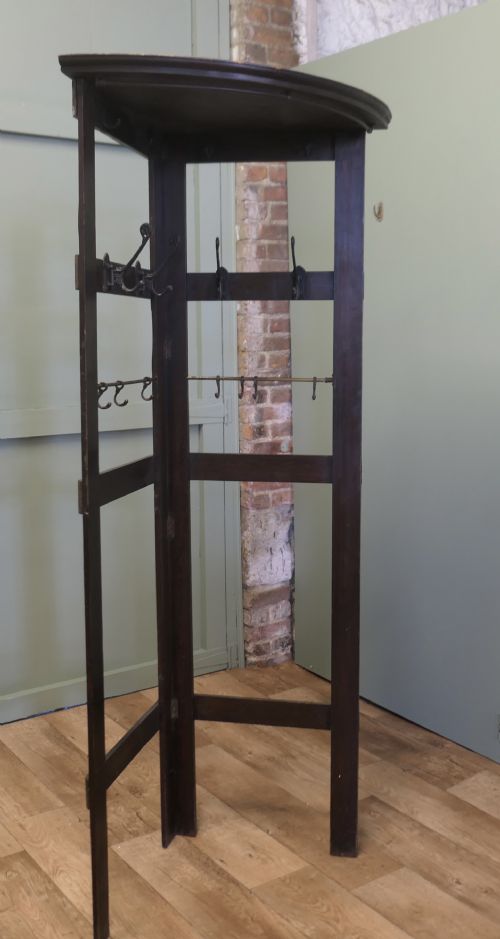
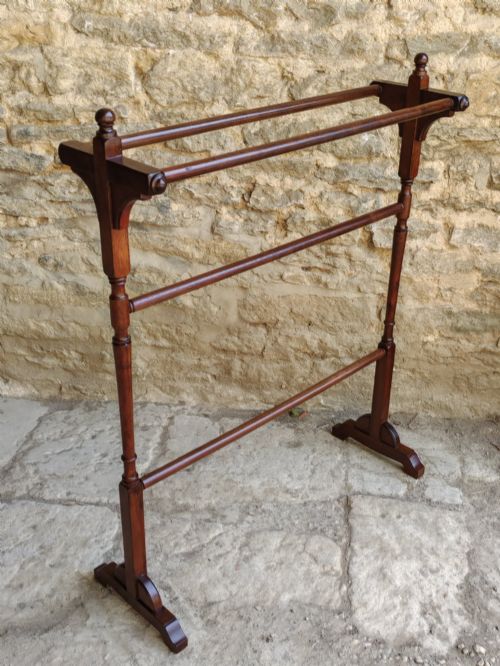
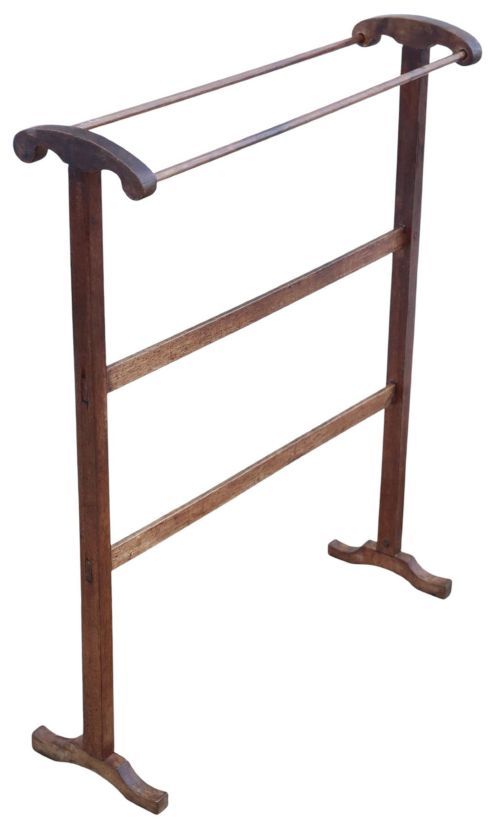
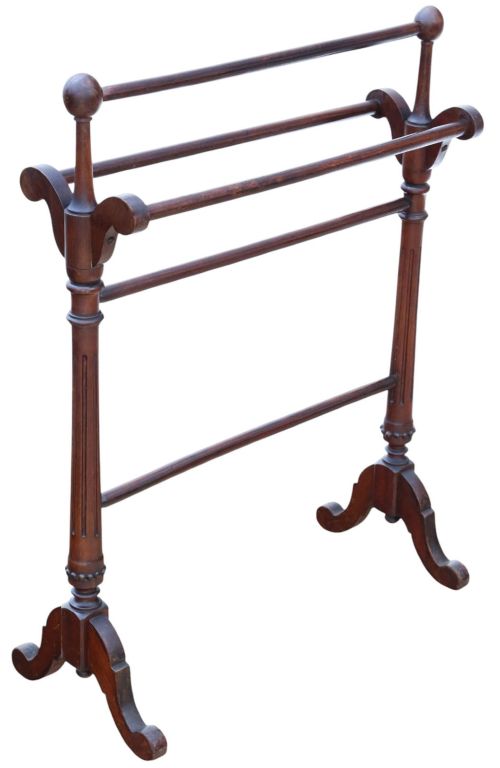
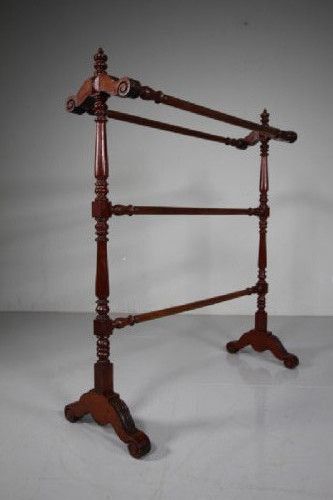
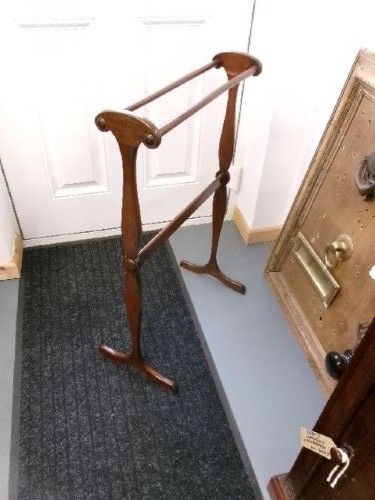
A mahogany clothes rack primarily encompasses folding towel rails, standing rails, and occasional hall or coat stands fashioned from timber. When searching for a mahogany clothes rack, buyers typically encounter Edwardian and Victorian folding rails designed for domestic utility.
The inventory spans several distinct eras, notably the nineteenth century, Regency, and early twentieth century. Most examples function as multi-bar drying racks or cheval rails intended for bedroom and bathroom use.
Makers historically produced these utility items in various scales, ranging from small domestic rails to large oversized William IV and Regency formats. Certain pieces incorporate secondary timbers such as oak, beech, or boxwood alongside the primary mahogany.
How they were made
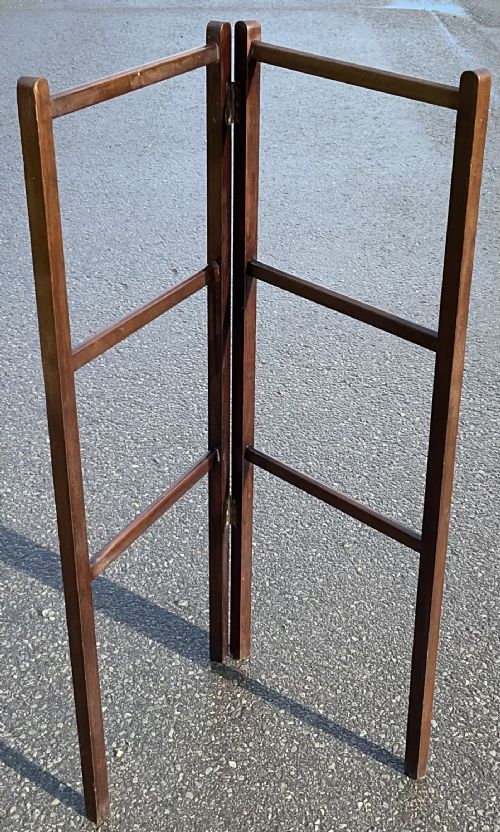
Cabinet makers utilised solid mahogany and stained wood to construct the frames, often incorporating brass hinges and iron fittings for folding mechanisms. Selected Edwardian pieces display delicate boxwood inlay or delicate turned uprights.
Bentwood techniques appear in specific twentieth-century items, yielding curved profiles for coat and hat storage. Joinery methods rely on traditional pegged or tenoned joints to withstand daily hanging and draping duties.
Mahogany Clothes Rack Retail Price Guide 2026
Typical asking prices for mahogany clothes rack among the pieces listed under this phrase on Sellingantiques today, from the lower quarter to the upper quarter. They describe what is for sale here now, not the wider market.
Current listings feature mahogany alongside brass, iron, oak, beech, bentwood, and boxwood across multiple historical periods.
What varies in quality
Quality in a mahogany clothes rack rests on the selection of dense timber and the integrity of the folding hinges. Superior examples exhibit finely turned bars, secure joints, and generous proportions rather than simple utilitarian construction.
Finer pieces from the Regency and Victorian periods show careful attention to surface finish and grain matching. Lesser items rely on basic stained wood or simpler assembly without decorative inlay.
The Mahogany Clothes Rack Glossary
- Cheval rail
- A standing clothes or towel rail mounted on pivots within a stable frame, allowing the entire multi-bar assembly to swing or tilt. This format appeared frequently in large Victorian bedrooms.
- Bentwood
- Wood softened by steam and bent into curved structural forms, seen in twentieth-century coat and hat racks. This technique creates lightweight yet resilient frames.
- William IV
- A transitional design style spanning the 1830s, characterised by robust proportions and classical restraint. Pieces from this era often display heavier timber sections.
- Inlay
- The technique of embedding contrasting woods, such as boxwood, into the primary mahogany surface to create linear or geometric decoration.
Mahogany Clothes Rack: Frequently Asked Questions
How do I use a folding clothes rack?
A folding clothes rack stands freely in a bedroom, bathroom, or utility space to air laundry and drape garments.
The hinged sections open to create multiple parallel rails, then fold flat against a wall when not in use.
Are these racks sturdy enough for heavy coats?
Most pieces were originally built for lighter linens and towels rather than heavy winter coats.
Larger Regency and William IV formats offer greater stability for heavier garments due to their substantial timber frames.
How do I identify an Edwardian towel rail?
Edwardian examples often feature slender turned uprights, five-bar configurations, and occasional light boxwood stringing.
These pieces typically date from around nineteen hundred to nineteen ten and reflect lighter domestic aesthetics.
Can I place a mahogany rail in a damp bathroom?
Mahogany resists moisture reasonably well, but prolonged exposure to steam can affect the polish and joints.
Adequate ventilation helps preserve the timber finish and prevents movement in the folding hinges.