
Mahogany Chest Drawers Brass
A mahogany chest drawers brass search leads to solid timber storage fitted with metal handles and mounts spanning the Georgian, Regency and Victorian eras.
Mahogany Chest Drawers Brass
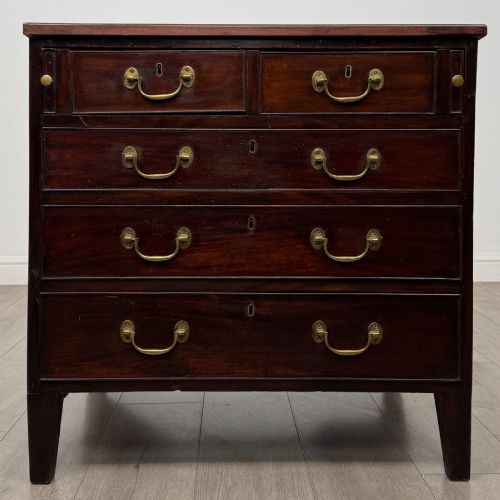
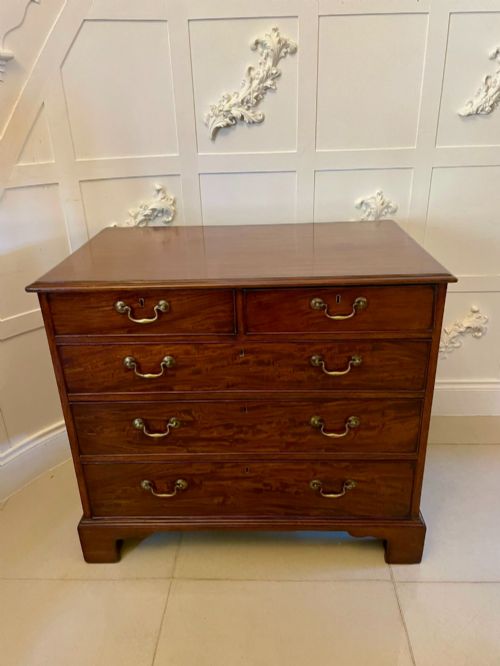
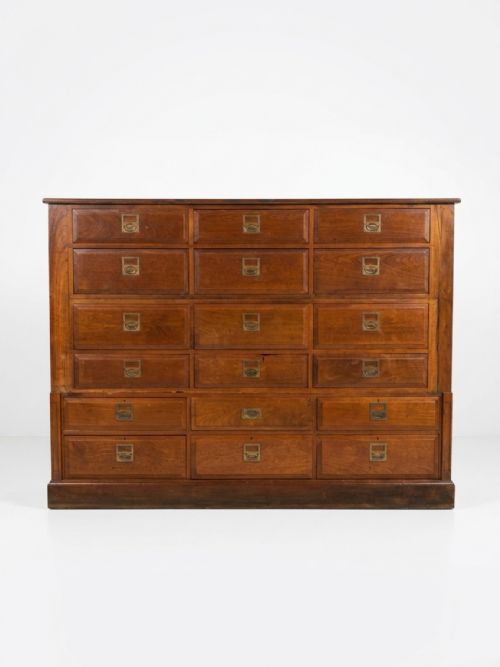
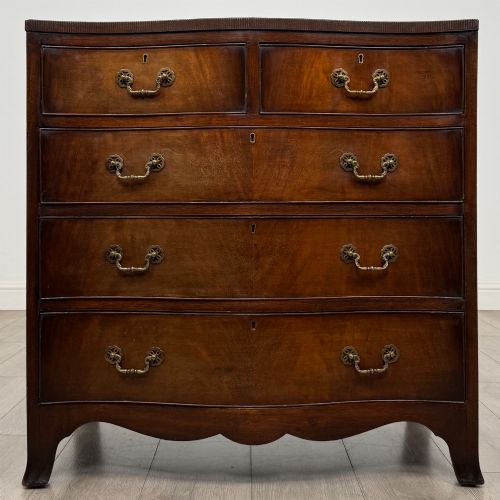
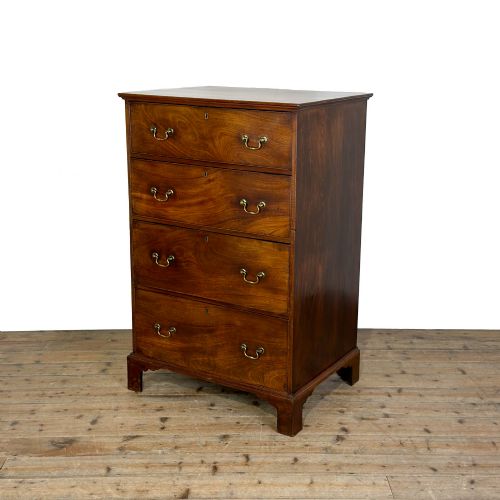
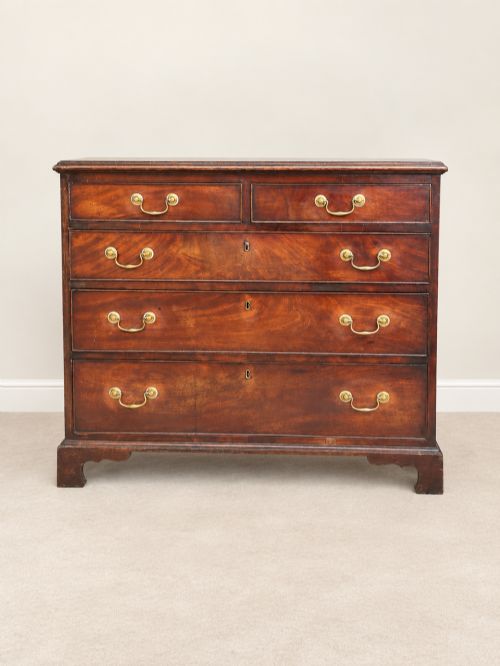
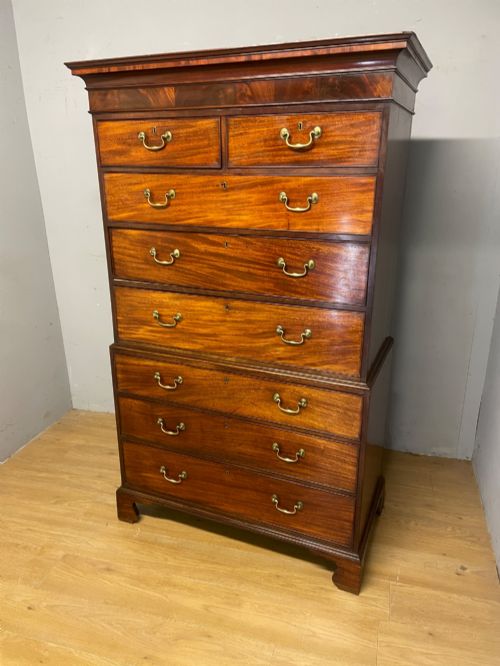
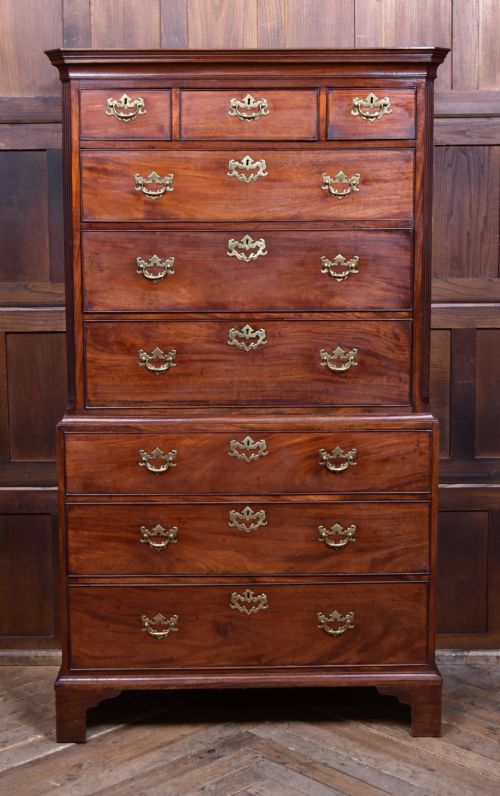
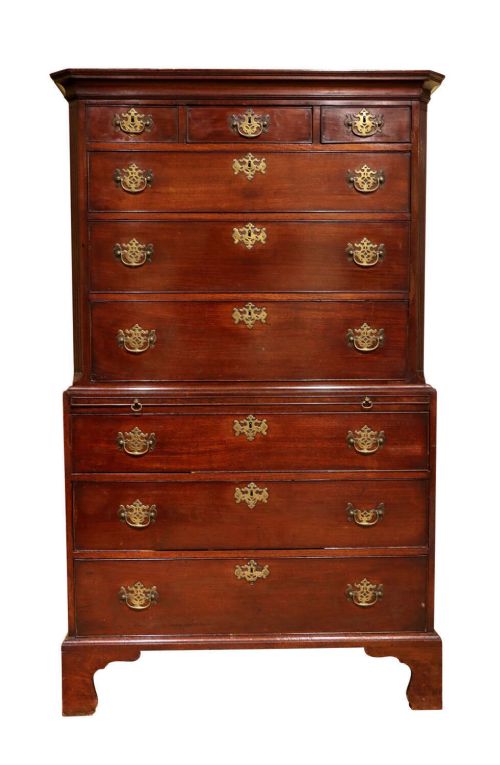
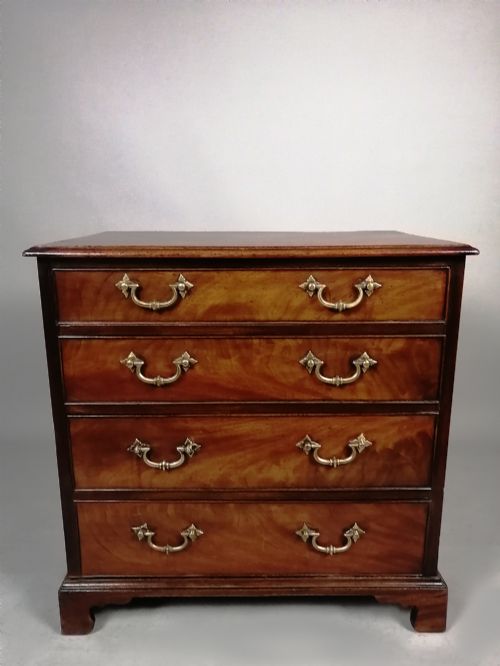
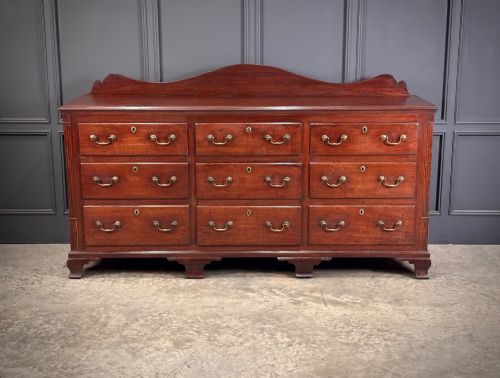
A mahogany chest drawers brass search reveals case furniture built for domestic storage, ranging from compact bow-front examples to tall proportions and military campaign boxes. The pieces originate primarily from Georgian, Regency, Victorian and Edwardian periods, constructed with multiple drawer configurations.
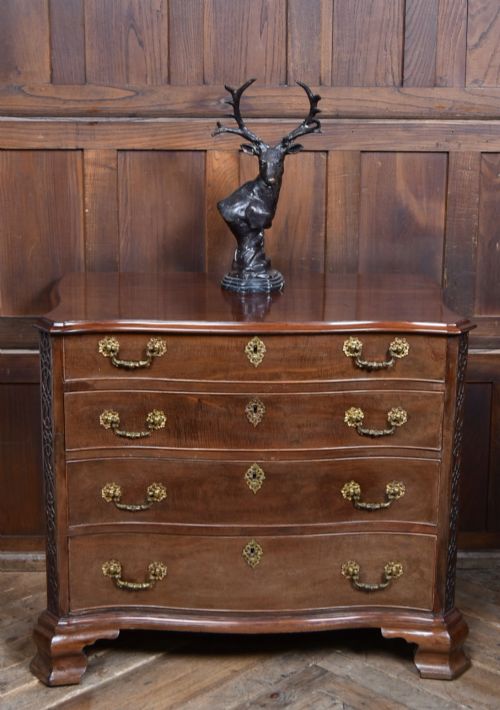
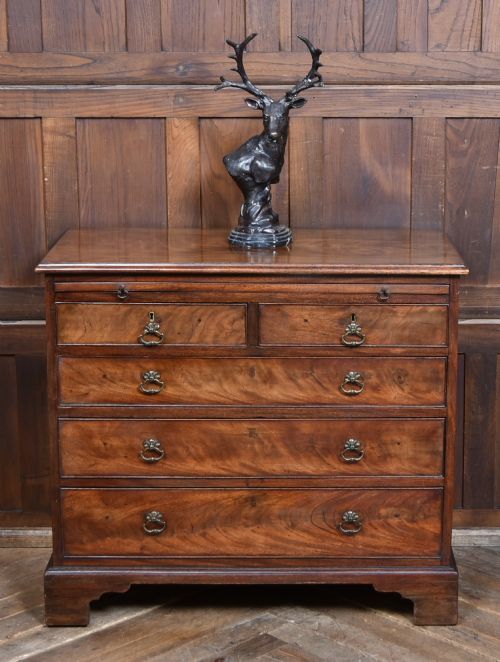
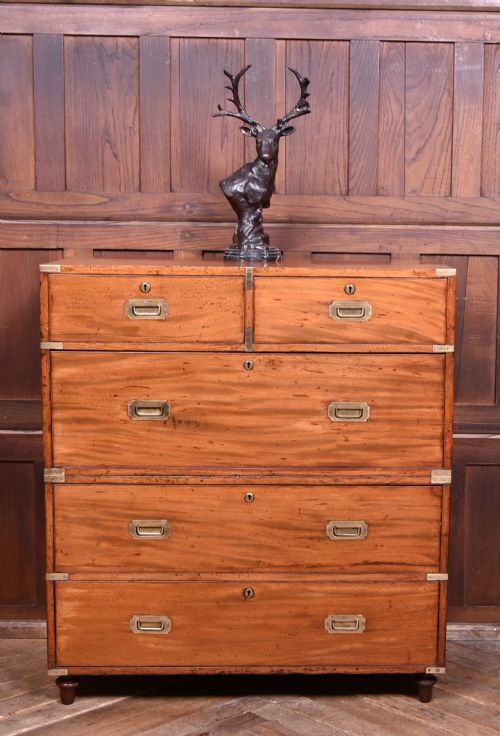
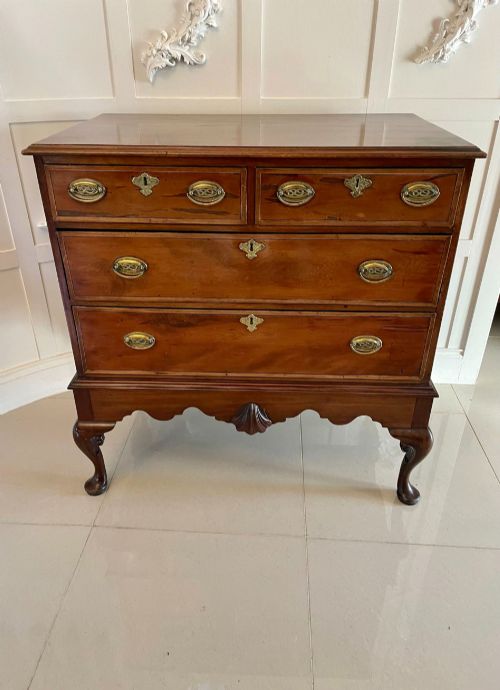
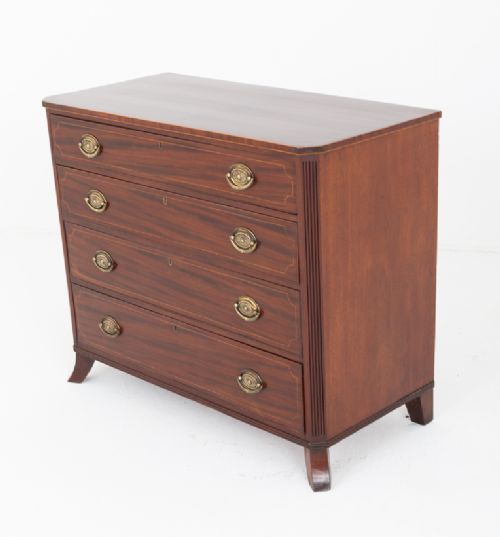
The standard domestic form uses two small drawers over three or four larger graduated drawers, resting on bracket feet, ogee feet or plinths. Variations include serpentine fronts, satinwood banding, crossbanded tops, and specialised campaign divisions with inset brass hardware.
How they were made
Makers constructed these carcasses using solid mahogany, flame mahogany, and occasionally oak or satinwood for secondary timbers and drawer linings. Hand-cut dovetails join the drawer corners, while secondary woods line the internal compartments.
Metal elements consist of cast or stamped brass hardware, including swan neck handles, oval plate handles, drop rings, lion heads, and protective corner brackets secured with brass screws.
Some miniature chests stand ready to hold tiny secrets, proving that grand Georgian proportions occasionally came in pocket sizes.
What varies in quality
Construction standards depend on the selection of timber grain, such as figured flame mahogany or symmetrical satinwood banding, matched with secondary woods like oak for drawer linings. Superior examples retain original brass handles, escutcheons and structural feet rather than replacements.
Joinery execution defines the tier of production, visible in tight hand-cut dovetailing, smooth drawer movement, and crisp moulding details along the cornices and bracket bases.
J Moorcroft·Graves and Sons of Devonport
The Mahogany Chest Drawers Brass Glossary
- Bow front
- A cabinet front that curves outward in a convex shape, common in late Georgian and Regency designs.
- Brushing slide
- A pull-out shelf integrated above the top drawers, historically used for folding clothes or writing.
- Campaign chest
- A sectional brass-bound chest built in two or more parts for easy transport by military officers.
- Crossbanding
- A decorative border of veneer laid perpendicular to the grain of the primary surface.
- Dovetail
- A joint formed by interlocking wedge-shaped fingers, securing drawer corners without metal fasteners.
Mahogany Chest Drawers Brass: Frequently Asked Questions
How do I date a mahogany chest?
Dating relies on architectural proportions, foot styles, timber choice, and the construction methods used inside the drawers. Early pieces utilise oak linings and hand-cut dovetails.
Hardware styles also help determine the period, as stamped brass plates and ring drops succeeded cast swan neck handles over time.
What is a campaign chest?
A campaign chest is a portable set of drawers split into modular sections for military transport. These units feature recessed brass handles and corner brackets to prevent damage during travel.
Most examples separate into two distinct boxes resting on one another, fitted with carrying side handles.
Are the brass handles original?
Original brass handles leave specific shadow marks and matching screw holes in the drawer timber if removed. Replacement hardware often uses slightly different hole spacings or modern casting techniques.
Original backplates and drop handles display natural wear patterns and patination matching the age of the wood.
What timber was used inside?
Interior drawer carcases and linings frequently consist of secondary woods like oak or pine rather than mahogany. Georgian and Victorian makers selected oak for strength in drawer sides and bottoms.
Secondary timber choices often assist in verifying the geographical origin and workshop period of the furniture.