



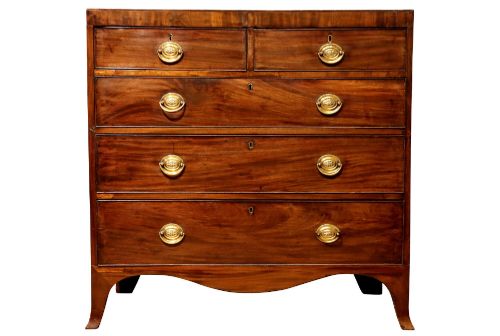
Mahogany Bureau with Drawers
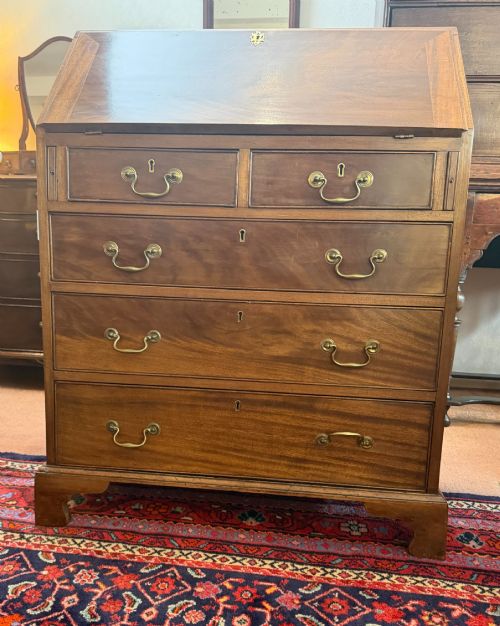
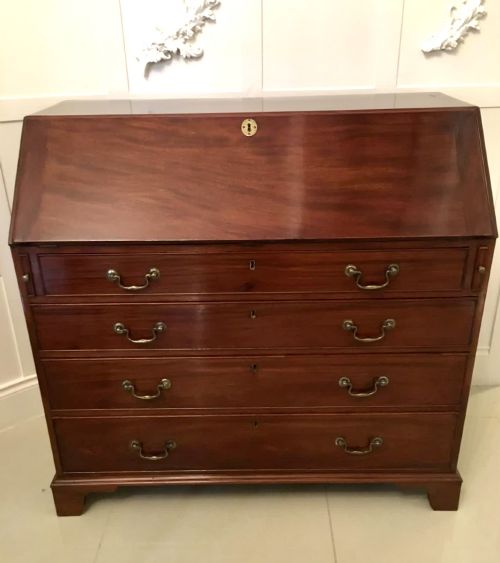
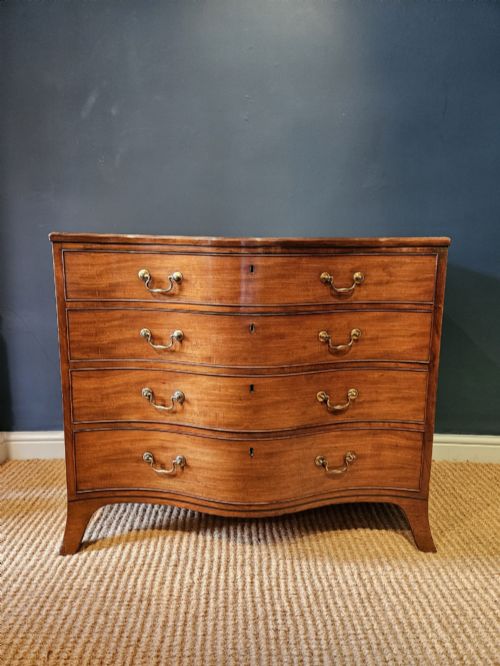
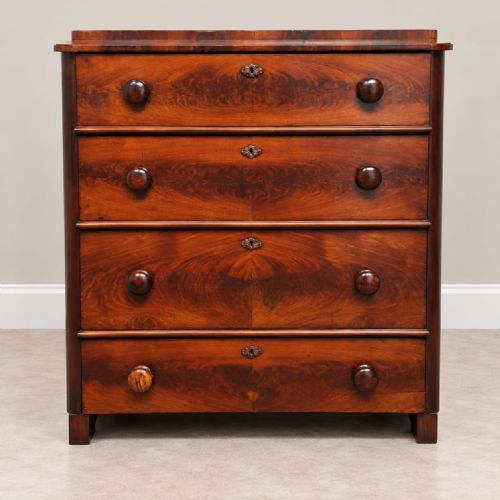
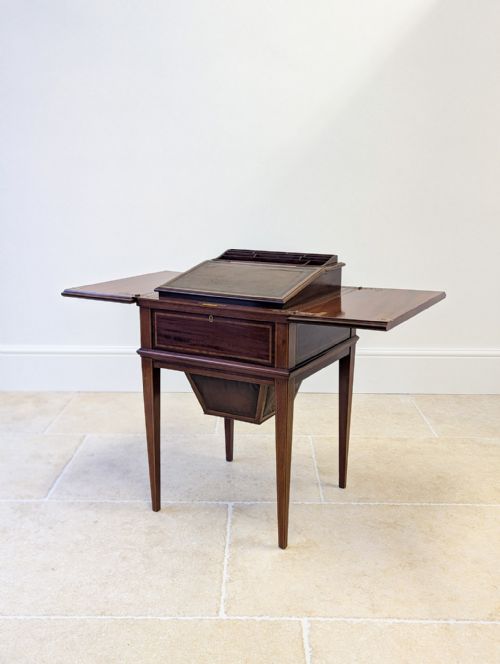
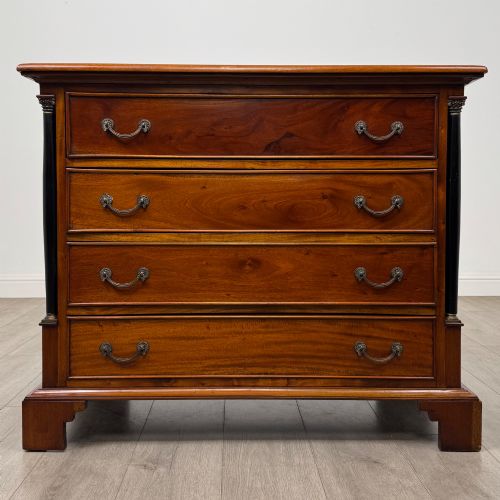
Mahogany bureau with drawers pieces are practical writing desks featuring drop-front writing slopes and storage compartments, valued for their clever compartmentalisation and rich timber grain.
Mahogany Bureau with Drawers
A mahogany bureau with drawers typically presents a fall-front flap that opens to reveal an interior fitted with small drawers and pigeonholes, sitting above a chest of lower drawers.
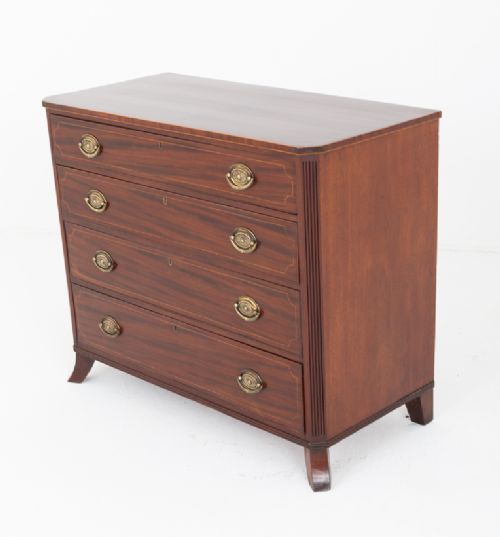
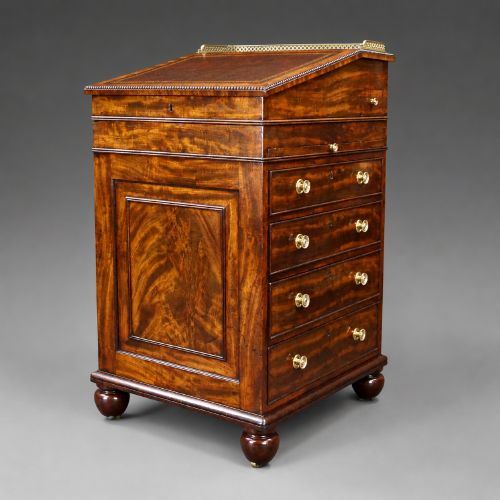
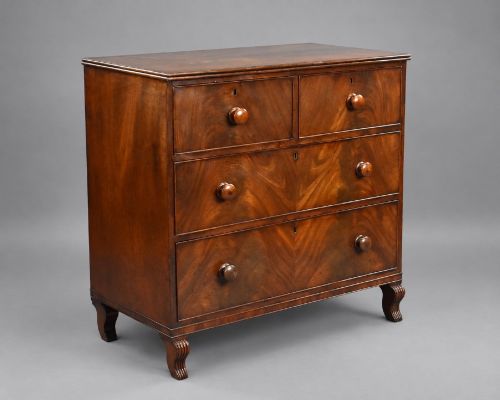
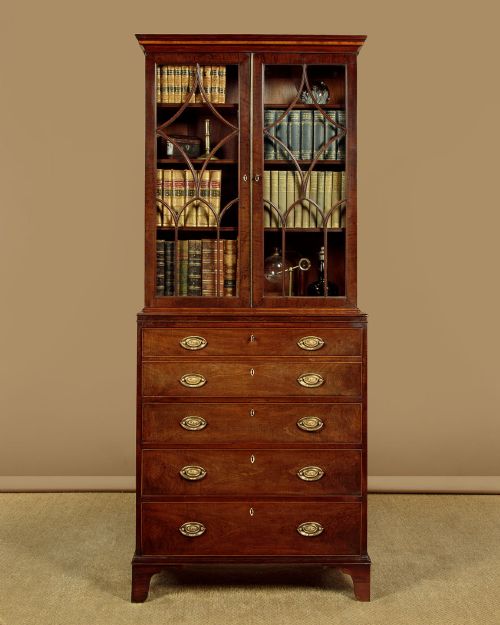
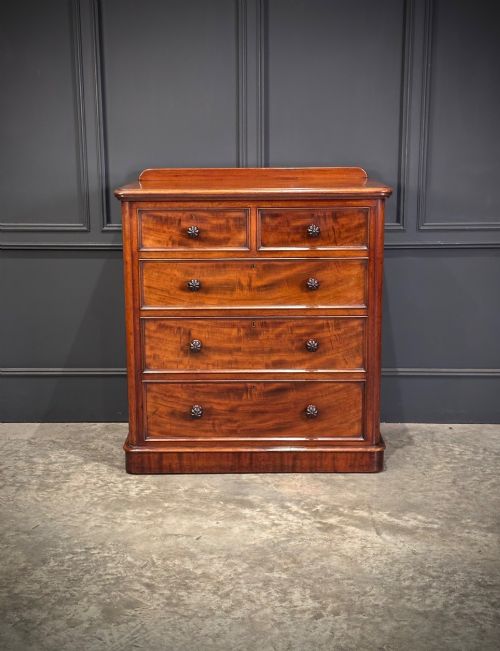
The pieces seen here span periods from the 18th century through the Victorian era and into Edwardian times, taking forms such as bureau bookcases, writing tables, and secretaire chests.
Georgian examples predominate in the selection, often showing traditional craftsmanship in oak-lined drawers and fitted compartments designed for correspondence and paperwork.
How they were made
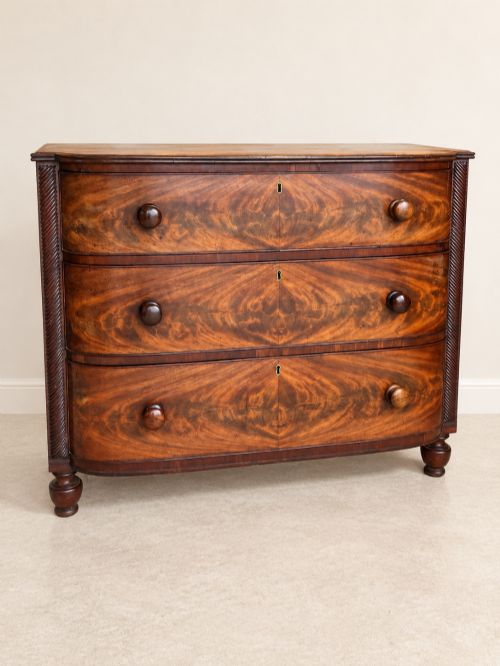
Cabinet makers utilised solid mahogany and flame mahogany veneers over secondary timbers such as oak, applying boxwood and satinwood stringing for decorative contrast on drawer fronts and falls.
Structural hardware relied upon cast brass handles, escutcheons, and hinges, while secondary woods like oak formed the robust linings of the internal and external drawers.
Many 18th-century examples feature cunning secret drawers hidden behind sliding pigeonhole panels, designed to guard private correspondence from curious house guests.
What varies in quality
The choice of timber creates a distinct visual hierarchy, ranging from standard plain mahogany planks to highly figured flame mahogany veneers selected for drawer fronts and fall flaps.
Internal complexity dictates the calibre of the piece, with superior examples offering sophisticated secret compartments, satinwood inlay, and meticulously dovetailed oak drawer linings.
Gillows
The Mahogany Bureau with Drawers Glossary
- Bureau
- A writing desk with a sloping hinged lid that covers pigeonholes and small drawers. It stands above a set of graduated exterior drawers for storage.
- Fall-front
- The hinged writing flap of a bureau that pulls down to a horizontal position for writing. When closed, it conceals the fitted interior.
- Flame mahogany
- A veneer cut from the fork of the mahogany tree where the branch meets the trunk. This produces a characteristic rippled, flame-like pattern.
- Dovetail
- A joint used in drawer construction formed by interlocking wedge-shaped fingers. Hand-cut dovetails indicate traditional period manufacturing methods.
- Secretaire
- A piece of furniture incorporating a writing drawer or compartment disguised as a standard drawer or panel. It often pulls forward to drop down as a desk surface.
Mahogany Bureau with Drawers: Frequently Asked Questions
What is inside a bureau?
A bureau interior contains a combination of small pigeonholes for sorting papers and miniature drawers for stationery. Many period pieces also conceal hidden secret compartments behind these internal fittings.
Opening the fall-front reveals this entire fitted arrangement at a convenient writing height above the main chest of drawers.
How do I date a bureau?
Dating relies upon examining construction methods, timber choices, and hardware styles across the piece. Earlier 18th-century examples often feature solid timber construction and hand-cut dovetails within oak-lined drawer boxes.
Later Victorian and Edwardian iterations frequently employ machine-cut joints, different veneer thicknesses, and factory-produced brass handles or locks.
Where were these desks used?
These desks served as private writing stations in domestic libraries, parlours, and bedrooms of period homes. They provided a secure place to manage household accounts and personal correspondence.
The lockable fall-front allowed owners to keep sensitive documents and valuable items out of sight when not in use.
How do I maintain the wood?
Maintenance involves keeping mahogany furniture away from direct sunlight and sudden temperature fluctuations to prevent timber splitting. Regular dusting with a dry, soft cloth preserves the polished surface.
Occasional applications of appropriate wax feed the timber and maintain the natural lustre of the mahogany grain.