

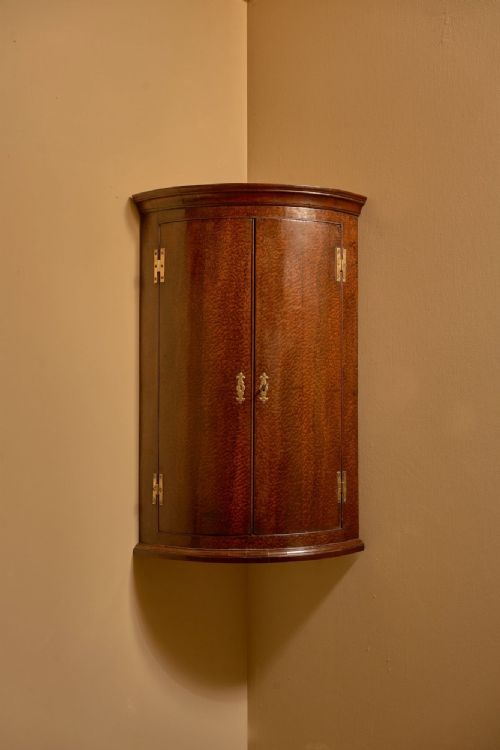
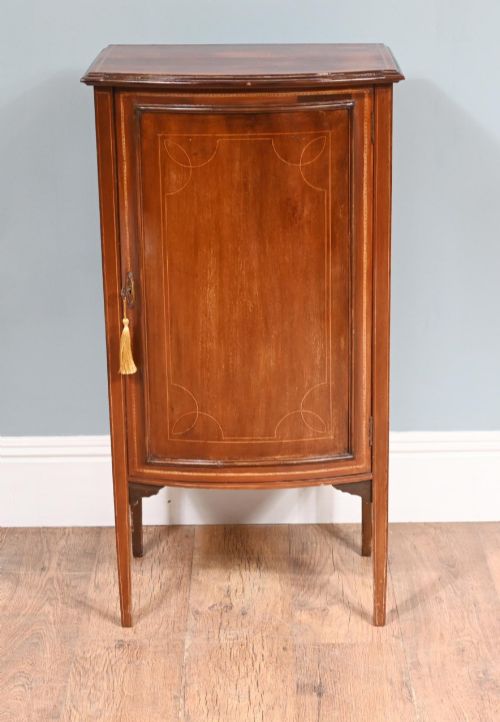
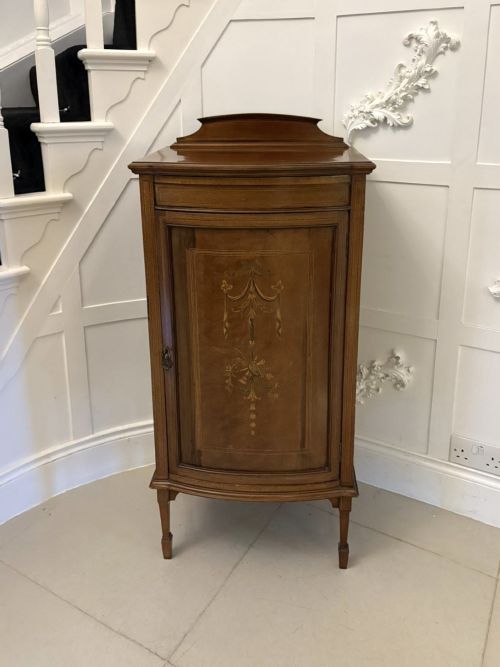
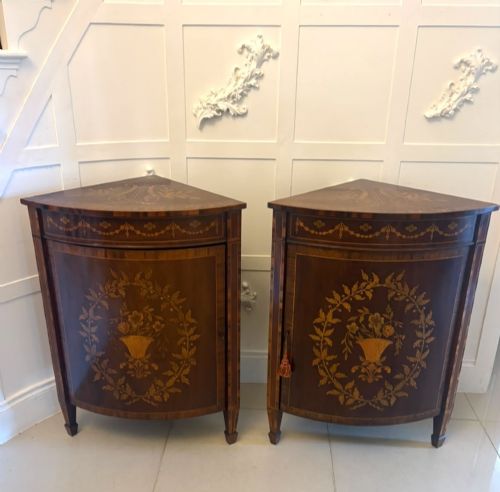
Mahogany Bow Fronted Cupboard
A mahogany bow fronted cupboard brings curved lines and rich timber into a room, offering practical storage with distinct period character.
Mahogany Bow Fronted Cupboard
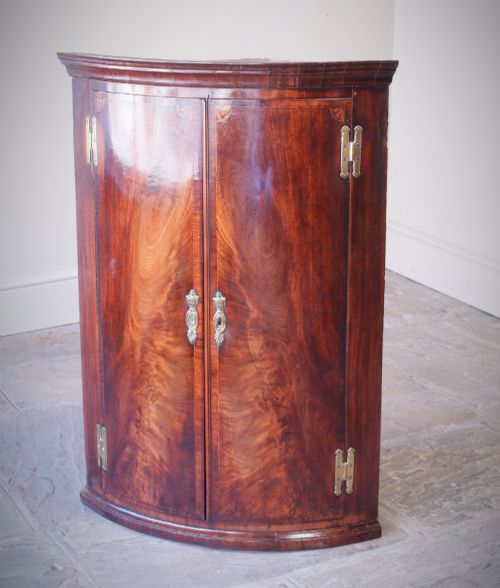
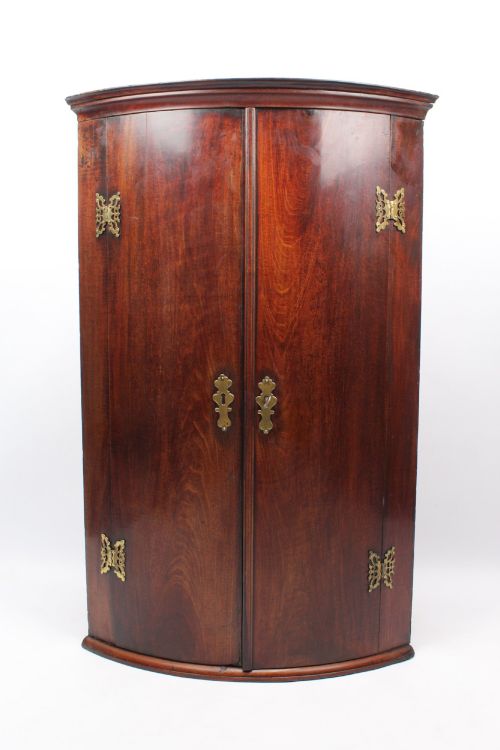
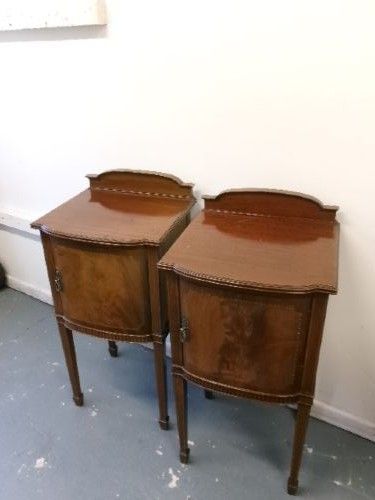
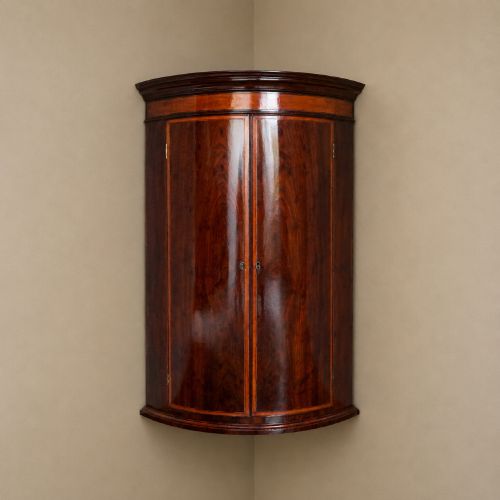
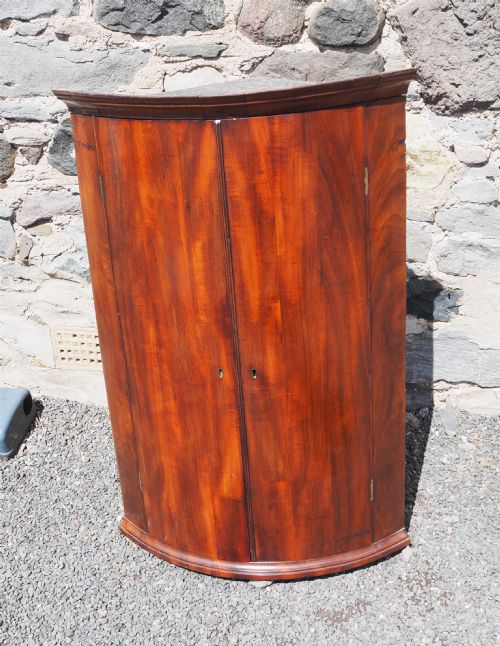
A mahogany bow fronted cupboard is a storage piece defined by its convex projecting front and dense tropical hardwood construction. Buyers searching this phrase encounter numerous corner units and wall-hanging cabinets alongside sideboards, display cases, and bedside chests.
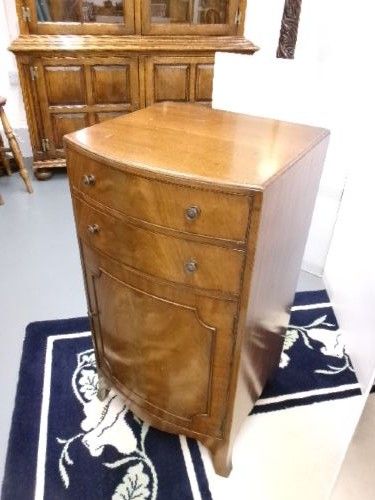
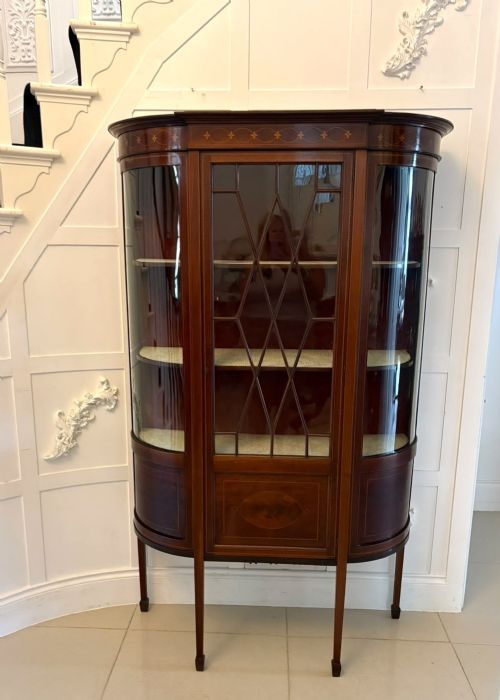
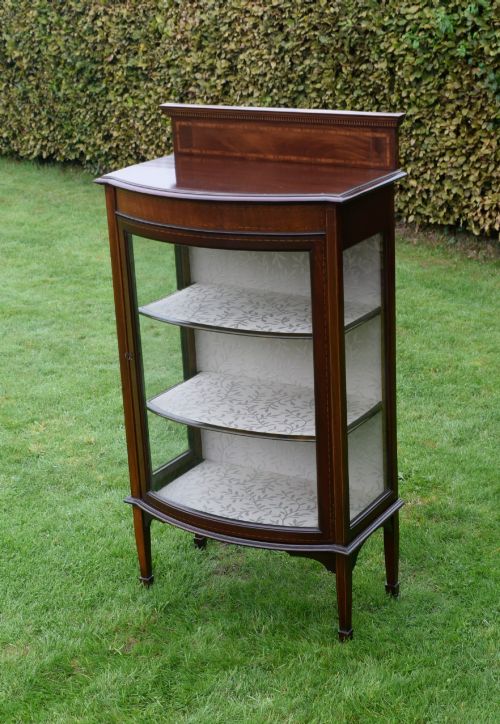
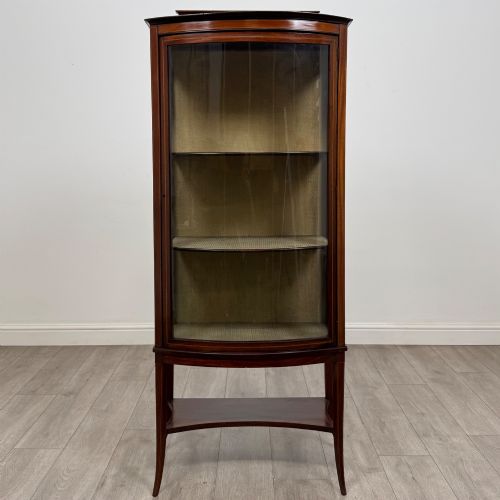
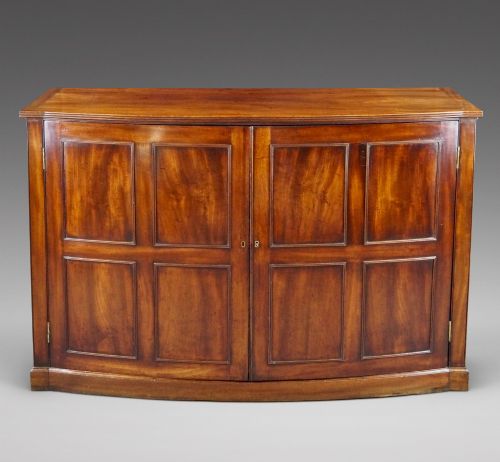
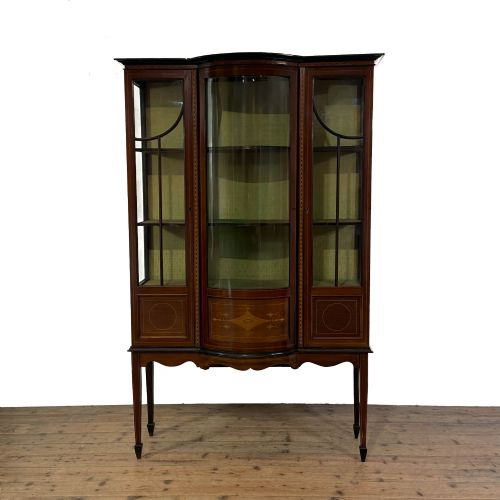
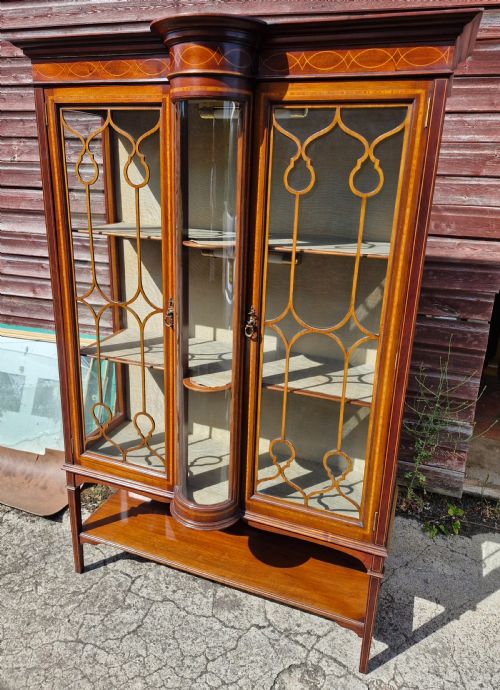
The pieces span several centuries, with George III and Georgian examples appearing frequently alongside Edwardian and later nineteenth-century revivals. Corner cupboards dominate the early Georgian entries, while Edwardian variations encompass display cabinets and sideboards featuring glazed doors and delicate stringing.
Makers often utilised secondary timbers like oak alongside primary mahogany, incorporating satinwood and boxwood for decorative contrast. The curved silhouette softens room angles while providing enclosed shelving for china, linen, or household provisions.
How they were made
Cabinetmakers constructed these curved frames using solid mahogany and flame veneers, occasionally selecting plum pudding mahogany for rich, mottled figure. They bent or shaped the wooden front rails to create the signature bow, framing doors with brass hinges and locks.
Inlay work defined the later Georgian and Sheraton Revival pieces, utilising satinwood, boxwood, and contrasting stringing to edge panels and cornices. Edwardian makers added marquetry motifs and bowed glass panes to display variations, securing glazed sections with delicate wooden glazing bars.
Mahogany Bow Fronted Cupboard Retail Price Guide 2026
Typical asking prices for mahogany bow fronted cupboard among the pieces listed under this phrase on Sellingantiques today, from the lower quarter to the upper quarter. They describe what is for sale here now, not the wider market.
Listings feature mahogany bow fronted pieces spanning the Georgian, Victorian, and Edwardian periods, alongside Sheraton Revival interpretations.
What varies in quality
The selection of timber sets the baseline for quality, distinguishing plain boards from richly figured flame mahogany and distinct plum pudding grain. Cabinetmakers who matched veneer patterns symmetrically across curved doors achieved a far superior visual balance.
Refinement in the inlay work and the crispness of brass hardware indicate higher workshop standards. Pieces that retain original glazing, tight door joints, and undisturbed structural framing demonstrate careful historical preservation.
The Mahogany Bow Fronted Cupboard Glossary
- Bow front
- A cabinet front that curves outward in a convex arc. This shape softens the profile of case furniture and maximises interior depth.
- Stringing
- Thin strips of contrasting light wood, such as boxwood or satinwood, inlaid into channels on the cabinet surface. It forms delicate geometric borders around door panels.
- Marquetry
- Decorative veneer patterns formed by fitting together pieces of various woods, shells, or other materials. It creates pictorial or abstract designs on cabinet doors.
- Linen press
- A tall cupboard featuring upper sliding trays for storing textiles and lower drawers for bulkier garments. These pieces often feature prominent mahogany bow fronts.
Mahogany Bow Fronted Cupboard: Frequently Asked Questions
Where should I place a corner cupboard?
A corner cupboard fits neatly into unused room junctions, making efficient use of awkward spaces while introducing period character. Wall-hanging versions attach directly to plaster, whereas floor-standing models anchor the corner entirely.
Ensure the door swing has adequate clearance from adjacent furniture and architectural mouldings before mounting or positioning the cabinet.
How do I care for antique mahogany?
Maintain mahogany surfaces by dusting with a soft, dry cloth and avoiding modern silicone sprays that build up residue. Keep timber away from direct heat sources and strong sunlight to prevent the polish from crazing or fading.
Apply a traditional beeswax polish sparingly when the wood appears dry, buffing gently to restore the natural sheen of the grain.
What is the difference between George III and Edwardian pieces?
George III pieces date from the eighteenth and early nineteenth centuries, relying on solid proportions, flame veneers, and minimal structural ornamentation. Edwardian items reflect later revivals, frequently incorporating lighter satinwood inlays, painted highlights, and glazed display sections.
Examining the construction methods, interior timber linings, and secondary woods helps distinguish eighteenth-century originals from Edwardian interpretations.
Can I use a display cabinet for modern dining ware?
Display cabinets with glass doors and internal shelving provide an enclosed space to store and exhibit glassware, ceramics, and tableware. The sturdy timber construction supports heavy porcelain safely behind glazed panels.
Check the weight capacity of internal wooden shelves before loading them with heavy stoneware or collections of dense ceramics.