




Mahogany Bow Front Bookcase
A mahogany bow front bookcase brings architectural elegance and glass-fronted display space to a room, offering a curved profile that softens corners.
Mahogany Bow Front Bookcase
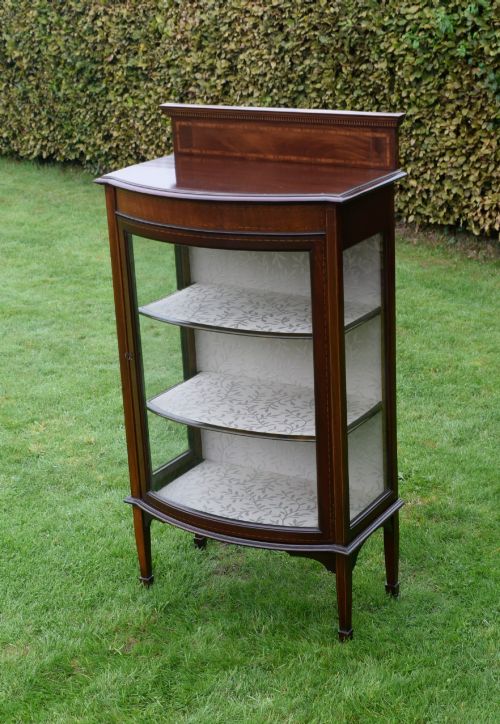
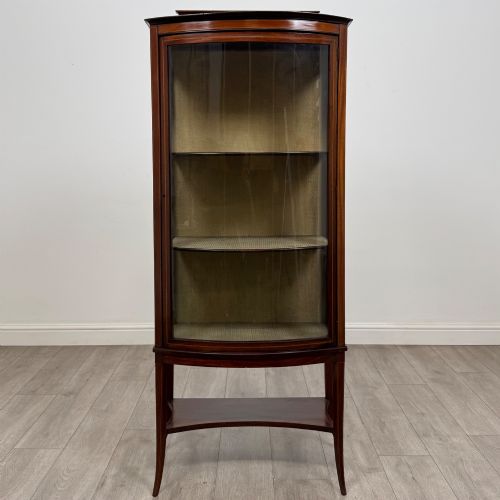
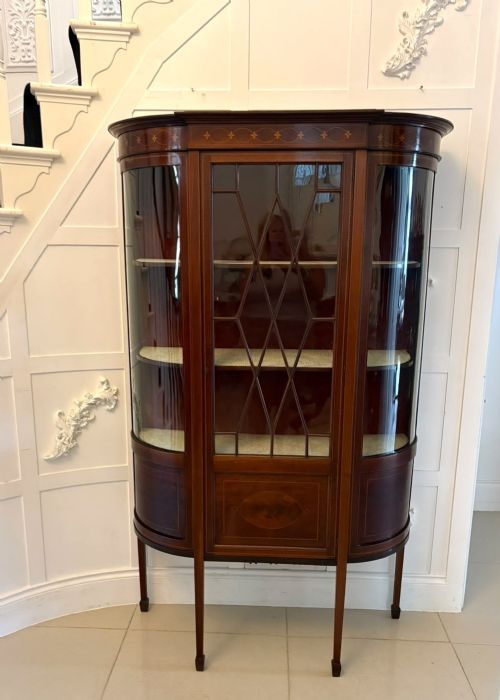
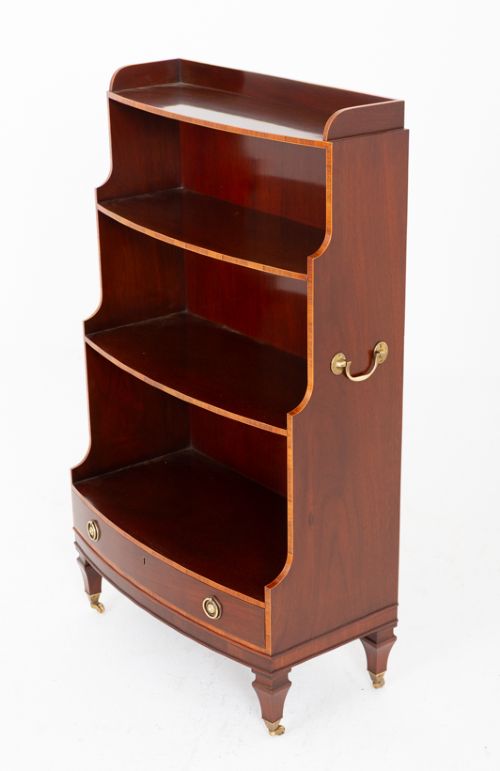
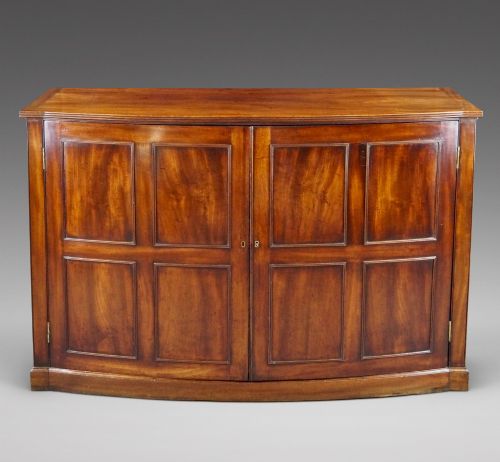
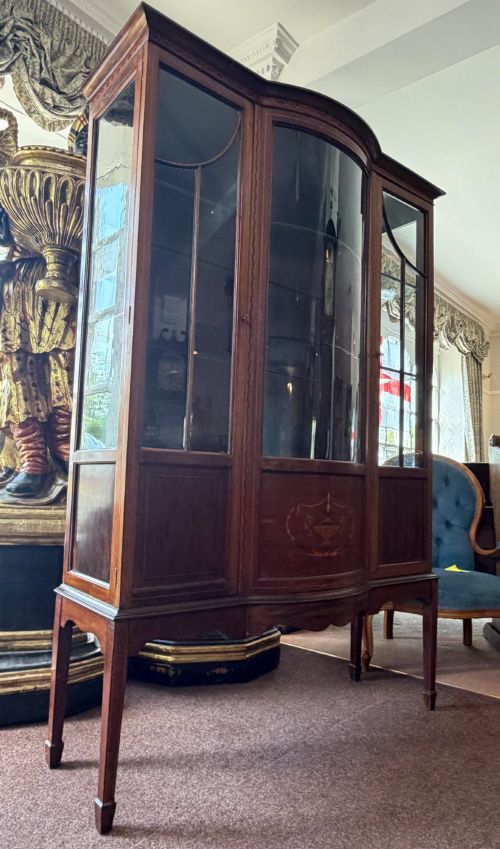
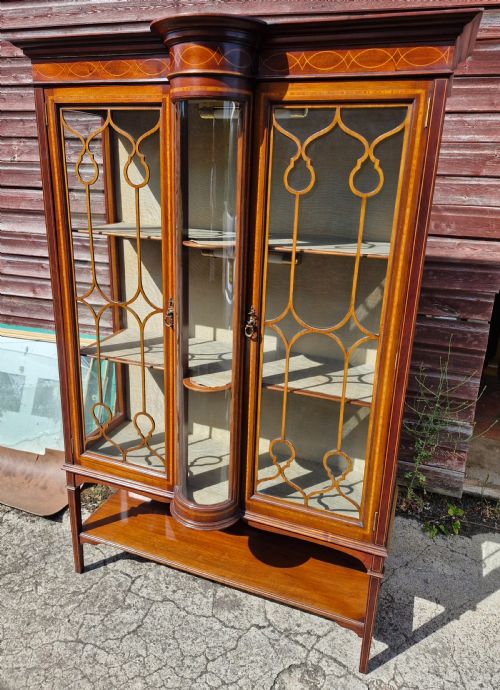
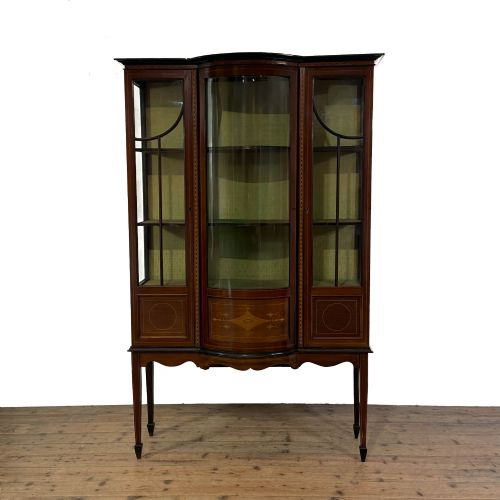
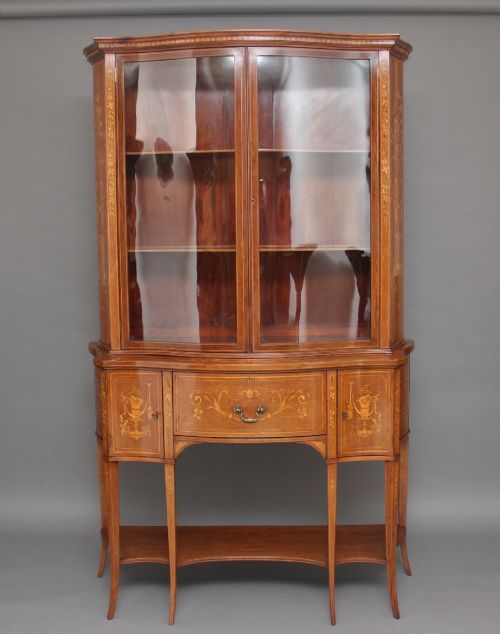
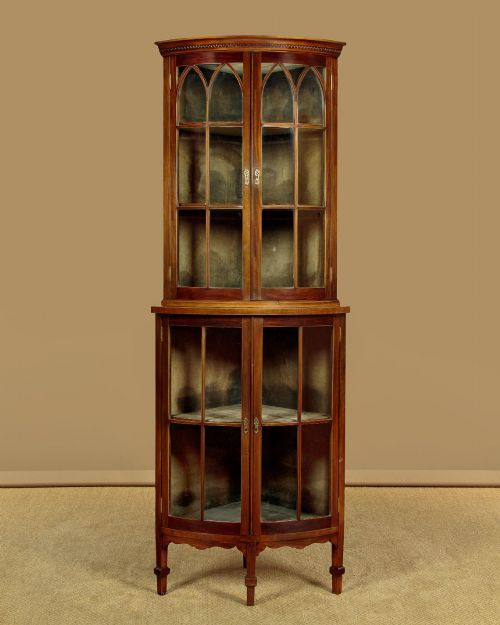
When searching for a mahogany bow front bookcase, buyers encounter pieces primarily originating from the Georgian, Victorian, and Edwardian eras. These items frequently manifest as display cabinets, corner cabinets, and library bookcases featuring curved front profiles.
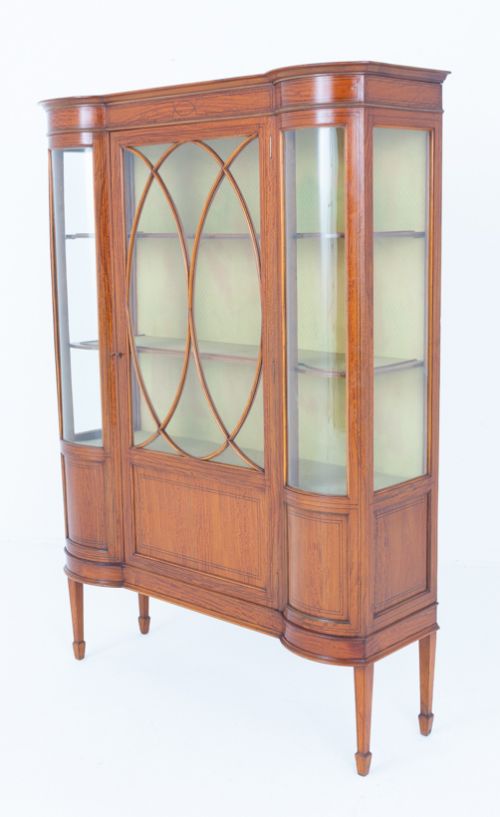
The Edwardian period and the Sheraton Revival style dominate the current selection, bringing lighter proportions and delicate decorative treatments to the traditional bookcase form. Pieces span various configurations, from tall shelved libraries to smaller side cabinets and vitrines designed for porcelain or books.
Georgian examples provide earlier forms including bow-fronted cupboards and corner units, while later nineteenth-century items incorporate elaborate inlays. The curving front provides a distinct visual rhythm that sets these cabinets apart from standard flat-fronted furniture.
Materials and construction methods
Cabinetmakers utilised solid mahogany and mahogany veneers over secondary timbers, shaping the characteristic curved front frames through steam-bending or segmented construction. Glass panels are fitted into glazed doors to protect contents while maintaining visibility.
Decorative surfaces often incorporate satinwood inlay, wood inlay, and brass hardware to accentuate the grain of the mahogany. Interiors may feature mirrors, fabric linings, or glass shelves depending on the specific cabinet type.
Mahogany Bow Front Bookcase Retail Price Guide 2026
Typical asking prices for mahogany bow front bookcase among the pieces listed under this phrase on Sellingantiques today, from the lower quarter to the upper quarter. They describe what is for sale here now, not the wider market.
Listings span from the Georgian period through Victorian times to Edwardian Sheraton Revival styles, incorporating glass, brass, and satinwood inlay.
Judging the quality of construction and finish
Quality reveals itself in the precision of the curved joinery and the crispness of the inlaid satinwood details. Superior examples maintain smooth operation on doors and drawers, with timber selections chosen for rich depth of colour and consistent grain.
Finer pieces demonstrate restraint in their decoration, where delicate stringing and marquetry enhance rather than overwhelm the architectural form. The integration of original glass, brass fittings, and structural integrity elevates certain cabinets above standard production items.
Maple and Co·Gillows·Edwards and Roberts
The Mahogany Bow Front Bookcase Glossary
- Bow front
- A convex curved front profile that projects outward, softening room angles and providing additional internal depth.
- Sheraton Revival
- A late nineteenth and early twentieth-century design style drawing inspiration from the neoclassical furniture of Thomas Sheraton, known for refined inlay and elegant proportions.
- Vitrine
- A glass-fronted display cabinet specifically designed to showcase porcelain, curiosities, or fine books.
- Inlay
- A decorative technique where contrasting woods such as satinwood are inserted into recesses within the primary mahogany surface.
- Secretaire bookcase
- A tall cabinet incorporating a pull-out writing drawer with fitted compartments concealed behind a fall-front desk panel.
Mahogany Bow Front Bookcase: Frequently Asked Questions
What is a bow front bookcase?
A bow front bookcase is a storage unit featuring a convex curved front profile designed to hold books or display decorative items behind glass doors.
These pieces combine functional shelving with curved architectural lines that project outward into the room.
How do I date a mahogany cabinet?
Dating relies on examining the construction methods, timber characteristics, decorative styles, and hardware present on the piece.
Edwardian pieces often show lighter satinwood inlays and revival styling, whereas Georgian items display heavier proportions and earlier joinery techniques.
Where should I place a corner cabinet?
Corner cabinets fit neatly into ninety-degree room angles, making efficient use of overlooked spaces while displaying contents through glazed doors.
They work well in dining rooms, studies, or hallways where wall space for traditional rectangular furniture is limited.