




Mahogany Bijouterie
Mahogany bijouterie display tables and cabinets showcase small treasures behind glass, combining rich timber frames with velvet-lined interiors to elevate personal collections.
Mahogany Bijouterie
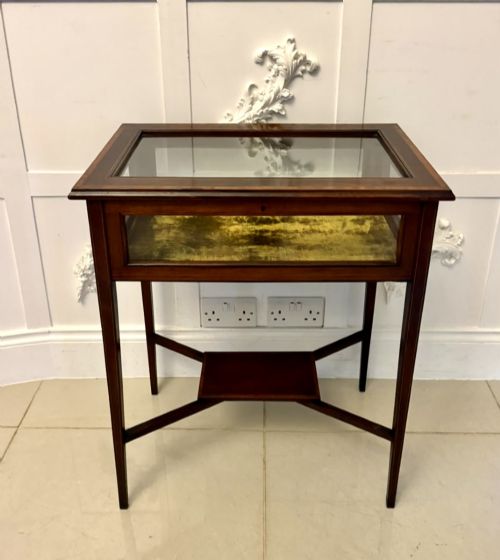
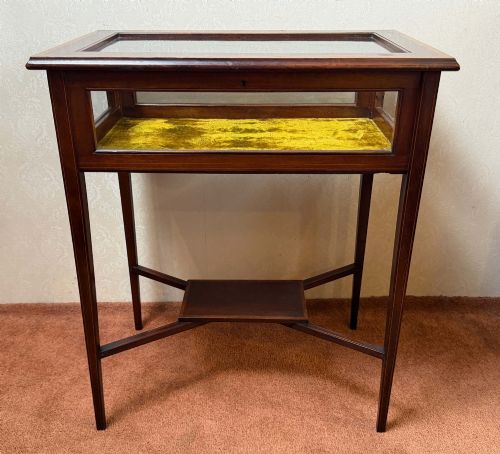
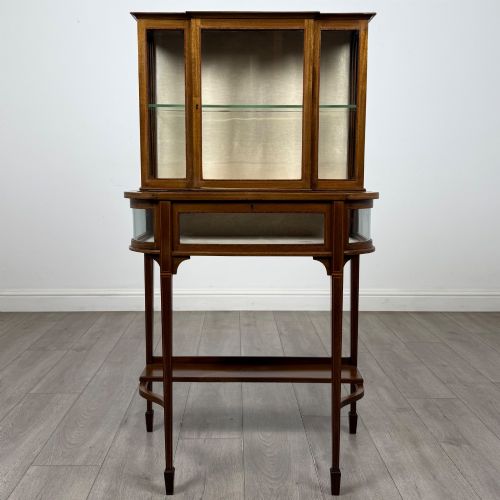
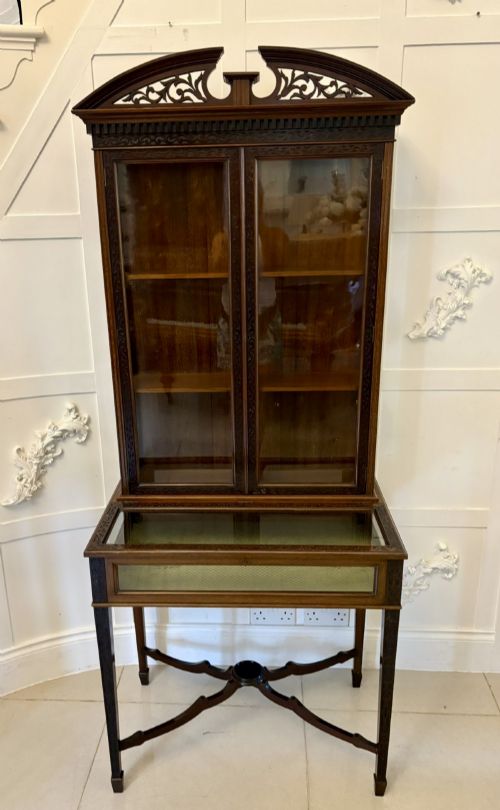
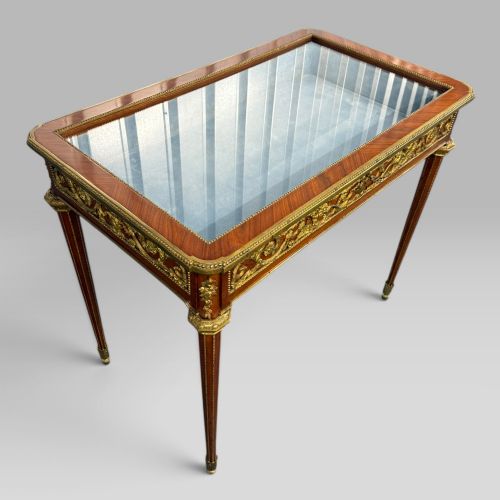
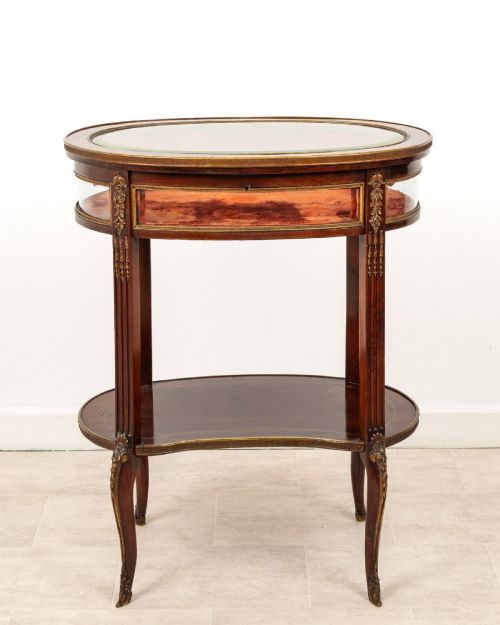
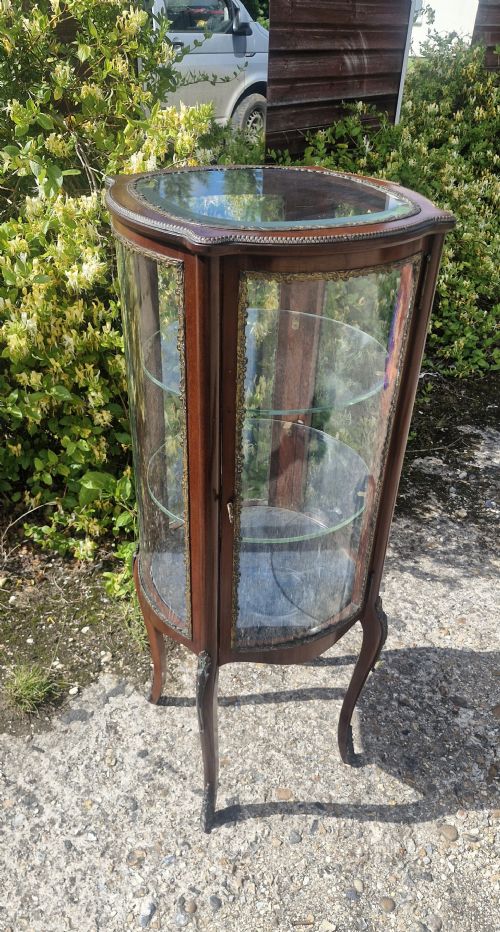
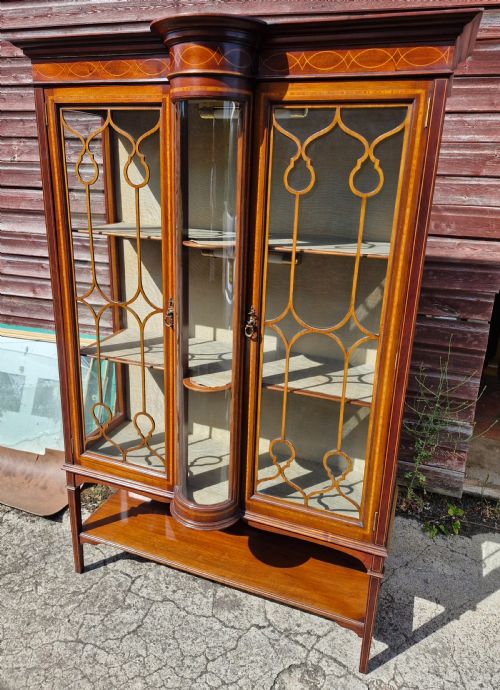
When buyers search for mahogany bijouterie, they encounter glazed display tables, vitrines, and cabinets designed specifically to hold jewellery, medals, and small curiosities. The pieces on this page span the Victorian and Edwardian eras, alongside later interpretations, taking the form of freestanding tables with glazed tops or taller display cabinets.
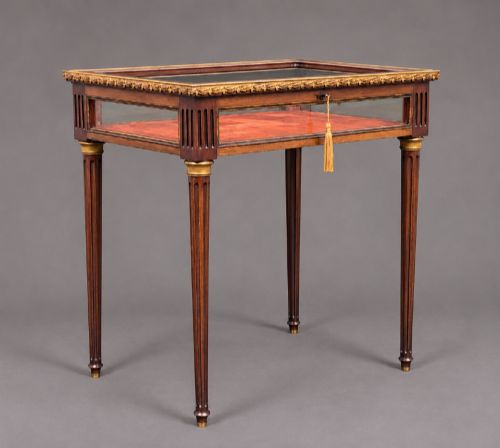
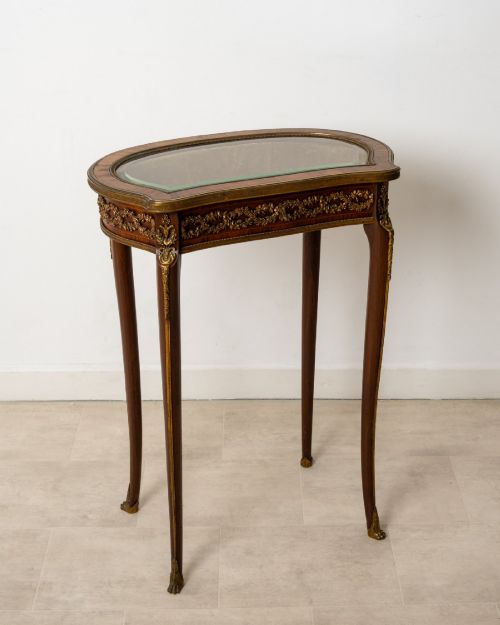
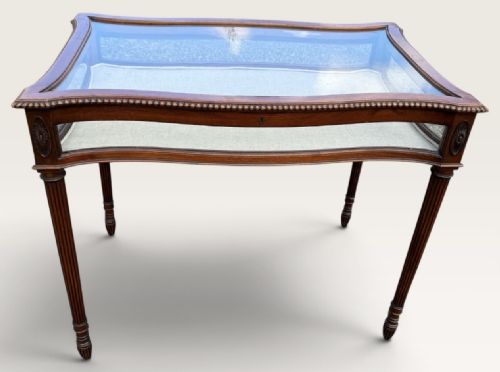
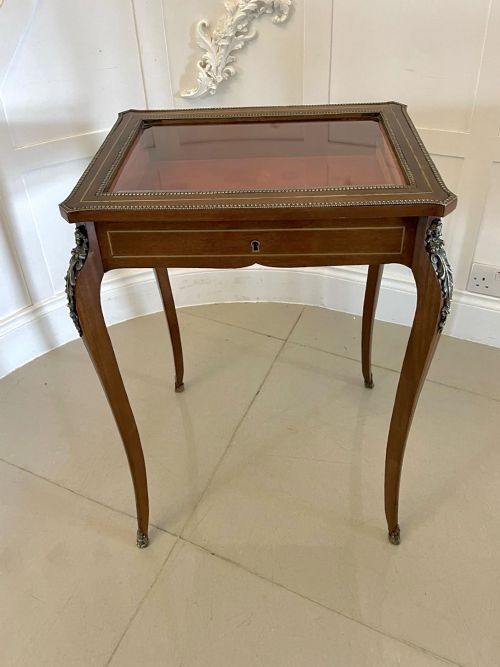
Edwardian inlaid examples and nineteenth-century French revival pieces dominate the selection, often featuring shaped glass cases that lift or open to reveal fabric-lined wells. These items serve a dual purpose as functional furniture and elevated stages for intimate personal collections.
Materials and construction
Makers built these pieces primarily using solid or veneered mahogany, frequently accented with contrasting satinwood or kingwood crossbanding, alongside marquetry and delicate brass inlay. Structural framing supported glazed panels of glass on all sides, creating a transparent enclosure for the objects displayed within.
Metalwork played a defining role in the construction, utilising cast ormolu and gilt bronze mounts to edge the glass tops, frame corners, and embellish leg mounts. Interiors relied on velvet or other fine fabric linings fitted to wooden bases to cushion the items placed inside the display well.
Mahogany Bijouterie Retail Price Guide 2026
Typical asking prices for mahogany bijouterie among the pieces listed under this phrase on Sellingantiques today, from the lower quarter to the upper quarter. They describe what is for sale here now, not the wider market.
Design forms range from serpentine and kidney-shaped display tables to freestanding vitrine cabinets.
Distinctions in quality
The refinement of the timber and the crispness of the secondary wood marquetry or satinwood banding set the baseline for a piece's standing. Finer examples display meticulous hand-cut inlay and well-chosen mahogany grain that requires no excessive staining to look distinguished.
Hardware and metal mounts separate standard production from superior craftsmanship, with chased ormolu and heavy cast brass detailing outperforming simpler stamped metal fittings. The precision of the joinery on serpentine or kidney-shaped frames further dictates how successfully the piece holds its structural line over time.
François Linke
The Mahogany Bijouterie Glossary
- Bijouterie table
- A specialised display table featuring a glazed compartment beneath the top surface designed for exhibiting small valuables and curiosities. These tables typically lift open on hinges.
- Ormolu
- Gilt bronze ornamentation applied to the mounts and feet of furniture. This decorative technique adds a bright metallic contrast to the dark mahogany timber.
- Crossbanding
- A border of veneer laid around the edge of a tabletop or panel with the grain running perpendicular to the main surface. It frames the central mahogany grain.
- Marquetry
- Decorative patterns formed by fitting together thin slices of various woods onto a structural surface. Edwardian makers used this technique extensively on display tables.
- Vitrine
- A glass-fronted cabinet or display case intended for showing porcelain, glassware, or small objects. French revival examples often incorporate extensive glass panels.
Mahogany Bijouterie: Frequently Asked Questions
What is mahogany bijouterie used for?
These glass-topped tables and cabinets were originally designed for the display of personal accessories, rings, medals, and delicate curiosities. They allowed owners to exhibit their collections in drawing rooms while keeping dust away from fragile items.
Today, they serve the same purpose for collectors of small antiques, pocket watches, and modern jewellery. The glazed top provides clear visibility while functioning as a standard surface or focal point in a room.
How do I date a mahogany bijouterie table?
Dating relies on stylistic clues, construction methods, and the specific proportions popular in different decades. Victorian pieces tend to be heavier and feature deep carving or cast ormolu mounts, whereas Edwardian examples often display lighter inlaid satinwood and delicate spade feet.
French revival pieces from the late nineteenth century frequently borrow Louis XV or Louis XVI vocabulary with kidney or serpentine shapes. Examining the secondary woods and hinge hardware provides further confirmation of the period.
Are these tables sturdy enough for daily use?
Bijouterie furniture is constructed with slender legs to maintain an elegant silhouette, meaning it requires careful placement rather than heavy daily weight. The glass tops are meant to carry only light decorative objects rather than heavy books or serving trays.
Positioning the table away from direct sunlight protects both the mahogany timber and the interior fabric lining from fading. Gentle handling of the glazed lids preserves the original hinges and locking mechanisms.
What styles are common in these cabinets?
The selection draws heavily on French Rococo and Louis XV or Louis XVI revival styles, characterised by curved lines, cabriole legs, and elaborate metal mounts. Sheraton and Chippendale influences also appear through symmetrical inlay and straight tapered legs.
Edwardian makers favored lighter satinwood crossbanding and marquetry motifs on mahogany foundations. These stylistic variations reflect changing tastes from heavy Victorian revivalism toward refined Edwardian elegance.