
Mahogany Armchairs and Chairs
Mahogany armchairs and chairs encompass formal dining sets, library seating, and swivel desk chairs shaped across the eighteenth, nineteenth, and early twentieth centuries.
Mahogany Armchairs and Chairs
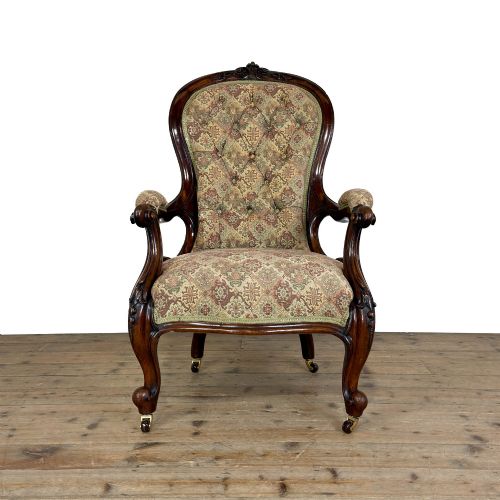
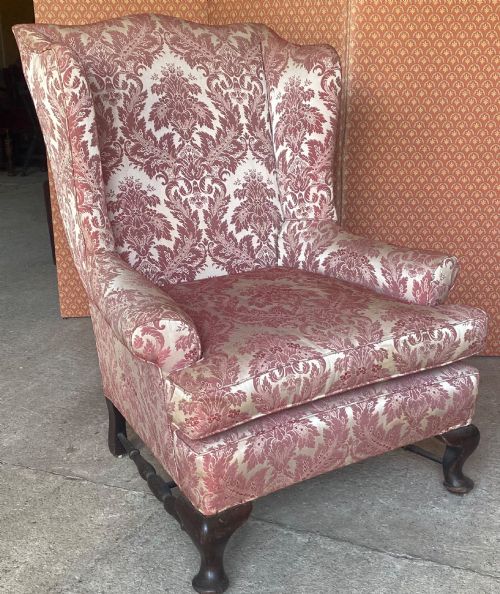
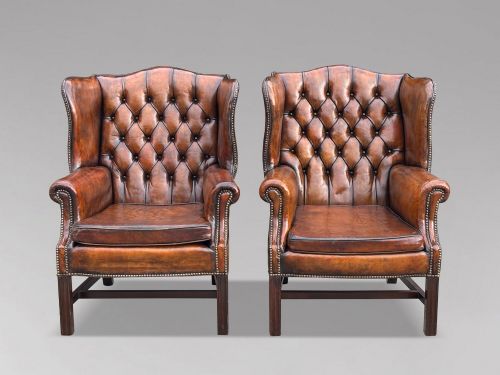
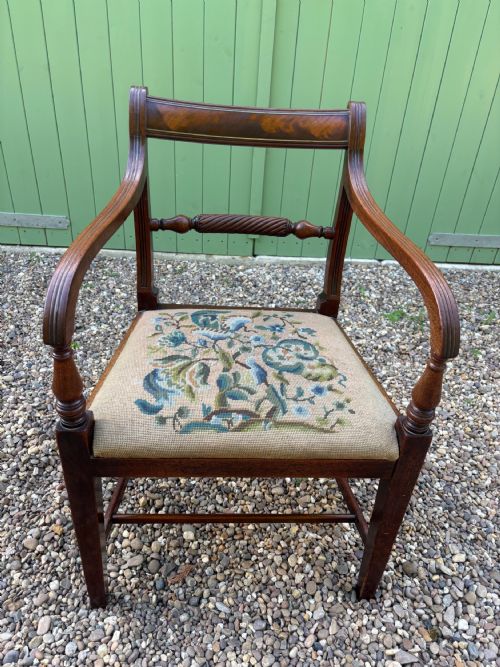
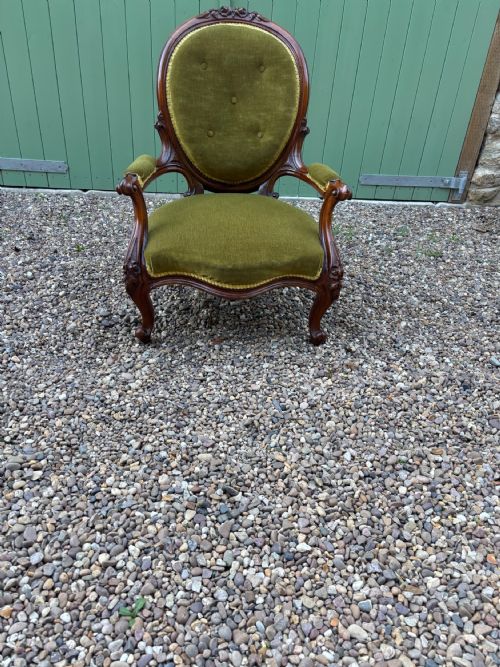
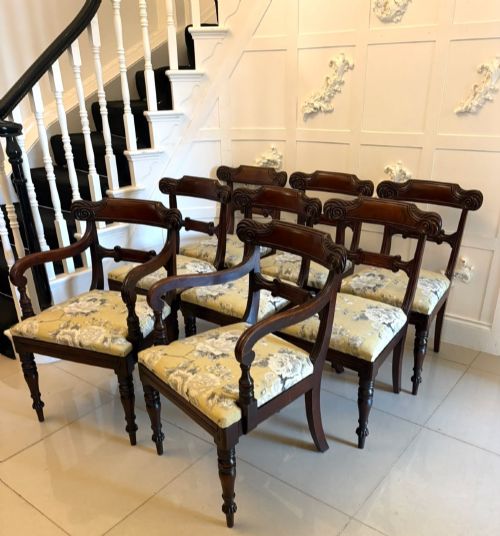
When you search for mahogany armchairs and chairs, you meet a vast selection spanning from the eighteenth-century Georgian era through to Edwardian revivals. The listings include large sets of dining chairs alongside single library armchairs, revolving desk chairs, and tub seats.
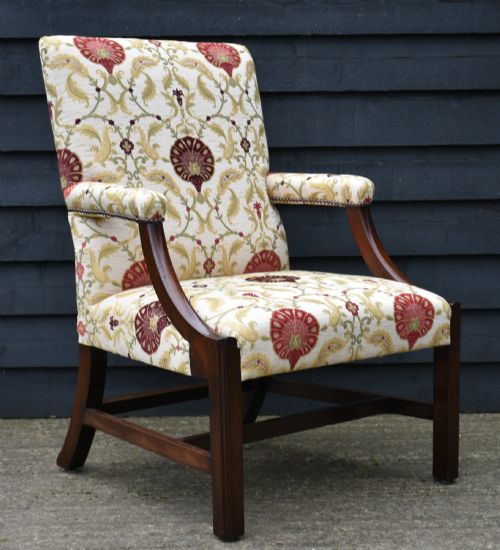
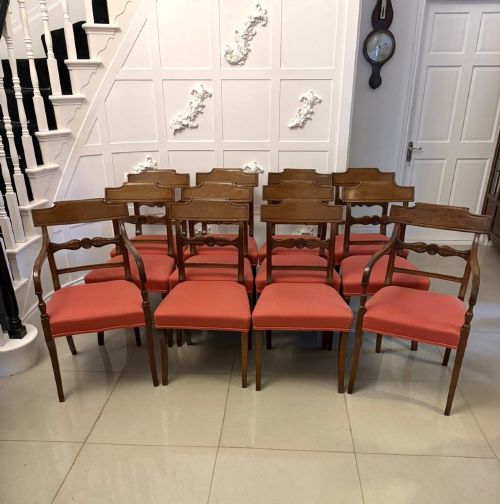
Dining chairs appear frequently as complete sets or matched groups, often featuring shield backs, ladder backs, or carved splats. Armchairs and carvers supplement these sets, while specialised forms like Gainsborough chairs, Windsor rocking chairs, and deep-seated library reading chairs provide heavier comfort.
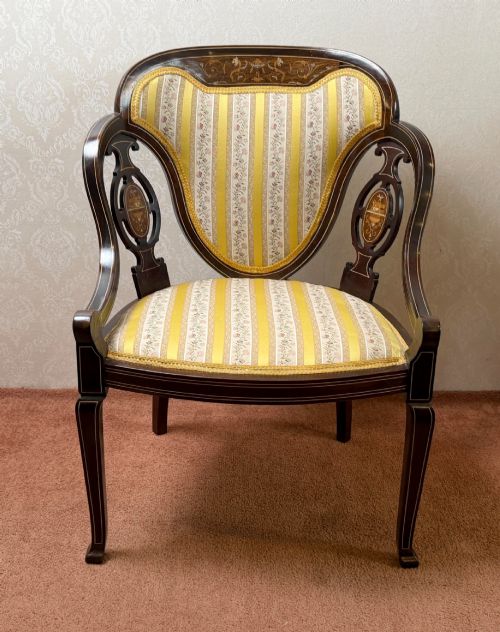
The materials recorded across these pieces centre on solid timber frames paired with leather, horsehair, velvet, and various modern or traditional upholstery fabrics. Brass studs, cane panels, and inlay work frequently accent the mahogany structures.
Materials and Construction
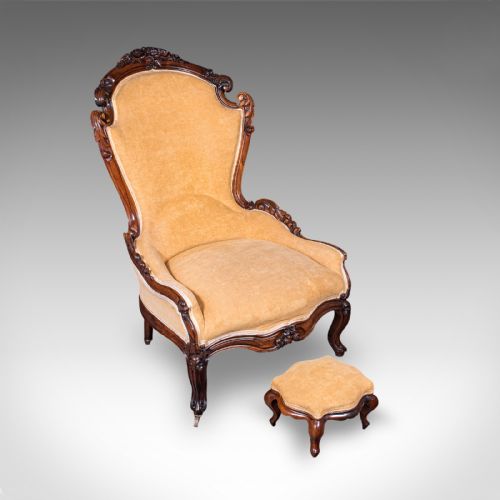
Makers built these chairs using dense tropical timber, primarily solid mahogany, which allowed for intricate hand-carving along the crest rails, arm supports, and cabriole or tapering legs. Joinery relied on traditional mortise and tenon techniques to ensure structural stability under daily weight.
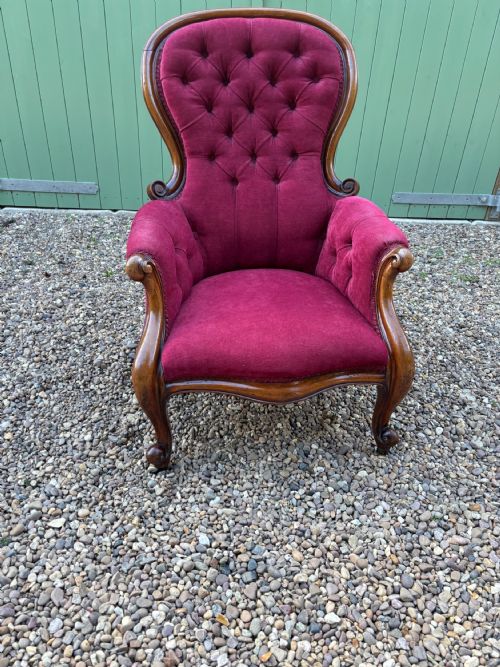
Upholstery methods evolved from drop-in seats and horsehair stuffing in the Georgian period to deep buttoning and spring-loaded interiors by the Victorian era. Leather, velvet, and woven fabrics were secured to the timber frames using brass tacks or decorative piping.
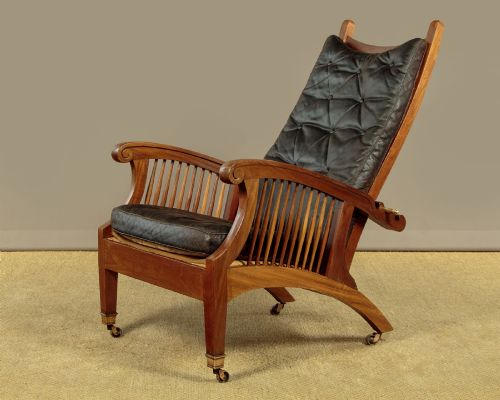
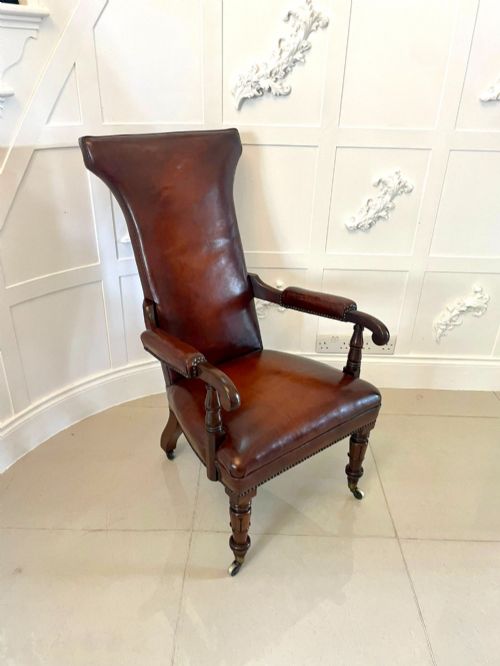
Several armchairs are specifically designated as library reading seats, designed for serious study or quiet slumber.
Assessing Craftsmanship
Quality in these seating pieces rests upon the crispness of the timber carving and the weight of the mahogany used in the frame. Superior examples display fluid lines in the arms and backsplats, whereas lesser items rely on simpler, mechanical cutting.
The integrity of the original joints and the presence of untouched timber surfaces dictate the standing of a piece. Later adaptations or replaced underframes alter the original character, distinguishing standard production items from exhibition-grade seating.
Whytock and Reid·Maple and Co·Edwards and Roberts
The Mahogany Armchairs and Chairs Glossary
- Carver
- An armchair designed to match a set of dining chairs, typically featuring open arms to accommodate dining attire.
- Gainsborough armchair
- A wide, low-seated library chair with upholstered arms, an open wooden frame, and padded back and seat.
- Splat
- The vertical central strip of wood in the back of a chair, often pierced or carved into distinctive patterns.
- Shield back
- A chair back shaped like a heraldic shield, popularized during the late eighteenth century.
- Tub armchair
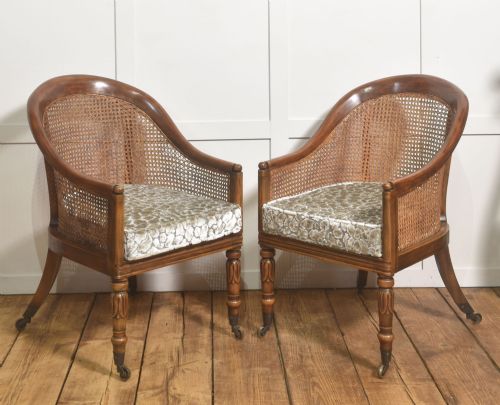
- A comfortable seat with a curved, continuous back and armrest enclosure resembling the shape of a half barrel.
Mahogany Armchairs and Chairs: Frequently Asked Questions
How do I date a mahogany chair?
Dating relies on examining the timber grain, construction joints, and stylistic markers such as cabriole legs or shield backs. Georgian pieces generally show hand-cut joinery and dense, dark timber, while later Victorian and Edwardian examples incorporate machine assistance and revival motifs.
Secondary woods used in the frames also help narrow the timeline. Oak or pine internal blocks point towards earlier periods, whereas later nineteenth-century pieces often standardise internal framing materials.
What is a carver chair?
A carver chair is an armchair built in the same style as a set of single dining chairs. They were traditionally placed at the head and foot of a dining table or used as desk seating.
The open arms allowed people wearing historical garments to sit comfortably without restriction. Today, they function well as standalone desk chairs or accent seating in living spaces.
Can I use antique mahogany chairs daily?
Most antique mahogany chairs are structurally robust enough for daily use if the joints remain tight and secure. Solid mahogany offers strong natural durability compared to softer timbers.
However, delicate carved splats and antique leather or fabric upholstery require careful maintenance. Periodic checks of the underframe ensure the chair handles regular sitting safely.
What distinguishes Chippendale style?
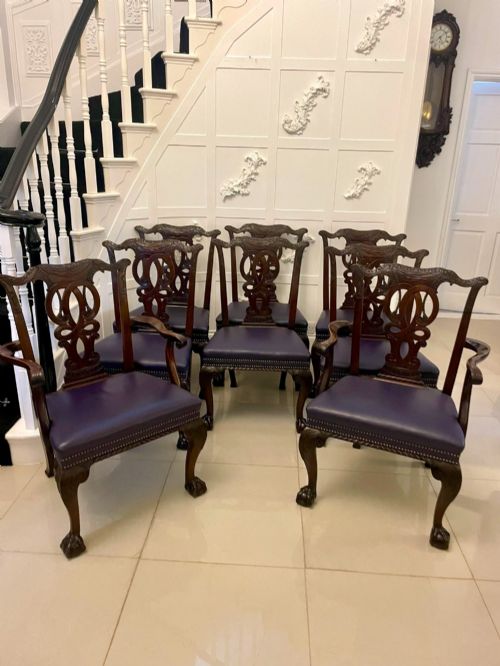
Chippendale style draws inspiration from eighteenth-century design manuals, featuring elaborate pierced splats, carved ribbon motifs, and ball and claw feet. The frames are typically constructed from heavy, dark mahogany.
Revival versions appeared in large numbers during the late nineteenth and early twentieth centuries. These later pieces emulate the carved detailing of the Georgian originals while utilising slightly different internal construction methods.