





Mahogany Apothecary Drawers
Mahogany apothecary drawers bring functional pharmaceutical heritage into a room, offering compartments designed for storage and display.
Mahogany Apothecary Drawers
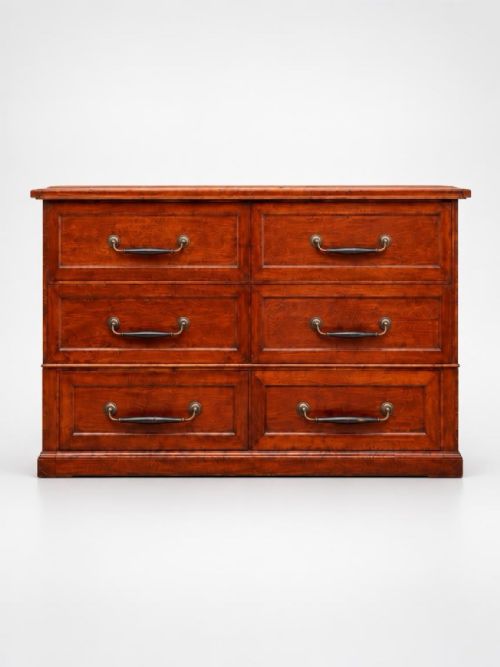
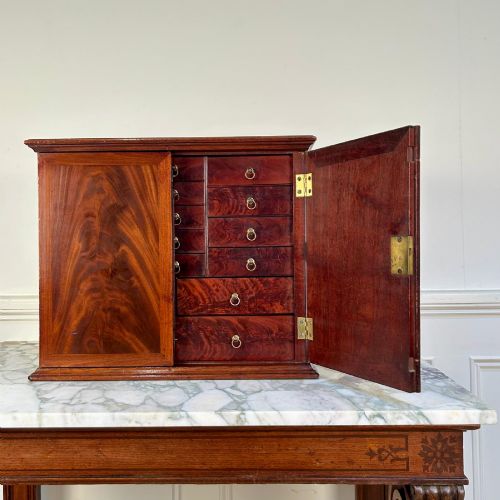
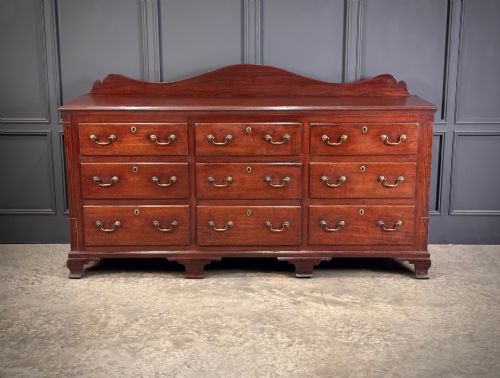
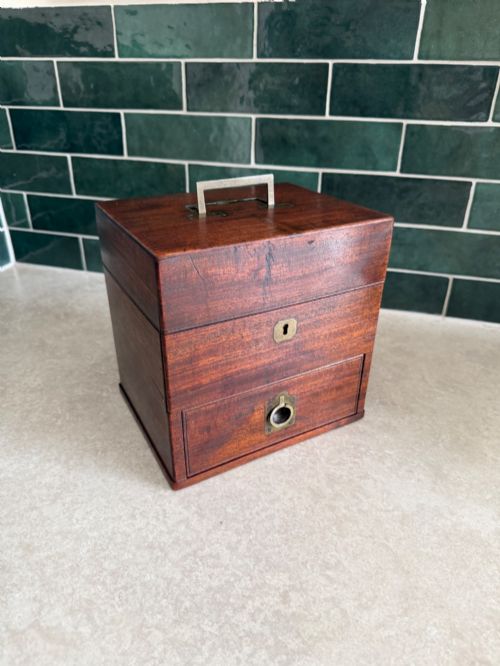
Mahogany apothecary drawers encompass banks of drawers, chemists' chests, and collectors' cabinets designed for organising medical, scientific, or personal items. Buyers seeking mahogany apothecary drawers encounter forms ranging from portable boxes with bottles to large multi-drawer banks and tall pharmacy cabinets.
The pieces on this page span the eighteenth, nineteenth, and early twentieth centuries, covering Georgian, Regency, Victorian, and Edwardian periods. Cabinets and banks of drawers dominate the selection, alongside specialised travelling cases and specimen chests.
Origins include English workshops as well as nineteenth-century French examples, reflecting diverse practical uses from chemist shops to private collections. Formats vary from compact table cabinets to tall filing units with numerous small compartments.
Factors separating quality ranges
Quality resides in the precision of the drawer construction, the retention of original brass hardware, and the survival of internal fittings like glass bottles or labels. Superior examples display dense timber grain, careful dovetailing, and intact secondary woods.
The presence of maker attribution, provenance, or specialised internal divisions elevates a piece from standard utility storage to a masterwork of cabinet-making. Original surface patination and untouched brass shell pulls distinguish high-grade specimens from later alterations.
Mahogany Apothecary Drawers Retail Price Guide 2026
Typical asking prices for mahogany apothecary drawers among the pieces listed under this phrase on Sellingantiques today, from the lower quarter to the upper quarter. They describe what is for sale here now, not the wider market.
Listings feature pieces spanning the Georgian, Victorian, and Edwardian periods, constructed primarily in mahogany with brass and glass elements.
STANDISH
The Mahogany Apothecary Drawers Glossary
- Bank of drawers
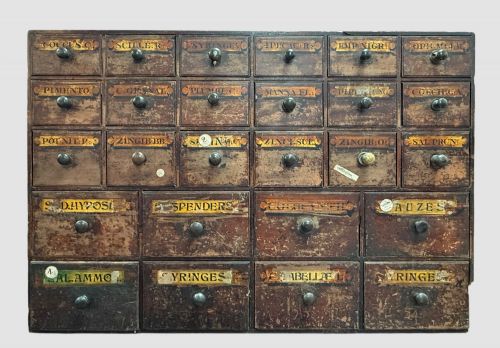
- A multi-drawer unit designed for high-density storage, commonly found in commercial pharmacies and workshops. These pieces feature numerous shallow compartments arranged in grids.
- Collectors cabinet
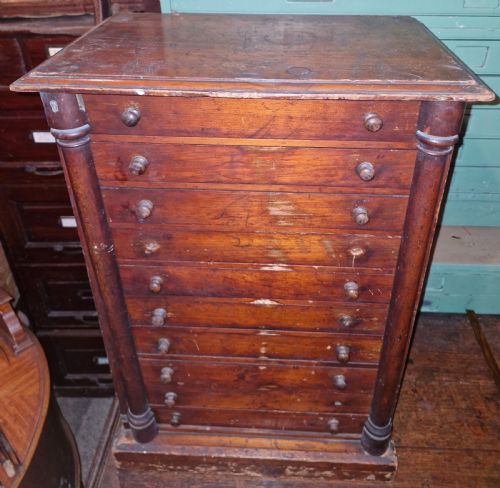
- A specialised piece of furniture featuring many small drawers built to house specimens, coins, or slides. Interiors often include glass panels or felt linings to protect delicate contents.
- Shell pull
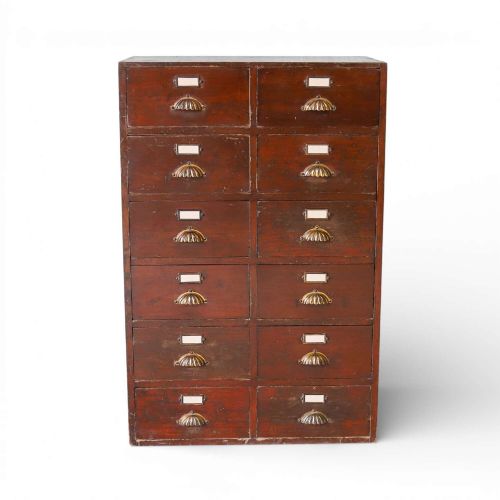
- A handle shaped like a half-seashell, frequently paired with a small frame to hold a paper label. These brass fittings appear commonly on nineteenth-century apothecary and chemist drawers.
- Specimen chest
- A compact cabinet created for storing natural history samples, minerals, or entomological collections. They typically contain closely fitted rows of shallow drawers.
- Travelling case
- A portable box fitted with secure latches, interior compartments, and medical bottles for use on journeys. These pieces protect contents during transport.
Mahogany Apothecary Drawers: Frequently Asked Questions
What were apothecary drawers originally used for?
Apothecaries and chemists used these multi-drawer units to sort dried herbs, roots, powders, and prepared pills in daily practice. Each small compartment kept specific ingredients organised and protected behind closed panels.
Larger banks served commercial pharmacies, while smaller boxes travelled with physicians or served domestic needs for organising medicines.
How do I date a mahogany cabinet?
Dating relies on examining construction techniques, timber choice, and hardware styles across different eras. Georgian pieces show hand-cut dovetails and fine brass work, whereas Victorian examples often feature denser mahogany and standardised pulls.
Secondary woods like pine or oak inside the drawers also help indicate the period of manufacture.
Are glass bottles usually original?
Original glass bottles survive in some travelling cases and apothecary boxes, matched to the specific internal slots designed to hold them. Many surviving drawer units have lost their original contents over decades of use.
Finding a complete set with original bottles adds significant interest for collectors.
Where should I place these drawers at home?
These cabinets suit studies, hallways, or living spaces where their numerous small drawers provide practical desktop or surface organisation. Placing them away from direct sunlight and heat sources protects the mahogany finish.
Their compact footprints make them versatile alternatives to standard chests of drawers.