


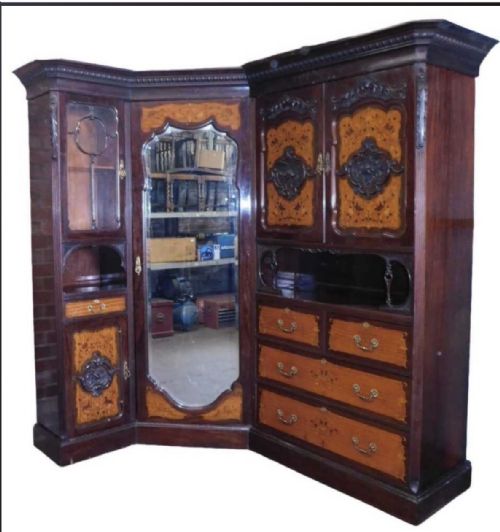


Mahogany and Satinwood Mirror
A mahogany and satinwood mirror brings warmth and refined contrast to a room through the combination of deep timber and pale inlay.
Mahogany and Satinwood Mirror
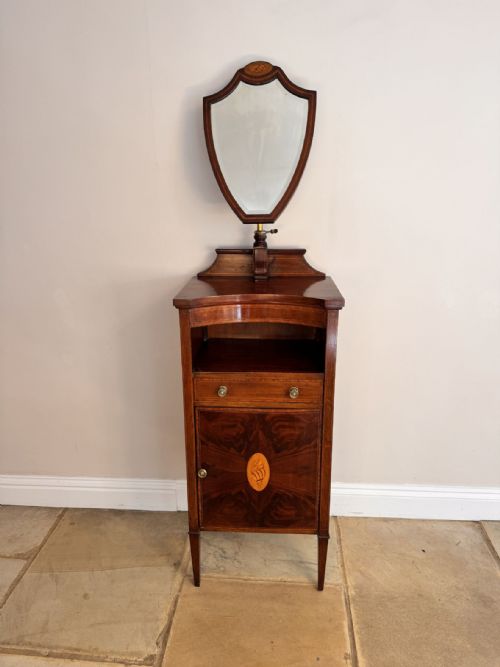
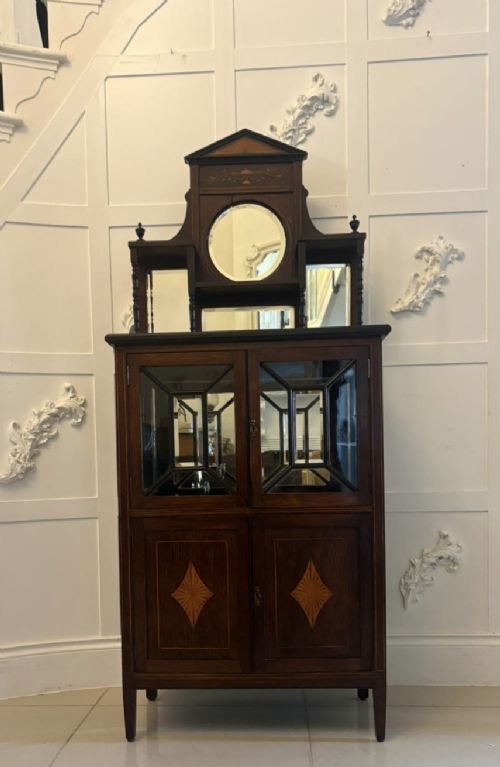
A mahogany and satinwood mirror draws on centuries of cabinet-making traditions, appearing primarily across Victorian, Edwardian, and Georgian periods. These pieces range from substantial cheval and dressing mirrors to compact wall-hanging formats.
The version most commonly met on this page is the Edwardian or late nineteenth-century dressing table mirror or wall mirror, frequently enhanced with satinwood inlay.
Surviving examples frequently demonstrate the sustained popularity of Sheraton Revival and Georgian styles through the twentieth century.
Materials and Technique
Cabinet-makers relied on solid or veneered mahogany as the primary structural wood, prized for its stability and rich grain. Satinwood was applied as fine inlay or banding to create contrasting geometric and floral motifs.
Makers utilised traditional joinery alongside careful glass-setting techniques, sometimes incorporating brass fittings and pivoting frames on cheval or toilet mirrors.
Mahogany and Satinwood Mirror Retail Price Guide 2026
Typical asking prices for mahogany and satinwood mirror among the pieces listed under this phrase on Sellingantiques today, from the lower quarter to the upper quarter. They describe what is for sale here now, not the wider market.
Some gentlemen's washstands and ladies' worktables doubled as mirrors of discretion, hiding secret rising compartments for valuables.
Judging Quality
The distinction between tiers rests upon the precision of the satinwood inlay and the depth of figure in the mahogany timber. Sharper contrast and tighter botanical or linear banding signal superior workshop output.
Flashman & Co·Edwards and Roberts·Maples & Co
The Mahogany and Satinwood Mirror Glossary
- Satinwood Inlay
- A decorative technique where small pieces of pale satinwood are fitted into recesses within the darker mahogany surface. This method creates striking contrasting borders and decorative panels.
- Cheval Mirror
- A full-length plate glass mirror supported by a freestanding frame with pivoting pivots. It allowed viewers to check their entire attire.
- Toilet Mirror
- A smaller mirror designed to sit atop a dressing table, chest of drawers, or washstand. These often include small drawers in the base.
- Sheraton Revival
- A late nineteenth and early twentieth century design movement that reinterpreted the light, neoclassical furniture forms of the eighteenth century. It heavily featured satinwood stringing and mahogany.
- Compactum
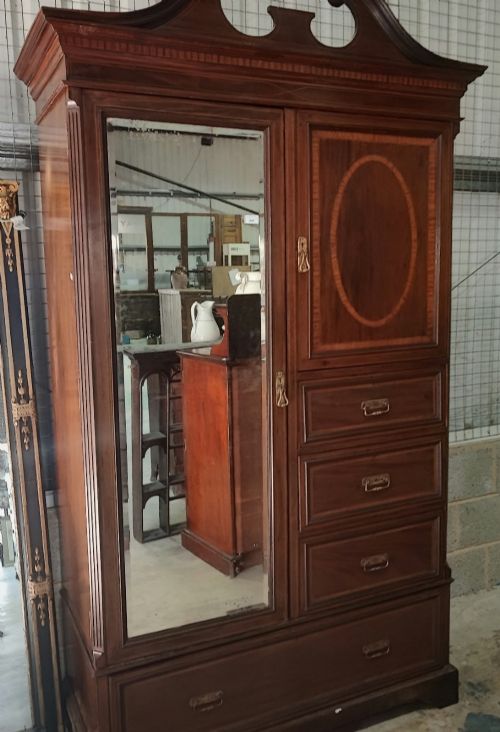
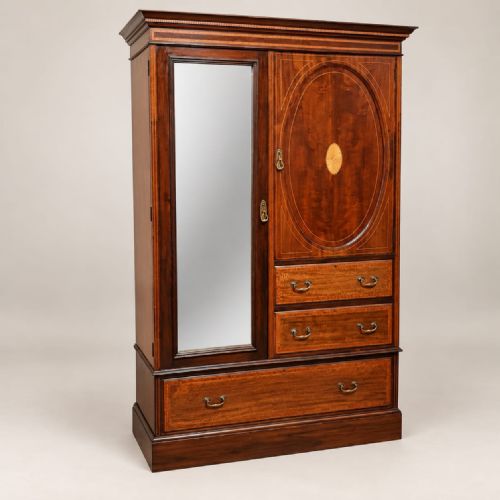
- A multi-functional wardrobe or cabinet combining hanging space, drawers, and shelving. Examples occasionally integrate mirror doors into the design.
Mahogany and Satinwood Mirror: Frequently Asked Questions
How do I date a mahogany and satinwood mirror?
Dating relies on assessing the construction methods, the thickness of the timber frame, and the style of the inlay. Edwardian pieces often display lighter carcass construction and machine-sawn backing boards.
Earlier Georgian and Regency examples feature hand-cut joints, heavier timber proportions, and distinct patination acquired over centuries of use.
Were these mirrors made for bedrooms or hallways?
They served various domestic functions depending on their scale and format. Smaller toilet and dressing mirrors belonged in bedrooms atop washstands or dressing tables.
Larger cheval or wall-hanging mirrors were positioned in dressing rooms, bedrooms, or hallways to reflect light and assist with final attire checks.
Is the mirror glass usually original?
Many surviving pieces retain their original mercury or early silvered glass, which often exhibits characteristic light foxing and tiny speckles. These subtle imperfections confirm age rather than detract from the piece.
Replacement glass is sometimes fitted during restoration work to ensure a clear reflection for daily use.
How should I care for the satinwood inlay?
Maintenance requires avoiding direct sunlight and excessive humidity to prevent the timber from drying out or the delicate satinwood veneer from lifting. Gentle dusting with a dry cloth keeps the surface clean without damaging the polish.
Occasional application of microcrystalline wax helps preserve the natural sheen of both the mahogany and the pale inlay.